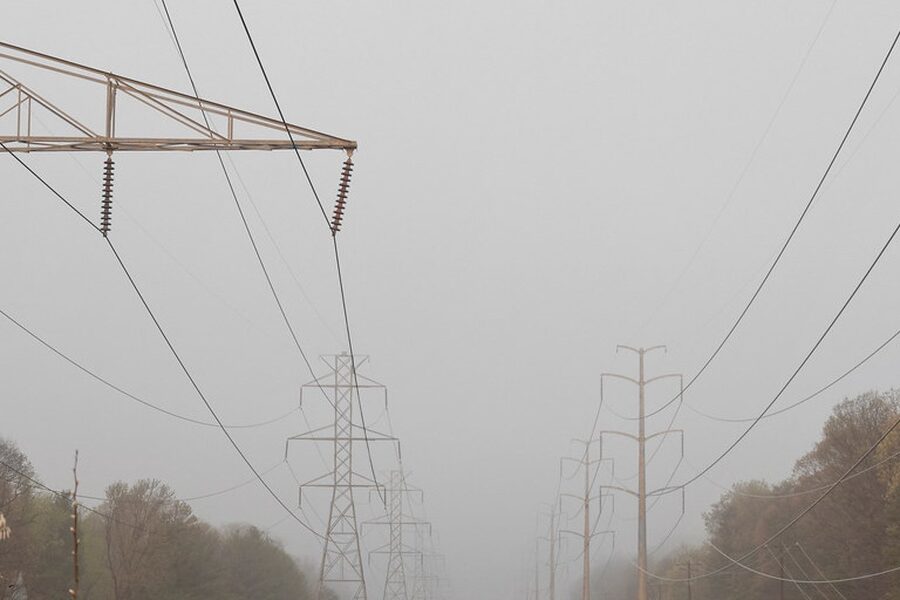
In August 2003 a cascading failure left roughly 50 million people without power across the U.S. Northeast and Ontario, snarling transit, shuttering hospitals, and shutting down factories for days. That blackout was a blunt reminder: a century-old electricity network built for one-way flow and manual fixes struggles when a single fault propagates at scale.
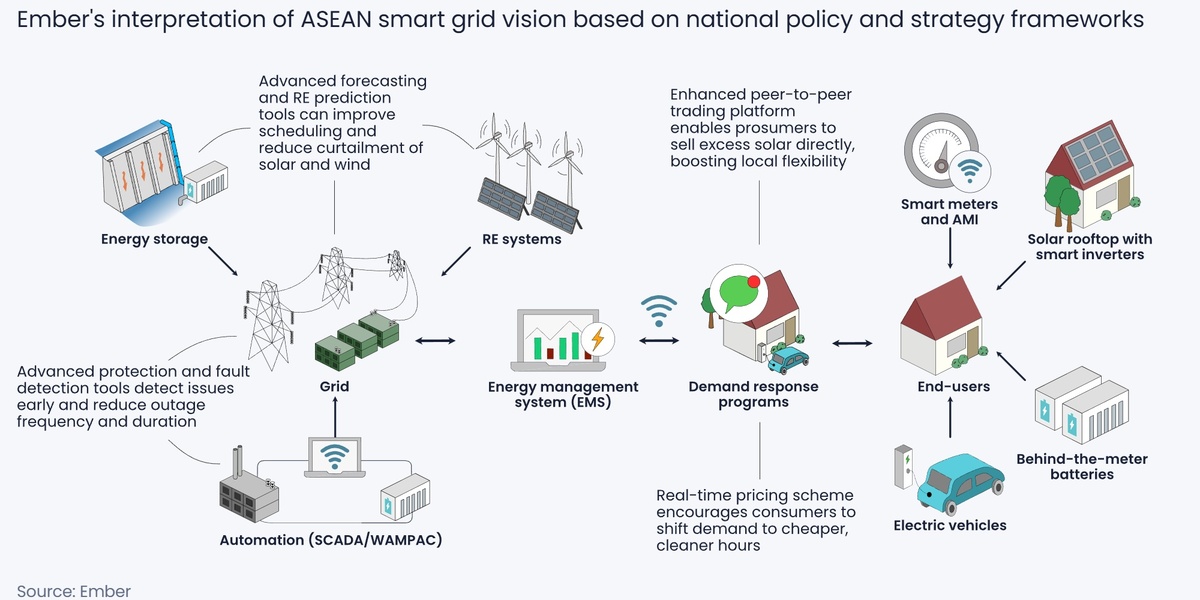
Aging wires, largely manual operations, and the fast growth of rooftop solar and other distributed resources have put legacy grids under strain. Modernizing the system with sensors, two-way communications, and smarter controls changes that dynamic. The claim is simple: modern technologies reduce costs, boost reliability, and speed the shift to cleaner energy.
Across the next pages I’ll list eight concrete benefits—grouped into economic & consumer, reliability & resilience, and environmental & efficiency gains—and give real examples utilities and communities already use. (For context, over 100 million smart meters had been installed globally by 2020.) These are some of the benefits of smart grid technology, shown in practical terms you can relate to.
Economic and Consumer Benefits
Smart meters, analytics, and demand-response programs touch both household budgets and utility balance sheets. When meters report usage every 15 minutes, and analytics predict when demand will spike, utilities can offer pricing and services that lower consumer bills and justify grid investments.
Pilot projects and national rollouts offer hard numbers: large-scale AMI (advanced metering infrastructure) deployments in parts of the U.K. and the U.S. have shown measurable consumer savings and operational cost reductions for utilities (see U.S. Department of Energy and IEA analysis for aggregated results).
1. Lower energy bills for households through smarter pricing
Smart grid tech enables time-of-use pricing, critical-peak rates, and automated demand-response that shift consumption away from expensive peaks. That’s how households lower bills: move a chunk of discretionary load to off-peak hours.
Trials show typical household savings in the single-digit percentage range after enrolling in TOU plans combined with smart thermostats and controls. When a Nest or similar thermostat reacts automatically to a TOU signal, it trims peak use without making the home uncomfortable.
Programs run by utilities such as PG&E and results from UK smart meter consumers demonstrate that automated load shifting and clearer price signals lead to steady bill reductions for many customers.
2. New revenue streams and local job growth
Grid modernization creates markets: aggregators, energy service firms, and software platforms package flexibility as a product. That lets small-scale resources sell capacity or ancillary services, creating new revenue streams.
On the jobs side, manufacturing and installing meters, sensors, batteries, and smart inverters creates local work. Studies tied to grid upgrades and the clean-energy transition estimate thousands to tens of thousands of jobs per large regional program—construction, installation, and software roles included.
Companies such as AutoGrid and Enel X now aggregate distributed resources, and installers for batteries and rooftop solar hire locally. Utilities also run workforce training programs during AMI rollouts to replace meter-reading roles with higher-skilled positions.
3. Lower operational costs for utilities and fewer service calls
Automation and remote monitoring cut routine costs like meter reading and manual disconnects. Utilities report significant reductions in truck rolls after AMI and remote-control switch deployments.
That reduces operating expense and speeds billing and collection. Field crews spend less time on manual reads and more on predictive maintenance, which in turn lowers emergency repair costs when equipment failure is anticipated and addressed proactively.
Examples from utilities such as Con Edison and Duke Energy show fewer site visits and faster service restoration where distribution automation and AMI are in place.
Reliability and Resilience Benefits
Reliable power is public safety and economic continuity. Sensors, automated controls, and distributed resources reduce outage frequency and shorten durations, keeping hospitals, transit, and commerce running when the unexpected happens.
Contrast the 2003 Northeast blackout with more recent responses to storms: places that invested in sensing, microgrids, and automation recover more quickly from events like Hurricane Maria in 2017, where lack of distributed controls prolonged outages across Puerto Rico.
4. Faster outage detection and shorter restoration times
Two-way communications and on-line sensors give near-instant awareness of faults. Systems such as fault location, isolation, and service restoration (FLISR) can automatically isolate a faulted section and reroute power around it.
Utilities that have deployed FLISR report dramatic reductions in customer-minutes-lost—often cutting outage duration for affected customers by substantial percentages compared with manual operations. AMI meters also act as remote alarms, flagging outages immediately instead of waiting for customer calls.
Automatic sectionalizers and circuit reclosers reduce how many customers are impacted by a single fault, so fewer people lose power and crews can focus on the root cause faster.
5. Microgrids and islanding for critical infrastructure
Smart controllers let microgrids separate from the main grid and run autonomously when transmission fails. That capability protects critical services—hospitals, water treatment plants, emergency shelters—during extended outages.
After Hurricane Maria, Puerto Rico became a testing ground for community and facility microgrids. Several projects now provide multi-day islanding capability for essential services by coordinating on-site solar, batteries, and diesel or biogas gensets.
Commercial vendors and systems integrators such as Siemens and Schneider Electric supply microgrid controls that manage transitions to and from islanded mode while keeping voltage and frequency stable.
6. Improved coordination of distributed energy for grid stability
Smart platforms aggregate small resources—rooftop solar, batteries, flexible loads, even EVs—and operate them as a single, dispatchable resource. That aggregation can supply frequency response, capacity, and peak shaving.
Virtual power plants run by aggregators (examples: Sonnen, Tesla project aggregations) have participated in markets, providing reserve capacity similar to a conventional generator. Falling battery costs—reported to have dropped substantially since 2010—make storage-backed aggregation more economic.
Coordinated DERs smooth variability and can step in during rapid ramps, making the larger system more stable without building new gas peaker plants.
Environmental and Efficiency Benefits
Efficiency gains reduce emissions and make it easier to add variable renewables. Better visibility cuts losses, smarter controls delay costly upgrades, and coordination of demand and storage lowers reliance on fossil peakers.
Transmission and distribution losses typically range around 5–8% in many systems, so even modest reductions save energy and emissions. Coupled with falling battery costs and smarter dispatch, the net effect is meaningful CO2 savings over time.
7. Easier integration of renewables and lower carbon emissions
Forecasting tools, real-time controls, and demand-response make it practical to host more wind and solar without sacrificing reliability. Grid-friendly inverters and smart curtailment avoid sudden swings that used to force conservative limits on solar hosting.
California’s efforts to address the “duck curve” illustrate this: demand-response programs and storage deployments shift load and store midday solar, smoothing evening ramps and reducing the need for fast-start fossil plants.
Modeling from research centers such as NREL and market operators shows that flexibility measures—storage, demand-side response, and advanced controls—raise the percentage of renewables a grid can reliably accept.
8. Reduced losses and improved grid efficiency
Distribution-level measures—Volt/VAR optimization (VVO), conservation voltage reduction, smart transformers, and dynamic line ratings—cut technical losses and reduce peak demand.
Utilities that implemented VVO have reported measurable reductions in energy losses and modest peak shaving, translating into deferred capital projects and lower operating costs. Those savings compound over years across thousands of feeders.
Improved asset monitoring also extends equipment life by avoiding prolonged over-voltage or thermal stress, meaning fewer emergency replacements and lower lifecycle costs.
Summary
Modern grid technologies deliver practical wins: they save money, shorten outages, and make clean energy easier to use. From smart meters that cut routine costs to microgrids that protect hospitals, the effects are tangible.
- Lower household bills are possible via TOU pricing and automated home controls; AMI pilot results point to steady single-digit savings for many customers.
- Utilities cut operating costs—fewer truck rolls, faster billing—and regions gain jobs in installation and software services tied to grid upgrades.
- Sensors, FLISR, and DER coordination significantly reduce outage minutes and enable critical microgrids that keep essential services powered during disasters.
- Volt/VAR optimization, better forecasting, and storage integration lower losses and emissions while enabling higher shares of renewables.
If you want to take action: ask your utility about TOU rates and demand-response programs, consider a smart thermostat or home battery, and support local policies that fund grid modernization so communities don’t repeat the mistakes of the 2003 outage. If you’re curious about the benefits of smart grid technology, start there.