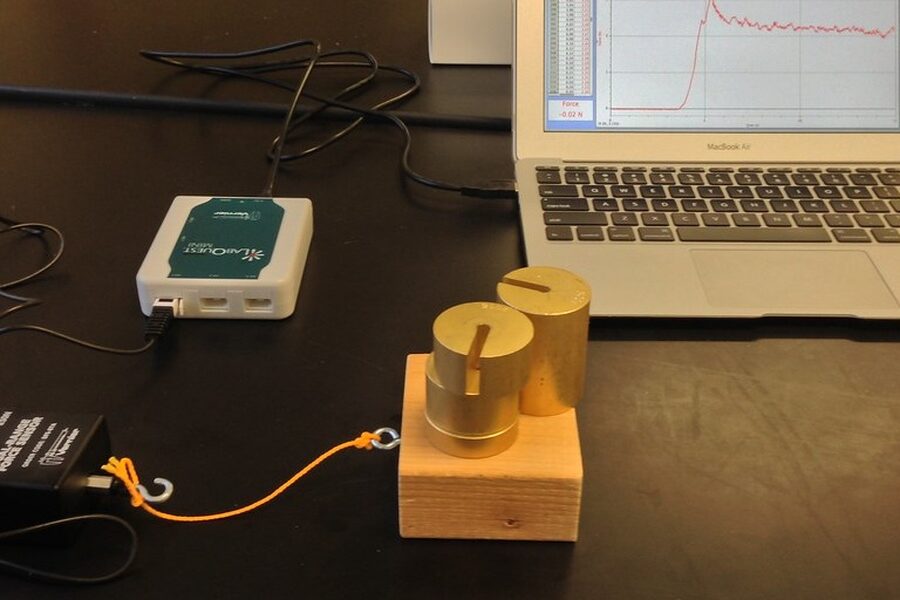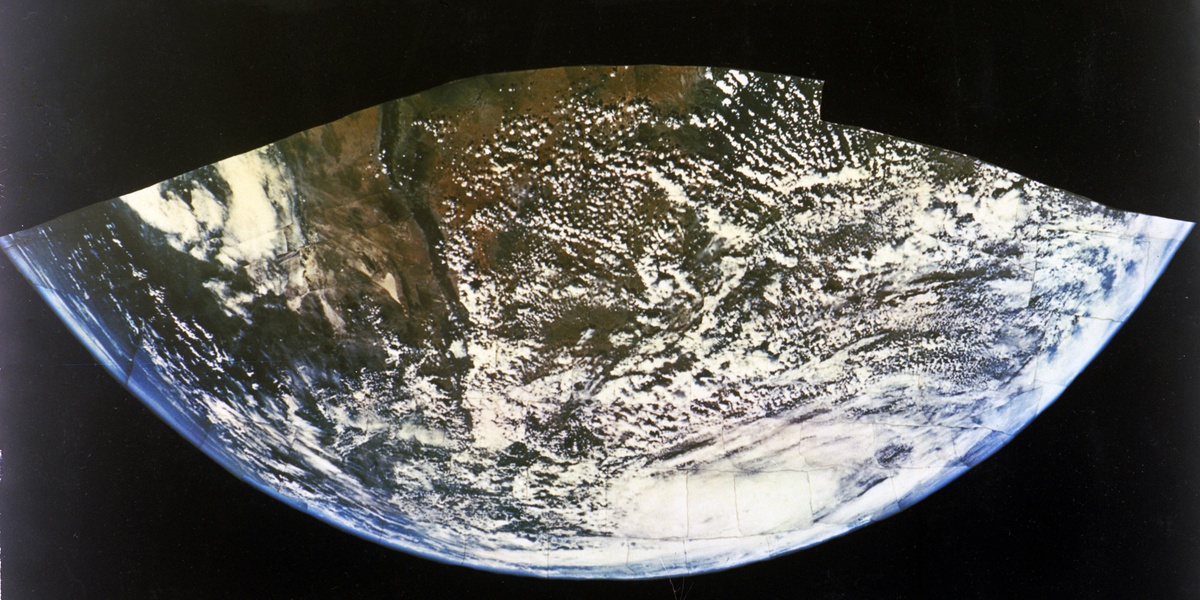
In 1687 Isaac Newton published the Philosophiae Naturalis Principia, famously describing gravity after watching (legend has it) an apple fall — a moment that began a scientific revolution.
Gravity governs everyday sensations like weight and also controls tides, satellite orbits, and the motion of galaxies. Standard gravity at Earth’s surface is about 9.80665 m/s², a tidy number scientists and engineers use all the time.
This piece lays out eight surprising, concrete facts about gravity grouped into three parts: the fundamental nature of gravity, its cosmic roles, and everyday and technological impacts. Read on for history, hard numbers (like G ≈ 6.67430×10⁻¹¹), and practical examples that show what gravity does.
Fundamental Nature of Gravity
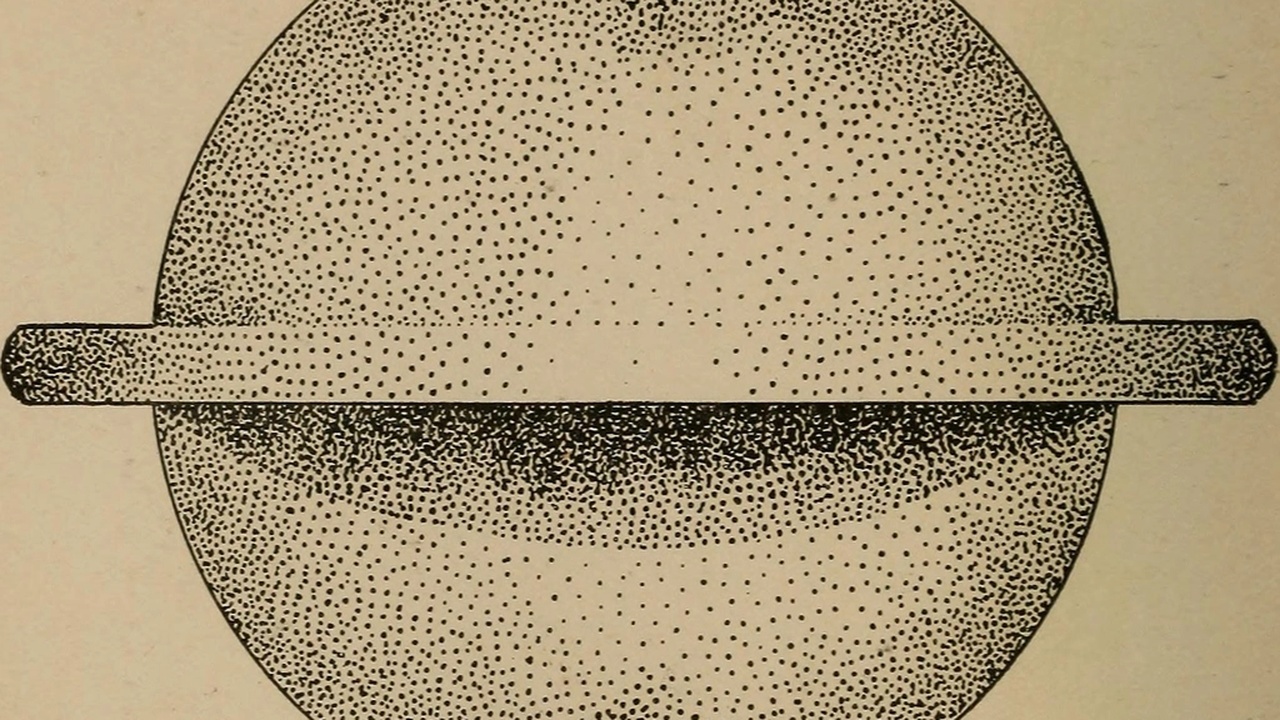
This category covers three core facts: gravity as an acceleration near Earth’s surface, Newton’s inverse-square law describing attraction between masses, and Einstein’s 1915 reinterpretation of gravity as curvature of spacetime. Key milestones are Newton (1687), Cavendish’s measurement of G (1798), and Einstein’s General Relativity (1915), each adding a new level of precision and insight.
1. Gravity is an acceleration: about 9.8 m/s² at Earth’s surface
Near Earth’s surface, gravity produces a downward acceleration of roughly 9.80665 m/s² (commonly rounded to 9.8 m/s²). That value, called g, connects mass to weight: weight = mass × g. So a 70 kg person has a weight of about 70 × 9.80665 ≈ 686 N.
Why that number? Use Newton’s law roughly: g ≈ G·Mearth/Rearth². With Earth’s mass ≈ 5.97×10²⁴ kg and radius ≈ 6,371 km, you get the 9.8 m/s² scale. The standard value 9.80665 m/s² is a defined reference; actual g varies slightly with altitude and latitude.
Historical experiments help: Galileo’s early 17th-century work on falling bodies established that objects accelerate similarly in gravity (ignoring air drag), and modern vacuum-drop towers and pendulum tests confirm uniform acceleration to high precision. Engineers rely on g for structural loads, crash testing, and designing roller coasters and aircraft seating.
2. Gravity acts between any two masses — Newton’s inverse-square law
Newton’s universal law of gravitation states that two masses attract with a force F = G·m1·m2 / r², where G is the gravitational constant. Henry Cavendish first measured G experimentally in 1798; today we use G ≈ 6.67430×10⁻¹¹ m³·kg⁻¹·s⁻².
That inverse-square dependence means gravity weakens quickly with distance, which explains stable planetary orbits and why small bodies don’t noticeably tug on distant objects. For example, you can compute the gravitational force between Earth and the Moon with the same formula to predict orbital dynamics.
In practice, mission planners use Newtonian gravity to design spacecraft trajectories and flybys. The same formula applied in laboratories compares the tiny force between two lead spheres to the enormous attraction between Earth and the Moon — the law works across scales.
3. Einstein reimagined gravity as spacetime curvature (General Relativity, 1915)
Einstein published General Relativity in 1915, replacing Newton’s picture of gravity as a force with the idea that mass and energy curve spacetime and objects follow those curved paths. The field equations are compact but powerful; they predict new effects beyond Newtonian gravity.
Two classic confirmations came quickly: the 1919 Eddington expedition observed starlight bending during a solar eclipse, and GR explained Mercury’s anomalous perihelion advance (about 43 arcseconds per century). Modern confirmations include LIGO’s detection of gravitational waves in 2015 (GW150914).
General Relativity has practical consequences too. GPS systems must correct satellite clocks for both special- and general-relativistic time shifts — the net correction is about 38 microseconds per day — or positioning errors would grow by kilometers. So Newton and Einstein both remain essential.
Gravity in the Cosmos
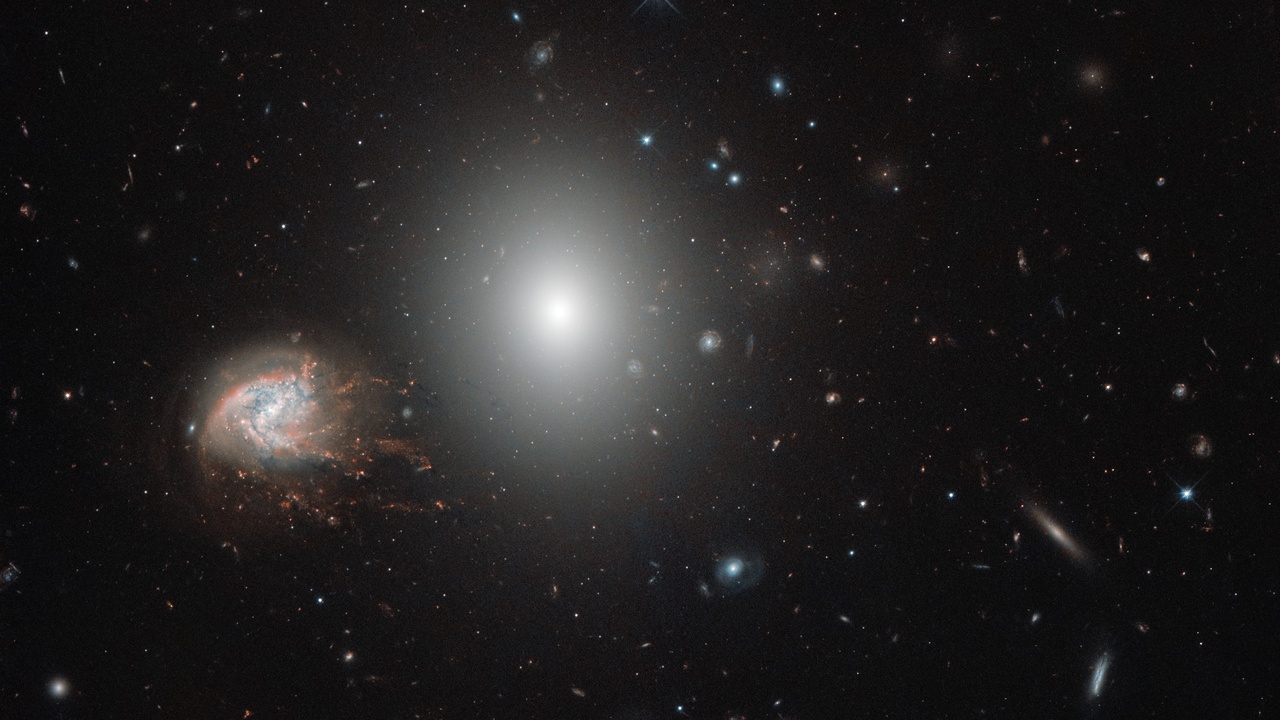
On cosmic scales gravity sculpts structure, drives collapse into compact objects, and bends light to reveal invisible mass. From protoplanetary disks to galaxy clusters, gravity’s influence runs from the birth of planets to the mergers of black holes.
4. Gravity builds structure: from protoplanetary disks to galaxies
Gravity pulls diffuse gas and dust together, initiating collapse and forming protostars and disks that spawn planets. Our Solar System formed about 4.6 billion years ago through these processes; meteorites preserve chemical clues to those early stages.
Telescopes like ALMA now image protoplanetary disks with rings and gaps where planets are likely forming, giving direct evidence of accretion and migration. Typical protostellar collapse increases densities by many orders of magnitude over 10⁵–10⁶ years, leading to young stars and planetesimals.
Those same gravitational ideas scale up: dark matter and baryons collapse into galaxy halos, where mergers and accretion over billions of years produce the cosmic web of filaments and clusters seen in surveys.
5. Gravity creates extremes: neutron stars and black holes
When massive stars exhaust nuclear fuel, gravity can compress cores into neutron stars or black holes. Neutron stars typically weigh about 1.4–2.1 solar masses but are only ~20 km across, yielding densities rivaling an atomic nucleus.
Black holes range from a few solar masses (stellar remnants) to millions or billions of solar masses (galactic centers). The LIGO detection GW150914 in September 2015 revealed a merger of black holes of roughly 36 and 29 solar masses, a watershed moment for gravitational-wave astronomy.
Pulsars (rotating neutron stars) act as precise clocks used in tests of gravity; x-ray binaries and accretion disks produce intense high-energy emission that astronomers use to study extreme-gravity physics in ways impossible on Earth.
6. Gravity bends light and maps invisible mass via lensing
Massive objects curve spacetime and bend light passing nearby, producing gravitational lensing. Strong lensing creates Einstein rings and arcs (seen by Hubble), while weak lensing provides statistical maps of mass across the sky, including dark matter.
A striking example is the Bullet Cluster (2006), where lensing maps showed most mass offset from the hot X-ray gas, offering visual evidence for dark matter that interacts weakly with baryons. Lensing also magnifies very distant galaxies, letting telescopes study objects that would otherwise be too faint.
Astronomers use lensing to weigh galaxy clusters and to probe cosmology; lensing measurements combine with redshifts and simulations to constrain how structure grows under gravity over cosmic time.
Everyday and Technological Impacts
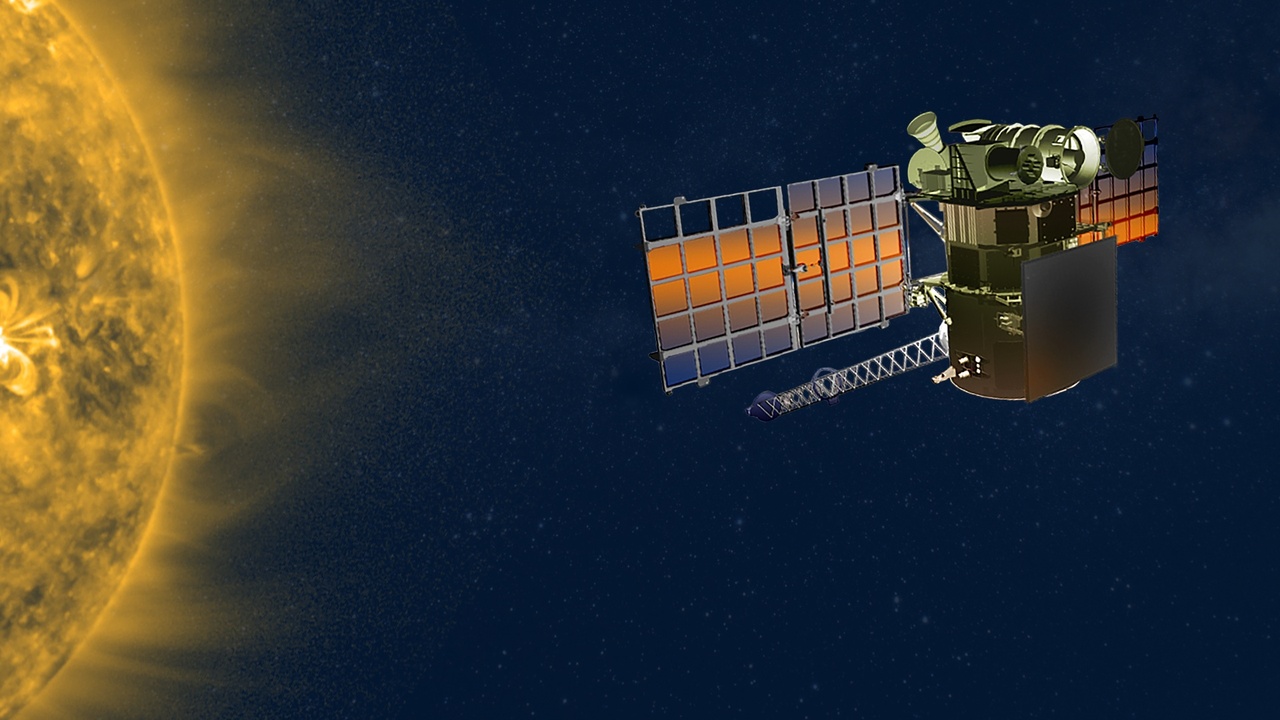
Gravity isn’t only a subject for physicists; it dictates tides, safety margins in engineering, how satellites orbit, and why GPS needs relativistic fixes. The following facts connect gravity to things people experience and rely on daily.
7. Gravity drives tides and shapes Earth’s environments
The Moon’s gravity — with a contribution from the Sun — pulls on Earth’s oceans to create tides. Spring tides (when Sun and Moon align) produce higher highs and lower lows; neap tides (when they are at right angles) reduce the range.
Some places have dramatic tidal ranges; the Bay of Fundy records tides of about 16 meters, among the largest on Earth. Tides affect coastal ecosystems, shipping schedules, and have potential for tidal power generation in suitable sites.
Gravity also governs tidal locking: the Moon keeps the same face toward Earth because tidal torques synchronized its rotation long ago. These gravitational interactions slowly lengthen Earth’s day and increase the Moon’s orbital distance over geological timescales.
8. Gravity matters for satellites, GPS, and engineering (from ISS to skyscrapers)
Satellites remain in orbit because their tangential speed balances gravitational pull. The International Space Station orbits at roughly 420 km altitude. Geostationary satellites sit at about 35,786 km over the equator, appearing stationary to ground observers.
Key numbers: Earth escape velocity is about 11.2 km/s, and precise orbital mechanics drive launch profiles (SpaceX, NASA) and satellite maneuvers. GPS satellites must include relativistic corrections — the net clock correction is roughly 38 microseconds per day — to keep location errors to meter scale.
On Earth, engineers factor gravity into load calculations for bridges, towers, elevators, and vehicles. Safety tests use specified g-loads; designers use conservative factors so structures perform under expected gravitational loads and extreme events.
Summary
- Gravity links everyday experience (g ≈ 9.8 m/s²) to cosmic processes (Newton 1687; Einstein 1915).
- Newton’s inverse-square law and Cavendish’s G (1798, G ≈ 6.67430×10⁻¹¹) explain attraction; General Relativity explains curvature, light bending (Eddington 1919), and gravitational waves (LIGO 2015).
- Gravity sculpts structure from protoplanetary disks (Solar System ≈ 4.6 billion years old) to black-hole mergers (GW150914: ~36 and 29 M☉) and maps dark matter via lensing (Bullet Cluster, 2006).
- Tides (Bay of Fundy ≈ 16 m) and engineering loads depend on gravitational physics; satellites and GPS require precise orbital mechanics and relativistic corrections (~38 μs/day).
- Curious? Watch local tides, try a safe classroom free-fall demo, or read NASA’s pages on gravity and LIGO’s outreach materials to learn more.