Have you ever wondered why a single missing species can topple one ecosystem but barely ripple another?
Early naturalists sketched tidy chains—Charles Elton in 1927 framed much of that thinking—before ecologists moved toward tangled webs that better reflect real feeding relationships. Textbook chains remain useful for teaching, but professional ecology leans on web models to capture complexity and predict surprises.
That distinction matters: a chain can suggest a single management lever, while a web often reveals indirect pathways and hidden keystone roles—think wolves reintroduced to Yellowstone in 1995 and the downstream effects on elk, willows and riverbanks.
Understanding the differences between food chain and food web reveals how ecologists describe energy flow, predict ecosystem responses, and design effective conservation strategies; the rest of this piece groups ten concrete differences into structural/conceptual, ecological/functional, and practical/observational categories.
Structural and Conceptual Differences
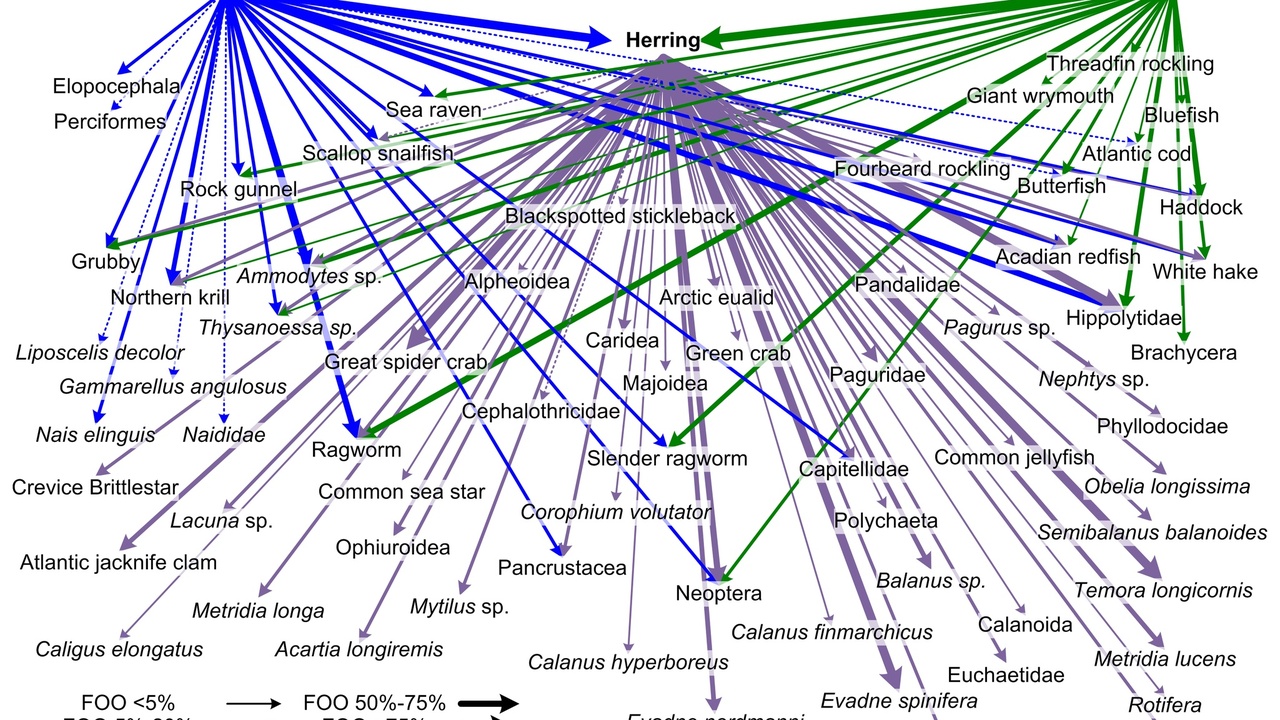
These differences are about how ecologists represent who-eats-whom. A food chain is a linear, didactic sketch of energy flowing from producers up to top predators; a food web is a networked map showing many simultaneous pathways and interactions. Chains work well as mental models—grass → rabbit → fox—while webs better represent real ecosystems, where published studies often document 30–300 species in a single web.
Choosing a model changes interpretation: chains highlight dominant flows and trophic levels, webs allow network analysis (nodes and links) and reveal alternate routes that can buffer or amplify disturbances.
1. Linear Path vs Network: One-way chain compared with interconnected web
Food chains map a single energy pathway; food webs map many interlinked pathways. Chains appear in primary-school diagrams, while webs appear in ecological studies and coastal surveys that can list 50+ species and dozens of links.
2. Single Trophic Pathway vs Multiple Trophic Connections
Chains imply neat trophic levels (producers → primary consumers → secondary consumers), but webs show species occupying multiple levels. Omnivory is common—reported in roughly 50–80% of species in some webs—so many organisms feed across levels.
3. Simplified Visualization vs Rich Topology: Nodes and links
Chains are simplified visuals; webs expose topology: nodes (species or groups) and links (feeding interactions). Network metrics like connectance (often 0.05–0.3 in empirical webs), degree distribution, and modularity become available only for webs.
4. Emphasis on Trophic Level vs Emphasis on Species Interactions
Chains sort organisms by level; webs focus on who interacts with whom. That matters: trophic-level thinking can hide keystone species—removing one predator can shift community composition by more than 50% in some studies—yet that role appears clearly in interaction networks.
Ecological and Functional Differences

Structural differences shape ecological function. A chain emphasizes directional energy transfer; a web shows multiple routes for energy and matter, which changes predictions about resilience, trophic cascades, and nutrient cycling. Here are three functional contrasts with empirical touchpoints.
5. Energy Flow Representation: Directional transfer versus multiple pathways
Chains highlight unidirectional flow from producers to top predators; Lindeman’s work in 1942 formalized trophic efficiency and the rough rule of thumb that about 90% of energy is lost per trophic transfer. Webs, however, reveal alternate energy pathways—diet switching and omnivory—that can buffer consumers when a primary prey declines.
6. Stability and Resilience: How complexity affects ecosystem responses
Webs let scientists assess redundancy and connectivity, which influence resistance and recovery. Theoretical debates since the 1970s show more links can either dampen shocks (by offering backups) or spread perturbations quickly. Practically, restoring one missing link often fails if multiple links remain broken—coral reefs, for example, shift to algal dominance after fishing removes several herbivore species.
7. Trophic Cascades and Indirect Effects: Chains show direct links; webs reveal indirect pathways
Chains make direct cascades easy to see—predator reduces herbivore, plants recover—but webs expose indirect effects like apparent competition, facilitation, or behavioral cascades. The Yellowstone wolf reintroduction beginning in 1995 produced direct and indirect changes: altered elk behavior, willow and aspen recovery, and shifts in beaver activity and river morphology reported in multiple studies.
Practical and Observational Differences

Practical uses diverge: chains are teaching tools and quick field guides; webs require detailed data but support research, modeling, and policy. The next three points cover education, research needs, and scale—plus when each model makes sense for managers and communicators.
8. Educational Use: Chains for simplicity, webs for depth
Teachers use short chains (3–5 species) to introduce energy flow; colleges present 20–100 species webs to teach network concepts. Use a simple apple tree → caterpillar → robin poster in middle school, and a 70-species forest web in upper-level ecology to explore connectance and trophic position.
9. Research and Management: Data needs and modeling approaches
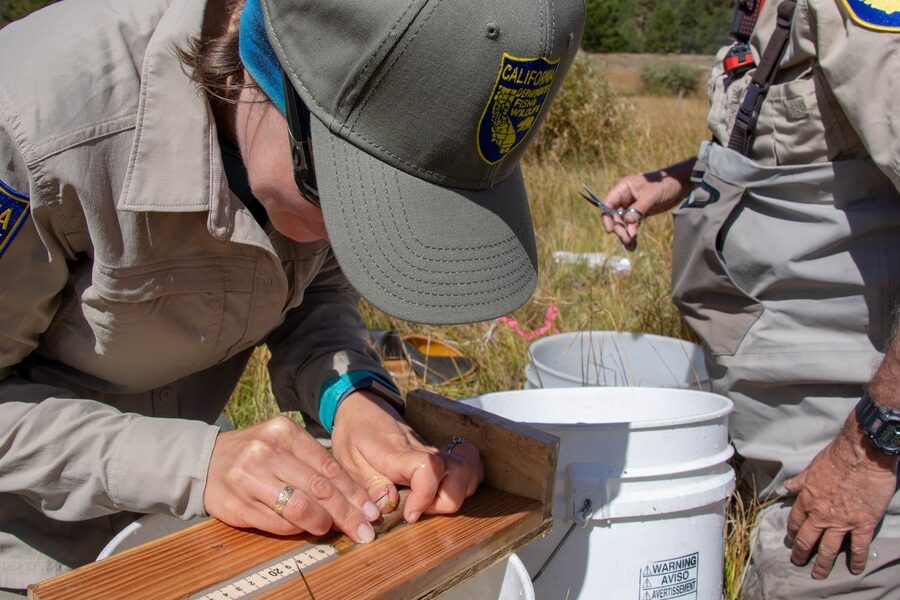
Building a food web takes diet studies, stable isotope ratios, gut-content analysis and often network software like Ecopath. Diet studies commonly require dozens to hundreds of stomach or isotope samples per target species to estimate feeding links robustly. Fisheries managers routinely use web models to evaluate the effects of removing or reducing key species.
10. Scalability and Resolution: When a chain suffices and when a web is necessary
Chains scale well for simple communication or when a dominant pathway exists. Webs become necessary for invasive-species risk assessments or ecosystem restorations where alternate prey, mutualists, or competitors determine outcomes. Practitioners often aggregate species into functional groups to keep web models tractable at landscape or global scales.
Summary
Chains and webs are complementary tools: one simplifies, the other reveals complexity. Choosing between them depends on your question, data, and audience.
- Chains are useful simplifications for teaching and quick communication (3–5 species chains work well in classrooms).
- Webs capture interaction topology—connectance (≈0.05–0.3), omnivory (often 50–80% in some systems), and indirect effects—so they better predict cascades and management outcomes.
- Key historical and quantitative anchors—Elton 1927; Lindeman 1942 and the ~90% energy-loss rule; Yellowstone wolves (1995)—show how models change interpretation and action.
- Apply this knowledge: build a local web with students, ask resource managers whether web-based assessments inform their decisions, or use food-web models for invasive-species risk and restoration planning.