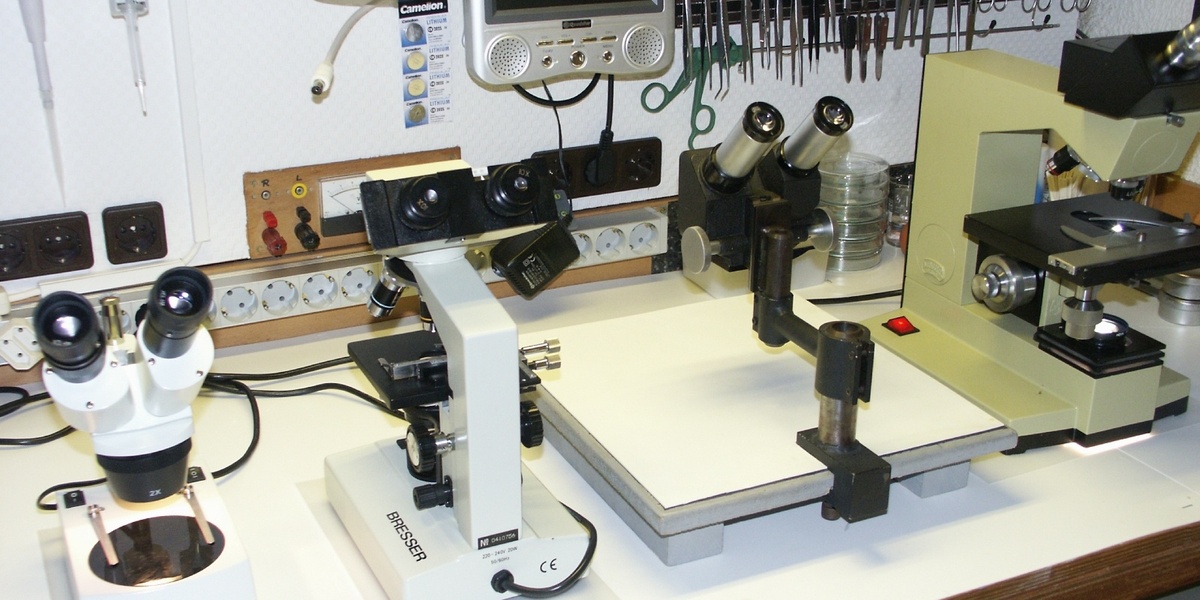
In 1944, Erwin Schrödinger’s lecture “What Is Life?” nudged physicists to look at biology with equations, microscopes, and curiosity. That talk sparked a movement: physicists and engineers began asking how quantifiable laws and instruments could reveal the inner workings of cells, proteins, and nerves.
Why does this matter now? Because those tools power vaccine design, new medical devices, targeted drugs, and brain interfaces. How do atoms and molecules give rise to disease or cognition? Can physical models speed discovery?
Biophysics is both a toolkit and a bridge between physics and biology.
This piece walks through ten core branches grouped into three categories: molecular/structural, cellular/systems/neuro, and applied/computational — showing what each branch measures, the tools it uses, and the concrete problems it solves. Along the way you’ll see examples from Thermo Fisher and AlphaFold to Medtronic and MRI systems, and learn how these approaches moved from blackboards into clinics and industry.
Molecular and Structural Biophysics
These branches study molecules — proteins, nucleic acids, and complexes — and ask how atomic arrangements and motions determine function. They’re foundational for drug discovery and synthetic biology because structures and dynamics are the blueprints engineers use to design interventions.
Key tools include X-ray crystallography at synchrotrons, cryo-electron microscopy (cryo-EM), and nuclear magnetic resonance (NMR) spectroscopy, plus newer predictive tools like AlphaFold. Industry-grade instruments (Thermo Fisher Scientific’s cryo-EM suites) and facilities such as Diamond Light Source make high-resolution work routine.
Below are three tightly related subfields — structural, molecular, and biophysical chemistry — each focused on a different scale and set of measurements, from atomic coordinates to reaction rates.
1. Structural Biophysics — Seeing molecules at atomic scale
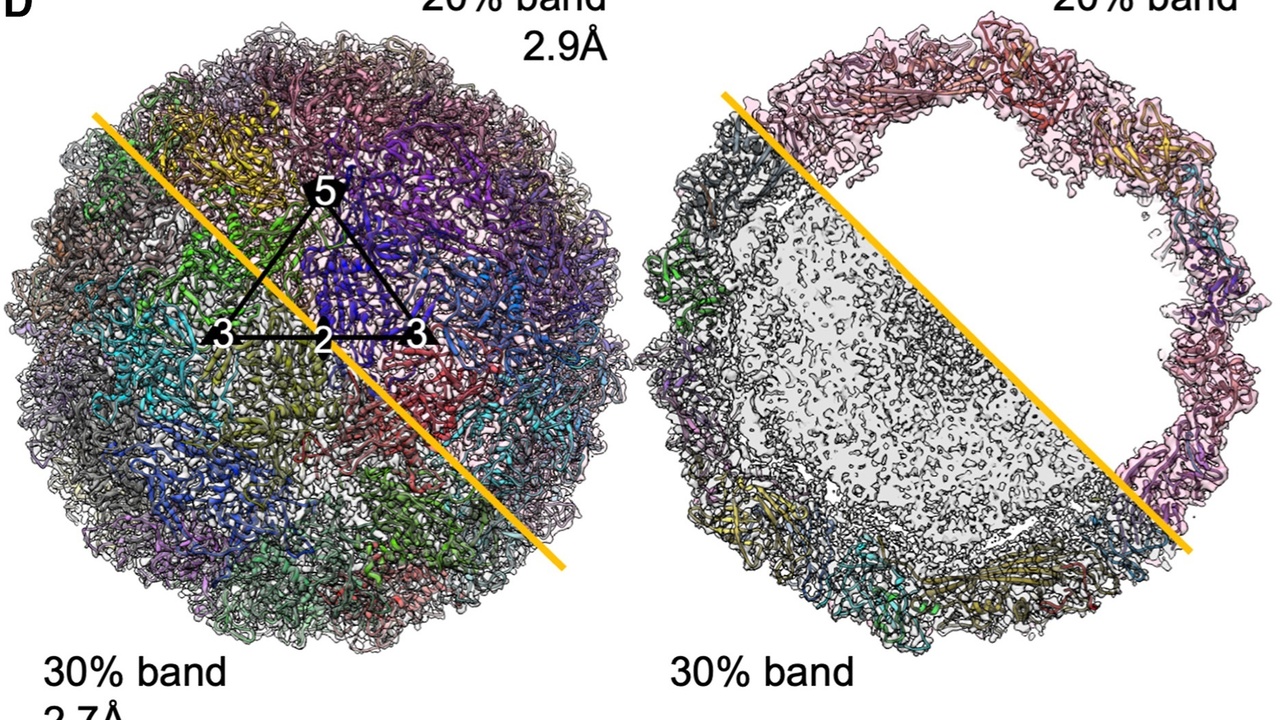
Structural biophysics determines three-dimensional atomic arrangements of biomolecules. Cryo-EM and X-ray crystallography now routinely reach near-atomic resolutions (around 2–3 Å for many high-quality structures), letting researchers map ligand pockets and conformational states.
Advances in cryo-EM were recognized with a Nobel Prize in 2017, and the rapid determination of the SARS‑CoV‑2 spike protein structure in 2020 directly informed vaccine antigen design. Major platforms include Thermo Fisher instruments and synchrotron beamlines like Diamond Light Source.
2. Molecular Biophysics — How proteins and nucleic acids behave
Molecular biophysics studies the motion, folding, and interactions of biomolecules, quantifying rates, energies, and pathways. Folding can occur on timescales from milliseconds to seconds; stability is often reported as free‑energy differences (ΔG).
Techniques such as single‑molecule FRET, circular dichroism, and calorimetry reveal kinetics and heterogeneity. Insights into misfolding underpin Alzheimer’s research, while protein engineering (pioneered in industry labs like Genentech) optimizes enzymes for therapeutics and biomanufacturing. Remember: the human proteome comprises roughly 20,000 protein‑coding genes, each a subject for these methods.
3. Biophysical Chemistry — Chemical physics applied to biology
Biophysical chemistry overlaps molecular biophysics but emphasizes reaction mechanisms, enzyme kinetics, and ligand binding. Michaelis–Menten kinetics remains a quantitative backbone for enzyme studies.
Typical enzyme parameters span a wide range: Km values often fall between micromolar and millimolar, while kcat can range from <1 to 10^3 s⁻¹ depending on the enzyme. Instruments such as isothermal titration calorimetry (ITC) and mass spectrometers are routine tools for measuring binding thermodynamics and reaction products.
Cellular, Systems, and Neurobiophysics
These branches scale up from molecules to cells, tissues, and whole organisms. Cellular biophysics reads forces and fluxes inside cells; systems biophysics builds quantitative models of interacting parts; neurobiophysics applies physical measurements to understand brains and nerves.
Techniques include patch‑clamp electrophysiology, live‑cell imaging, optogenetics, and large‑scale recordings. Together they form the core of modern neuroscience, cardiology, and developmental biology — fields where measurements translate directly to therapies and devices.
Next are specific areas that make these connections concrete, from motor‑protein forces to whole‑tissue simulations.
4. Cellular Biophysics — Mechanics and signals inside cells
Cellular biophysics asks how forces, diffusion, and signaling produce behaviors such as migration, division, and secretion. Intracellular diffusion coefficients commonly lie in the range of ~0.1–10 µm²/s for many soluble proteins, shaping signaling timescales.
Measurement methods include live‑cell fluorescent reporters, single‑particle tracking, and traction force microscopy. Motor proteins such as kinesin produce forces on the order of 5–7 pN, enough to transport vesicles along microtubules. These mechanics matter for cancer cell migration, wound healing, and targeted drug delivery.
5. Membrane and Transport Biophysics — Gates, pumps, and gradients
Membrane biophysics studies how lipid bilayers, channels, and transporters control chemical gradients and electrical signals. Ionic gradients of Na+ and K+ power action potentials; a typical resting membrane potential is around −70 mV.
Patch‑clamp recordings quantify ion channel conductances in picosiemens (pS), and those measurements guide pharmacology: cardiac sodium‑channel blockers are used to treat arrhythmias. Foundational experimental work on membrane transport earned Neher and Sakmann the Nobel Prize in 1991 for the patch‑clamp technique.
6. Neurobiophysics — Physical principles of nervous systems
Neurobiophysics translates neuronal activity into quantifiable electrical and optical signals. The human brain contains about 86 billion neurons (Herculano‑Houzel) and trillions of synapses, leading to enormous network complexity.
Methods range from intracellular electrophysiology and two‑photon imaging to optogenetics and connectomics. Practical outcomes include brain–computer interfaces and neuromodulation therapies: deep brain stimulation devices (manufactured by companies such as Medtronic) are an established treatment for Parkinson’s disease.
7. Systems Biophysics — Integrating components into function
Systems biophysics studies how interacting components produce emergent behavior. Researchers use differential equations, network models, and agent‑based simulations to connect single‑cell behavior to tissue and organ outcomes.
Typical datasets include time series from hundreds to thousands of cells or variables in organ‑level models. Cardiac electrophysiology simulations that couple thousands of cells help predict arrhythmia risk. Common tools include NEURON and Virtual Cell for multi‑scale modeling.
Applied and Computational Biophysics
This category turns biophysical insight into tools, technologies, and predictive simulations. Computational approaches scale experiments; instrumentation translates measurements into clinical devices and industrial platforms.
Common computational techniques include molecular dynamics, Monte Carlo, and machine learning. Instruments range from MRI and ultrasound to atomic force microscopes (AFM). Industry applications connect directly to pharma, diagnostics, and medical equipment makers.
Across the branches of biophysics, models and instruments shorten the loop from hypothesis to impact — accelerating discovery and deployment.
8. Computational / Theoretical Biophysics — Simulations and models
Computational biophysics builds predictive models from molecular to system scales. Molecular dynamics simulations routinely cover nanoseconds to microseconds; specialized projects push into the millisecond regime on large clusters or GPUs.
Popular software includes GROMACS and NAMD for MD and Rosetta for structure prediction and design. AlphaFold’s prediction of nearly the full human proteome (roughly 20,000 proteins) shows how predictive models can prioritize experiments and reduce wasted lab time. Applications span in silico screening, predicting stability, and guiding mutational scans.
9. Biomedical Imaging and Instrumentation — From microscopes to MRIs
This branch develops imaging technologies that reveal structure and function across scales, from nanometers with AFM to meters with whole‑body scanners. MRI is widely used clinically; the World Health Organization estimated roughly 35,000 MRI units worldwide in 2017, illustrating global clinical penetration.
Cryo‑EM transformed structural biology, AFM resolves nanoscale topography, and major manufacturers such as Siemens Healthineers and GE Healthcare supply clinical MRI systems. Applications include diagnostics, surgical planning, materials testing, and single‑molecule characterization.
10. Medical Biophysics and Biomechanics — Translating to clinics
Medical biophysics applies physics to diagnose and treat disease; biomechanics studies forces in tissues and movement. These fields guide radiation therapy planning, prosthetic design, implant testing, and rehabilitation engineering.
Concrete examples include radiotherapy systems from vendors like Varian or Accuray, biomechanical testing that shapes prosthetic limbs and stent design, and standards for clinical imaging protocols. Many clinical procedures and devices are rooted in careful physical measurement and modeling — cite authoritative sources when adding exact global counts.
Summary
- Structural methods turn molecules into blueprints for drugs and vaccines — cryo‑EM and synchrotrons deliver 2–3 Å detail that matters for design.
- Single‑molecule and molecular biophysics reveal kinetics and stability (folding in ms–s, proteome ≈20,000 proteins), informing disease research and enzyme engineering.
- Cellular, systems, and neuro approaches connect forces and signals inside cells to tissue and brain function (the human brain has ~86 billion neurons), enabling therapies like deep brain stimulation.
- Computational and applied branches scale discovery: MD tools (GROMACS/NAMD), AlphaFold predictions, and imaging systems (MRI, AFM) speed translation to clinics and industry.
If you’re curious about careers or collaborations, there’s room in instrumentation, modeling, and translational teams — the lines between physics and biology keep opening practical opportunities.