In 1811, Mary Anning’s discovery of an almost complete ichthyosaur skeleton on the Jurassic Coast of England helped turn curious amateurs into some of the first practitioners of what would become modern paleontology. Her finds reshaped ideas about extinction and deep time, and they remind us that fossils do more than decorate museum halls: they inform climate science, guide resource exploration, illuminate the rise and fall of ecosystems, and fuel public fascination. Understanding how paleontologists divide their work makes it easier to see why a fragment of shell can point to an ancient sea while a mounted skeleton can reshape whole family trees. This piece explains eight distinct branches of paleontology and what each does, offering a practical look at how specialists—from those who study microscopic shells to those who reconstruct giant dinosaurs—assemble Earth’s deep history.
Organism-focused branches
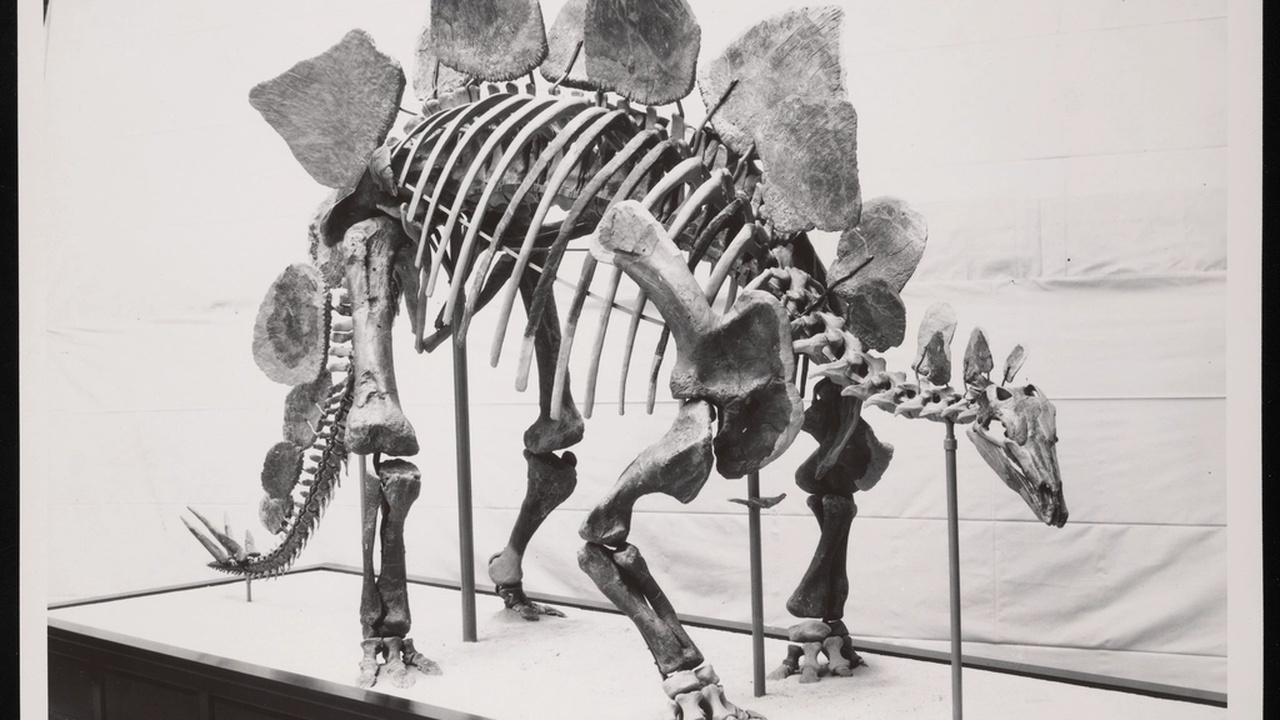
Many paleontological specialties group fossils by the kind of organism they study. These organism-focused branches are the most familiar to museum visitors and the public, and they drive headline-grabbing reconstructions, evolutionary research, and education programs. They also overlap heavily with analytical fields like taphonomy and biostratigraphy—so a museum T. rex exhibit depends on many behind-the-scenes specialties.
1. Vertebrate paleontology — Reconstructing ancient animals and their behavior
Vertebrate paleontology studies fossil fish, amphibians, reptiles, birds, and mammals—the animals with backbones—and it focuses on anatomy, behavior, and evolutionary relationships. To give scale: paleontologists have described more than 1,000 dinosaur species to date, and they use well-established dates such as the Cretaceous–Paleogene mass extinction at about 66 million years ago as temporal anchors.
Applications range from museum exhibits (the mounted Tyrannosaurus rex that draws crowds) to biomechanics research that inspires robotics and conservation analogs for living species. Classic examples include Sue the T. rex (discovered in 1990), which refined ideas about growth and injury in large theropods, and Archaeopteryx from the Solnhofen limestone, a fossil that helped establish the bird–dinosaur connection.
Vertebrate paleontologists also use trace evidence—like fossil trackways—to infer gait, speed, and social behavior, turning isolated bones into whole-life stories.
2. Invertebrate paleontology — Mapping ancient seas and environmental change
Invertebrate paleontology focuses on animals without backbones—mollusks, arthropods, echinoderms and others—which actually dominate the fossil record numerically. Some groups offer remarkably long records: trilobites appeared around 521 million years ago and persisted until the end of the Permian (≈252 Ma), while ammonites serve as robust index fossils across much of the Mesozoic.
Because many invertebrates evolved rapidly and are widespread, they’re essential for biostratigraphy and paleoenvironmental reconstruction. Oil and gas exploration relies heavily on micro- and macro-invertebrate zonations to correlate subsurface layers. Museum displays of trilobite diversity and fossil corals also help visitors visualize ancient seas and reefs.
Concrete examples include using ammonite zones to correlate Cretaceous strata across continents, and fossil corals that reveal ancient reef systems and sea-level changes.
3. Paleobotany — Reading ancient landscapes through plant fossils
Paleobotany examines fossil plants, wood, leaves, and pollen (palynology) to reconstruct past vegetation and climate. Pollen records are powerful: they can track vegetation shifts and climate change across the last 65 million years, and they’re often used to date and correlate terrestrial sediments.
Applications include paleoclimate reconstruction and archaeological context—pollen and plant macrofossils tell us what people or animals lived near. Paleobotany also documents major botanical transitions, such as the spread of angiosperms (flowering plants) through the Cretaceous (roughly 125–66 Ma).
Examples include the petrified wood at Petrified Forest National Park, pollen records that track post-glacial vegetation shifts, and analyses of fossil leaf stomatal density used to infer past CO2 levels.
Fossil scale and trace-focused branches
Some specialties are organized by the size or type of fossil evidence rather than by organismal class. These fields—looking at microfossils and trace fossils—are crucial for industry, archaeology, and fine-scale climate reconstructions, because tiny shells or a set of footprints can reveal behavior or global trends.
4. Micropaleontology — Big insights from tiny fossils
Micropaleontology studies microfossils such as foraminifera, diatoms, and radiolarians—particles typically smaller than 1 millimeter. Despite their size, these fossils are abundant and excellent for dating sediments and reconstructing past ocean and lake conditions.
Marine microfossils have been central to reconstructing Holocene sea-level changes and Pleistocene glacial cycles. Foraminifera oxygen isotope records, for example, track ice-volume and temperature changes through the Pleistocene, and planktonic forams are standard tools in Pleistocene–Holocene stratigraphy.
Practical uses include petroleum stratigraphy—microfossil assemblages help correlate subsurface wells—as well as forensic geology and regional paleoclimate studies based on diatom assemblages in lake cores.
5. Ichnology — Studying trace fossils to read behavior
Ichnology focuses on trace fossils: footprints, trackways, burrows, feeding marks and other evidence of activity. Trace fossils record behavior and environmental context more directly than bones do—spacing in a trackway yields stride length and speed estimates, while burrow morphology indicates sediment consistency.
Famous examples include the Paluxy River dinosaur tracks (documented in the early 20th century) and extensive sauropod trackways that suggest herd movements. Ichnology contributes to paleoenvironmental interpretation and can reveal social behavior such as herding or predator–prey interactions.
Beyond research, tracksites are often important for tourism and conservation, so ichnologists work with managers to protect and interpret these fragile windows into ancient life.
Process-driven and applied branches
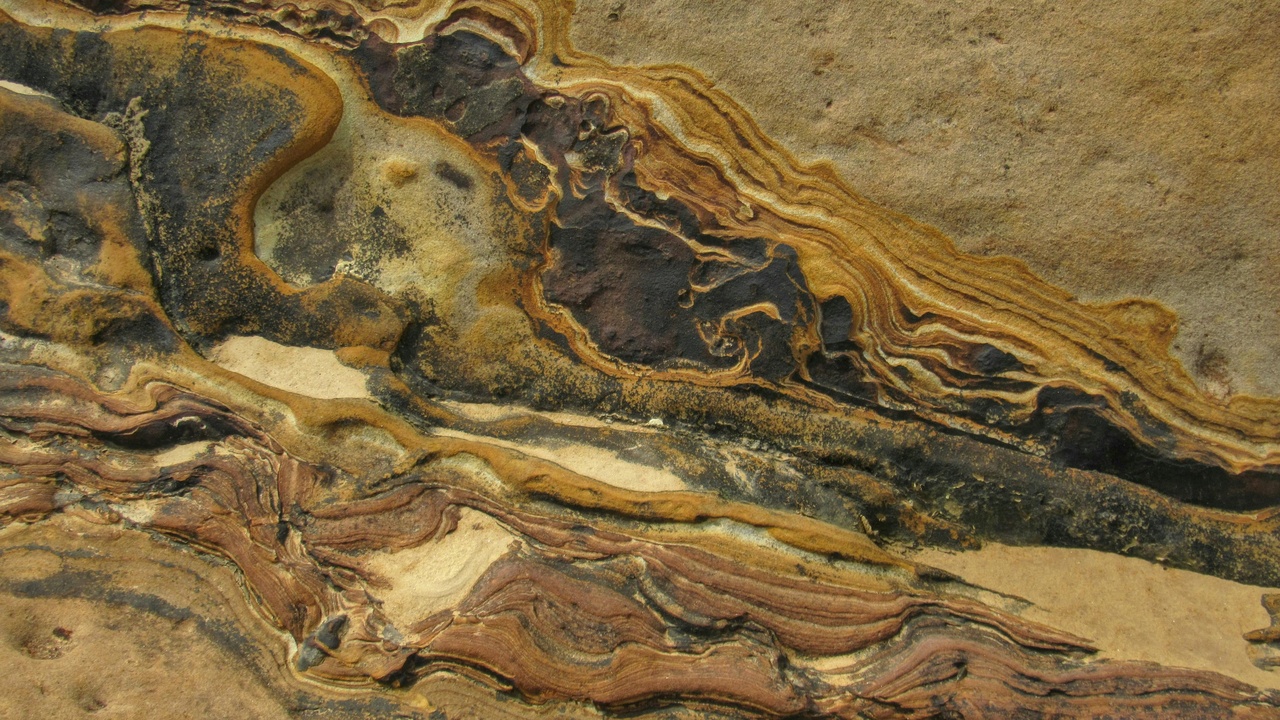
These specialties probe processes—how fossils are made, how ecosystems respond to change, and how fossils help us date and correlate rocks. They link biological data to geologic systems and are central to applied work in energy, conservation, and climate science.
6. Taphonomy — How fossils form and why some fossils are rare
Taphonomy studies post-mortem pathways: decay, transport, burial, and diagenesis. It helps explain preservation biases in the fossil record so scientists can tell whether an absence reflects true rarity or a preservational blind spot.
Exceptional preservation sites (Lagerstätten) are taphonomy’s showpieces: the Burgess Shale (≈508 million years old) preserves soft-bodied animals in remarkable detail, while the Solnhofen limestone (≈150 Ma) preserves feathers on Archaeopteryx. These sites reveal soft-tissue anatomy and behavior that ordinary fossil beds rarely record.
Understanding taphonomy also guides fieldwork—knowing which environments favor rapid burial or mineral replacement helps paleontologists plan where to look for rare fossils and how to protect fragile localities.
7. Paleoecology — Reconstructing ancient ecosystems and climate context
Paleoecology examines interactions among organisms and their environments through time, using fossils, isotopic data, and sedimentary context to reconstruct food webs, habitats, and climate change. It treats fossil assemblages as living communities frozen in time.
A prominent case study is the Paleocene–Eocene Thermal Maximum (PETM, ~56 Ma), a rapid-warming event used as an analog for modern climate change. During the PETM, fossil and isotopic records show species turnover, migrations, and shifts in carbon cycling—data that feed climate models and conservation planning.
Paleoecology also tracks recovery after mass extinctions, such as the mammal diversification following the 66 Ma event, and it integrates multiple lines of evidence to inform both basic science and applied concerns like habitat resilience.
8. Biostratigraphy — Using fossils to date and correlate rocks
Biostratigraphy uses index fossils to correlate and relatively date sedimentary layers across space. Common index fossils include ammonites for much of the Mesozoic and planktonic foraminifera for the Cenozoic, and a single well-dated index species can narrow a rock’s age to a window of a few million years or less in many cases.
Applications are highly practical: biostratigraphy underpins geological mapping and oil‑and‑gas exploration, where tying wells and outcrops together is essential. Ammonite zonation in Jurassic and Cretaceous sequences and planktonic foraminifera zones offshore are routine tools for correlating basins and calibrating radiometric dates.
Biostratigraphic frameworks allow scientists to place evolutionary events, climate shifts, and tectonic episodes into a consistent temporal scheme.
Summary
These eight paleontological specialties work together to turn fragments of rock into narratives about life, climate, and Earth history. Organism-focused branches supply the specimens that fuel museums and evolutionary research; scale- and trace-focused fields provide detailed proxies and behavioral snapshots; and process-driven disciplines explain preservation, ecosystem dynamics, and how to date rocks for both science and industry. Across the branches of paleontology, small fossils often punch far above their weight and taphonomic context determines what survives to tell a story.
Takeaways
- Microfossils (forams, diatoms) are central to climate records and hydrocarbon exploration—tiny things, big impact.
- Taphonomy shapes what we find: Lagerstätten like the Burgess Shale and Solnhofen reveal soft tissues we’d otherwise miss.
- Large vertebrate fossils capture the public imagination and drive education, but they rely on many supporting specialties to interpret them fully.
- Biostratigraphy and paleoecology connect fossils to time and environment, making fossils useful for mapping, industry, and climate science.
See a mounted dinosaur or a microfossil exhibit at your local natural history museum, join a fossil-hunting group, or read a landmark open-access fossil paper to explore further—support for fieldwork and citizen science helps keep new discoveries coming.