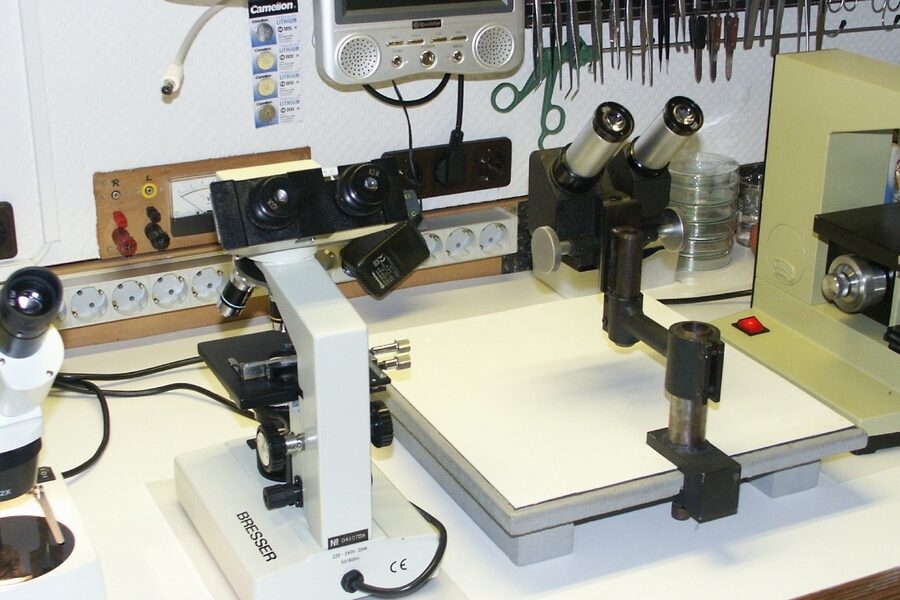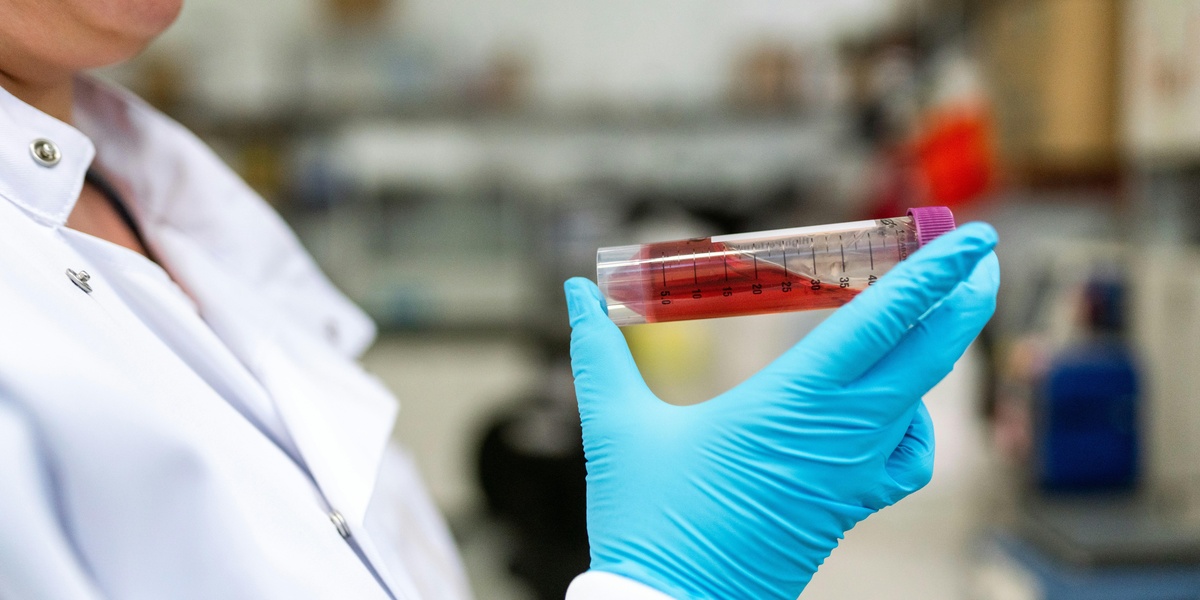
On October 8, 1958, surgeon Åke Senning and engineer Rune Elmqvist implanted the first successful internal pacemaker in patient Arne Larsson. That device didn’t appear by accident: it needed careful design, electrical prototyping, bench testing, and sterile manufacturing steps before saving a life.
Tools matter in biomedical engineering because they shape how quickly teams can iterate, how reliably devices perform, and how cleanly a development program maps onto regulatory requirements. From CAD that documents geometry in a design history file to validated autoclave cycles for implants, the right instruments reduce risk and speed time to clinic. Below are 8 concrete examples that show how engineers move from a clinical need to a cleared product, with dates, product names, and practical numbers where they help the story.
Design and Prototyping Tools
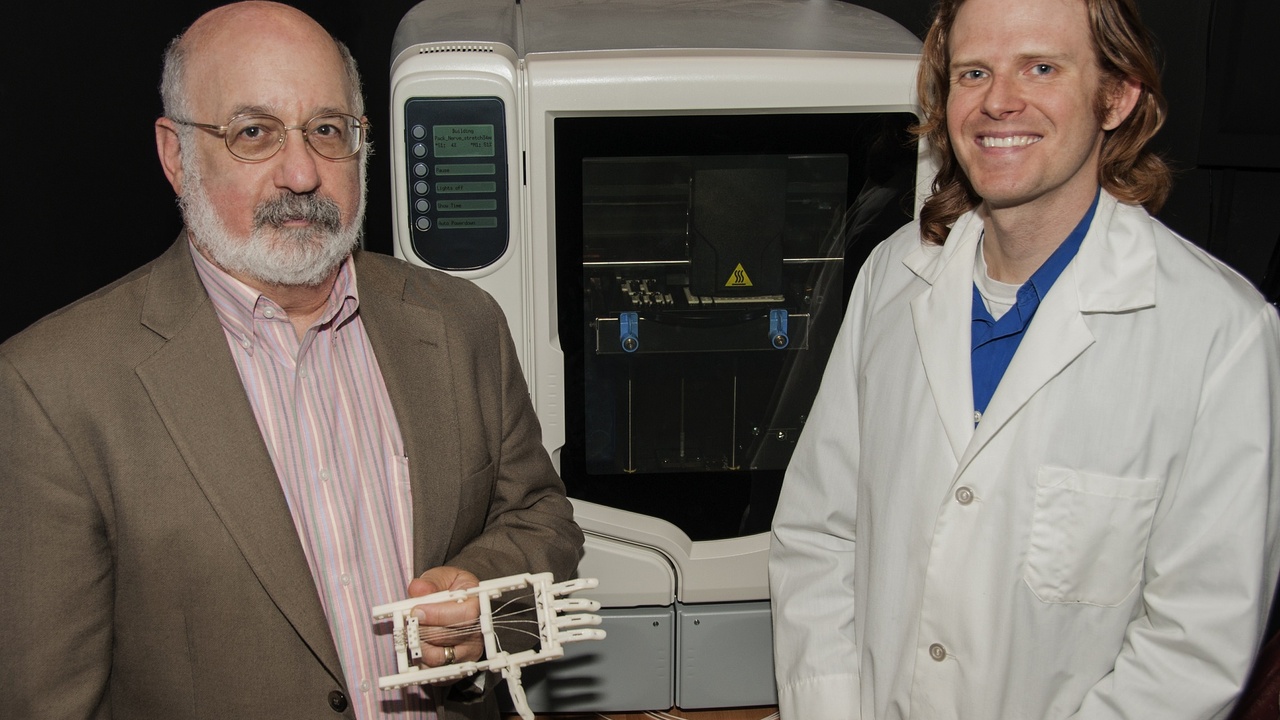
Turning a clinical problem into a physical device usually starts in software. Digital design and simulation let teams explore geometry, tolerances, and multi-physics interactions before committing to hardware. Rapid fabrication then turns validated models into parts you can hold, test, and give to clinicians for feedback. That loop—design, print, test—shortens development cycles and reduces expensive late-stage changes.
Regulatory bodies expect traceability: the FDA’s design history file concept requires records that show design inputs, outputs, and verification activities. Using CAD and controlled prototype records helps meet those needs and makes regulatory submissions smoother. Plus, an early electronics prototype can reveal firmware and sensor issues long before a production PCB is manufactured, saving months.
1. CAD and Simulation Software (SolidWorks, ANSYS, COMSOL)
CAD and multiphysics simulation let engineers test geometry, stresses, fluid flow, and heat long before any hardware exists. Software like SolidWorks handles rapid mechanical geometry and assemblies, ANSYS runs finite-element stress and modal analyses, and COMSOL Multiphysics models coupled systems such as electro-thermal or fluid-structure interactions.
These packages have been staples in industry since the 1990s (ANSYS and COMSOL gained wide adoption in that decade), and studies routinely show simulation can cut the number of physical prototypes and shorten development by months on many device programs. Examples include optimizing a pacemaker housing for impact resistance or predicting catheter flow behavior to reduce thrombosis risk.
2. 3D Printing and Rapid Prototyping (SLA, SLS, FDM)
Low-volume, high-resolution fabrication makes patient-specific and complex designs affordable. SLA printers like the Formlabs Form 3 commonly deliver layer resolutions of about 25–100 microns, which is fine enough for surgical guides, dental models, and prosthetic sockets. Stratasys systems offer material choices and SLS/FDM workflows for functional prototypes and small batches.
Dental and orthodontic industries embraced 3D printing early—Invisalign relies on 3D printing workflows for aligner production—and volunteer groups such as e-NABLE have shown how quickly custom prosthetic hands can reach users. Lead times drop from weeks to days for many validation parts, speeding clinician feedback and design freeze decisions.
3. Electronics and PCB Prototyping Tools (Oscilloscopes, PCB Mills, Microcontrollers)
Embedded electronics power many modern devices, so bench and board tools are essential. Rigol oscilloscopes and logic analyzers help debug sensor signals and timing, benchtop power supplies test battery and charging behavior, and soldering stations allow rapid hardware modifications on the bench.
Desktop PCB mills like the Bantam Tools mill speed the move from breadboard to production-like hardware, while Arduino, Raspberry Pi, and STM32 dev kits let teams validate control firmware and sensor integration. Early pacemaker controllers, for example, start on dev boards before migrating to validated, medical-grade PCBs in production.
Diagnostic and Imaging Tools
Imaging and diagnostics turn patient anatomy and physiology into quantifiable data that drives design decisions. CT and MRI provide geometry and tissue contrast; wearables and biosensors supply continuous physiological traces. Engineers use those datasets to size devices, pick materials, and create surgical plans that fit real patients.
For context, CT slice thickness commonly ranges around 0.5–1 mm for high-resolution scans, and clinical ECGs are sampled at 250–1,000 Hz for arrhythmia detection. These numbers matter when converting DICOM scans into 3D models or when deciding whether a wearable’s sampling rate is sufficient for a study.
4. Medical Imaging and Analysis Software (MRI, CT, 3D Slicer)
Imaging turns anatomy into data you can measure and manipulate. MRI matured in the 1970s with first human images in the late 1970s, while CT has delivered sub-millimeter slices for decades. Software such as 3D Slicer, OsiriX, and Materialise Mimics converts DICOM scans into segmented, CAD-ready 3D models.
A practical application is creating patient-specific cutting guides or implant models for orthopedic surgery. Surgeons and engineers can iterate on a model, print a trial implant, and refine fit before any operation, reducing OR time and improving outcomes.
5. Biosensors and Wearable Data Loggers (ECG, CGMs, Accelerometers)
Biosensors convert physiology into continuous, quantitative signals. Continuous glucose monitors typically sample every five minutes, while clinical ECG systems sample at 250–1,000 Hz to capture cardiac events. Wearables provide the real-world datasets needed for validation and post-market surveillance.
Apple Watch received FDA clearance for ECG functionality in 2018, showing how consumer devices can reach clinical-grade milestones. Devices like Dexcom CGMs and chest-strap ECG monitors are used in trials and device feedback loops, linking patient behavior and physiology to design decisions.
Testing, Fabrication, and Data Tools
Beyond prototypes and scans, teams need to prove a device is safe and effective. Mechanical testing, sterilization methods, and biological assays are part of that proof. Standards such as ISO 10993 for biocompatibility and ISO 13485 for quality systems shape which tests are required and how to document them.
Validation combines physical test data, sterilization records, and lab assays. That evidence is what regulators and hospitals rely on. Mechanical tests verify physical durability, cleanroom and sterilization controls ensure implants remain sterile, and molecular assays confirm biological responses.
6. Mechanical Testing and Metrology (Instron, CMMs)
Mechanical testing checks tensile strength, compression behavior, and fatigue life. Instron machines are widely used for tensile testing, while coordinate measuring machines (Mitutoyo, Zeiss) verify dimensional tolerances down to thousandths of an inch.
Real-world tests include catheter pull and leak tests, and fatigue testing of implantable leads used in pacemakers. Test data both validate simulations and satisfy regulatory test-method requirements cited in submissions.
7. Cleanroom, Sterilization, and Validation Equipment (Autoclaves, EO Sterilizers)
Sterilization and cleanroom procedures are mandatory for anything that contacts sterile fields. Steam autoclaves commonly run at 121°C for 15–30 minutes under pressure, while ethylene oxide (EO) sterilization is used for heat-sensitive materials and assemblies.
Validation tools include biological indicators and chemical integrators to confirm cycles, and sterility assurance level (SAL) calculations inform acceptable risk. Documenting packaging and sterilization validation is a near-universal regulatory requirement before first clinical use.
8. Biological and Data-Analysis Instruments (qPCR, ELISA, MATLAB/Python)
Many devices interact with biology, so wet-lab assays are part of product validation. qPCR machines such as the Bio-Rad CFX run roughly 30–40 cycles per assay to quantify nucleic acids, and ELISA plate readers from Tecan or Molecular Devices measure protein biomarkers in preclinical work.
On the analysis side, MATLAB, Python (NumPy, Pandas), and R process signals, run statistics, and build machine-learning models from sensor datasets collected over days or weeks. A common use case is qPCR confirmation of inflammatory markers in biocompatibility testing or analyzing wearable ECG streams across a clinical cohort.
Summary
- Digital design (CAD + simulation) and fast fabrication shrink iteration loops, helping teams document a clear design history for regulatory review.
- Imaging and wearables convert anatomy and physiology into measurable inputs—CT slices at ~0.5–1 mm and ECG sampling at 250–1,000 Hz directly affect design choices.
- Mechanical testing, sterilization validation (autoclave and EO), and biological assays (qPCR, ELISA) provide the evidence needed to prove safety and efficacy under ISO and FDA expectations.
- Together these tools used by biomedical engineers reduce time-to-clinic and lower program risk; a small investment in the right software or a visit to a local makerspace can pay off quickly.
- Next step: try a free CAD student license or visit a university makerspace to prototype a part, and skim the FDA guidance documents or ISO 10993/13485 summaries to align early with regulatory expectations.