
Remember how 4G made streaming and ridesharing feel ordinary? Commercial 5G rollouts began in 2019 and promised another leap—faster speeds, near-instant responses, and new use cases. This piece lays out seven evidence-backed facts about 5g technology so you can separate marketing from measurable capability.
You should care because changes in mobile networks affect everything from how quickly an app updates to whether a factory can safely run hundreds of robots on a private radio system. I’ll cite standards bodies and measurement sources such as 3GPP and Ookla where relevant, and focus on practical examples, trials, and the real trade-offs behind the buzz.
Network performance and speed
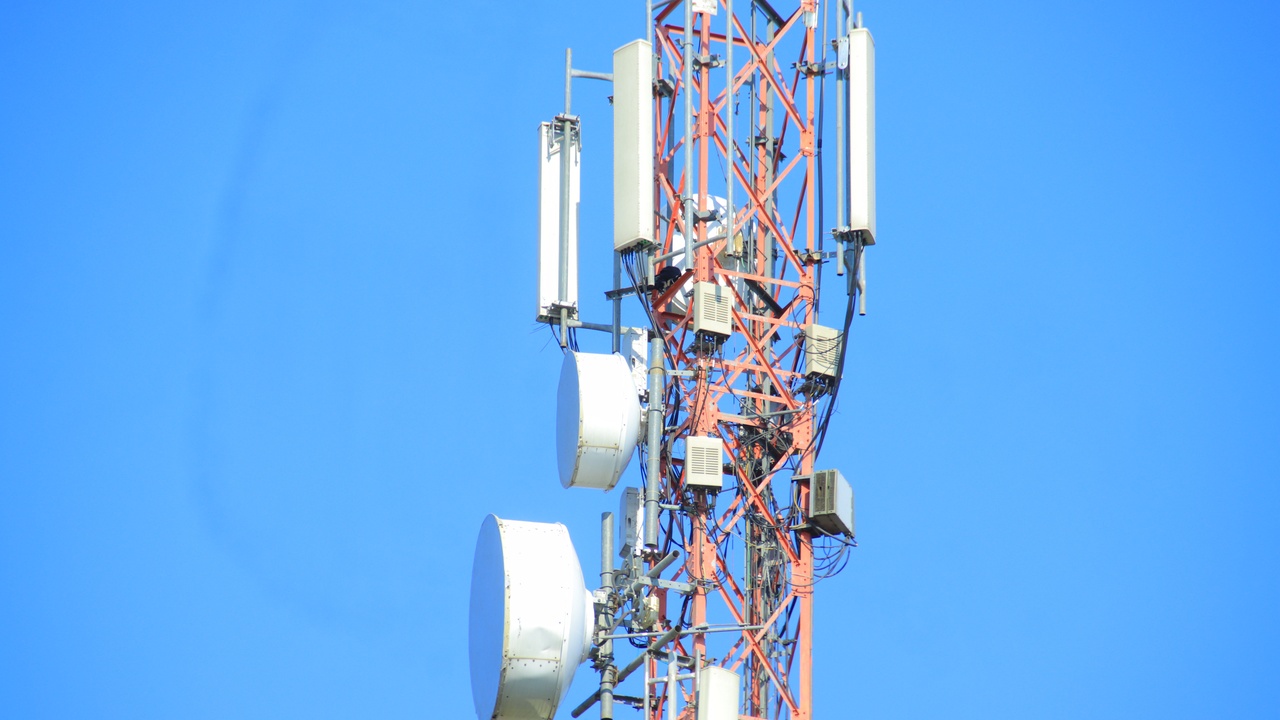
Compared with earlier generations, the newer air interfaces and spectrum options deliver far higher throughput, much lower round-trip times, and far greater network capacity per square kilometer. Picture a mix of millimeter-wave hotspots, mid-band macro cells, and low-band overlays working together.
1. Peak speeds can be an order of magnitude higher than 4G
In lab conditions, 5G NR has demonstrated peak theoretical speeds approaching 10 Gbps thanks to wide channel bandwidths and advanced MIMO, while consumer speeds in early rollouts typically landed between 100–400 Mbps depending on the band. By comparison, mature 4G LTE averages in many markets have been roughly 20–50 Mbps in real-world tests (measurement firms such as Ookla report these ranges).
mmWave trials by carriers such as Verizon and AT&T showed hundreds of Mbps in dense urban pockets, but that performance decays quickly with blockage. Mid-band (around 3.5 GHz) gives broader coverage with lower peak rates, which is why many European operators prioritized mid-band to balance speed and reach. 3GPP and the ITU set lofty lab targets; real-world results depend on spectrum, site density, and device support.
2. Latency drops enable near real-time applications
5G was designed with ultra-low latency use cases in mind. 3GPP’s URLLC work targets sub-millisecond air-interface latency in specialized settings, though most commercial networks typically report 10–20 ms round trips today.
Lower latency plus edge compute — placing servers close to users — makes cloud gaming feel more responsive, improves AR/VR interaction, and enables teleoperation demos. Industry trials have shown remote-controlled machinery and surgical demonstrations can work over 5G links under controlled conditions, but such deployments remain specialized and rely on carefully instrumented networks and local compute.
3. Much higher device capacity and flexible virtual networks
One defining trait is device density. 3GPP’s massive machine-type communications (mMTC) targets support for over 1,000,000 devices per km² in the specifications, enabling dense IoT sensor deployments in industrial sites and smart cities.
Network slicing lets operators carve physical infrastructure into virtual networks with different service guarantees — for example, a slice with strict latency and reliability for industrial control and another for consumer broadband. Vendor trials (Ericsson, Nokia, Huawei) and carrier pilots have demonstrated enterprise slices that enforce SLAs for specific customers.
New use cases and industry impact

Beyond faster smartphones, operators and vendors position 5G as an enabler for industry-specific applications—from private networks on factory floors to vehicle-to-everything trials in city corridors. Partnerships between carriers, equipment suppliers, and industrial firms accelerate pilots and real deployments.
4. It scales industrial automation and large-scale IoT
Private 5G networks give factories local radio control, predictable latency, and the capacity to manage thousands of sensors and automated guided vehicles. Operators and vendors have rolled private LTE/5G as turnkey offerings to manufacturers such as automotive plants that need deterministic links for robotics coordination.
Examples include port and logistics pilots where firms moved from Wi‑Fi and wired control to private 5G to improve coverage and reliability for dock automation. Telecom operators commonly partner with industrial vendors like Siemens and ABB to integrate control systems and radio infrastructure for on-premise deployments.
5. It helps enable connected cars and smarter cities
5G supports C‑V2X standards work in 3GPP and can meet the latency and reliability needs of cooperative driving features when networks and edge compute are in place. Safety-related V2X functions typically demand single-digit millisecond latencies and high availability for effective operation.
Smart-city pilots in places like Seoul and Barcelona have combined dense sensor networks, edge analytics, and 5G connectivity for traffic management, dynamic lighting, and air-quality monitoring. Many projects remain trials, but they demonstrate how city infrastructure can use slicing and local processing to keep critical data close and responsive.
Societal effects, security and deployment challenges

Technical advances bring social and policy questions: security, vendor supply chains, public concern, and the practical difficulty of building much denser infrastructure. These issues shape how quickly and evenly benefits arrive.
6. Security has improved — but the attack surface has also expanded
5G introduces stronger crypto and more flexible authentication models, and standards bodies and agencies such as NIST and ENISA provide guidance for securing virtualized functions and orchestration. Those are genuine improvements over older architectures.
At the same time, software-defined network elements, cloud-native components, and complex supply chains create new vectors that operators and enterprises must defend. Since about 2019–2020 some governments enacted vendor restrictions or auditing requirements focused on supply-chain risk; operators respond with zero-trust designs and hardened private-network practices for enterprise customers.
7. Deployment challenges: spectrum choices, coverage and energy trade-offs
Rolling out 5G is not simply a software upgrade. Regulators must allocate spectrum, carriers need many more active sites for high-band deployments, and operators must balance cost and power consumption across bands.
mmWave signals work well for short-range, high-capacity hotspots but typically reach only tens to a few hundred meters depending on obstacles. Mid-band provides a compromise, and low-band stretches coverage broadly. Densification requires hundreds or thousands of small cells in dense neighborhoods, creating backhaul and power challenges that translate into higher deployment costs and uneven rural coverage.
Summary
- Peak rates can reach multi-gigabit laboratory levels, but consumer speeds usually fall in the low-hundreds of Mbps depending on band and location.
- Latency improvements (URLLC and edge compute) open near real-time uses such as cloud gaming and industrial teleoperation, though sub-ms performance is largely limited to specialized setups.
- Massive device density and network slicing allow tailored virtual networks for factories, utilities, and emergency services, supporting very large IoT rollouts.
- Practical industry impacts include private factory networks, port automation, and vehicle-to-everything trials, driven by operator‑vendor partnerships (Siemens, ABB, Qualcomm, etc.).
- Security and deployment trade-offs matter: stronger protocols exist, but software-defined elements and supply chains require vigilant policies from bodies like NIST and ENISA; spectrum and densification create cost and rural-coverage challenges.
Keep an eye on real-world deployments and updates from standards bodies such as 3GPP and trusted agencies for the latest performance data and policy guidance.