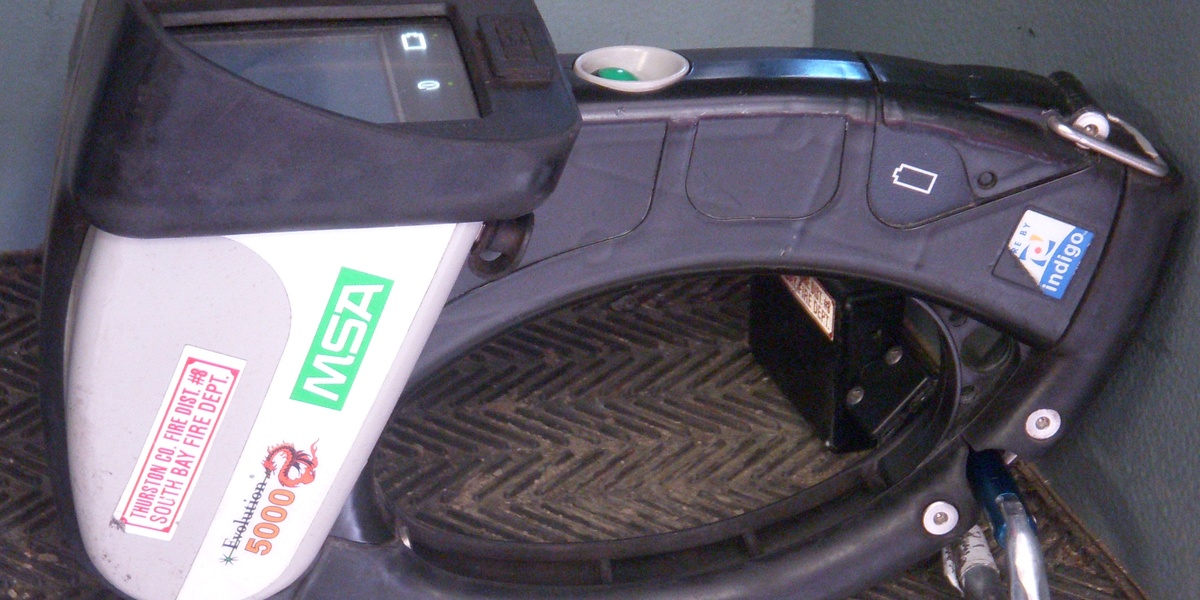
On a warm evening you can feel infrared all around you: sun‑warmed pavement, car engines, and the heat a body gives off. Those everyday places reveal patterns of invisible energy that thermal cameras and simple thermometers pick up in homes, streets and clinics.
There are 20 Examples of Infrared Radiation, ranging from Asphalt road surface to Tympanic (ear) thermometer; for each, data are organized as Category,Wavelength (µm),Typical location/source — you’ll find below.
How can I recognize common infrared sources in everyday life?
Look for things that are warmer or cooler than their surroundings: pavement after sun exposure, exhaust components, human skin, and heated household items. A thermal camera or an IR thermometer makes these differences visible, while small devices like remote controls emit near‑IR that simple detectors can pick up; remember that reflections and an object’s emissivity change how infrared appears.
Do I need special equipment to measure infrared radiation accurately?
Yes—handheld IR thermometers and tympanic thermometers are fine for spot checks, while thermal cameras and spectrometers are needed for spatial imaging or wavelength‑specific work. Match the tool to the wavelength band, account for emissivity and distance, and use calibrated instruments when precise measurements are required.
Examples of Infrared Radiation
| Name | Category | Wavelength (µm) | Typical location/source |
|---|---|---|---|
| Sun | Natural | 0.70–20.00 µm | Sky; direct sunlight |
| Human body | Natural | 7.00–14.00 µm | Skin surfaces of people |
| Fire (flames) | Natural | 0.70–5.00 µm | Campfires, fireplaces, burners |
| Incandescent bulb | Household | 0.70–3.00 µm | Household light bulbs |
| Electric stove/oven coil | Household | 3.00–10.00 µm | Kitchen stovetops and oven elements |
| Infrared heater / heat lamp | Household | 0.80–20.00 µm | Patios, therapy rooms, reptile enclosures |
| Infrared remote control | Household | 0.94 µm | TV and appliance remote controls |
| IR illuminator (night‑vision) | Household | 0.85–0.95 µm | Security cameras, night-vision gear |
| Thermal camera | Industrial | 7.00–14.00 µm | Handheld cameras, drones, phones |
| Non-contact infrared thermometer | Medical | 8.00–14.00 µm | Handheld forehead thermometers |
| Tympanic (ear) thermometer | Medical | 8.00–14.00 µm | Ear canal thermometers |
| Pulse oximeter (NIR) | Medical | 0.66,0.94 µm | Finger clip devices |
| CO2 laser | Industrial | 10.60 µm | Cutting tables, surgical suites |
| FTIR infrared spectrometer | Scientific | 2.50–25.00 µm | Chemistry and materials labs |
| Fiber‑optic communications | Industrial | 1.30–1.55 µm | Telecom networks, data centers |
| Spitzer Space Telescope | Scientific | 3.00–180.00 µm | Space observatory archives |
| Interstellar dust cloud | Scientific | 10.00–100.00 µm | Star-forming regions in space |
| Red giant star | Scientific | 1.00–30.00 µm | Evolved stars in telescopes |
| IR flame detector | Industrial | 4.30 µm | Refineries, boiler rooms, turbines |
| Asphalt road surface | Industrial | 8.00–12.00 µm | Roads, parking lots, urban surfaces |
Images and Descriptions

Sun
The Sun emits a broad infrared spectrum from near to far IR; solar IR reaches Earth and warms the atmosphere, oceans, and surfaces. Astronomers and climate scientists study solar IR for energy balance and remote sensing applications.

Human body
Human skin and exposed tissues constantly emit thermal infrared, peaking near 10 µm. This emission allows non-contact thermometers and thermal cameras to measure body temperature and detect fevers, circulation issues, or locate people in search-and-rescue.
Fire (flames)
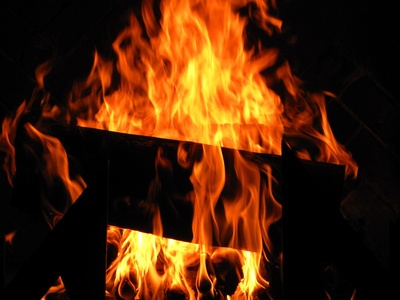
Open flames emit both visible light and strong near-to-mid infrared, depending on temperature and fuel. Campfires and industrial burners produce IR used for combustion monitoring, heating, and infrared photography revealing heat patterns invisible to the eye.
Incandescent bulb
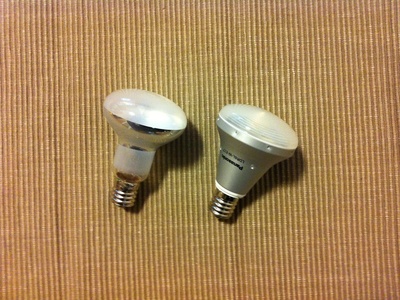
Traditional incandescent bulbs produce a lot of near- and mid-infrared as waste heat because the hot filament radiates across IR wavelengths. This makes them inefficient light sources but useful when warmth, rather than visible light, is desired.
Electric stove/oven coil
Hot stovetops and oven heating elements radiate mid-to-longwave infrared that cooks food and heats cookware. Infrared emission varies with temperature and is the basis for infrared cooking and thermal imaging to check heating performance.
Infrared heater / heat lamp
Infrared heaters and heat lamps emit controlled IR to provide direct radiant warmth for patios, reptile enclosures, and therapeutic uses. Short-wave units are intense and penetrating; long-wave models give gentler ambient heat.

Infrared remote control
Most TV and appliance remote controls use a near-infrared LED around 0.94 µm to transmit coded pulses. They’re inexpensive, directional, and invisible to humans, but easily detected by cameras and IR sensors.
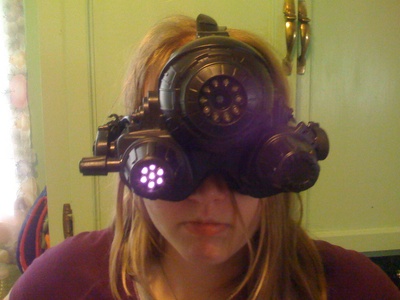
IR illuminator (night‑vision)
IR illuminators emit near-infrared light to light scenes for security cameras and night-vision gear without visible glow. They typically operate near 0.85–0.95 µm and enable imaging in darkness with compatible sensors.
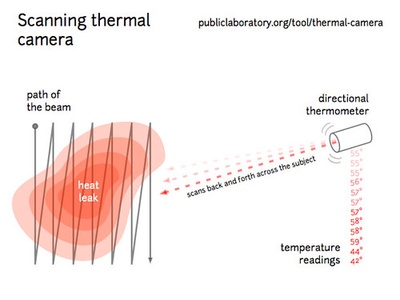
Thermal camera
Thermal cameras detect long-wave infrared (often 7–14 µm) to form images of surface temperatures. Used in building inspections, firefighting, medicine, and manufacturing, they visualize heat patterns invisible to normal cameras.
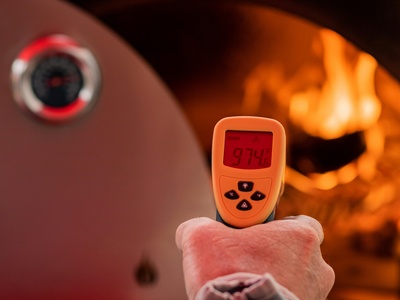
Non-contact infrared thermometer
Handheld non-contact thermometers measure longwave IR emission from skin to estimate temperature quickly and hygienically. Common in medical screening, they operate around 8–14 µm and require correct distance and emissivity settings for accuracy.

Tympanic (ear) thermometer
Ear (tympanic) thermometers sense infrared radiation from the eardrum and ear canal to provide fast, reliable body temperature readings. They target long-wave IR emission and are commonly used in clinics, pediatric care, and home healthcare.
Pulse oximeter (NIR)
Pulse oximeters use two wavelengths—red and near-infrared around 0.66 and 0.94 µm—to measure blood oxygen saturation by comparing absorption. They’re small, clip-on devices used widely in hospitals, clinics, and home monitoring.
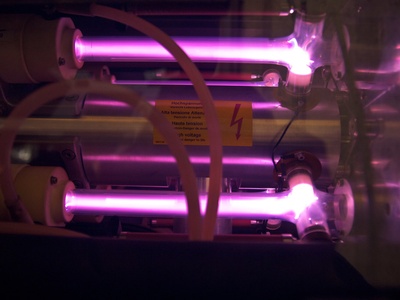
CO2 laser
CO2 lasers emit a powerful 10.6 µm mid-infrared beam used for cutting, engraving, and precision surgery. The wavelength is strongly absorbed by organic material and many plastics, enabling efficient industrial and medical tissue ablation.
FTIR infrared spectrometer
FTIR spectrometers analyze molecular vibrations by measuring mid-infrared absorption roughly between 2.5 and 25 µm. Scientists and chemists use them to identify chemical bonds, contaminants, and material compositions across many fields.
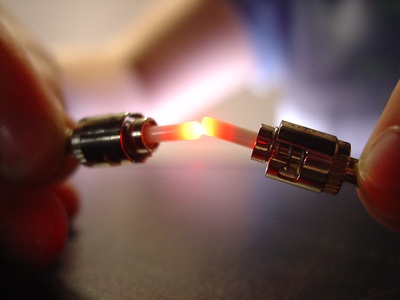
Fiber‑optic communications
Telecom fiber systems transmit near-infrared light at 1.30 and 1.55 µm for low-loss, high-bandwidth data transfer. These wavelengths are standard in internet backbones, data centers, and long-distance communications infrastructure.
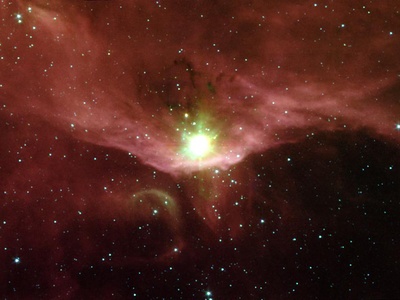
Spitzer Space Telescope
Spitzer observed the universe in infrared from about 3 to 180 µm, revealing cool dust, star-forming regions, and exoplanets. Its detectors enabled discoveries invisible in optical light, transforming infrared astronomy.

Interstellar dust cloud
Dust clouds in space absorb starlight and reradiate energy as infrared, typically in the 10–100 µm range. IR observations penetrate optical obscuration to reveal star formation and the structure of galaxies.
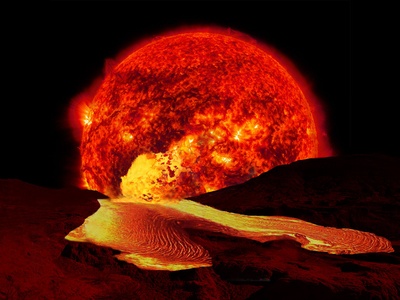
Red giant star
Cool red giants emit strongly in the infrared (roughly 1–30 µm), with dust shells and molecular bands prominent. Astronomers study their IR spectra to learn about stellar evolution and circumstellar material.
IR flame detector
Infrared flame detectors sense characteristic IR emission—often around the 4.3 µm CO2 band—to provide fast, reliable fire detection in industrial plants, refineries, and turbine enclosures, even without visible flames.

Asphalt road surface
Sun-warmed asphalt absorbs sunlight and re-emits thermal infrared, typically peaking in the 8–12 µm band. Infrared measurements of roads help with urban heat studies, pavement diagnostics, and remote temperature mapping.