At the edge of every cell, the membrane acts as both guardian and gateway. Whether you’re studying physiology, pharmacology, or prepping for exams, a clear sense of how molecules cross that barrier makes it easier to understand nutrition, signaling and drug uptake.
There are 15 Types of Membrane Transport, ranging from Antiport (secondary active) to Transcytosis. For each type, you’ll find below concise entries organized as Category,Energy (ATP?),Mechanism (<=15 words) so you can quickly compare passive versus active routes and carrier, channel or vesicular mechanisms—you'll find those details below.
How do active and passive membrane transport differ?
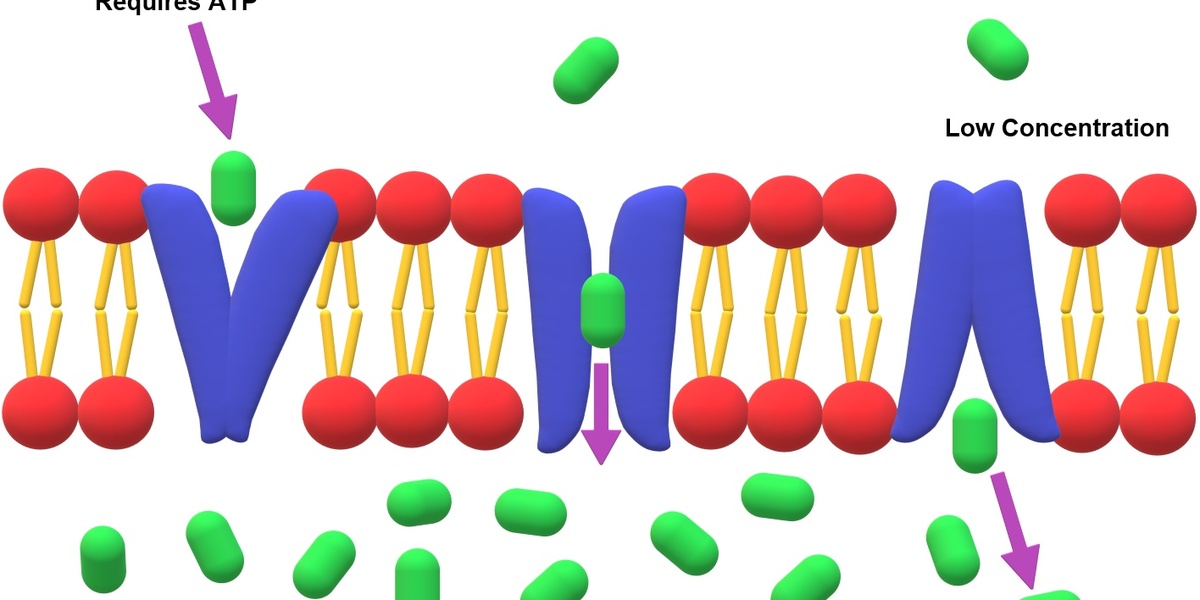
Passive transport moves substances down their concentration or electrochemical gradients and does not use ATP (examples: simple diffusion, facilitated diffusion via channels or carriers). Active transport requires energy—directly from ATP (primary) or indirectly via gradients set up by ATPases (secondary)—and moves solutes against gradients using pumps or coupled transporters.
When is transcytosis used instead of channels or carriers?
Transcytosis is used to move large particles or macromolecules across a cell layer intact (e.g., antibodies across epithelium or endothelium). It relies on vesicular endocytosis and exocytosis, consumes energy, and is chosen when size, polarity, or tissue barriers prevent passage through channels or carriers.
Types of Membrane Transport
| Name | Category | Energy (ATP?) | Mechanism (<=15 words) |
|---|---|---|---|
| Simple diffusion | Passive | No | Movement down concentration gradient through lipid bilayer. |
| Osmosis | Passive | No | Water moves down osmotic gradient across membrane. |
| Facilitated diffusion (uniport) | Passive | No | Carrier protein moves solute down gradient via conformational change. |
| Ion channels (channel-mediated diffusion) | Passive | No | Open protein pore allows ions down electrochemical gradient. |
| Aquaporins | Passive | No | Water-specific channel permits rapid water movement across membrane. |
| Primary active transport | Active | Yes | ATP hydrolysis directly drives solute movement against gradient. |
| Secondary active transport (co-transport) | Active | No | Uses ion gradient energy to drive uphill movement of solute. |
| Symport (secondary active) | Active | No | Two solutes move same direction; one down gradient drives other up. |
| Antiport (secondary active) | Active | No | Exchanger swaps two solutes in opposite directions using gradient energy. |
| Receptor-mediated endocytosis | Bulk/Vesicular | Yes | Ligand binding triggers vesicle formation to internalize specific molecules. |
| Phagocytosis | Bulk/Vesicular | Yes | Cell membrane engulfs large particles into intracellular vesicles. |
| Pinocytosis | Bulk/Vesicular | Yes | Nonspecific uptake of extracellular fluid into small vesicles. |
| Exocytosis | Bulk/Vesicular | Yes | Vesicles fuse with membrane to release cargo extracellularly. |
| Transcytosis | Bulk/Vesicular | Yes | Vesicles transport cargo across cell from one surface to opposite. |
| Gap junctions | Passive | No | Direct cytoplasmic channels connect adjacent cells allowing small molecules. |
Images and Descriptions
Simple diffusion
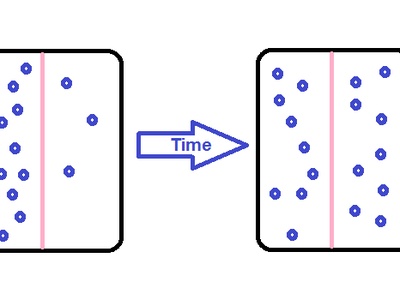
Passive movement of small nonpolar molecules like oxygen and carbon dioxide across the lipid bilayer. No proteins required; rate depends on concentration difference and membrane permeability. Common in gas exchange between lungs, bloodstream, and tissues.
Osmosis
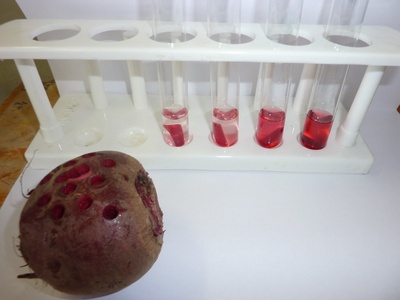
Selective movement of water across a semipermeable membrane from low to high solute concentration, often aided by water channels. Critical for cell volume and hydration balance, common in kidney tubules and plant root cells managing water uptake.

Facilitated diffusion (uniport)
Carrier proteins bind specific solutes and flip them across the membrane down their concentration gradient. No energy is used; important for polar molecules like sugars and some amino acids entering cells.
Ion channels (channel-mediated diffusion)
Protein pores allow rapid, selective ion flow in response to voltage, ligands, or mechanical forces. Central to nerve impulses, muscle contraction, and maintaining resting membrane potential in many cell types.
Aquaporins
Specialized protein channels that allow fast, selective water passage while excluding ions. They enable efficient water balance and are prominent in kidney collecting ducts and red blood cells for regulated water movement.
Primary active transport
Membrane pumps use ATP to move ions or molecules uphill, directly consuming energy to establish and maintain gradients essential for electrical signaling, nutrient uptake, and pH control across virtually all cells.
Secondary active transport (co-transport)
Transporters harness existing ion gradients (established by ATP-driven pumps) to move other solutes uphill without direct ATP use. Key for nutrient absorption across epithelia and reabsorption in kidneys.
Symport (secondary active)
A co-transporter carries two molecules together in the same direction, using the energy of one moving down its gradient to import another uphill. Common in intestinal nutrient uptake coupled to ion gradients.
Antiport (secondary active)
An exchanger moves one solute into the cell while moving another out, using the downhill movement of one to power uphill transport of the other. Important for calcium removal and pH regulation.
Receptor-mediated endocytosis
Specific ligands bind receptors and trigger vesicle formation to bring selected cargo into the cell. This selective uptake helps cells absorb hormones, nutrients, and regulate surface receptors.
Phagocytosis
Cells extend membrane to engulf large particles or microbes into phagosomes for digestion. ATP-dependent and primarily used by immune cells like macrophages and neutrophils to clear pathogens and debris; a key innate defense.
Pinocytosis
Continuous, nonspecific engulfment of extracellular fluid and dissolved solutes into small vesicles. ATP-dependent process used for sampling the environment, bulk nutrient uptake, and membrane turnover in many cell types.
Exocytosis
Vesicles carrying neurotransmitters, hormones, or waste fuse with the plasma membrane to release their contents outside the cell. ATP-dependent and often calcium-triggered, essential for secretion and membrane expansion.
Transcytosis
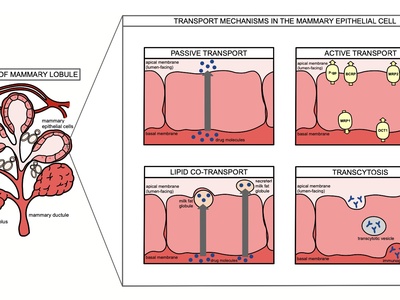
A combined endo- and exocytic route that moves molecules across a cell, delivering cargo from one membrane domain to the other. Important for antibody transfer, nutrient passage, and transport across endothelial barriers.
Gap junctions
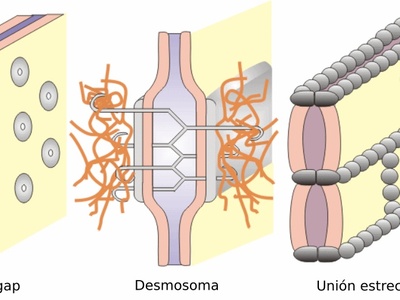
Protein channels link neighboring cell cytoplasms so ions and small signaling molecules pass directly between cells without vesicles. ATP isn’t required for passage; crucial in heart tissue and some epithelia for electrical and metabolic coupling.