From fruit and honey on the table to the sugars that power your cells, simple sugars are everywhere you look. They shape taste, energy and biochemical pathways, so a clear list helps both cooks and scientists see patterns and make quick comparisons.
There are 27 Monosaccharides, ranging from 2-Deoxyribose to Xylulose. Each entry is arranged so you can scan Carbon atoms (C), Type, Natural sources at a glance, making it easy to compare size, classification and where they occur naturally — you’ll find below.
How do these monosaccharides differ and why should I care?
Monosaccharides differ mainly by the number of carbon atoms and the arrangement of their functional groups, which changes sweetness, reactivity and how organisms use them. Knowing whether a sugar is an aldose or ketose and its carbon count helps predict behavior in food chemistry, metabolism and lab reactions.
Can I recognize any of these monosaccharides in everyday foods?
Yes—glucose and fructose show up in fruits and honey, while ribose and deoxyribose are part of nucleic acids rather than being dietary sugars. The “Natural sources” column below points to common foods or biological contexts so you can spot which sugars are likely present.
Monosaccharides
| Name | Carbon atoms (C) | Type | Natural sources |
|---|---|---|---|
| Glyceraldehyde | 3 | Aldose, D and L enantiomers | Produced in cells during glycolysis, plant metabolism |
| Dihydroxyacetone | 3 | Ketose, achiral ketotriose | Glycolysis intermediate in cells, found in some cosmetics |
| Erythrose | 4 | Aldose, D-form common | Photosynthetic intermediates, plant metabolites |
| Threose | 4 | Aldose, D-form common epimer of erythrose | Sugars in meteorites, some microorganisms |
| Erythrulose | 4 | Ketose, D-form ketotetrose | Produced by some bacteria and in fermented foods |
| Ribose | 5 | Aldose, D-ribose common | RNA, ATP, fruits, honey, cells |
| 2-Deoxyribose | 5 | Aldose, 2-deoxy-D-ribose | DNA backbone in all living organisms |
| Ribulose | 5 | Ketose, D-ribulose common | Calvin cycle in plants, some microbes |
| Xylose | 5 | Aldose, D-xylose common | Wood, hemicellulose, fruits, corn cobs |
| Arabinose | 5 | Aldose, D-arabinose common | Plant gums, pectins, hemicellulose |
| Lyxose | 5 | Aldose, D-lyxose common epimer | Rare in nature, some bacterial polysaccharides |
| Xylulose | 5 | Ketose, D-xylulose common | Metabolic intermediate in pentose phosphate pathway |
| Glucose | 6 | Aldose, D-glucose common | Fruits, honey, blood, starch breakdown |
| Fructose | 6 | Ketose, D-fructose common | Fruits, honey, sucrose component |
| Galactose | 6 | Aldose, D-galactose common | Dairy lactose breakdown, cell surface glycans |
| Mannose | 6 | Aldose, D-mannose common | Plant polysaccharides, glycoproteins |
| Allose | 6 | Aldose, D-allose epimer of glucose | Found rarely in plants and algae |
| Altrose | 6 | Aldose, D-altrose epimer of glucose | Rarely in nature, microbial metabolites |
| Gulose | 6 | Aldose, D-gulose epimer | Rare, reported in seaweed and microbial sources |
| Idose | 6 | Aldose, D-idose epimer | Reported in some bacteria and synthetic studies |
| Fucose | 6 | Aldose, 6-deoxy-L-galactose | Seaweed, human glycans, plant cell walls |
| Rhamnose | 6 | Aldose, 6-deoxy-L-mannose | Plant glycosides, bacteria, fruits |
| Glucosamine | 6 | Aldose derivative, amino-sugar (D-glucosamine) | Chitin, cartilage, glycoproteins, fungi |
| Galactosamine | 6 | Aldose derivative, amino-sugar (D-galactosamine) | Glycoproteins, cartilage, animal tissues |
| Mannosamine | 6 | Aldose derivative, amino-sugar (D-mannosamine) | Bacterial sphingolipids, some glycans |
| Sedoheptulose | 7 | Ketose, D-sedoheptulose common | Plants, photosynthetic tissues, algae |
| Mannoheptulose | 7 | Aldose (aldoheptose), D-mannoheptulose | Avocado, some fruits and plants |
Images and Descriptions

Glyceraldehyde
A simple triose aldehyde that is a central intermediate in carbohydrate metabolism and stereochemical reference. Important in biochemical pathways and foundational for forming larger sugars via condensation reactions.
Dihydroxyacetone
The simplest ketose and an intermediate of glycolysis. Achiral and commonly formed during sugar breakdown, it serves in metabolic pathways and as a building block for complex carbohydrates.
Erythrose
A tetrose aldose involved in the pentose phosphate pathway and biosynthesis of aromatic amino acids. Plays roles as a metabolic intermediate and in early sugar chemistry studies.
Threose
A tetrose stereoisomer of erythrose with roles in prebiotic chemistry studies. Appears in some microbial metabolites and is notable for stereochemistry discussions in carbohydrate chemistry.
Erythrulose
A ketose tetrose found in minor quantities in fermentation and bacterial metabolism. Used in cosmetic tanning products and studied for keto-enol chemistry and metabolic pathways.
Ribose
A fundamental pentose sugar in RNA, ATP, and many cofactors. Central to genetic information transfer, energy metabolism, and found widely in foods and living tissues.
2-Deoxyribose
The five-carbon sugar in DNA where the 2-hydroxyl is missing. Critical for DNA stability and genetic material structure; absence of the 2-OH distinguishes DNA from RNA chemically and functionally.
Ribulose
A ketopentose central to photosynthesis (Calvin cycle) and carbohydrate interconversions. Forms ribulose-1,5-bisphosphate in plants and participates in metabolic rearrangements.
Xylose
A common pentose component of plant hemicellulose and biomass. Important in plant cell wall structure and industrial biomass processing for biofuels and chemicals.
Arabinose
A plant-derived pentose in gums and pectins, used by bacteria as a carbon source. Notable for bacterial operon regulation studies and as a diagnostic sugar in labs.
Lyxose
A rare pentose aldose occurring in select microbial glycans. Of biochemical interest for stereochemistry and diversity of natural sugars rather than as a common dietary sugar.
Xylulose
A ketopentose that functions as an intermediate in sugar metabolism and the pentose phosphate pathway. Involved in carbohydrate interconversions and regulatory roles.
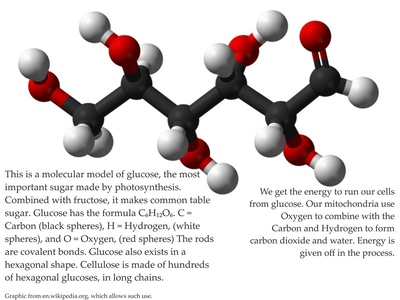
Glucose
The primary energy sugar in animals and plants. Central to metabolism (glycolysis, respiration), blood sugar regulation, and a universal fuel and structural precursor for polysaccharides.
Fructose
A common dietary ketose found in fruit and honey. Rapidly metabolized, sweeter than glucose, and important in sweet taste, metabolism, and as a component of sucrose.
Galactose
A hexose present in lactose and many glycoconjugates. Important for cell recognition, brain metabolism, and is converted to glucose derivatives in the liver.
Mannose
A hexose important in glycoprotein synthesis and cell recognition. Appears in plant polysaccharides and on cell surfaces; deficiencies affect protein glycosylation.
Allose
A rare hexose epimeric to glucose studied for its unique stereochemistry. Occurs in some plants and has been investigated for biological activity and metabolic studies.
Altrose
An uncommon hexose differing in stereochemistry from glucose. Appears in minor microbial products and is mainly of interest in carbohydrate chemistry research.
Gulose
A naturally rare hexose with distinct stereochemistry studied in carbohydrate diversity and microbial glycans. Not a common dietary sugar but relevant to structural studies.
Idose
A hexose epimer found infrequently in nature, primarily in specialized microbial glycans and laboratory synthesis, useful for studying stereochemical effects on function.
Fucose
A naturally occurring 6-deoxyhexose abundant in glycoconjugates on cell surfaces. Plays roles in cell recognition, immunity, and development; common in blood group antigens.
Rhamnose
A 6-deoxyhexose common in plant glycosides and bacterial cell walls. Contributes to flavor compounds, plant defense molecules, and microbial surface structures.

Glucosamine
An amino hexose where an amino group replaces a hydroxyl. Key building block for chitin and glycosaminoglycans; important in structural biopolymers and cell signaling.
Galactosamine
An amino sugar present in glycoproteins and glycosaminoglycans. Contributes to extracellular matrix structures and cell-surface recognition processes.
Mannosamine
An amino hexose involved in microbial glycoconjugates and glycan biosynthesis. Serves as a precursor for sialic acid pathways in some organisms.
Sedoheptulose
A seven-carbon ketose in the pentose phosphate and Calvin cycles. Involved in photosynthesis intermediates and central metabolism, contributing to sugar-phosphate rearrangements.
Mannoheptulose
A naturally occurring heptose found in avocados that can inhibit hexokinase. Studied for metabolic effects and as a rare plant-derived sugar with regulatory roles.