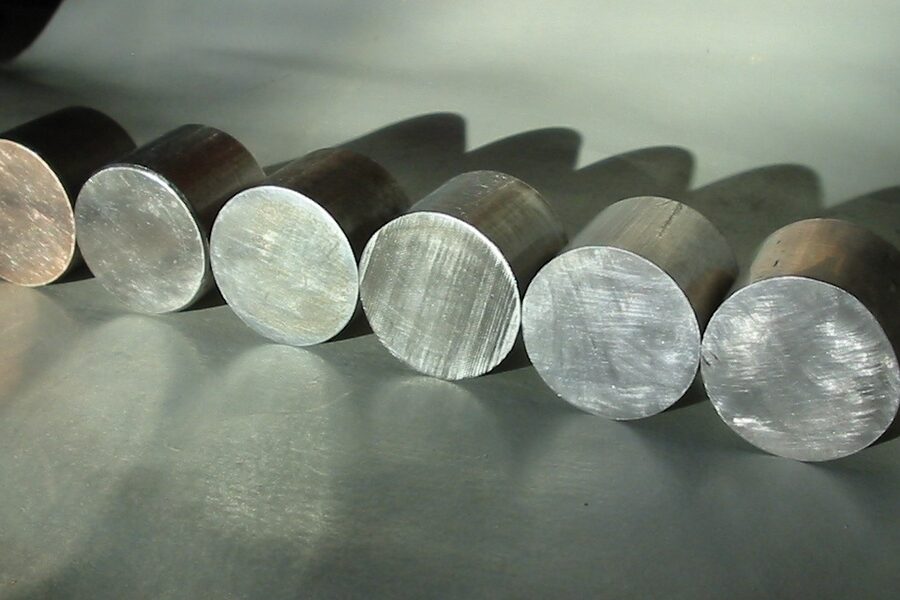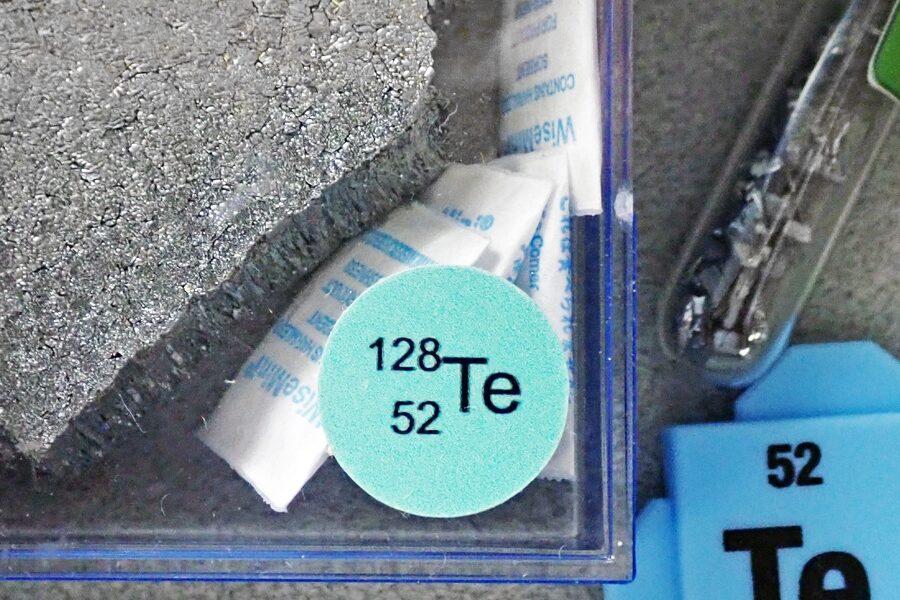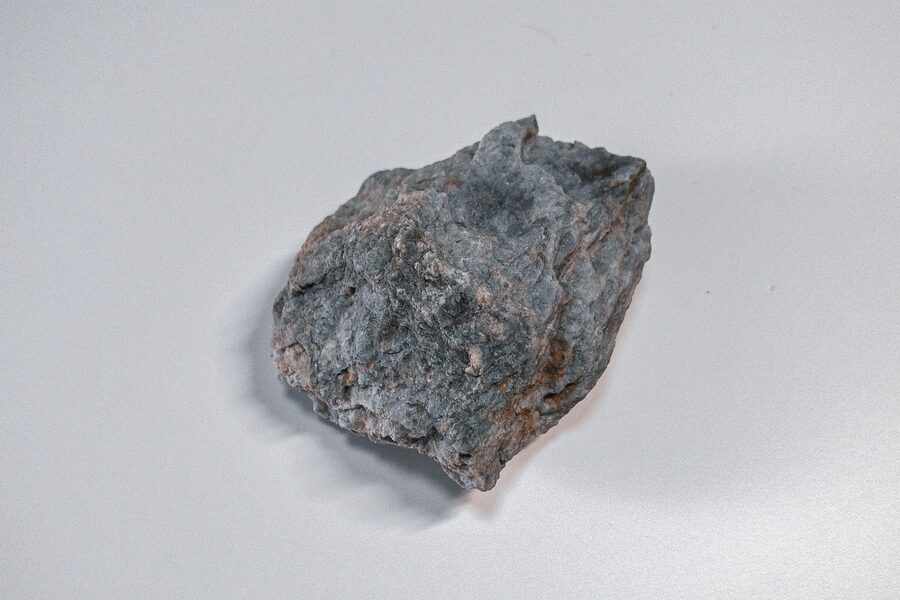
On the periodic table, selenium (atomic number 34) sits among the chalcogens and plays roles from electronics to biology; understanding its isotopes helps explain those varied behaviors. Whether you’re tracking environmental selenium or comparing nuclear properties, the isotope map reveals useful patterns.
There are 32 Selenium Isotopes, ranging from Se-64 to Se-95. For each isotope, the data are organized as Half-life (s/min/h/d/yr),Decay mode,Natural abundance (%); you’ll find below.
Which selenium isotopes occur naturally or are effectively stable?
Naturally occurring selenium is made up of several isotopes—most notably Se-74, Se-76, Se-77, Se-78, Se-80 and Se-82—which account for the element’s natural abundance; these are the isotopes you’ll see listed with nonzero natural abundance values in the table below.
How do I interpret the half-life and decay mode entries?
Half-life units vary (seconds to years) to match each isotope’s stability, and the decay mode shows how an unstable isotope transforms (beta decay, electron capture, etc.); use the half-life plus decay mode together to judge how long an isotope persists and what daughter nuclide it produces.
Selenium Isotopes
| Isotope | Half-life (s/min/h/d/yr) | Decay mode | Natural abundance (%) |
|---|---|---|---|
| Se-64 | ~tens of milliseconds | Beta-plus/electron capture (proton-rich) | 0 |
| Se-65 | <1 s | Beta-plus/electron capture | 0 |
| Se-66 | Seconds | Beta-plus/electron capture | 0 |
| Se-67 | Seconds | Beta-plus/electron capture | 0 |
| Se-68 | Seconds | Beta-plus/electron capture | 0 |
| Se-69 | Seconds | Beta-plus/electron capture | 0 |
| Se-70 | Seconds to minutes | Beta-plus/electron capture | 0 |
| Se-71 | Tens of seconds | Beta-plus/electron capture | 0 |
| Se-72 | ~1 day | Electron capture/beta-plus | 0 |
| Se-73 | ~7.2 s | Electron capture/beta-plus | 0 |
| Se-74 | stable | Stable (observational) | 0.89 |
| Se-75 | 119.78 d | Electron capture (gamma emitter) | 0 |
| Se-76 | stable | Stable (observational) | 9.36 |
| Se-77 | stable | Stable (observational) | 7.63 |
| Se-78 | stable | Stable (observational) | 23.77 |
| Se-79 | 327,000 yr | Beta-minus | 0 |
| Se-80 | stable | Stable (observational) | 49.61 |
| Se-81 | ~18.5 min | Beta-minus | 0 |
| Se-82 | stable | Stable (observational) | 8.73 |
| Se-83 | ~24 s | Beta-minus | 0 |
| Se-84 | ~40 s | Beta-minus | 0 |
| Se-85 | ~1.5 min | Beta-minus | 0 |
| Se-86 | ~15 s | Beta-minus | 0 |
| Se-87 | ~10 s | Beta-minus | 0 |
| Se-88 | ~6 s | Beta-minus | 0 |
| Se-89 | ~4 s | Beta-minus | 0 |
| Se-90 | ~2 s | Beta-minus | 0 |
| Se-91 | ~1 s | Beta-minus | 0 |
| Se-92 | <1 s | Beta-minus | 0 |
| Se-93 | <1 s | Beta-minus | 0 |
| Se-94 | <1 s | Beta-minus | 0 |
| Se-95 | <1 s | Beta-minus | 0 |
Images and Descriptions

Se-64
Very proton-rich, synthesized in labs via projectile fragmentation; extremely short-lived and of interest in nuclear-structure studies rather than practical uses.

Se-65
Proton-rich radioisotope produced in accelerators; decays quickly by positron emission or electron capture, used principally in experimental nuclear physics.
Se-66
Short-lived isotope made in nuclear reactions; mainly of academic interest for studying shell effects and proton-rich nuclear behavior.
Se-67
Produced in fragmentation and fusion-evaporation experiments; too short-lived for applications, useful for nuclear decay studies.
Se-68
Light, proton-rich selenium isotope observed in lab experiments; decays by positron emission or electron capture with no natural occurrence.
Se-69
Short-lived and proton-rich, created in nuclear reactions; used to probe nuclear structure near the proton drip line.
Se-70
Produced synthetically; decays mainly by positron emission or electron capture and helps map proton-rich nuclear behavior.
Se-71
Radioactive and short-lived; studied in laboratories to understand decay properties of light selenium isotopes.
Se-72
Moderately short-lived isotope produced in reactors and accelerators; decays by electron capture and is used in nuclear physics experiments.
Se-73
Proton-rich, short-lived nuclide used in spectroscopic studies to probe nuclear energy levels near stability.
Se-74
Stable, one of selenium’s six naturally occurring isotopes, makes up ~0.89% of natural Se; found in minerals and used in isotopic studies and geochemistry.
Se-75
Artificially produced and widely used as a sealed gamma source for industrial radiography and research; useful for calibrations and tracer studies.
Se-76
Naturally occurring and stable, about 9.36% of terrestrial selenium; important in isotope geochemistry and as part of natural Se element mixtures.
Se-77
Stable isotope present in nature (~7.63%); used in nuclear magnetic resonance (77Se NMR) and in biochemical tracer experiments.
Se-78
Relatively abundant stable isotope (~23.77%), common in minerals and useful in isotopic ratio studies in earth sciences.
Se-79
Long-lived radioactive fission product present in nuclear waste (half-life ~327,000 years); of environmental and waste-management concern because it is mobile in some conditions.
Se-80
Most abundant natural selenium isotope (~49.61%); stable and widespread, forming the bulk of elemental Se used in industry and research.
Se-81
Short-lived neutron-rich isotope produced in reactors and accelerators; decays by beta emission and is relevant to nuclear decay-scheme studies.
Se-82
Stable and naturally occurring (~8.73%); its presence contributes to selenium’s natural isotopic composition and geochemical investigations.
Se-83
Neutron-rich, short-lived isotope observed in laboratory experiments; mainly of interest for nuclear-structure research.
Se-84
Produced synthetically and decays by beta emission; used to explore neutron-rich nuclear behavior near selenium.
Se-85
Short-lived, neutron-rich nuclide studied in fragmentation and fission experiments to map decay properties.
Se-86
A neutron-rich isotope with brief half-life; useful in experimental nuclear physics rather than practical applications.
Se-87
Produced in neutron-rich reactions and decays rapidly by beta emission; of academic interest.
Se-88
Short-lived and neutron-rich; measured to refine models of nuclear stability on the neutron-rich side.
Se-89
Very neutron-rich, short-lived; observed in exotic-beam facilities to study nuclear structure and decay.
Se-90
High neutron excess leads to rapid beta decay; produced in specialized nuclear experiments.
Se-91
Extremely short-lived neutron-rich nuclide; primarily of research interest for nuclear models.
Se-92
Very short half-life, only observed in high-energy experiments; contributes to mapping the neutron drip region.
Se-93
Extremely neutron-rich and short-lived; created in fragmentation studies to probe limits of stability.
Se-94
Observed with a sub-second lifetime in exotic-beam experiments; no natural occurrence or uses.
Se-95
One of the heaviest known Se isotopes, very short-lived and only made in advanced nuclear-physics facilities.