In the 18th and 19th centuries, “potash”—the crude ash-derived precursor to modern potassium carbonate—helped launch glassworks and soapmakers across Europe and North America. Those early industries prized the alkali for lowering melting points and improving finish, and the chemical lineage carries through to many factories today.
Potassium carbonate is a surprisingly versatile compound: from improving modern glass and detergents to enabling carbon capture and niche food processes and even appearing in battery research. Its practical strengths—acting as a flux, a mild base, a nutrient source, and a precursor for materials—mean it turns up in laboratories, kitchens, farms, and pilot plants. This piece walks through eight concrete benefits, organized into industrial, environmental, food/lab/household, and technological categories so you can see where this simple salt matters.
Industrial and manufacturing benefits

Manufacturers use potassium carbonate as an additive and process chemical because it modifies melt behavior and reaction conditions in predictable ways. As an alkali flux, it lowers the temperature at which silica-rich batches soften and can reduce fuel use during melting; industry notes commonly report working-temperature drops on the order of 50–150°C depending on formulation (roughly a few percent to around 10% in many soda-lime variants).
Beyond energy savings, altering the alkali balance with potassium—rather than only sodium—can yield clearer colors, fewer seed bubbles in art and optical glass, and improved surface gloss for containers. Plants that make specialty or hand-blown glass often adjust K2O/K2CO3 levels to tune viscosity and color response.
On the shop floor, potassium carbonate is handled like other inorganic alkalis: keep it dry, use dust controls and eye protection, and store in a cool, labeled container. For large-scale use, consult materials science references and industry safety data sheets for specific exposure limits and compatibility notes.
1. Lowers melting temperature and improves glass quality
Potassium carbonate serves as a flux in many glass batches, meaning it helps silica and other oxides melt at lower temperatures. In practical terms, replacing some sodium carbonate with potassium carbonate can reduce the batch softening and working range by roughly 50–150°C, depending on silica content and other modifiers.
Those shifts matter: lower furnace temperatures cut fuel bills and can reduce thermal stress that causes defects. Historically, potash glass from European works produced distinctive warm tones; modern formulations use potassium additions to tune clarity and color in container, decorative, and optical glasses.
Smaller facilities and artisans especially value the compositional flexibility—better color control, fewer seeds, and sometimes a glossier surface—while large-scale plants use precise alkali balances to meet strict product and energy targets.
2. Acts as a catalyst or base in chemical manufacturing
As a mild inorganic base, potassium carbonate is a go-to reagent in a number of industrial organic reactions and process chemistries. It’s commonly used for deprotonation in nucleophilic substitutions, for saponification steps in soap making, and as a heterogeneous support or promoter in catalytic systems.
In biodiesel production, carbonate-based catalysts (or supported K2CO3) can deliver transesterification yields above 90% under optimized conditions, with catalyst loadings often in the 1–5 wt% range for heterogeneous variants. In fine-chemical manufacture, K2CO3 frequently replaces stronger bases when a gentler, non-nucleophilic option is desirable (typical reagent protocols call for 1–3 equivalents in batch reactions).
Because it’s less corrosive than some alternatives, potassium carbonate is compatible with a wide range of solvents and reactor materials, though basicity still requires corrosion-aware equipment choices and appropriate personal protective equipment during handling.
Agricultural and environmental benefits

Potassium carbonate finds use in agriculture and environmental technology as both a potassium source and a solvent for gas treatment. Its carbonate anion provides mild alkalinity, making it useful where chloride salts are undesirable and where pH buffering is helpful in nutrient solutions.
Environmentally, aqueous K2CO3 solutions are a well‑established option for CO2 absorption and gas purification in some industrial processes. Typical solvent strengths fall in the 15–30 wt% range and operating conditions often run from near-ambient up to ~80°C for absorption and higher temperatures for regeneration, depending on the process design.
Handlers should balance benefits against trade-offs: carbonate systems tend to be less corrosive than strong alkylamines but may require different regeneration energy and materials of construction. Follow vendor guidance and environmental regulations when deploying these chemistries at scale.
3. Provides potassium for niche agricultural formulations
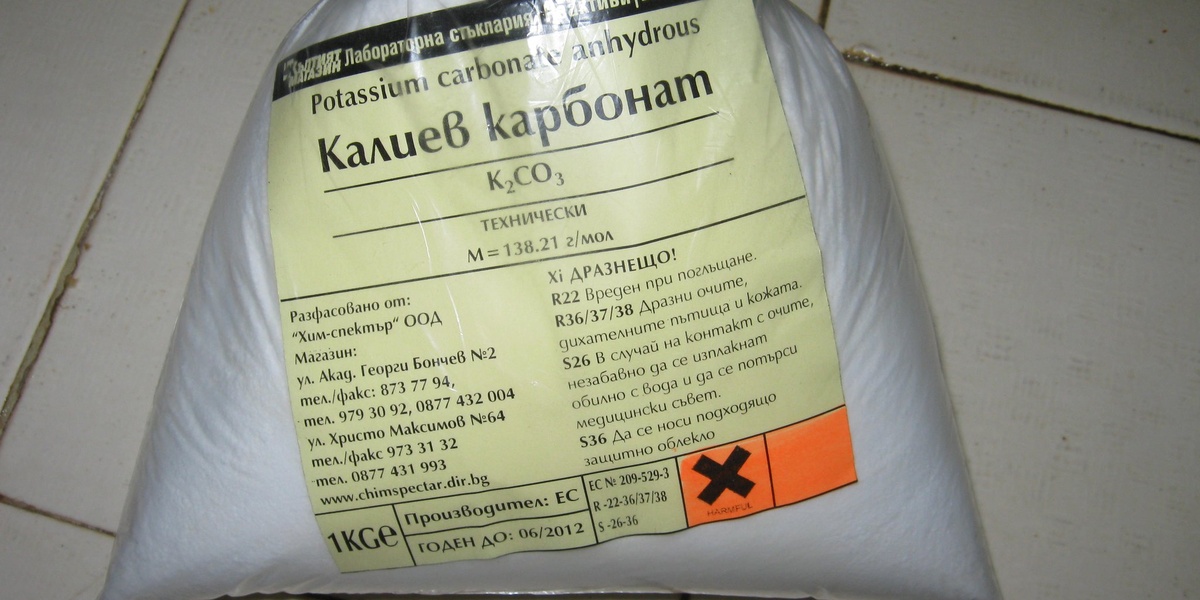
Potassium carbonate can act as a potassium source in specialty fertilizer blends and nutrient solutions. K2CO3’s molar mass is about 138.21 g·mol−1, and roughly 56.6% of that mass is potassium, making it a concentrated K source compared with some alternatives.
Because the carbonate anion buffers pH, growers sometimes prefer it in hydroponic recipes or for chloride-sensitive crops such as certain fruits and ornamentals. Typical use levels in nutrient solutions are low additions tailored to crop needs, and solubility is high enough for practical dosing in most greenhouse systems.
Limitations include cost and the need to monitor solution alkalinity; soil systems that already trend alkaline may not benefit from additional carbonate inputs.
4. Useful in CO2 capture and gas treatment
Aqueous potassium carbonate absorbs CO2 through formation of bicarbonate and related species, so it has been deployed in flue-gas scrubbing, biogas upgrading, and natural gas sweetening in certain plants. Process engineering literature shows 15–30 wt% K2CO3 solutions are common, with absorption often most effective at moderate temperatures (25–80°C) and regeneration carried out at elevated temperatures (roughly 100–140°C) in thermal cycles.
Compared with typical amine solvents, carbonate systems can offer lower vapor pressure and reduced solvent loss, though they often require different equipment and can have slower reaction kinetics for low‑CO2‑partial‑pressure streams. Designers choose based on cost, solvent stability, and plant integration rather than a universal superiority.
Practical deployment calls for corrosion-resistant materials, solvent reclamation systems, and attention to waste-stream handling to keep environmental benefits intact.
Food, laboratory, and household benefits

Potassium carbonate is useful in small, well-regulated amounts for food processing, and it’s a standard reagent in many teaching and research labs. Regulatory lists and reagent catalogs make it easy to source and to apply in controlled recipes and protocols.
Regulators commonly list it as E501 when approved for food use, and laboratory suppliers provide detailed datasheets for safe handling. In households, it’s occasionally seen in traditional baking and noodle recipes or in small-scale DIY projects—but use only food-grade material for cooking and follow safety guidance for storage and skin/eye protection.
The molar mass (≈138.21 g·mol−1) and the salt’s solubility mean precise dosing is straightforward for formulators and lab technicians alike.
5. Approved food additive and processing aid (E501) in select foods
As E501, potassium carbonate appears in laws and food additive lists in many jurisdictions and is used where a non-chloride alkaline salt is preferred. One classic culinary use is in alkaline noodle doughs—’kansui’ blends often combine small amounts of potassium carbonate and sodium carbonate to produce the characteristic chew and color of some Asian wheat noodles.
Usage levels in dough or processing are small—typically fractions of a percent by weight—so the additive acts more as a functional ingredient than a nutrient. Cocoa alkalization and other niche processes also use carbonate salts for pH adjustments under controlled conditions, and food authorities supply guidance on maximum levels and labeling.
6. Handy lab reagent for buffering and drying
In the lab, potassium carbonate is valued for mild alkaline buffering and as a drying agent. The carbonate/bicarbonate acid–base pair has a second pKa around 10.33, so carbonate-rich buffers are useful in the roughly pH 9–11 region.
Protocols commonly call for 0.05–0.2 M carbonate solutions for pH adjustments, and K2CO3 is a gentler drying agent for some polar solvents compared with stronger desiccants. Good laboratory practice includes weighing in a fume hood, avoiding dust inhalation, and storing the solid in a sealed, labeled container away from acids.
Technological and emerging benefits
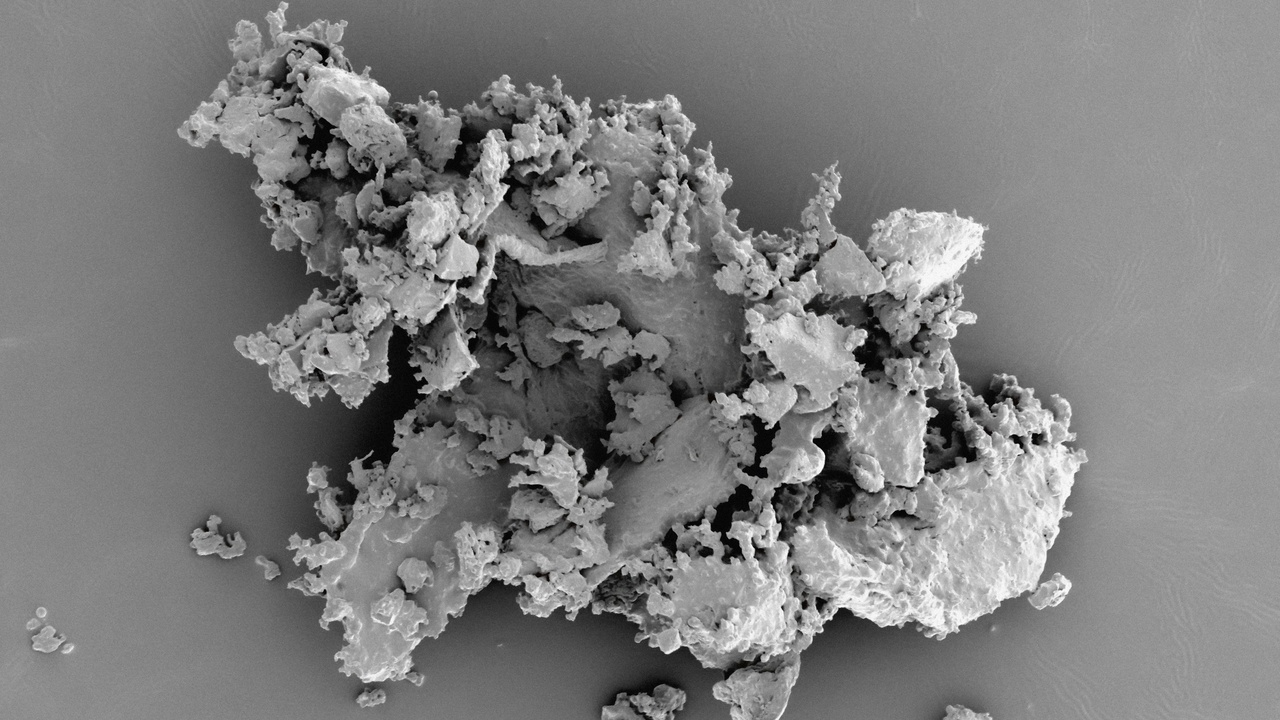
Recent years have seen renewed interest in potassium-based chemistries for energy and materials science. Researchers have evaluated K2CO3-containing electrolytes, molten carbonate mixtures, and potassium-promoted catalysts in papers and patents from roughly 2018 onward, noting advantages tied to element abundance and different ionic behavior compared with lithium or sodium.
While many of these avenues remain at lab or pilot scale, published studies (2018–2023) report promising conductivity and cell performance metrics in controlled conditions. Real-world commercialization depends on scaling, long-term stability, and system-level economics rather than a single promising datapoint.
Expect continued pilot demos over the next several years as groups refine electrolytes and materials with an eye toward lower-cost, more earth-abundant alternatives.
7. Emerging role in energy technologies (batteries and fuel cells)
Potassium carbonate and related potassium salts have been investigated in potassium-ion battery electrolytes and in molten carbonate fuel cell components. Academic work between 2018 and 2023 explored K-based electrolytes that showed ionic conductivities in the single-digit mS·cm−1 range under certain formulations and demonstrated lab-scale cell capacities that suggest potential for low-cost storage research.
Why potassium? Potassium is more abundant and cheaper than lithium, and some cathode chemistries allow competitive specific capacities in research cells. But practical devices need long cycle life, stable interfaces, and electrolyte additives to control dendrites—challenges still being addressed before broad commercialization.
8. Useful precursor for specialty materials and catalysts
In material chemistry, potassium carbonate serves as a convenient source of potassium in syntheses for ceramics, glazes, and catalyst preparations. Ceramicists use potassium-bearing glazes to alter melting behavior and surface gloss, while chemists use K2CO3 to introduce potassium into mixed-metal oxides that tune catalytic activity or selectivity.
Examples in the literature (2017–2022) include catalyst formulations where potassium doping improved selectivity for small-molecule oxidations and pilot glazes where K2CO3 lowered maturation temperatures. These are usually lab-to-pilot demonstrations; scale-up depends on reproducibility and cost-benefit analyses.
Summary
- Potassium carbonate traces a long industrial lineage from potash glass to modern glassmaking and still provides real energy and quality advantages by lowering melt and working temperatures.
- It doubles as a mild base and catalyst in chemical manufacture—helpful in biodiesel, detergent, and fine-chemical processes where gentler alkalinity or specific reactivity is needed.
- Environmentally, K2CO3 solutions play roles in CO2 absorption and gas treatment, and the salt can serve as a chloride-free potassium source for niche agricultural and hydroponic uses.
- At the small scale, it’s an approved food additive (E501) for select processes and a routine lab reagent for buffering and drying; at the same time, safe handling and adherence to regulations are essential.
- Research since about 2018 highlights promising energy and materials applications—potassium-ion electrolytes, molten carbonate systems, and potassium-doped catalysts—but most of these remain at lab or pilot stage for now.
For anyone curious about practical chemistry or looking for materials that bridge tradition and innovation, the benefits of potassium carbonate are worth a closer look—safely and with proper sourcing, it’s a small compound with a lot of real-world uses.