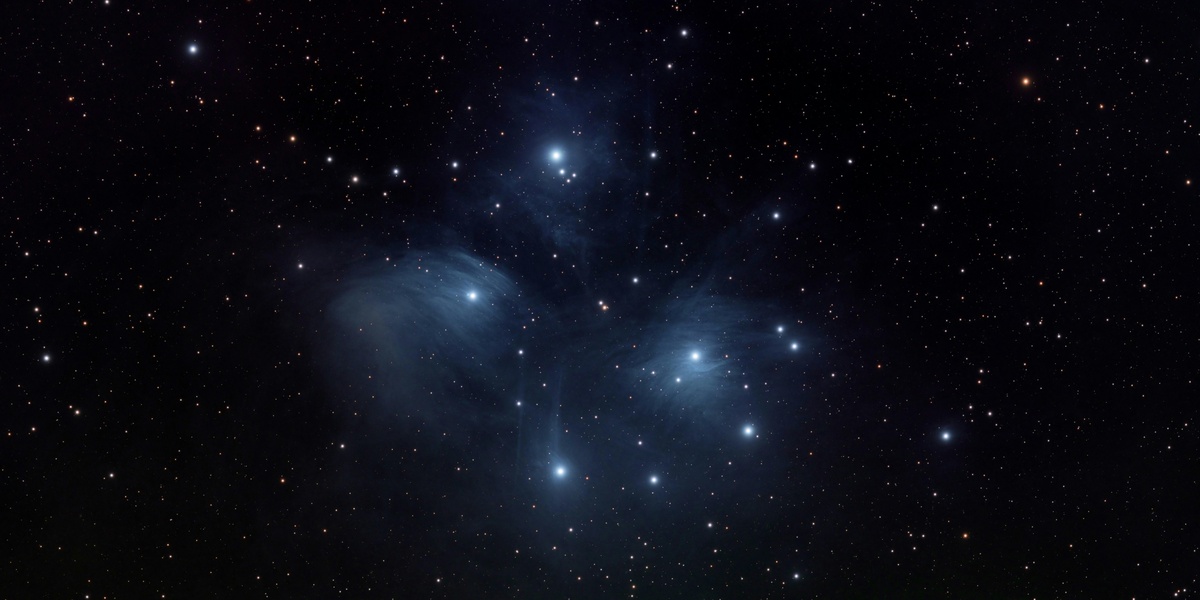
On clear nights, open star clusters look like loose neighborhoods of stars—groups that formed together and still travel through the galaxy as a family. They mark recent star formation and are easy, rewarding targets whether you’re scanning with binoculars or a small telescope.
There are 20 Examples of Open Clusters, ranging from Beehive (Praesepe) to Wishing Well Cluster. For each cluster you’ll find Catalog IDs,Constellation,Distance (ly) listed below.
How can I spot an open cluster with binoculars or a small telescope?
Begin with brighter, well-known clusters and use binoculars to sweep the relevant constellation; small telescopes reveal more faint members. Check a star chart or app for coordinates, observe on moonless nights, let your eyes adapt, and look for a loose concentration of similar stars rather than a single standout star.
What do the catalog IDs and distance figures help me understand?
Catalog IDs (Messier, NGC, etc.) let you cross-reference images and data, while the distance in light-years gives physical scale and explains apparent size and brightness; together with the constellation they make it easy to locate, compare, and prioritize clusters from the list below.
Examples of Open Clusters
| Name | Catalog IDs | Constellation | Distance (ly) |
|---|---|---|---|
| Pleiades | Messier 45, NGC 1432, Melotte 22 | Taurus | 444 |
| Hyades | Melotte 25, α Tauri cluster, NGC 2108 | Taurus | 153 |
| Beehive (Praesepe) | Messier 44, NGC 2632 | Cancer | 577 |
| Double Cluster | NGC 869 & NGC 884 | Perseus | 7,600 |
| M38 | Messier 38, NGC 1912 | Auriga | 4,200 |
| M36 | Messier 36, NGC 1960 | Auriga | 4,100 |
| M37 | Messier 37, NGC 2099 | Auriga | 4,500 |
| Wild Duck Cluster | Messier 11, NGC 6705 | Scutum | 6,200 |
| Ptolemy’s Cluster | Messier 7, NGC 6475 | Scorpius | 980 |
| Butterfly Cluster | Messier 6, NGC 6405 | Scorpius | 1,600 |
| M67 | Messier 67, NGC 2682 | Cancer | 2,700 |
| Wishing Well Cluster | NGC 3532 | Carina | 1,300 |
| Jewel Box | NGC 4755 | Crux | 6,440 |
| NGC 6231 | NGC 6231, Collinder 315 | Scorpius | 5,200 |
| Christmas Tree Cluster | NGC 2264, Cone Cluster | Monoceros | 2,600 |
| NGC 6791 | NGC 6791 | Lyra | 13,300 |
| NGC 6633 | NGC 6633, Collinder 380 | Ophiuchus | 1,040 |
| NGC 2516 | NGC 2516, Collinder 160 | Carina/Puppis | 1,300 |
| ET Cluster | NGC 457 | Cassiopeia | 7,900 |
| Eagle Cluster | NGC 6611, Messier 16 | Serpens | 7,000 |
Images and Descriptions
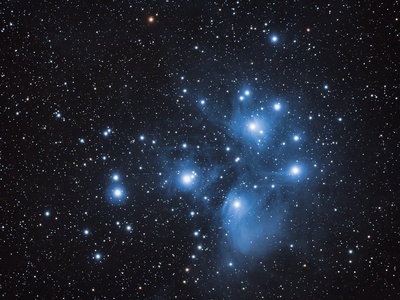
Pleiades
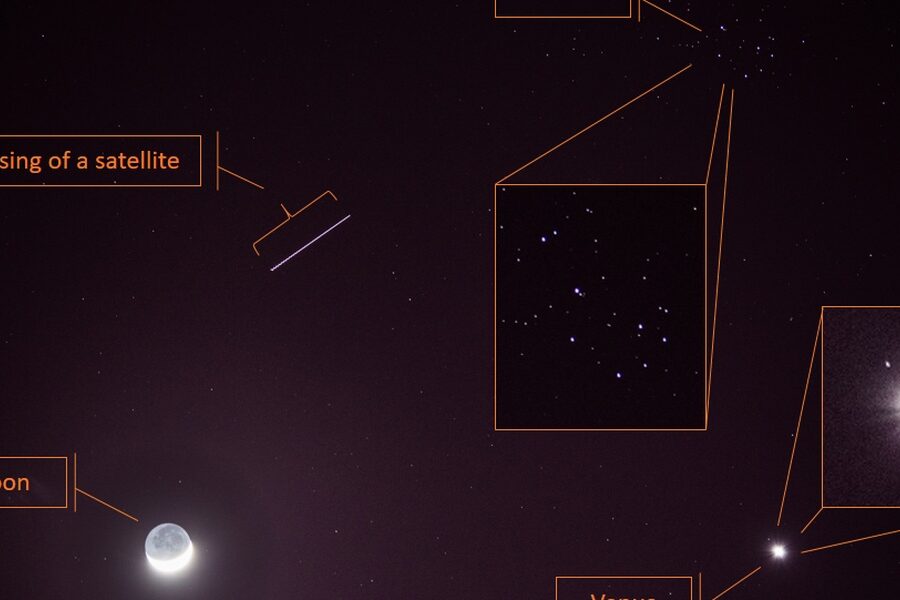
A bright, easy-to-see cluster of hot blue stars often visible to the naked eye; young (~100 Myr) and surrounded by reflection nebulosity. Great for beginners, striking in binoculars and a classic winter sky highlight.
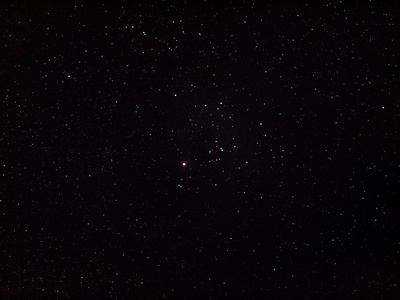
Hyades
Nearest open cluster to Earth with a loose V-shaped pattern around Aldebaran; middle-aged (~600 Myr). Excellent for parallax and stellar evolution studies and obvious to the naked eye for northern observers.
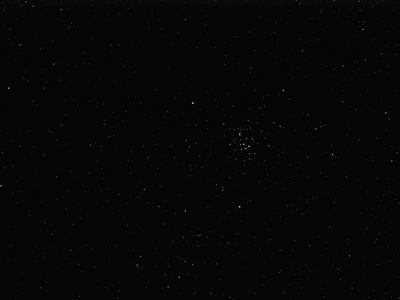
Beehive (Praesepe)
A broad, rich cluster visible with binoculars in spring; intermediate age (~600–800 Myr). Historically important and easily found, it provides many stars for binocular star-hopping and casual observing.
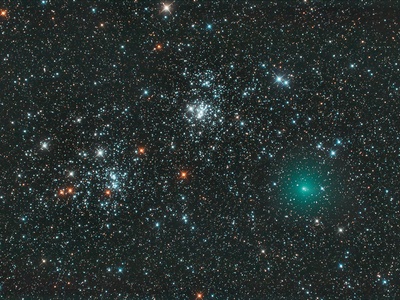
Double Cluster
Two adjacent young clusters forming a spectacular naked-eye pair in Perseus; ages ~12–14 Myr. Very bright in binoculars and small telescopes, prized for striking star colors and dense star fields.
M38
A loose, moderately bright open cluster with dozens of stars; age ~220 Myr. Attractive in small telescopes and binoculars with a scattered, triangular shape and several bright member stars.
M36
Compact and younger (~25 Myr) than many nearby clusters, M36 appears as a small, concentrated group in binoculars. Good target for small scopes and for comparing youthful clusters in Auriga.
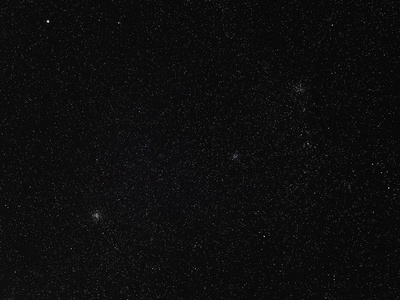
M37
The richest of the Auriga trio, with hundreds of stars and a dense core; age ~300–400 Myr. Bright and rewarding in binoculars and small telescopes, it shows many faint members.
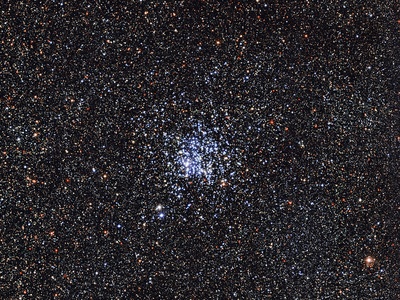
Wild Duck Cluster
A very rich, compact cluster with the appearance of a duck in telescopes; relatively young (~220 Myr). One of the brightest open clusters, excellent in small telescopes and crowded star fields.
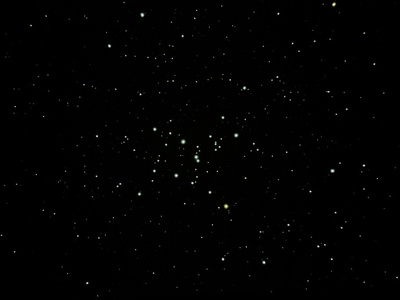
Ptolemy’s Cluster
A large, bright cluster near the Scorpion’s tail, visible to the naked eye from dark sites; age ~220 Myr. Low in the sky for many observers but dramatic through binoculars and rich in bright stars.

Butterfly Cluster
A small, pretty cluster with a butterfly-like pattern of bright orange and blue stars; age ~100 Myr. Easily seen in binoculars and attractive in small telescopes for color contrast.
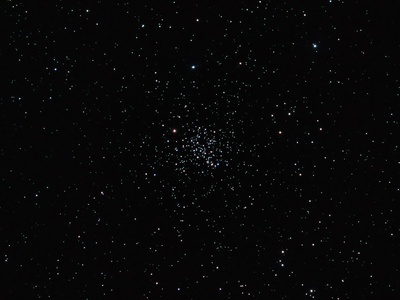
M67
One of the oldest nearby open clusters (~3.5–4 Gyr), M67 is a solar-age laboratory. Its Sun-like stars and advanced evolution stages make it fascinating for amateurs and studies of stellar aging.
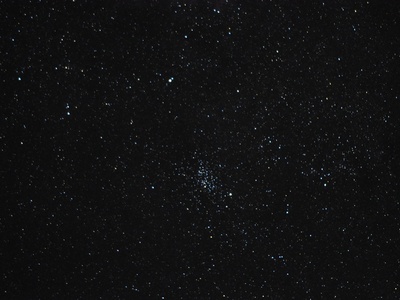
Wishing Well Cluster
A bright, wide southern cluster rich with colorful stars, visible to the naked eye from southern latitudes; age ~300 Myr. Popular for visual observing and wide-field photography with many resolved members.
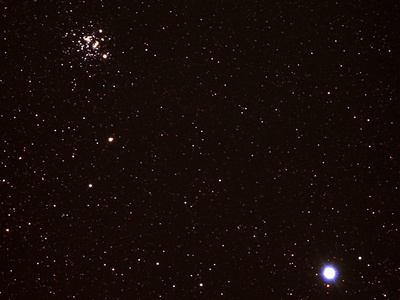
Jewel Box
A compact, colorful cluster near the Southern Cross with striking blue and red stars; age ~14 Myr. A southern-sky favorite for its vivid colors and tight grouping in small telescopes.
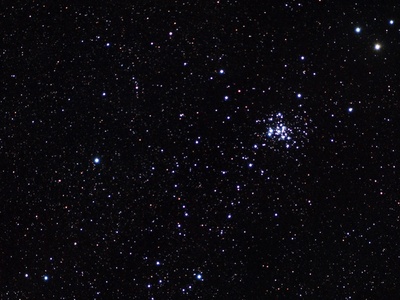
NGC 6231
A bright, young cluster that forms part of the Scorpius “False Comet,” rich in massive hot stars; age ~3–7 Myr. Lovely in binoculars and small scopes with a dense core and many bright members.
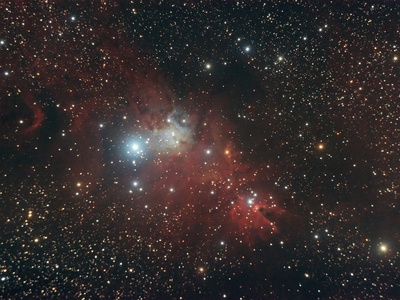
Christmas Tree Cluster
Associated with reflection and emission nebulae, this young cluster (~3 Myr) forms a tree-like outline. Popular for imaging and visual observers as part of the Christmas Tree/ Cone Nebula complex.
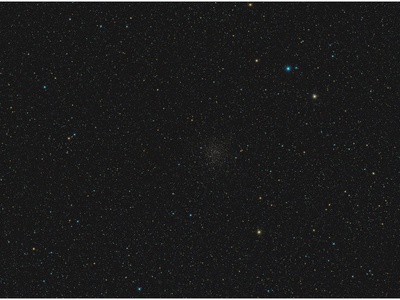
NGC 6791
One of the oldest and most metal-rich known open clusters (~8 Gyr), unusually ancient and compact. Fainter and distant but scientifically important for studies of stellar evolution and cluster longevity.

NGC 6633
A bright, loose cluster visible with binoculars and small telescopes; age ~600 Myr. Offers an open appearance with many bright F- and G-type stars, handy for spring observing in the northern hemisphere.
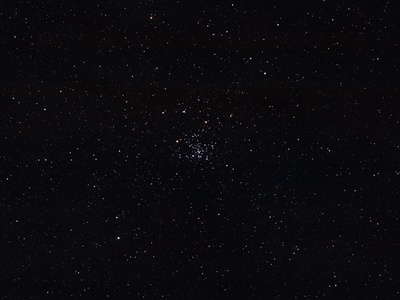
NGC 2516
A southern counterpart to the Pleiades with many bright blue stars; age ~140 Myr. Great in binoculars and small scopes, popular for star counting and colorful imaging.
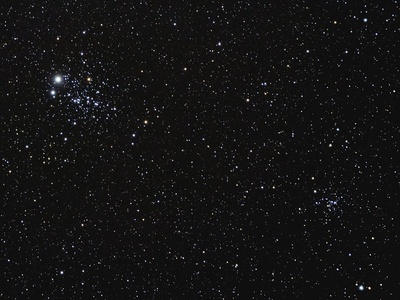
ET Cluster
A compact, bright cluster nicknamed for its “ET” or Owl shape; age ~21 Myr. Easily seen in small telescopes and binoculars, notable for a few bright supergiant members and striking silhouette.
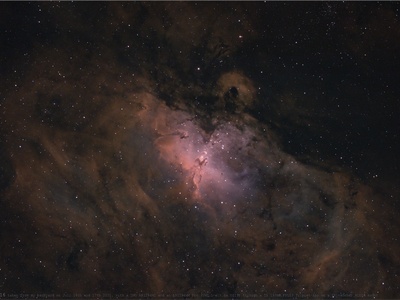
Eagle Cluster
The young cluster that lights the Eagle Nebula, containing hot O- and B-type stars; age ~1–2 Myr. Famous for the nearby Pillars of Creation, it’s an exciting target for both imaging and study.