In 1859, Charles Darwin used comparative anatomy to argue that similarities between species often reflect shared ancestry rather than chance.
Early naturalists were frequently fooled by look-alikes: a fin here, a wing there, and they assumed close kinship. Over time, careful study of embryos, bones and genes showed that outward similarity can mean very different things.
This piece outlines 8 differences between homologous and analogous structures so you can see why origin matters for evolution, classification, medicine and engineering.
Biological origins and developmental basis
1. Evolutionary origin: common ancestry versus independent invention
Homologous structures descend from a common ancestor; analogous structures emerge independently through convergent evolution.
Darwin’s 1859 observations relied on this distinction: shared ancestry explains repeating patterns across related species. A classic homologous motif is the pentadactyl plan—five digits—which appears across mammals, amphibians, reptiles and birds.
By contrast, flight evolved more than once. Wings in pterosaurs, birds and bats trace back to different lineages and modifications, while insect wings evolved from thoracic structures. Appearance alone would have misled early observers.
2. Developmental pathways reveal deep similarity
Embryology often unmasks homology when adult forms diverge. Tissues that give rise to a structure and the sequence of its development can show common origin even if adults look very different.
For example, limb buds in vertebrate embryos follow similar stages of outgrowth and patterning, reflecting shared developmental programs. Insects, however, build wings from thoracic exoskeleton tissue rather than limb buds.
Comparing those developmental markers—cell lineage, timing and gene expression—lets researchers separate true homology from functional mimicry.
3. Genetic evidence: conserved toolkits versus different genetic routes
Homologous structures frequently share genetic regulators. Vertebrates have four Hox gene clusters that help lay out body plans, and similar Hox and Tbx expression patterns often mark homologous body parts.
When the same regulatory genes and networks appear in species that share a trait, that genetic signature supports common ancestry. Analogous traits often arise through distinct genes or novel regulatory changes.
Genomic and gene-expression studies therefore provide a powerful line of evidence for assigning homology beyond what bones or surface anatomy show.
Form, function, and morphology
4. Structural homology versus functional analogy
A key distinction is that homologous structures can perform different jobs, while analogous structures perform similar jobs but evolved separately.
Take vertebrate forelimbs: the same basic bones are repurposed for grasping (humans), swimming (whales) and flying (bats). Those are homologous structures with divergent functions.
By contrast, bird wings and insect wings both enable flight but have different origins and internal makeups; insect wings lack the homologous limb bones found in vertebrates.
5. Superficial similarity can be misleading: look beneath the surface
External form—streamlining, surface shape or similarity of appendages—can hide fundamentally different internal anatomy.
Many tetrapods share core limb elements such as the humerus, radius and ulna, a concrete internal template that signals homology even when digits or joints change.
Compare sharks and dolphins: both are sleek and fish-like externally, but sharks are fish with cartilage skeletons while dolphins are mammals with the full tetrapod bone plan—an example of analogous external form underlain by different structure.
6. Phylogenetic distribution: consistent across clades versus scattered appearance
Homologous traits tend to map consistently across a clade and help reconstruct evolutionary trees. Taxonomists prefer characters that reflect shared ancestry when building phylogenies.
Analogous traits, by contrast, crop up in unrelated branches under similar selective pressures. Wings appear across many taxa for the same ecological reason but not from a single common winged ancestor.
To give scale: there are roughly 10,000 bird species and more than 1,000,000 described insect species, yet wings in those groups do not imply a single evolutionary origin.
Implications and applications in research, medicine, and engineering
7. Adaptive significance: convergence shows similar solutions to similar problems
Analogous structures often point to the same environmental challenge and show how selection can find similar mechanical solutions independently.
The camera-style eye in cephalopods and vertebrates is a striking case: complex optics and a lens-based design evolved separately in both lineages, yet both solve the challenge of high-resolution vision.
Convergence can arise over relatively short geological spans or over deep time, but the presence of convergence tells scientists which environmental pressures were strong drivers of form and function.
8. Practical implications: taxonomy, medicine, and biomimetics
Misidentifying analogy as homology can mislead classification and applied research. Taxonomists rely on homologous characters to infer relationships and build reliable cladograms.
In medicine, developmental homology informs how clinicians and geneticists interpret congenital limb defects: knowing that limbs share developmental programs across vertebrates helps identify causative pathways.
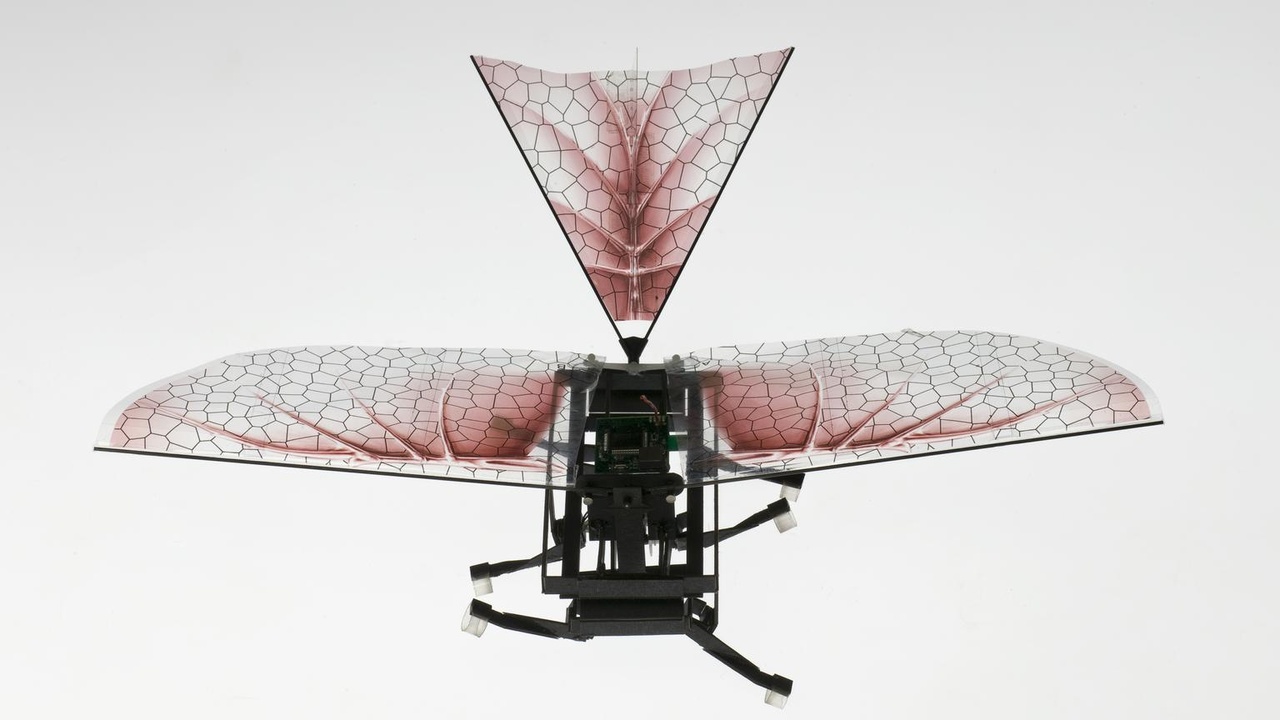
Engineers, meanwhile, often borrow analogous designs. Micro-air vehicles take inspiration from insect wing mechanics, and robotic grasping borrows principles from bat or primate hands without needing common ancestry.
For researchers and designers the rule is simple: confirm origin with multiple lines of evidence—morphology, embryology and genetics—before assuming a relationship or copying a biological design.
Understanding the differences between homologous and analogous structures improves both scientific inference and practical innovation.
Summary
- Homology is about shared ancestry; analogy is about independent, convergent solutions (remember the pentadactyl limb versus multiple origins of wings).
- Embryology and genetics (for example, the four Hox clusters in vertebrates) often reveal true relationships that surface anatomy can hide.
- Function and appearance can mislead—inspect internal structures like the humerus, radius and ulna and check developmental origin.
- Distinguishing the two matters across fields: taxonomy, evolutionary medicine and biomimetics each depend on knowing whether similarity reflects ancestry or convergence.
- When comparing traits, use multiple lines of evidence—morphology, embryology and genetics—to confirm whether a similarity is homologous or analogous.