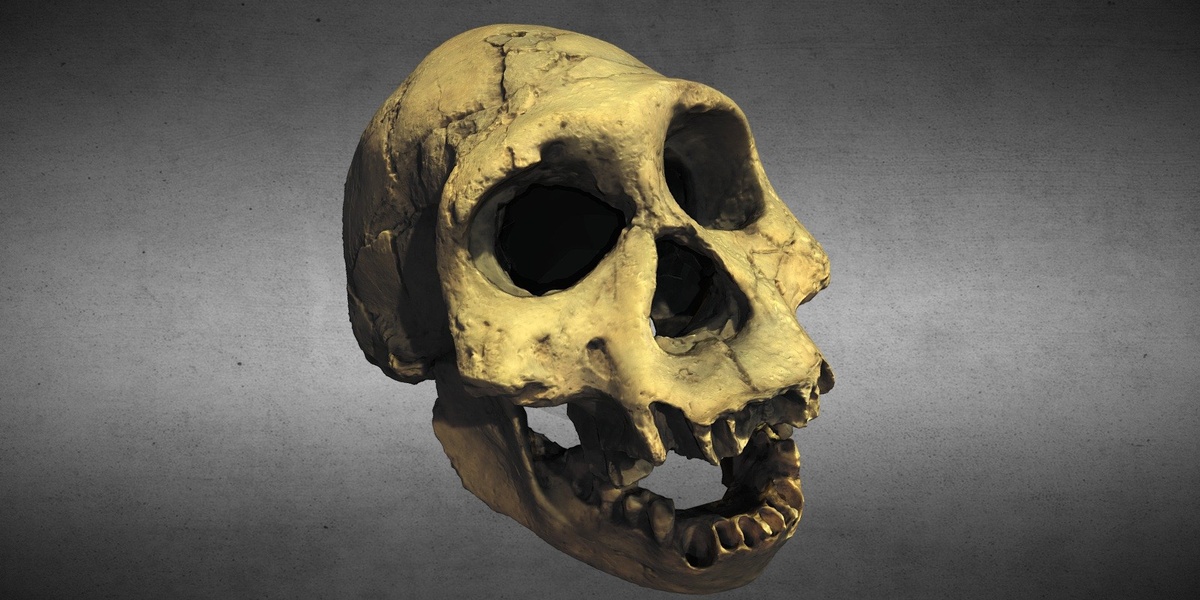
In 1974 the discovery of “Lucy” (Australopithecus afarensis) in Ethiopia reshaped public ideas about our ancient past and showed how easily stories rush in where data are sparse. Lucy, dated to about 3.2 million years ago, became a vivid symbol for human origins—and a reminder that simple explanations often stick better than complicated evidence. Why do myths take hold so fast?
Misunderstandings matter because they shape education, policy, and how people relate to science. Clear, accurate explanations help students, museum visitors, and the curious separate catchy myths from what fossils, DNA, and artifacts actually tell us. The goal here is plain: debunk 10 common misunderstandings and show the evidence behind the real story. The article groups myths into four themes—timeline, anatomy, behavior, and modern misinterpretation—so you can jump to the parts that interest you most.
Foundations and Timeline Myths
Many timeline myths come from picturing evolution as a straight line rather than a branching tree. Phylogenetic trees represent relatedness and shared ancestry, not a linear ladder. Genetic studies and fossils fill in branches at different times and places, so dates like the human–chimp divergence (about 6–8 million years ago) and Lucy at roughly 3.2 million years ago help anchor that messy picture.
Fossils such as Sahelanthropus tchadensis (around 7 million years ago) and later Australopithecus specimens show a range of early hominins rather than a single sequence. DNA data complement those finds by estimating when lineages split. Keep that branching image in mind: multiple species can appear, persist, and disappear on different branches at the same time.
1. Humans descended directly from chimpanzees
This is a common slip: humans did not descend from modern chimpanzees. Instead, humans and chimps share a common ancestor that lived roughly 6–8 million years ago.
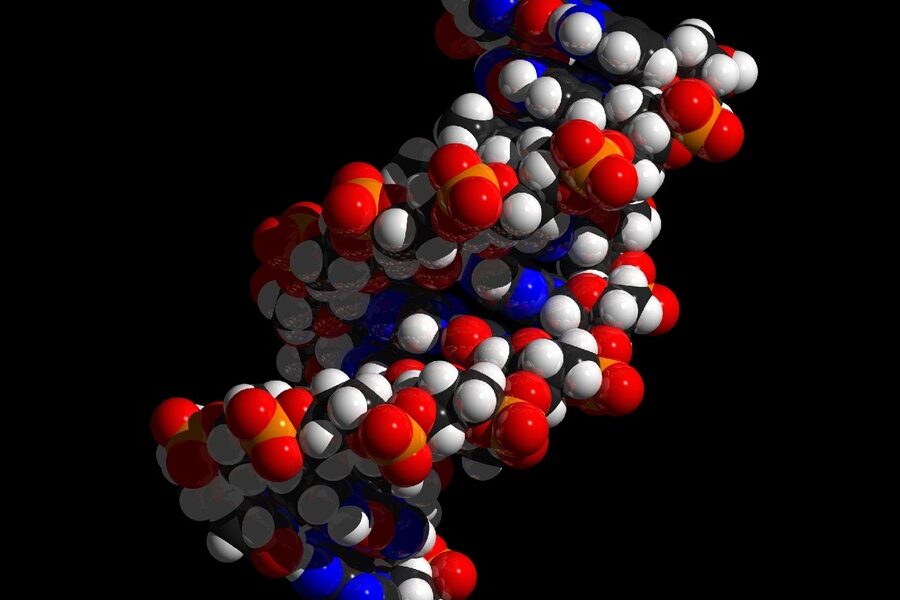
Genetically we remain very similar—about 98–99 percent of DNA in common—but the shared percentage reflects common ancestry, not direct descent. Fossils like Sahelanthropus (≈7 mya) and Orrorin point to early hominins near the time of that split, illustrating separate evolutionary paths for the line that led to chimpanzees and the one that led to us.
The misconception persists because chimps are our closest living relatives and because everyday language often frames evolution as “from ape to human.” That simplification matters in classrooms and public discourse; teaching shared ancestry helps correct a misleading picture.
2. There was a single “missing link” between apes and humans
The phrase “missing link” suggests one intermediate species connecting apes and humans. Paleontology offers a different story: dozens of hominin species, multiple transitional forms, and a long, branching sequence of changes over millions of years.
Conservative counts list 20+ recognized hominin taxa in the past few decades, with examples such as Australopithecus, Homo habilis, and Ardipithecus ramidus (about 4.4 million years ago). Those fossils show mosaic traits—some apelike, some humanlike—accruing over time rather than arriving in a single jump.
The “missing link” idea hails from a 19th-century search for neat intermediates. Once you accept branching evolution, you see why looking for one perfect specimen is misguided.
3. Human evolution is a straight ladder from primitive to modern
Evolution is often imagined as progress up a ladder toward modern humans, but the fossil record looks more like a bushy tree. Multiple hominins coexisted, adapted to different niches, and sometimes interbred.
For example, Neanderthals, Denisovans, and early Homo sapiens overlapped in time. Neanderthals and our ancestors interbred, leaving roughly 1–2 percent Neanderthal DNA in many non-African genomes. Island species such as Homo floresiensis show unique, localized adaptations rather than a straightforward improvement sequence.
Seeing evolution as non-directional removes a false value judgment: survival depends on context, not on being “more advanced.”
Anatomy and Physical Trait Myths
Anatomical changes—pelvis shape, brain size, robusticity—are often misread as single-cause adaptations. In truth, traits usually reflect trade-offs and multiple selective pressures. Bipedalism, for instance, evolved in a context of shifting environments, body plans, and behaviors.
Interpreting morphology requires context: where fossils are found, associated tools or cut marks, and comparative anatomy across species. That fuller view helps explain why humans look the way we do.
4. Bipedalism evolved primarily for hunting
It’s tempting to link upright walking directly to hunting, but multiple hypotheses compete. Bipedalism may have improved locomotor efficiency across open habitats, helped with thermoregulation, freed the hands for carrying food or infants, or aided visual surveillance and display.
Fossil evidence—pelvis and femur shapes—shows bipedal traits present by about 4–6 million years ago, often long before the kinds of coordinated hunting seen in later Homo. Modern interpretations of early pelvis fossils favor a mix of selective pressures rather than a single hunting cause.
5. A big brain is the only thing that makes us human
Brain size matters but it’s not the whole story. Modern Homo sapiens average about 1,300–1,400 cc, yet cognitive abilities also depend on brain organization, prolonged development, social networks, and cultural transmission.
Measures such as encephalization quotient help compare species, but behavior is crucial too. Symbolic artifacts—like the ochre and engraved pieces from Blombos Cave—point to complex cognition that involves learning and culture as much as sheer brain volume.
6. Neanderthals were brutish and unintelligent
Older portrayals cast Neanderthals as crude brutes, but decades of archaeology and genetics have overturned that stereotype. Evidence shows care for injured individuals, complex tools, potential symbolic behavior, and adaptation to cold climates.
Archaeological examples include the Shanidar burials and well-made Mousterian tools. Genomic studies show Neanderthals contributed about 1–2 percent of DNA to many non-African populations, confirming interaction and biological closeness to our lineage.
Museum displays and textbooks have begun to update accordingly, portraying Neanderthals as capable, adaptable humans rather than caricatures.
Behavioral and Cultural Myths
Cultural traits, language, and technology often build slowly. The archaeological record keeps pushing behavioral timelines deeper, showing that symbolic behavior and tool traditions emerged gradually rather than as sudden revolutions.
Preservation bias and uneven research also affect what we find. Some early behaviors leave little trace, so absence of evidence isn’t evidence of absence. Still, finds like Oldowan tools and Blombos artifacts make clear that cultural roots reach far back.
7. Culture and language appeared suddenly around 50,000 years ago
The “Great Leap Forward” idea suggests a rapid cognitive revolution around 50,000 years ago, but many artifacts show symbolic behavior earlier. Blombos Cave in South Africa yielded engraved ochre and shell beads dated to about 75,000 years ago.
Language origins are even harder to pin down because speech leaves no bones. Archaeological visibility varies, so gradual accumulation of symbolic artifacts and social learning is a more plausible picture than a single abrupt emergence.
8. Stone tools are proof only of modern human intelligence
Stone tools appear deep in time and across species. The Oldowan industry dates to about 2.6 million years ago and is associated with early Homo, long before anatomically modern humans appeared.
Tool use also exists among other primates today—chimpanzees fish for termites and crack nuts—showing that tools alone don’t define modern cognition. Complexity increased over time with cultural transmission, regional traditions, and innovation.
Modern Misinterpretations and the Scientific Process
Misunderstandings often come from conflating scientific findings with social narratives or from not appreciating what “theory” means in science. Evolution is descriptive: it explains patterns we observe in fossils, genes, and living populations, not a value judgment about worth.
Radiometric dating, comparative genetics, and observed cases of rapid evolution in modern species together form a consistent framework. That framework helps us place fossils and artifacts into time and understand the processes that shaped them.
9. Evolution always means progress toward “better” organisms
Evolution favors traits that improve reproductive success in a given environment, not an abstract notion of “better.” What helps in one setting can be harmful in another.
Consider the sickle‑cell trait: carrying one copy of the mutation confers resistance to malaria, a clear selective advantage in regions where malaria is endemic. Conversely, cave species often lose eyesight when vision offers no benefit. These are adaptations to circumstance, not progress toward an ideal form.
10. Evolution is “just a theory” and therefore unreliable
Calling evolution “just a theory” misunderstands scientific language. In science a theory is a tested, explanatory framework that integrates evidence and makes sense of observations.
Multiple independent lines of evidence converge on human origins: dated fossils such as Oldowan tools at about 2.6 million years, comparative genetics that estimate splits and admixture, and radiometric methods like argon-argon and uranium‑series that provide absolute ages. Radiocarbon dating is effective up to roughly 50,000 years, while other techniques cover older material.
Reputable sources such as Nature, the Smithsonian, and National Geographic summarize this cross-disciplinary support. Addressing common myths about human evolution relies on those converging data streams rather than on single, isolated findings.
Summary
- Evolution is a branching process, not a straight ladder; numeric anchors help: Lucy ≈3.2 mya, Oldowan tools ≈2.6 mya, human–chimp split ≈6–8 mya.
- Many hominin species coexisted and sometimes interbred—Neanderthal DNA makes up about 1–2% of many non-African genomes—so “missing link” and brutish Neanderthal myths are misleading.
- Anatomical traits reflect trade-offs and multiple causes: bipedalism, brain size (~1,300–1,400 cc on average), and tool traditions evolved gradually under varied pressures.
- Cultural and technological behaviors have deep roots; symbolic artifacts predate 50,000 years in places such as Blombos Cave (≈75,000 years ago), and tool use goes back millions of years.
- Trust the scientific framework: converging evidence from fossils, genetics, archaeology, and dating methods underpins our understanding—so check reputable museum exhibits and outlets like the Smithsonian or Nature to learn more about myths about human evolution.