Austria’s history of ideas and discovery shows up in surprising places — from Viennese cafés where writers debated to laboratories that changed physics. Those achievements are reflected in the country’s Nobel record and the stories behind each laureate.
There are 16 Austria’s Nobel Prize Winners, ranging from Alfred Hermann Fried to Wolfgang Pauli. Entries are organized in columns Year (YYYY),Prize,Nationality/Notes so you can quickly see when, in which field, and under what circumstances each person was honored, and you’ll find below.
Which Austrians won Nobel Prizes and in which fields?
The list includes laureates across Peace, Physics, Medicine, Literature and Economic Sciences; names span early peace activists like Alfred Hermann Fried to leading scientists such as Wolfgang Pauli, with each row showing the year, the prize category and brief nationality or contextual notes for clarity.
How reliable and current is this list?
The compilation follows official Nobel records and established historical sources, using the Year (YYYY) format and notes for dual nationality or special cases; consult NobelPrize.org for the most current official updates.
Austria’s Nobel Prize Winners
| Name | Year (YYYY) | Prize | Nationality/Notes |
|---|---|---|---|
| Bertha von Suttner | 1905 | Peace | Born in Prague (Austrian Empire); Austrian noble and peace activist |
| Alfred Hermann Fried | 1911 | Peace | Born in Vienna; Austrian pacifist and journalist |
| Victor Franz Hess | 1936 | Physics | Born in Austria; Austrian physicist |
| Erwin Schrödinger | 1933 | Physics | Born in Vienna; Austrian-born physicist |
| Wolfgang Pauli | 1945 | Physics | Born in Vienna; Austrian-born theoretical physicist |
| Karl Landsteiner | 1930 | Medicine | Born in Vienna; Austrian physician and immunologist |
| Julius Wagner-Jauregg | 1927 | Medicine | Born in Wels, Austria; Austrian physician |
| Konrad Lorenz | 1973 | Medicine | Born in Vienna; Austrian ethologist and zoologist |
| Otto Loewi | 1936 | Medicine | Worked in Graz/Vienna; affiliated with Austria when awarded |
| Robert Bárány | 1914 | Medicine | Born in Vienna; Austrian otologist (later Swedish citizen) |
| Fritz Pregl | 1923 | Chemistry | Born in Ljubljana (then Austro-Hungarian); Austrian-Hungarian chemist |
| Max Perutz | 1962 | Chemistry | Born in Vienna; Austrian-born molecular biologist (later British citizen) |
| Walter Kohn | 1998 | Chemistry | Born in Vienna; Austrian-born theoretical chemist (later US citizen) |
| Friedrich Hayek | 1974 | Economic Sciences | Born in Vienna; Austrian economist and political philosopher |
| Elfriede Jelinek | 2004 | Literature | Born in Mürzzuschlag; Austrian novelist and playwright |
| Peter Handke | 2019 | Literature | Born in Griffen; Austrian author and playwright |
Images and Descriptions
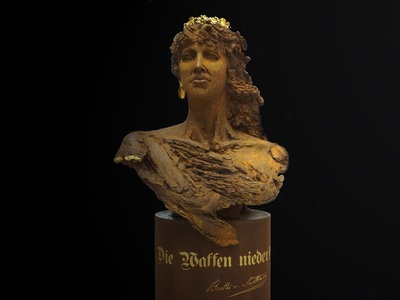
Bertha von Suttner
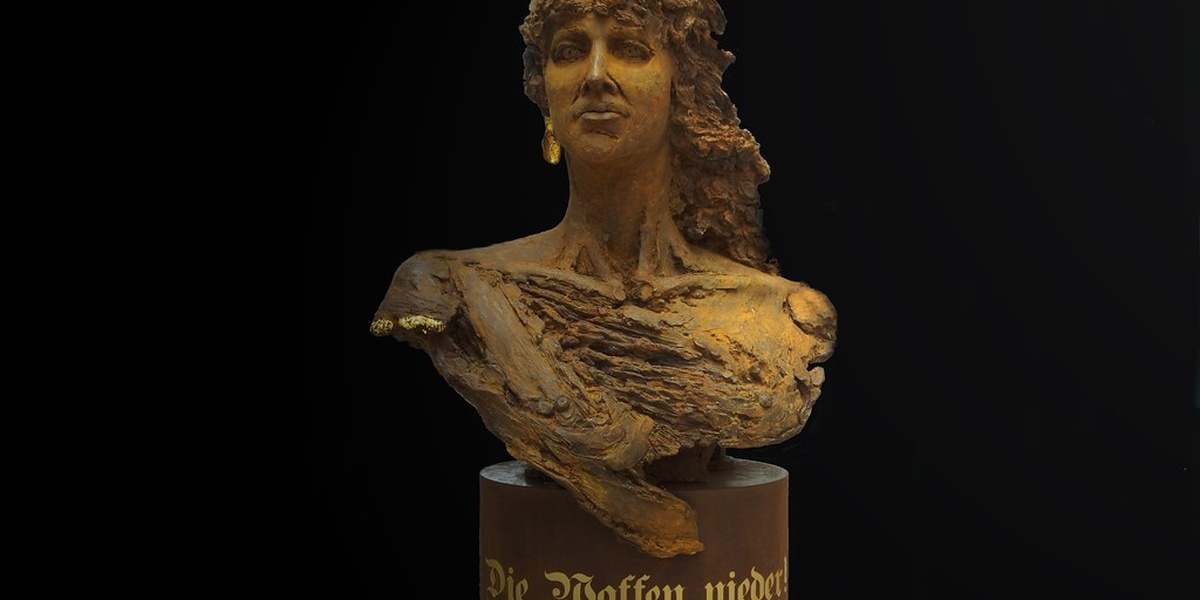
Bertha von Suttner campaigned for peace through her influential novel “Lay Down Your Arms” and work with pacifist organizations. Her activism helped popularize international disarmament and influenced Alfred Nobel; she was the second Nobel Peace Prize laureate, recognized in 1905.

Alfred Hermann Fried
Alfred Hermann Fried was a leading pacifist and founder of peace journals; his writings and organizing promoted international arbitration and pacific solutions to conflict, earning him the Nobel Peace Prize in 1911 for advancing the cause of peace.
Victor Franz Hess
Victor Franz Hess discovered cosmic rays by measuring ionizing radiation at high altitude in balloon flights, conclusively demonstrating an extraterrestrial source. His 1936 Nobel Prize acknowledged this foundational contribution to astrophysics and atmospheric radiation studies.
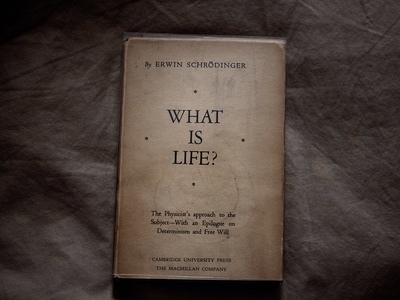
Erwin Schrödinger
Erwin Schrödinger developed wave mechanics and the Schrödinger equation, a cornerstone of quantum theory. His elegant formalism reshaped physics and chemistry; the 1933 Nobel Prize honored his foundational work explaining atomic behavior and quantum dynamics.
Wolfgang Pauli
Wolfgang Pauli was honored for the Pauli exclusion principle, explaining how no two electrons can occupy the same quantum state. His work underpins atomic structure, quantum mechanics, and the behavior of matter, profoundly shaping 20th-century physics.
Karl Landsteiner
Karl Landsteiner discovered and classified human blood groups (A, B, O and Rh later), revolutionizing transfusion medicine and making blood transfusions safe. Awarded the 1930 Nobel Prize for his decisive contributions to immunology and clinical practice.
Julius Wagner-Jauregg
Julius Wagner-Jauregg introduced malarial therapy to treat neurosyphilis (general paresis), intentionally infecting patients to induce fever that sometimes alleviated symptoms. His controversial 1927 Nobel Prize recognized this early biological treatment approach in psychiatry.
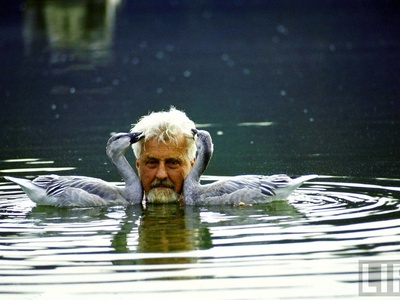
Konrad Lorenz
Konrad Lorenz pioneered ethology, studying animal behavior and imprinting, particularly in geese and birds. His work established foundational principles of instinct and social behavior; he shared the 1973 Nobel Prize for achievements in understanding animal behavior.
Otto Loewi
Otto Loewi demonstrated chemical transmission of nerve impulses by stimulating frog hearts and identifying acetylcholine, proving neurotransmission. His 1936 Nobel Prize established neurochemistry as a field and transformed understanding of synaptic signaling.
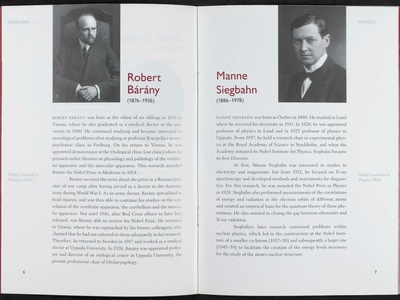
Robert Bárány
Robert Bárány made seminal discoveries about the vestibular system and balance by studying inner ear function. His work improved diagnosis and treatment of balance disorders and earned him the 1914 Nobel Prize in Physiology or Medicine.
Fritz Pregl
Fritz Pregl developed microanalysis techniques for organic compounds, enabling accurate chemical analysis from minute samples. His methods revolutionized analytical chemistry and laboratory practice, earning him the 1923 Nobel Prize in Chemistry for improved microanalysis.
Max Perutz
Max Perutz determined the structure of haemoglobin using X-ray crystallography, pioneering structural biology. His detailed studies of protein structure transformed understanding of biological macromolecules and won him the 1962 Nobel Prize in Chemistry.
Walter Kohn
Walter Kohn developed density functional theory, a practical quantum method enabling efficient calculation of electronic structure in atoms, molecules, and solids. The 1998 Nobel Prize recognized his foundational contribution to computational chemistry and materials science.
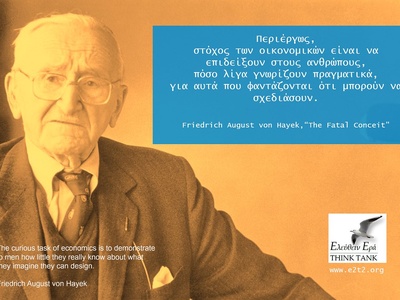
Friedrich Hayek
Friedrich Hayek was honored for his pioneering analysis of price signals and decentralized knowledge, arguing markets coordinate dispersed information. His work on monetary theory, business cycles, and political philosophy profoundly influenced economics and public policy.
Elfriede Jelinek
Elfriede Jelinek writes provocative, linguistically playful novels and plays exploring gender, power, and Austrian society. Her sharp, satirical voice and experimental style earned her the 2004 Nobel Prize in Literature for her musical flow of voices and counter-voices.
Peter Handke
Peter Handke is known for innovative, introspective prose and plays that challenge narrative conventions. His experimental literature and controversial public stances made him a polarizing figure; the 2019 Nobel Prize recognized his influential body of work.