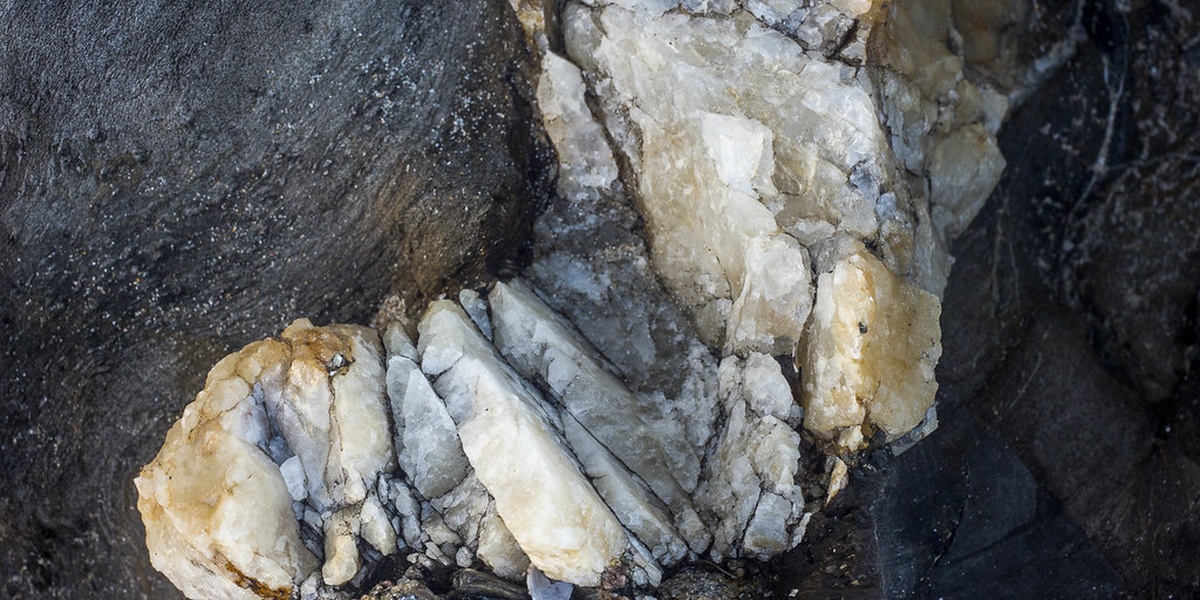
Nova Scotia’s rugged shorelines, glacial deposits and long mining history give the province a compact but diverse mineral record. From coastal outcrops to old pit workings, local geology offers useful lessons for hobbyists, students and anyone curious about what lies in the rocks.
There are 30 Minerals in Nova Scotia, ranging from Albite to Tourmaline (schorl). For each entry you’ll find below Formula,Hardness (Mohs),Notable localities (NS) so you can quickly check composition, relative hardness and likely collecting spots — details you’ll find below.
Where can I legally collect mineral samples in Nova Scotia?
Rules vary by land type: always get landowner permission on private land, follow park regulations (many protected areas prohibit collecting), and check provincial guidelines before you dig. Local rockhounding clubs and museum websites are good sources for up-to-date access rules and safe, responsible collecting practices.
How can I identify and care for specimens I find?
Start with simple tests—visual features, a hand lens, and a Mohs hardness check—and compare results to the Formula,Hardness (Mohs),Notable localities (NS) information in the list below. Label each find with location and date, keep fragile samples cushioned in boxes, and avoid aggressive cleaning that can damage softer or coated minerals.
Minerals in Nova Scotia
| Name | Formula | Hardness (Mohs) | Notable localities (NS) |
|---|---|---|---|
| Quartz | SiO2 | 7 | Minas Basin; Sambro coast; Meguma gold veins |
| Calcite | CaCO3 | 3 | Widespread veins; Windsor area |
| Gypsum | CaSO4·2H2O | 2 | Windsor gypsum mines (Hants County); Minas Basin |
| Pyrite | FeS2 | 6–6.5 | Meguma gold districts; coal seams; sulfide veins |
| Marcasite | FeS2 | 6–6.5 | Coal seams; pyrite-rich deposits |
| Arsenopyrite | FeAsS | 5.5–6 | Meguma gold mineralization (Goldenville, Moose River) |
| Chalcopyrite | CuFeS2 | 3.5–4 | Base-metal and gold-bearing veins across province |
| Galena | PbS | 2.5 | Historic lead-zinc veins (Pictou, Cape Breton) |
| Sphalerite | ZnS | 3.5–4 | Lead-zinc deposits in southern Nova Scotia, Cape Breton |
| Hematite | Fe2O3 | 5.5–6.5 | Iron deposits in Cumberland and Cape Breton |
| Magnetite | Fe3O4 | 5.5–6.5 | Mafic intrusions; Cape Breton occurrences |
| Native gold | Au | 2.5–3 | Goldenville; Moose River; Tangier gold districts |
| Graphite | C | 1–2 | Metamorphic belts (Cape Breton, Cumberland) |
| Stilbite | NaCa2Al5Si13O36·14H2O | 3.5–4 | Bay of Fundy basalts (Minas Basin) |
| Heulandite | Ca(Al2Si7O18)·6H2O | 3.5–4 | Bay of Fundy basalts (Minas Basin) |
| Analcime | NaAlSi2O6·H2O | 5 | Bay of Fundy basalts (Minas Basin) |
| Natrolite | Na2Al2Si3O10·2H2O | 5–5.5 | Bay of Fundy basalts (Minas Basin) |
| Chabazite | (Ca,Na,K)2Al2Si4O12·6H2O | 3.5–4 | Bay of Fundy basalts (Minas Basin) |
| Mesolite | Na2Ca2Al4Si6O18·6H2O | 5 | Bay of Fundy basalts (Minas Basin) |
| Epidote | Ca2(Al,Fe)3Si3O12(OH) | 6–7 | Meguma metamorphic terrain; gold-bearing schists |
| Garnet (almandine) | Fe3Al2Si3O12 | 6.5–7.5 | Meguma metamorphic rocks; southern Nova Scotia |
| Muscovite | KAl2(AlSi3O10)(OH)2 | 2–2.5 | Metamorphic rocks and pegmatites across province |
| Biotite | K(Mg,Fe)3AlSi3O10(OH)2 | 2.5–3 | Metamorphic rocks across Nova Scotia |
| Albite | NaAlSi3O8 | 6–6.5 | Pegmatites and granites (Musquodoboit area) |
| Microcline | KAlSi3O8 | 6–6.5 | Granites and pegmatites (Halifax County) |
| Beryl | Be3Al2Si6O18 | 7.5–8 | Pegmatites near Musquodoboit and Halifax County |
| Tourmaline (schorl) | NaFe3Al6(BO3)3Si6O18(OH)4 | 7–7.5 | Pegmatites (Musquodoboit, Halifax County) |
| Spodumene | LiAl(SiO3)2 | 6.5–7 | Lithium-bearing pegmatites (Musquodoboit area) |
| Lepidolite | K(Li,Al)3AlSi3O10(F,OH)2 | 2.5–3 | Pegmatites (Musquodoboit, Halifax County) |
| Apatite | Ca5(PO4)3(F) | 5 | Igneous and pegmatite localities across province |
Images and Descriptions
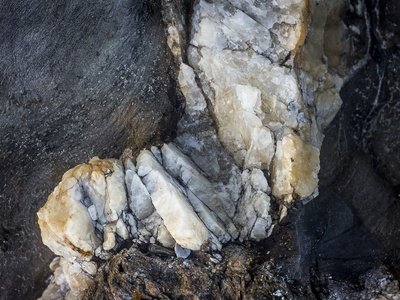
Quartz
Common, glassy crystal frequently found in Nova Scotia—from clear euhedral pockets to amethyst or smoky varieties in cavities and gold veins. Easy to ID by hardness and conchoidal fracture; collectible as large crystals and attractive beach-rolled pieces.

Calcite
Soft, reactive carbonate that forms rhombs and dog-tooth crystals in Nova Scotia veins and cavities. Fizzes with acid, shows cleavage and varied colors; popular with collectors for crystal shapes and as a gangue mineral in many historic mine sites.
Gypsum
Soft, bladed or fibrous crystals commonly mined near Windsor. Very easy to scratch with a fingernail, gypsum forms attractive translucent specimens and selenite sheets; important industrially and a classic Nova Scotia mineral find.
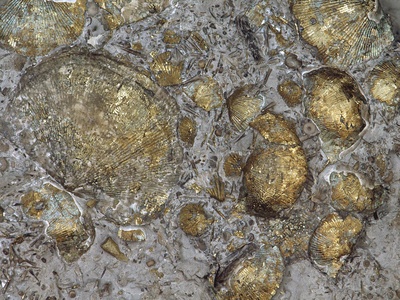
Pyrite
Brassy metallic “fool’s gold” occurs widely in sulphide veins and coal seams. Forms cubes, pyritohedra and masses; a common indicator mineral for mineralized zones and a favourite for specimen collectors despite rapid weathering.
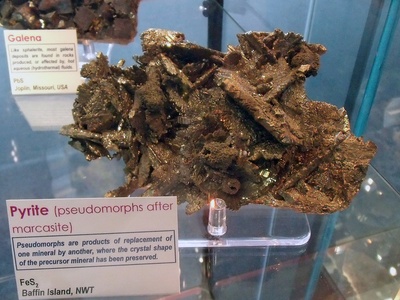
Marcasite
Marcasite looks like pale, metallic pyrite but forms twinned or spear-like crystals. It commonly occurs in coal-bearing strata and old mine dumps; delicate crystallography makes for attractive specimens but they can oxidize to brown iron oxides.
Arsenopyrite
A silver-white sulfide commonly associated with Nova Scotia gold veins. Dense and brittle with metallic lustre; important to geologists as an indicator of gold mineralization. Handle with care—contains arsenic and can oxidize.
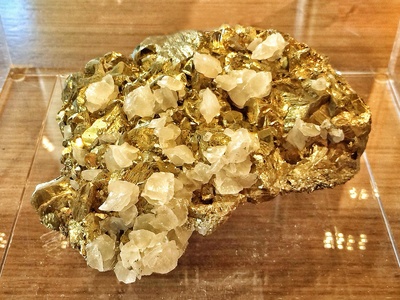
Chalcopyrite
Brassy to brassy-green metallic copper iron sulfide common in many hydrothermal and vein systems. Softer than pyrite, often tarnishes to iridescent colours; attractive to collectors and signals copper-bearing mineralization.
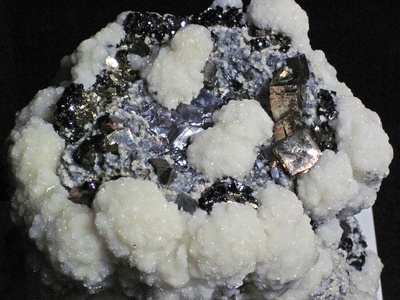
Galena
Heavy, bright metallic lead sulfide forming cubic crystals in veins. Distinctive heft and perfect cleavage make it easy to ID; historically important ore mineral and sometimes collected for sharp cubic specimens.
Sphalerite
Resinous to adamantine sulphide that forms brown to black crystals in base-metal veins. Often associated with galena and chalcopyrite; collectible for crystal forms and color variations.
Hematite
Iron oxide occurring as shiny specular or earthy red/brown masses. Found in historic ironbearing occurrences and metamorphic rocks; used as an ore and collectible for mirrorlike “specularite” crystals.
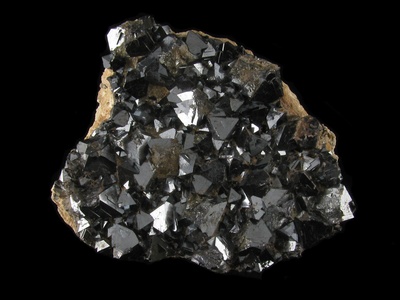
Magnetite
Black, magnetic iron oxide found in mafic and metamorphic rocks. Dense and easily tested with a magnet; of interest to collectors and prospectors mapping iron-rich units.
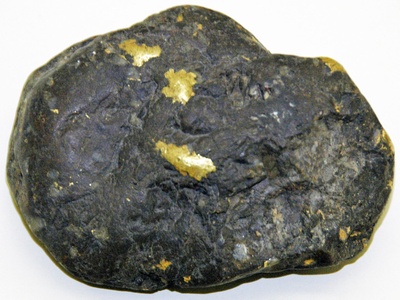
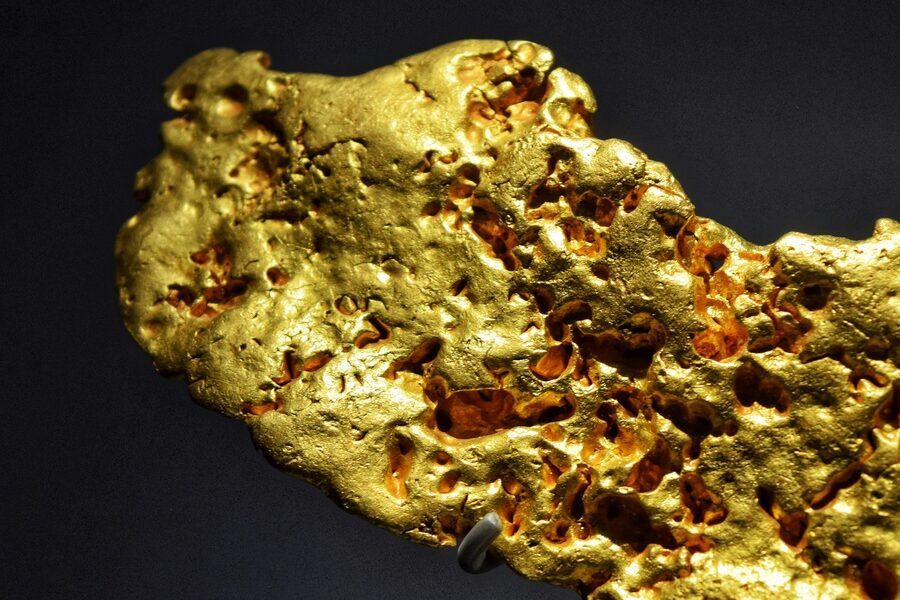
Native gold
Rare but celebrated—visible gold occurs in quartz veins of the Meguma terrane. Identified by its unmistakable colour and heft; prized by collectors and prospectors, often occurring with pyrite and arsenopyrite.
Graphite
Soft, black, greasy mineral in metamorphic rocks and schists. Used industrially and collected as crystalline masses or flakes; easy to identify by streak and softness, commonly seen in regional metamorphic terrains.
Stilbite
A common zeolite in basalt amygdales along the Bay of Fundy. Forms sheaflike, pearly pink to white crystals; sought after by collectors for showy crystalline sprays and easy identification in pocket vugs.
Heulandite
Heulandite occurs in amygdaloidal basalts around the Bay of Fundy. Typically cream to salmon-colored tabular crystals, it’s a staple zeolite for collectors and indicates low-temperature hydrothermal activity.
Analcime
Analcime forms trapezohedral, often white to grey crystals in basalt cavities. Harder than many zeolites and distinctive in shape; popular with local collectors hunting Fundy amygdales and basalt vugs.
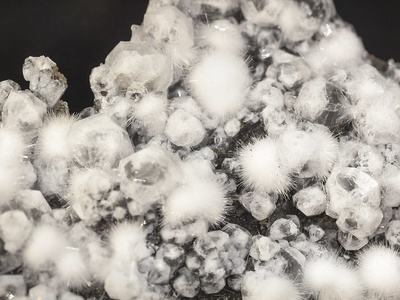
Natrolite
Needlelike or radiating white zeolite found in Fundy basalts. It forms attractive sprays and is a common find for field collectors exploring tidal exposures and pocket sites.
Chabazite
Chabazite produces blocky, often pinkish or white crystals in basalt cavities. A classic Fundy zeolite, it’s popular with collectors for its crystal form and occurrence alongside stilbite and heulandite.
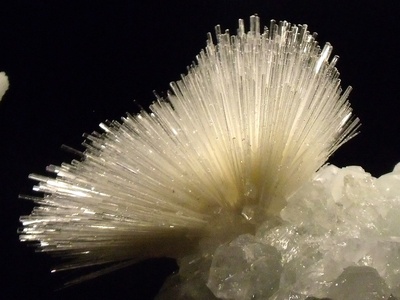
Mesolite
Fine, needlelike white zeolite that forms radiating sprays in basalt amygdales. Less flashy but common in Fundy pockets; appreciated for delicate, lacy specimens.
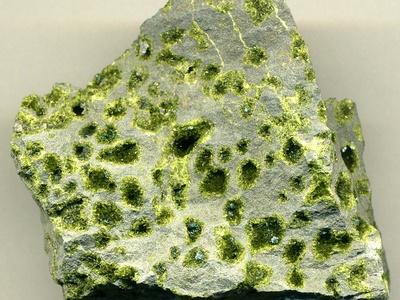
Epidote
Green, pistachio-coloured silicate common in metamorphosed rocks and hydrothermal zones. Forms prismatic crystals and is useful for identifying altered and mineralized schists in Nova Scotia’s gold belts.
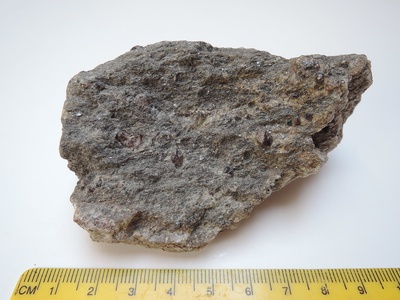
Garnet (almandine)
Dark red to brown almandine garnets occur in metamorphic schists across the province. Rounded to euhedral crystals are popular with collectors and commonly used to interpret metamorphic conditions.
Muscovite
Silvery, flaky mica occurs in schists, gneisses, and pegmatites. Splits into thin, flexible sheets; easy to identify and often part of attractive matrix specimens from pegmatites and mine dumps.
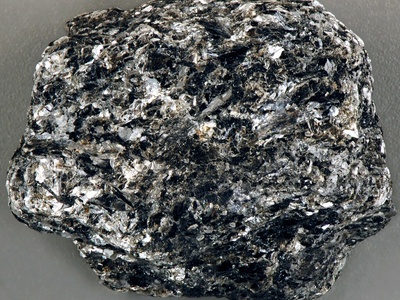
Biotite
Dark brown to black mica common in metamorphic rocks. Forms thin, shiny flakes with perfect cleavage; useful for field ID and commonly seen in schists and gneisses.
Albite
A sodium-rich plagioclase feldspar found in pegmatites and granitic rocks. Typically white to grey with good cleavage; common in pegmatite pockets and a routine field mineral for collectors.
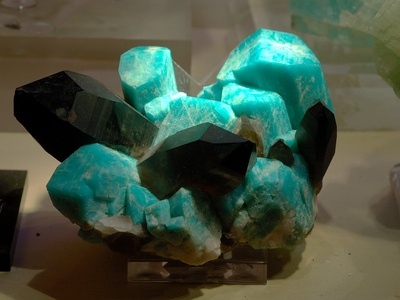
Microcline
Potassium feldspar that forms blocky, often pink to green crystals in granites and pegmatites. Identifiable by grid-twinning and durable crystals, valued in museum and lapidary specimens.
Beryl
Beryl (including aquamarine/tinted varieties) occurs in Nova Scotia pegmatites. Hard, hexagonal crystals are prized by collectors and gemcutters when gemmy; small but attractive crystals turn up in local pegmatite pockets.

Tourmaline (schorl)
Black schorl tourmaline forms prismatic crystals in Nova Scotia pegmatites. Hard and striated, tourmaline is a favourite among collectors for sharp crystals often hosted with quartz and feldspar.
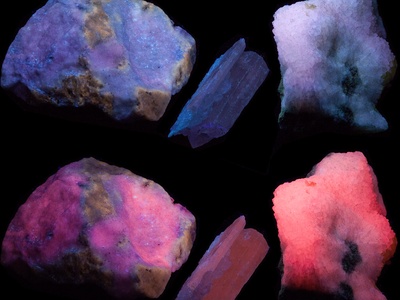
Spodumene
Pale to greenish prismatic lithium pyroxene found in local pegmatites. Collectible for its prismatic crystals and interest to mineralogists exploring pegmatite mineralogy and rare-element occurrences.
Lepidolite
Lilac to pink lithium mica occurring in Nova Scotia pegmatites. Soft, scaly and attractive in colour, lepidolite is a popular collectible and indicator of rare-element pegmatites.
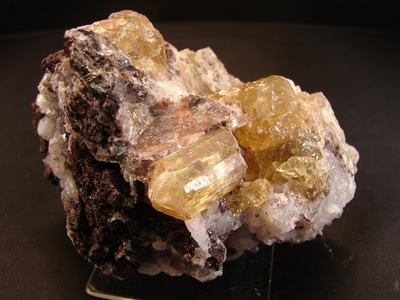
Apatite
Green to blue phosphate that forms prismatic crystals in pegmatites and igneous rocks. Moderate hardness and colorful crystals make it an attractive, educational specimen for local collectors.