Dante Alighieri’s Divine Comedy, completed c.1320, fixed an image of Hell in the Western imagination with its vivid map of nine circles. For roughly seven centuries artists, preachers, and writers treated Dante’s poetic taxonomy as if it were an authoritative description rather than a literary device. That overlay of literature and art shapes moral fears, political rhetoric, and devotional practices even now.
Popular Hell imagery often stands in for complex theological debates about justice, judgment, and the afterlife. Many commonly held ideas come from translation choices, medieval sermons, apocryphal tales, and later folklore rather than a single, clear scriptural source. This piece debunks eight common misunderstandings, traces their origins, and shows why distinguishing cultural accretions from doctrinal claims matters.
Let’s begin with historical and literary origins that supplied much of the detail people assume is “biblical.”
Historical and Literary Origins
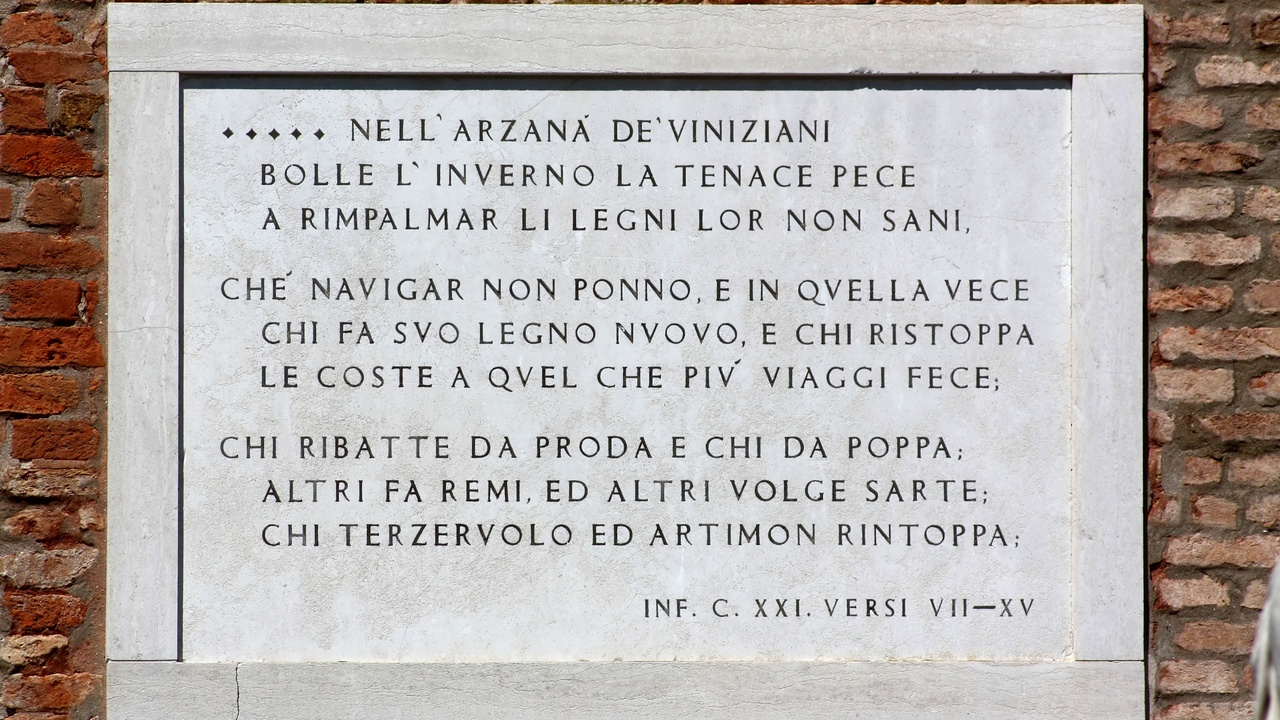
Many of the most specific images of Hell are literary or artistic creations later treated as if they were doctrinal. Dante’s Divine Comedy is the clearest example: its ordered moral universe gave critics and congregations a tidy map to rehearse. Medieval sermon manuals and memento mori art amplified gruesome physical details to spur repentance.
Artists like Gustave Doré (1861) and frescoes such as Michelangelo’s Last Judgment (1536–1541) recycled and intensified Dantean and apocryphal visuals. Tracing those origins helps separate cultural accretions from claims made by particular religious traditions.
1. Hell as a neatly organized place with nine levels (Dante’s model is biblical)
Myth: Dante’s nine circles are a biblical outline of Hell. Reality: Dante (writing c.1308–1320) designed a poetic taxonomy to dramatize moral gradations, not to create church doctrine. The Inferno’s nine concentric circles map sins to punishments for narrative and didactic effect.
There is no single biblical passage that lists nine levels with Dante’s precision. Still, preachers and artists adopted his structure because it offered a memorable teaching tool. Gustave Doré’s 1861 engravings and countless sermon manuals later popularized the Dantean categories for Victorian and later audiences.
2. Hell’s fiery imagery comes directly from scripture
Myth: Flames, rivers of fire, and implements like pitchforks come straight from the Bible. Reality: Scripture uses powerful fire metaphors—Jesus mentions “Gehenna” and “unquenchable fire” in the Gospels—but many pictorial details come from extra‑biblical sources and folklore.
Gehenna was originally a physical valley outside Jerusalem employed as a metaphor in the Synoptic Gospels. Over centuries, artists and apocryphal writers grafted pagan underworld motifs and local folk imagery onto those metaphors, producing the dramatic visual repertoire later preached from pulpits.
3. Hell as a later invention (people assume it didn’t exist before Christianity)
Myth: Hell is a novel Christian invention. Reality: Concepts of an underworld predate Christianity by centuries. Ancient Hebrew texts refer to Sheol, and Greek literature describes Hades; both are earlier ways of talking about death and the place of the dead.
Christian theology later fused older motifs with emphases on moral judgment and eschatology. Confusing Sheol and Hades with later Christian “Hell” flattens important distinctions and fuels modern debates that overlook how terms and functions shifted across centuries.
Theological and Doctrinal Misconceptions
Different religious traditions read texts and formulate doctrine in varied ways. Catholic, Orthodox, and Protestant bodies often describe Hell as separation from God or as a place of punishment, yet many Protestants also entertain annihilationist or universalist options. Non‑Christian religions offer parallel but distinct afterlife schemas.
Because theology is plural, the phrase myths about hell shows up in conversation when people assume a single, settled view. Official statements—like the Catholic Catechism (see CCC 1033)—frame Hell as definitive self‑exclusion, while some modern theologians and movements argue for conditional immortality or universal reconciliation. Translation choices and denominational histories shape what communities teach and how they minister.
Understanding that doctrinal claims vary helps explain why debates about justice, mercy, and the character of God remain active across churches.
4. The Devil rules Hell
Myth: Satan governs Hell as its monarch. Reality: Folklore and medieval drama often personified Satan as a royal figure, but most theological accounts place final judgment with God, not with the devil. Scripture more commonly depicts Satan as accuser and tempter rather than sovereign ruler of the afterlife.
Medieval mystery plays and later literary works made Satan a stage villain who presides over torments. Systematic theology and eschatological passages, however, emphasize divine judgment and the eventual defeat of evil rather than an eternal diabolical reign.
5. Hell equals Hades/Sheol — they’re interchangeable
Myth: Hell, Hades, and Sheol mean the same thing. Reality: Sheol in the Hebrew Bible and Hades in Greek texts usually denote the abode of the dead without the explicitly punitive connotations later associated with Gehenna and the Christian doctrine of Hell.
Jesus’ use of Gehenna in the Synoptic Gospels carries a different moral and eschatological force than the more neutral Sheol references in older Hebrew poetry. Translators and commentators who conflate terms can make ancient texts sound harsher or more uniform than they originally were.
6. Eternal conscious torment is the only legitimate interpretation
Myth: Eternal conscious torment (ECT) is the sole orthodox position. Reality: While ECT has been historically prominent, other serious theological positions exist: annihilationism argues the wicked are destroyed rather than eternally tormented, and universal reconciliation maintains eventual restoration for all.
These views have proponents across denominational lines. Some modern evangelical scholars argue for conditional immortality; historically, thinkers such as Origen entertained universalist ideas, and writers like C.S. Lewis sometimes showed sympathy for conditionalist tones. Each position leads to different pastoral approaches and moral emphases.
Cultural and Popular Imagery
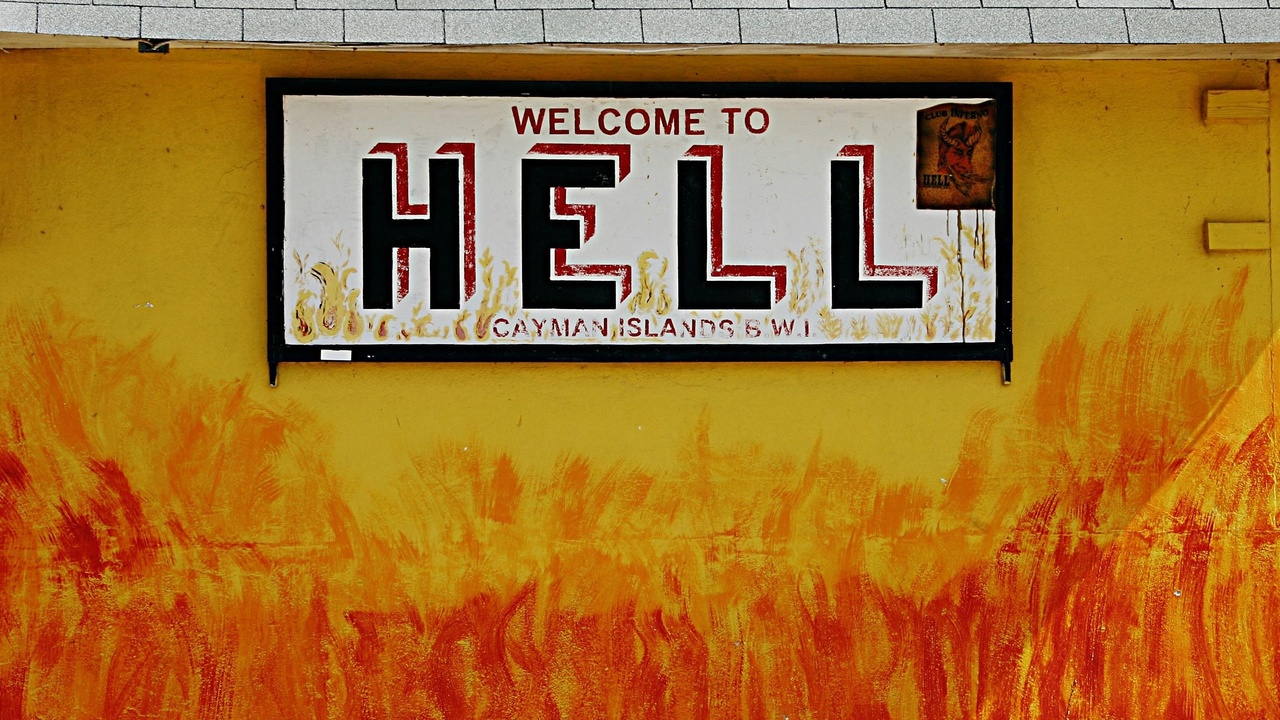
Film, television, comics, and video games have recycled and amplified simplified Hell imagery—flames, horns, pitchforks, and bureaucratic infernos. Pop culture flattens theological distinctions and supplies memorable shorthand that often outpaces what scholars or clergy actually teach.
Blockbuster movies, bestselling novels, and popular games like Doom or recurring television sketches have a measurable impact on public imagination. Those images feed back into religious discourse and seasonal iconography (Halloween, editorial cartoons), shaping assumptions about punishment, evil, and cosmic order.
Recognizing how media recycles older motifs helps when sorting theatrical license from doctrinal claim.
7. The red-skinned, horned demon with a pitchfork is biblical
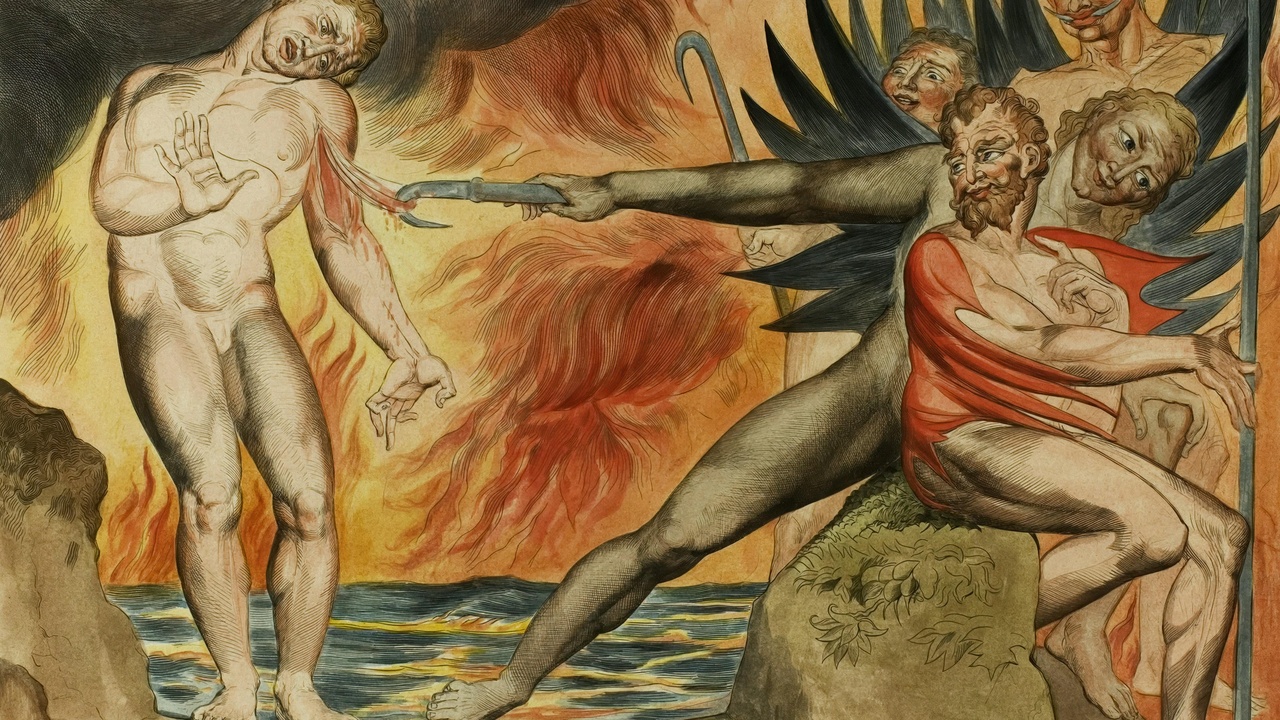
Myth: The horned, red demon with a pitchfork is a biblical portrait of Satan. Reality: That iconography is a later concoction drawn from pagan gods, medieval bestiaries, and artistic imagination after the Roman era. Scripture offers scant physical description of the devil.
Medieval marginalia, Renaissance prints, and folk traditions combined animal features, horns, and caricatured faces to create a striking symbol of evil. Modern cartoons and Halloween costumes cemented the trope into a pop‑cultural shorthand that often trivializes theological complexity.
8. Pop culture depictions don’t influence real-world beliefs
Myth: Movies and games don’t affect how people think about theological matters. Reality: Cultural portrayals frequently reinforce simplified images and enter public conversation; they can revive interest in works such as Dante or shift how entire generations picture the afterlife.
Consider how blockbuster films and bestselling novels recycle Dantean or medieval imagery, or how a popular game’s map of Hell can become the default mental image for non‑specialists. Those images influence debates about justice, punishment, and mercy outside ecclesial contexts.
Summary
- Separate literary and artistic images from doctrinal claims—Dante’s nine circles reshaped Western imagery more than scripture did.
- Recognize theological diversity: traditions differ on eternal punishment, annihilation, and universal reconciliation (see the Catholic Catechism, CCC 1033, for one official framing).
- Remember that translation choices and ancient terms (Sheol, Hades, Gehenna) are not interchangeable and affect interpretation.
- Acknowledge pop culture’s role: films, games, and novels often cement simplified images that influence public belief about the afterlife.