In 1932 James Chadwick identified a neutral particle tucked inside the atom’s nucleus — the neutron — and received the 1935 Nobel Prize for a discovery that reshaped modern physics. That single experiment at the Cavendish Laboratory solved a troubling mismatch between atomic charge and mass: atoms seemed heavier than the number of protons alone could explain. Chadwick showed that bombarding beryllium with alpha particles produced a neutral radiation that could knock protons out of paraffin, revealing a new, unseen constituent of the nucleus.
You should care because neutrons affect everyday technology, medical treatments, and how we interpret the cosmos. In short, they’re uncharged yet massive particles that define isotopes, drive nuclear reactions, power analytical tools, and appear in the most extreme objects in the universe. Here are eight interesting facts about neutrons, each tied to experiments, applications, and concrete examples you can follow up on.
Neutron basics and discovery
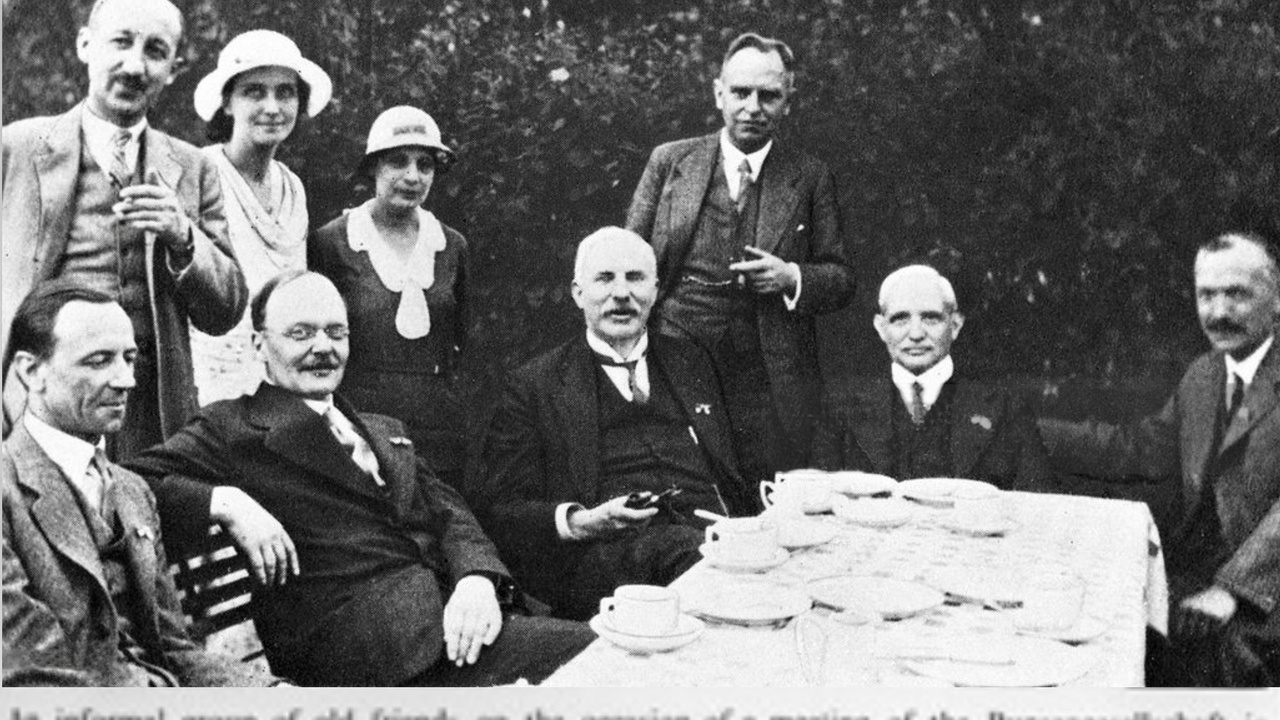
Chadwick’s 1932 work closed a major gap in atomic theory. Before his experiment, physicists noticed that atomic masses didn’t line up with proton counts; the neutron explained the “extra” mass without adding electrical charge. The key observation came from experiments at the Cavendish Laboratory: alpha particles striking beryllium emitted a neutral radiation that displaced protons in hydrogen-rich targets. Measuring those recoils let Chadwick infer a particle with mass similar to the proton but no charge, and the result earned him the 1935 Nobel Prize in Physics.
Being electrically neutral is more than a label. Neutrons don’t feel the Coulomb force, so they don’t get deflected by electric or (to first order) magnetic fields the way charged particles do. That neutrality lets them penetrate materials and nuclei with less interaction from electrons, making them ideal probes for interior structure and prime actors in nuclear reactions. Still, neutrons do have measurable properties: a mass of about 1.675 × 10⁻²⁷ kg (≈1.00866 u), roughly 0.14% heavier than a proton, and a nonzero magnetic moment that reveals their composite internal structure.
1. Discovered in 1932 by James Chadwick
Plain and simple: James Chadwick discovered the neutron in 1932. His setup at the Cavendish Laboratory used alpha particles from polonium to bombard beryllium, producing a penetrating neutral radiation that knocked protons out of paraffin. By measuring the energies of those recoiling protons, Chadwick determined the new particle’s mass and concluded it was a neutral constituent of the nucleus. The finding resolved why atomic masses exceeded proton counts and helped complete the nuclear model of the atom.
The discovery’s impact was immediate. With neutrons in the picture, nuclear chemistry, isotopes, and later nuclear engineering had a firm physical basis. Chadwick received the Nobel Prize in 1935, and institutions like Cavendish (and, later, CERN and national labs) built on this work to study nuclear structure and reactions.
2. Neutrons have no electric charge but do have mass
Neutrons are electrically neutral, yet they carry nearly the same mass as protons. The neutron’s mass is about 1.675 × 10⁻²⁷ kg (≈1.00866 atomic mass units), approximately 0.14% heavier than a proton. That small mass difference matters in nuclear binding and decay energetics.
Despite lacking charge, neutrons have a magnetic moment, which is a clue that they’re composite particles made of quarks. Their neutrality means they don’t interact via the Coulomb force, so they can penetrate deeper into materials and approach nuclei without being repelled by the positive charge. That property underlies neutron imaging systems and the design of neutron beamlines at reactors and spallation sources, where neutron detectors and moderators shape beams for experiments.
Neutrons in nuclei and isotopes
The number of neutrons in an atomic nucleus does three big things: it defines isotopes, affects nuclear stability, and governs how nuclei respond to incoming particles. Add or remove neutrons and you get different isotopes with distinct masses and decay behaviors—some stable, some radioactive. Free neutrons, when not bound inside a nucleus, decay via beta decay with a mean lifetime of roughly 880 seconds, which has implications from cosmology to experimental physics. And when neutrons strike fissile nuclei, they can trigger chain reactions that power reactors or, in other contexts, weapons.
3. Neutron number defines isotopes
Isotopes are elements with the same proton number but different neutron counts. Take carbon as a familiar example: carbon‑12 has six neutrons and six protons, while carbon‑14 has eight neutrons and six protons. That extra neutron pair makes carbon‑14 radioactive, with a half‑life of about 5,730 years, which is why archaeologists rely on radiocarbon dating to age organic artifacts.
Simpler isotopes illustrate chemistry and physics: deuterium (one neutron) and tritium (two neutrons) are hydrogen isotopes used in research and, in the case of tritium, fusion experiments. These concrete differences in neutron count are why isotopes behave similarly chemically but differ in mass and nuclear behavior.
4. Free neutrons decay — they aren’t stable on their own
A neutron bound in a nucleus can be stable, but a free neutron decays on its own. Its mean lifetime is about 880 seconds (roughly 14.7 minutes), and the decay mode is beta decay: neutron → proton + electron + antineutrino. That conversion increases the nuclear charge by one and releases a small amount of energy.
Measuring the neutron lifetime is experimentally challenging, and labs such as NIST and other national facilities run trap and beam experiments to refine the value. The precise lifetime matters beyond nuclear physics: it feeds into Big Bang nucleosynthesis models and predictions of the primordial abundances of light elements in the early universe.
5. Neutrons control nuclear stability and reactions
Neutrons are often the trigger and the glue in nuclear processes. Thermal (slow) neutrons are especially efficient at inducing fission in fissile isotopes such as uranium‑235, which contains 143 neutrons and 92 protons. The first controlled chain reaction — Chicago Pile‑1, assembled by Enrico Fermi’s team in 1942 — demonstrated how moderating and controlling neutron flux produces a sustained reaction.
In practice, nuclear reactors regulate neutron populations with control rods and moderators to maintain a steady power output. The difference between fissile (e.g., U‑235) and fertile (e.g., U‑238) materials hinges on how neutrons interact: some isotopes readily fission with thermal neutrons, while others must be transmuted to fissile isotopes by neutron capture.
Practical uses and cosmic roles
Neutrons serve as both practical tools and cosmic players. In laboratories they probe materials, in hospitals they enable specialized cancer therapies, and in space they help create the heavy elements found in jewelry and electronics. Major facilities such as Oak Ridge’s Spallation Neutron Source (SNS) and the Institut Laue‑Langevin (ILL) in Grenoble produce high‑quality neutron beams for experiments across physics, chemistry, biology, and engineering.
On the cosmic side, neutron stars compress a Sun‑like mass into a roughly 10–12 km radius, yielding average densities on the order of 4 × 10¹⁷ kg/m3. Collisions between neutron stars — notably GW170817, observed in 2017 — create neutron‑rich environments where rapid neutron capture (the r‑process) forges gold, platinum, and other heavy elements.
6. Neutron scattering reveals material structure
Neutron scattering is a central technique for studying materials at the atomic and magnetic scale. Facilities like SNS and ILL offer instruments that characterize battery electrodes, proteins, polymers, and magnetic ordering. Neutrons are especially sensitive to light elements such as hydrogen, so they reveal details that X‑rays sometimes miss.
Concrete applications include improving lithium‑ion battery electrodes by tracking lithium movement, studying hydrogen distribution in fuel‑cell membranes, and using neutron reflectometry to map layered thin films. Researchers depend on neutron contrast and penetration to solve problems in energy, biology, and materials design.
7. Neutrons enable medical imaging and targeted cancer therapy
Neutron imaging is a non‑destructive technique used in industry to inspect dense or metal components — turbine blades and aerospace parts, for example — where X‑rays might give less contrast. Neutron radiography sees through metal to show internal structures, flaws, or water ingress.
Boron neutron capture therapy (BNCT) is a targeted clinical approach under active research. Patients receive a boron‑10 compound that preferentially accumulates in tumor cells; when those boron atoms capture incoming neutrons, the reaction produces short‑range alpha particles that damage nearby cancer cells. Clinical trials and research programs in Japan and other centers continue to refine delivery, dosing, and neutron sources for BNCT.
8. Neutrons play starring roles in stars and create heavy elements
Neutron stars are extreme objects: about 1.4 times the Sun’s mass compressed into a roughly 10–12 km radius, producing mean densities near 4 × 10¹⁷ kg/m3. The first recognized pulsar (a rotating neutron star) was found in 1967 by Jocelyn Bell Burnell, confirming these compact remnants existed in nature.
When neutron stars merge, as in GW170817 (detected in 2017), conditions become ripe for the r‑process. Large fluxes of neutrons are captured rapidly onto seed nuclei, building heavy elements such as gold and uranium. Studying these processes connects nuclear physics to astronomical observations and explains where many of the elements we use daily originate.
Summary
- Chadwick’s 1932 experiment at the Cavendish Laboratory revealed the neutron and earned the 1935 Nobel Prize, resolving atomic mass puzzles.
- Neutrons are electrically neutral but have mass (~1.675 × 10⁻²⁷ kg) and a magnetic moment, which makes them uniquely able to penetrate matter and probe nuclei.
- The neutron count defines isotopes (e.g., carbon‑12 vs carbon‑14) and free neutrons decay with a mean lifetime of about 880 seconds, affecting both lab experiments and cosmology.
- Practical uses range from neutron scattering at SNS and ILL to industrial imaging and experimental therapies like BNCT, while neutron stars and events such as GW170817 explain heavy‑element formation.
- These facts about neutrons show how a neutral particle quietly underpins technologies, medical research, and our picture of the universe—worthy topics to explore further at places like CERN, Oak Ridge, or NASA resources.