In 1959 Richard Feynman gave a short, mischievous lecture called “There’s Plenty of Room at the Bottom” that imagined manipulating matter at scales a thousand times smaller than a human hair. That talk is often treated as the origin story for modern nanoscale work, and it set public expectations that have sometimes been unrealistically grand.
Those expectations helped spawn a handful of persistent myths about nanotechnology that still shape headlines, product fears, and policy debates. Part of the problem is that “nano” sounds like magic: particles at the nanoscale measure roughly 1–100 nanometers, and that tiny size does produce unusual properties—but unusual does not always mean dangerous or limitless.
This piece separates hype from evidence and debunks seven common misconceptions across safety, technical capability, and social impact. We’ll look at what the science and regulators actually say, give concrete examples (sunscreen, semiconductors, carbon nanotubes), and point toward pragmatic steps for consumers and decision‑makers.
Safety and Health Myths

Safety stories grab attention because products are visible on store shelves and early toxicology work raised hard questions. Remember the size range: 1–100 nm. Toxicity is not a yes/no property of size alone, and major regulators—FDA, EPA, and international bodies—have been studying engineered nanomaterials for years.
Below are three safety myths that often get conflated in media coverage; each point links to a mix of toxicology literature and regulator statements that have shaped current practice.
1. Myth: Nanoparticles are inherently and universally toxic to people
Claiming all nanoparticles are toxic is misleading. Toxicity depends on chemistry, dose, particle shape, coating and how a person is exposed.
Some lab studies show clear harms for specific nanomaterials at high doses—measured the same way as other chemicals (for example, mg/kg or concentration in air/water). But many consumer nanomaterials have decades of safety data. Titanium dioxide and zinc oxide nanoparticles used in sunscreens (brands such as Neutrogena or La Roche‑Posay) are formulated to sit on the skin surface and have been reviewed by regulators.
Regulatory agencies have responded proportionally: the FDA has guidance language about nanomaterials in regulated products, and the EPA evaluates nanoscale forms under existing chemical rules. In short, risk is material- and exposure-specific, not an automatic consequence of being tiny.
2. Myth: All nanoparticles easily penetrate skin, lungs, or the blood–brain barrier
That belief exaggerates how biological barriers work. Penetration depends on size, surface chemistry, whether particles clump (aggregate), and exposure duration.
For skin, multiple peer‑reviewed studies show that coated ZnO and TiO2 particles in commercial sunscreens largely remain in the outermost dead layer of the epidermis rather than entering the bloodstream. Inhalation research documents where particles deposit in the respiratory tract—some deposit in the nose or lungs depending on size—but deposition isn’t the same as systemic distribution.
Workplace measurements in facilities that make engineered nanomaterials have guided sensible controls (ventilation, respirators) that differ from consumer exposure. And while a few specially designed nanoparticles can cross the blood–brain barrier for drug delivery, most engineered particles do not do so freely.
3. Myth: Nanotechnology will inevitably cause cancer or widespread chronic disease
Fear of cancers from tiny particles often traces to early studies and comparisons to asbestos. That association is too broad.
Certain long, rigid fibrous nanomaterials raised alarm in lab animals because of physical similarities to asbestos fibers; a well‑known study in the late 2000s found that long carbon nanotubes produced asbestos‑like responses under specific exposures. The scientific community responded by clarifying that form matters: short, tangled nanotubes behave very differently from long, stiff fibers.
Design and testing now avoid fiber‑like shapes when that hazard is relevant, and regulators and funders prioritized follow‑up research. So while targeted concerns exist for particular materials and forms, you shouldn’t generalize those results to all nanoscale products.
Technical and Scale Misconceptions

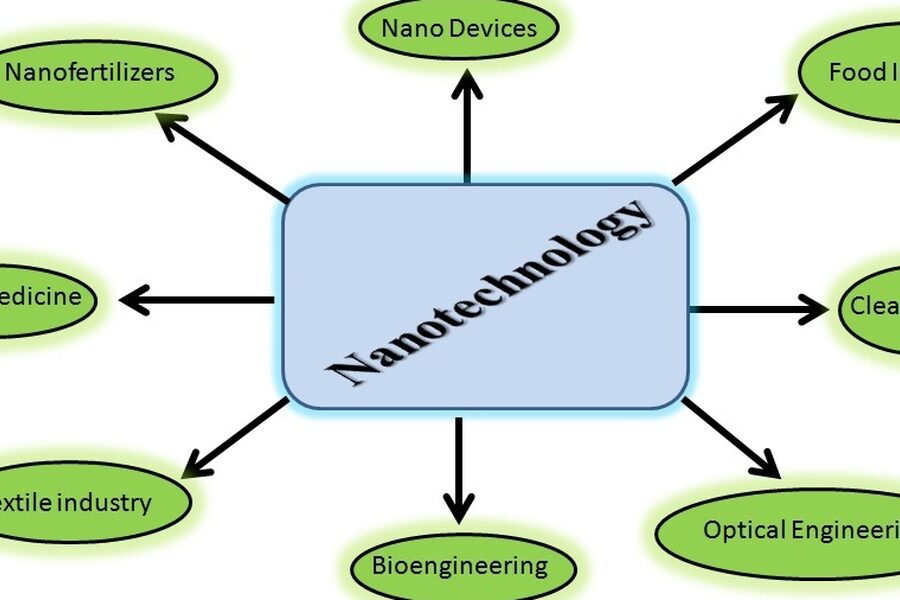
Science fiction has pushed two technical myths: that atom‑by‑atom factories are imminent, and that “nanotech” is one single technology. Reality is messier and more interesting. Engineers use a range of top‑down and bottom‑up methods to get desired properties, and different fields apply nanoscale ideas in very different ways.
To anchor scale: modern semiconductor transistor gate lengths are measured in single‑digit nanometers—7 nm and 5 nm process nodes are industry standards—while other nanoscale work uses self‑assembly, coatings, or bulk nanocomposites to achieve targeted behaviors.
4. Myth: Nanotechnology is—or will soon be—about building tiny machines atom-by-atom on demand (the molecular assembler)
The idea of universal, on‑demand molecular assemblers comes from fiction and influential thought experiments. There are lab demonstrations of manipulating individual atoms—Don Eigler and colleagues famously moved xenon atoms on a nickel surface in the late 1980s—but those were proof‑of‑principle, slow, and done at cryogenic temperatures.
Atom‑by‑atom construction is real in surface science and research tools, but it’s not a scalable manufacturing route for most products. Scalable approaches rely on chemical synthesis, self‑assembly (for example, block‑copolymer lithography), and top‑down lithography used in chip fabs. Those methods achieve the needed structures far more efficiently for practical devices.
So the molecular assembler remains speculative; what industry delivers instead are clever combinations of chemistry, templates and patterning to get desired functions without positioning every atom by hand.
5. Myth: Nanotechnology is just a buzzword that means ‘advanced materials’ or is interchangeable with biotech/AI
Calling nanotechnology a vague buzzword hides a useful distinction: it specifically refers to engineering at the nanoscale and spans many disciplines, from materials science to electronics and nanobiotechnology.
There is overlap with biotech—for instance, nanoparticle drug carriers intersect with pharmaceutical research—and with data science in sensor systems, but these are distinct fields. Comparing a vitamin‑coated nanoparticle used to deliver medicine with CRISPR gene editing or with a machine‑learning model misses those differences.
Real examples show the spread: nano‑coatings and composite tennis rackets, nanoscale additives that improve battery electrodes, and semiconductor fabrication lines that pattern features measured in single‑digit nanometers. Each requires different skills and regulatory pathways.
Societal, Environmental, and Economic Myths

Public myths here shape policy. Two common errors are seeing nanotech as an unstoppable job killer or imagining it as entirely unregulated. Both extremes miss the nuance of market evolution, regulation, and lifecycle impacts.
Market projections for nanotechnology‑enabled products vary by definition, but many reputable analyses project substantial growth over the next decade. Policy responses—national research programs, regulatory guidances, and industry standards—are already shaping how products reach consumers.
6. Myth: Nanotechnology will cause massive, unavoidable job losses across the economy
Technology waves displace some roles and create others. Historical analogies—automation and electrification—show workforce transformation rather than simple elimination.
Nanotech creates jobs in R&D, process engineering, quality control and specialized manufacturing (for example, semiconductor fabs and nanomaterials production). Patent filings and growth in university nanotechnology centers are concrete indicators of expanding technical workforces.
Policies that support retraining and university‑industry partnerships can smooth transitions. The likely outcome is sectoral change with new high‑skill opportunities rather than uniform job loss across the economy.
7. Myth: Nanotechnology products are unregulated and will flood the market without oversight
The idea that nanotech products escape oversight is not accurate. Major jurisdictions apply existing frameworks to nanoscale forms, and several agencies have issued specific guidance.
Examples: the FDA has published considerations about nanomaterials in drugs, devices and cosmetics; the EPA assesses nanoscale substances under chemical control rules; and the EU addresses new materials through REACH. Where rules lag, industry voluntary standards and registries help fill gaps.
That said, regulatory approaches vary by country and by product type, so ongoing research, targeted policy updates and transparency from manufacturers remain important for consumer confidence.
Summary
- Tiny size (1–100 nm) gives materials new behaviors, but risk is material‑ and exposure‑specific rather than an automatic property of “nano.” Examples include sunscreen TiO2/ZnO and workplace exposure controls.
- Atom‑by‑atom assemblers are scientific curiosities in the lab (Don Eigler’s atom moves) but not a practical route for mass production; scalable methods use chemistry, self‑assembly and lithography (5–7 nm transistor nodes).
- Certain forms—long rigid fibers—have raised asbestos‑like concerns in targeted studies, but those findings don’t apply across all nanomaterials; design and testing help reduce long‑term hazards.
- Regulation and standards exist (FDA, EPA, EU REACH and industry programs) and are evolving; market growth and job shifts are likely to create new technical roles rather than uniform job loss.
- Look for credible sources and evidence: read regulator guidance, peer‑reviewed reviews, and product disclosures rather than headlines that recycle common myths about nanotechnology.