Zirconium shows up across labs and production lines — in ceramics, coatings, catalysts and corrosion-resistant alloys — because its chemistry gives useful thermal stability and inertness. Whether you’re skimming a materials database or sourcing reagents, a compact list makes it easier to compare formulas and uses quickly.
There are 31 Zirconium Compounds, ranging from Basic zirconium carbonate to Zirconyl nitrate. For each entry, data is organized as Formula,CAS,Key properties / uses (max 15 words),Description (30-50 words); see the list you’ll find below.
How are these compounds most commonly used?
Many serve in ceramics and refractories, as catalysts or catalyst supports, and in pigment or coating formulations; some are precursors for thin-film deposition and nuclear-grade materials. Use tends to depend on solubility and oxidation state — choose the compound that matches thermal, chemical and processing needs.
Are special precautions needed when handling or disposing of them?
Yes — treatment varies: some salts are low-hazard solids, others (nitrates, alkoxides) are oxidizing, moisture-sensitive or irritants. Always consult the SDS, use PPE and engineering controls, segregate incompatible wastes, and follow local hazardous-waste regulations for disposal.
Zirconium Compounds
| Name | Formula | CAS | Key properties / uses (max 15 words) | Description (30-50 words) |
|---|---|---|---|---|
| Zirconia | ZrO2 | 1314-23-4 | Ceramic, refractory, high strength, thermal barrier coatings | Zirconia is zirconium dioxide, a tough ceramic used for thermal barrier coatings, dental crowns, and oxygen sensors. It resists heat and wear, can be stabilized into different crystal phases for toughness, and fine dust can irritate lungs if inhaled. |
| Zircon | ZrSiO4 | N/A | Gemstone, refractory, source of zirconium | Zircon is zirconium silicate, a common mineral used as a gemstone and refractory material and an important ore of zirconium. It occurs in igneous and sedimentary rocks, sometimes contains trace thorium (mild radioactivity), and resists chemical attack except HF. |
| Zirconium tetrachloride | ZrCl4 | N/A | Lewis acid, precursor for metalorganic syntheses and CVD | Zirconium tetrachloride is a covalent, moisture-sensitive chloride used as a precursor to zirconium metal, catalysts, and organometallic complexes. It hydrolyzes violently with water, releases corrosive HCl fumes, and requires dry, inert handling conditions. |
| Zirconyl chloride (octahydrate) | ZrOCl2·8H2O | N/A | Precursor to zirconia, tanning, aqueous zirconium source | Zirconyl chloride octahydrate provides soluble zirconium for ceramics, tanning, and catalyst preparation. It hydrolyzes to oxyhydroxides, is acidic in solution, can irritate skin and eyes, and must be handled with appropriate protective equipment. |
| Zirconium nitrate | Zr(NO3)4 | N/A | Precursor for ceramics, catalysts, solution processing of zirconia | Zirconium nitrate is a soluble zirconium salt used to make zirconia gels and catalysts by wet-chemical routes. It decomposes to oxide upon heating, acts as an oxidizer, and should be stored away from combustible organics due to fire risk. |
| Zirconium sulfate | Zr(SO4)2 | N/A | Tanning, paper industry, corrosion-resistant coatings | Zirconium sulfate is used in tanning, paper sizing, and as a zirconium source for pigments and coatings. It forms hydrates and acidic aqueous solutions; prolonged exposure can irritate skin, eyes, and the respiratory tract. |
| Basic zirconium carbonate | Zr(OH)2CO3·xH2O | N/A | Crosslinker in cosmetics, antiperspirants, corrosion inhibitors | Basic zirconium carbonate is an amorphous inorganic polymer used as a crosslinker in antiperspirants, cosmetics, and corrosion-inhibiting coatings. It binds to polymers to improve adhesion and durability, is sparingly soluble, and may cause skin irritation in some users. |
| Zirconium hydride | ZrH2 | N/A | Hydrogen storage, neutron moderation, affects nuclear cladding | Zirconium hydride is a metal hydride used in neutron moderation and hydrogen storage studies; it can form when zirconium takes up hydrogen. It is brittle compared with the metal, affects mechanical properties of cladding, and requires controlled handling. |
| Zirconium nitride | ZrN | N/A | Hard refractory coating, decorative PVD gold-colored coating | Zirconium nitride is a hard, electrically conductive ceramic used as wear-resistant and decorative coatings produced by physical vapor deposition. It offers high hardness, thermal stability, and corrosion resistance, and is typically chemically inert under normal conditions. |
| Zirconium carbide | ZrC | N/A | Ultra-high-temperature ceramics, cutting tools, refractory compound | Zirconium carbide is an ultra-high-temperature ceramic with exceptional melting point, hardness, and chemical stability. It is used in aerospace components, cutting tools, and nuclear applications; powders can be hazardous if inhaled and synthesis requires high temperatures. |
| Zirconium tetrafluoride | ZrF4 | N/A | Optical materials, fluoride glass precursors, fluoride chemistry | Zirconium tetrafluoride is used in specialty fluoride glasses and optical materials and as a reagent in fluoride chemistry. It is moisture-sensitive, corrosive to glass in aggressive conditions, and exposure to fluoride requires careful safety measures and protective equipment. |
| Zirconium tetraiodide | ZrI4 | N/A | Precursor in chemical vapor transport and metal synthesis | Zirconium tetraiodide is a volatile halide used in chemical vapor transport and synthetic routes to zirconium complexes. It is moisture-sensitive, liberates iodine vapors on decomposition, and must be handled under inert atmosphere with appropriate ventilation. |
| Zirconium tetrabromide | ZrBr4 | N/A | Precursor for organometallics and CVD, moisture sensitive | Zirconium tetrabromide is a moisture-sensitive halide used as a precursor in synthesis and vapor deposition. It hydrolyzes to release hydrobromic acid, is corrosive to skin and metals, and demands dry, inert handling conditions. |
| Zirconium oxyhydroxide | ZrO(OH)2 (approx) | N/A | Precursor to zirconia, high-surface-area sorbent for ions | Zirconium oxyhydroxide forms by hydrolysis of zirconium salts and serves as a precursor to zirconia and as a sorbent for phosphates and heavy metals. It is often poorly crystalline with high surface area and useful in water treatment applications. |
| Zirconium acetate | Zr(CH3COO)4 | N/A | Precursor for sol-gel, surface coatings, metal-organic processing | Zirconium acetate is a coordination compound used in sol-gel chemistry, surface coatings, and as a zirconium source for thin films. Solutions are acidic, it hydrolyzes to oxides, and contact can irritate skin or eyes. |
| Zirconocene dichloride | Cp2ZrCl2 | 1,271-58-1 | Organometallic catalyst precursor, polymerization, organic synthesis | Zirconocene dichloride is a widely used organometallic complex serving as a precursor for catalysts in olefin polymerization and organic synthesis. It undergoes reduction and ligand exchange; it is air- and moisture-sensitive and handled under inert conditions in research labs. |
| Schwartz reagent (hydrozirconation reagent) | Cp2Zr(H)Cl | N/A | Selective hydrozirconation reagent for organic synthesis | The Schwartz reagent, Cp2Zr(H)Cl, is used to add zirconium hydride across alkenes and alkynes, enabling selective reductions and functional group transformations. It is typically prepared from zirconocene dichloride and hydride donors and is moisture-sensitive and pyrophoric. |
| Zirconium isopropoxide | Zr(OiPr)4 | N/A | Sol-gel precursor for zirconia films and nanoparticles | Zirconium isopropoxide is an alkoxide used as a sol-gel precursor to zirconia thin films, coatings, and nanoparticles. It hydrolyzes rapidly with water to form oxides; it is flammable and moisture-sensitive, requiring dry and ventilated handling. |
| Zirconium butoxide | Zr(OBu)4 | N/A | Sol-gel precursor, coatings, ceramics synthesis | Zirconium butoxide is a liquid zirconium alkoxide employed in sol-gel syntheses of zirconia, crosslinking agents, and ceramic precursors. It hydrolyzes on contact with water, is flammable, and should be used under dry, inert conditions to control reactions. |
| Zirconium phosphate | Zr(HPO4)2·H2O | N/A | Ion-exchange, proton conductor, catalyst support | Zirconium phosphate is a layered inorganic acid used for ion exchange, catalysis, and proton-conducting membranes. It binds strongly to metal ions, stabilizes catalysts, and is valued for chemical stability and thermal robustness in composite materials. |
| Zirconium tungstate | ZrW2O8 | N/A | Negative thermal expansion, composite filler for thermal stability | Zirconium tungstate exhibits negative thermal expansion—it contracts on heating—making it useful as a filler for composites to achieve near-zero thermal expansion. It is a complex oxide synthesized at high temperature with carefully controlled stoichiometry. |
| Zirconium molybdate | Zr(MoO4)2 | N/A | Catalysis, acid-resistant ceramics, pigments | Zirconium molybdate is an inorganic compound used in catalysts, high-temperature ceramics, and inorganic pigments. It often forms hydrated phases, is chemically robust, and participates in solid-state reactions at elevated temperatures for specialty materials. |
| Zirconyl nitrate | ZrO(NO3)2 | N/A | Precursor for sol-gel and oxide synthesis, oxidizing solution | Zirconyl nitrate is a soluble zirconium source used in sol-gel and wet chemical syntheses, decomposing to zirconia on heating. As a nitrate it acts as an oxidizer and should be handled away from combustible organic materials. |
| Zirconium oxysulfate | ZrO(SO4) | N/A | Acid catalyst support precursor, analytical reagent | Zirconium oxysulfate and related oxysalts are precursors for acid-resistant catalyst supports and analytical reagents. They are water-soluble, acidic, and useful for depositing zirconium-containing coatings or preparing heterogeneous catalysts. |
| Synthetic zirconium silicate | ZrSiO4 | N/A | Ceramics, refractory, foundry sand, zirconium source | Synthetic zirconium silicate is used in ceramics, refractories, and as a foundry material; it is also a primary source for zirconium extraction. It shows high hardness and chemical durability and remains stable in most environments except strong fluorides. |
| Zirconium oxynitride | Zr2ON2 (approx) | N/A | Hard, refractory ceramic with mixed bonding characteristics | Zirconium oxynitride is a mixed-anion ceramic combining oxide and nitride characteristics; it offers high hardness and thermal stability useful for coatings and refractory parts. It requires specialized high-temperature, nitrogen-containing synthesis methods to form. |
| Potassium hexafluorozirconate | K2ZrF6 | N/A | Fluoride flux, zirconium source, crystalline complex | Potassium hexafluorozirconate is a stable fluoride complex used in electroplating, fluxing, and as a zirconium reagent. It is corrosive in acidic conditions due to fluoride release and must be handled carefully to prevent fluoride exposure. |
| Zirconium hydroxide | Zr(OH)4 (approx) | N/A | Precursor to zirconia, sorbent, flame-retardant additive | Zirconium hydroxide is a gelatinous precipitate and precursor to zirconia, used as a sorbent for metals and occasionally as a flame-retardant additive. It forms from hydrolysis of salts and typically has a high surface area beneficial for catalysis. |
| Zirconium silicate (natural/mineral) | ZrSiO4 | N/A | Refractory, gem (zircon), zirconium ore | Natural zirconium silicate (zircon) is a durable refractory mineral and gemstone used in jewelry and as the main ore of zirconium. It is chemically resistant, very hard, and may contain trace radioactive elements like thorium or uranium. |
| Zirconium boride | ZrB2 | N/A | Ultra-high-temperature ceramic, electrical conductor, refractory coating | Zirconium diboride is an ultra-high-temperature ceramic with excellent hardness, electrical conductivity, and thermal stability used in aerospace and refractory coatings. It resists oxidation to some extent but often requires protective coatings at extreme temperatures. |
| Zirconium aluminates | ZrAl2O5 or ZrAlO? (various) | N/A | Refractory ceramics, pigments, thermal-stable phases | Zirconium aluminates are mixed oxide phases used in refractory ceramics and pigments, offering thermal stability and chemical resistance. Their precise stoichiometry varies by phase; they are prepared by high-temperature solid-state reactions for specialty ceramics. |
Images and Descriptions

Zirconia
Zirconia is zirconium dioxide, a tough ceramic used for thermal barrier coatings, dental crowns, and oxygen sensors. It resists heat and wear, can be stabilized into different crystal phases for toughness, and fine dust can irritate lungs if inhaled.
Zircon
Zircon is zirconium silicate, a common mineral used as a gemstone and refractory material and an important ore of zirconium. It occurs in igneous and sedimentary rocks, sometimes contains trace thorium (mild radioactivity), and resists chemical attack except HF.
Zirconium tetrachloride
Zirconium tetrachloride is a covalent, moisture-sensitive chloride used as a precursor to zirconium metal, catalysts, and organometallic complexes. It hydrolyzes violently with water, releases corrosive HCl fumes, and requires dry, inert handling conditions.
Zirconyl chloride (octahydrate)
Zirconyl chloride octahydrate provides soluble zirconium for ceramics, tanning, and catalyst preparation. It hydrolyzes to oxyhydroxides, is acidic in solution, can irritate skin and eyes, and must be handled with appropriate protective equipment.
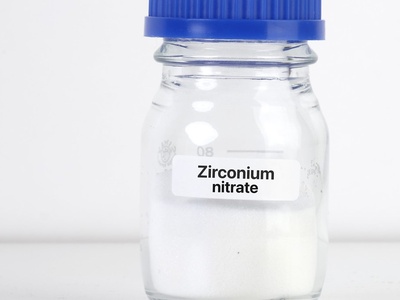
Zirconium nitrate
Zirconium nitrate is a soluble zirconium salt used to make zirconia gels and catalysts by wet-chemical routes. It decomposes to oxide upon heating, acts as an oxidizer, and should be stored away from combustible organics due to fire risk.
Zirconium sulfate
Zirconium sulfate is used in tanning, paper sizing, and as a zirconium source for pigments and coatings. It forms hydrates and acidic aqueous solutions; prolonged exposure can irritate skin, eyes, and the respiratory tract.
Basic zirconium carbonate
Basic zirconium carbonate is an amorphous inorganic polymer used as a crosslinker in antiperspirants, cosmetics, and corrosion-inhibiting coatings. It binds to polymers to improve adhesion and durability, is sparingly soluble, and may cause skin irritation in some users.
Zirconium hydride
Zirconium hydride is a metal hydride used in neutron moderation and hydrogen storage studies; it can form when zirconium takes up hydrogen. It is brittle compared with the metal, affects mechanical properties of cladding, and requires controlled handling.
Zirconium nitride
Zirconium nitride is a hard, electrically conductive ceramic used as wear-resistant and decorative coatings produced by physical vapor deposition. It offers high hardness, thermal stability, and corrosion resistance, and is typically chemically inert under normal conditions.
Zirconium carbide
Zirconium carbide is an ultra-high-temperature ceramic with exceptional melting point, hardness, and chemical stability. It is used in aerospace components, cutting tools, and nuclear applications; powders can be hazardous if inhaled and synthesis requires high temperatures.
Zirconium tetrafluoride
Zirconium tetrafluoride is used in specialty fluoride glasses and optical materials and as a reagent in fluoride chemistry. It is moisture-sensitive, corrosive to glass in aggressive conditions, and exposure to fluoride requires careful safety measures and protective equipment.
Zirconium tetraiodide
Zirconium tetraiodide is a volatile halide used in chemical vapor transport and synthetic routes to zirconium complexes. It is moisture-sensitive, liberates iodine vapors on decomposition, and must be handled under inert atmosphere with appropriate ventilation.
Zirconium tetrabromide
Zirconium tetrabromide is a moisture-sensitive halide used as a precursor in synthesis and vapor deposition. It hydrolyzes to release hydrobromic acid, is corrosive to skin and metals, and demands dry, inert handling conditions.
Zirconium oxyhydroxide
Zirconium oxyhydroxide forms by hydrolysis of zirconium salts and serves as a precursor to zirconia and as a sorbent for phosphates and heavy metals. It is often poorly crystalline with high surface area and useful in water treatment applications.
Zirconium acetate
Zirconium acetate is a coordination compound used in sol-gel chemistry, surface coatings, and as a zirconium source for thin films. Solutions are acidic, it hydrolyzes to oxides, and contact can irritate skin or eyes.
Zirconocene dichloride
Zirconocene dichloride is a widely used organometallic complex serving as a precursor for catalysts in olefin polymerization and organic synthesis. It undergoes reduction and ligand exchange; it is air- and moisture-sensitive and handled under inert conditions in research labs.
Schwartz reagent (hydrozirconation reagent)
The Schwartz reagent, Cp2Zr(H)Cl, is used to add zirconium hydride across alkenes and alkynes, enabling selective reductions and functional group transformations. It is typically prepared from zirconocene dichloride and hydride donors and is moisture-sensitive and pyrophoric.
Zirconium isopropoxide
Zirconium isopropoxide is an alkoxide used as a sol-gel precursor to zirconia thin films, coatings, and nanoparticles. It hydrolyzes rapidly with water to form oxides; it is flammable and moisture-sensitive, requiring dry and ventilated handling.
Zirconium butoxide
Zirconium butoxide is a liquid zirconium alkoxide employed in sol-gel syntheses of zirconia, crosslinking agents, and ceramic precursors. It hydrolyzes on contact with water, is flammable, and should be used under dry, inert conditions to control reactions.
Zirconium phosphate
Zirconium phosphate is a layered inorganic acid used for ion exchange, catalysis, and proton-conducting membranes. It binds strongly to metal ions, stabilizes catalysts, and is valued for chemical stability and thermal robustness in composite materials.
Zirconium tungstate
Zirconium tungstate exhibits negative thermal expansion—it contracts on heating—making it useful as a filler for composites to achieve near-zero thermal expansion. It is a complex oxide synthesized at high temperature with carefully controlled stoichiometry.
Zirconium molybdate
Zirconium molybdate is an inorganic compound used in catalysts, high-temperature ceramics, and inorganic pigments. It often forms hydrated phases, is chemically robust, and participates in solid-state reactions at elevated temperatures for specialty materials.
Zirconyl nitrate
Zirconyl nitrate is a soluble zirconium source used in sol-gel and wet chemical syntheses, decomposing to zirconia on heating. As a nitrate it acts as an oxidizer and should be handled away from combustible organic materials.
Zirconium oxysulfate
Zirconium oxysulfate and related oxysalts are precursors for acid-resistant catalyst supports and analytical reagents. They are water-soluble, acidic, and useful for depositing zirconium-containing coatings or preparing heterogeneous catalysts.
Synthetic zirconium silicate
Synthetic zirconium silicate is used in ceramics, refractories, and as a foundry material; it is also a primary source for zirconium extraction. It shows high hardness and chemical durability and remains stable in most environments except strong fluorides.
Zirconium oxynitride
Zirconium oxynitride is a mixed-anion ceramic combining oxide and nitride characteristics; it offers high hardness and thermal stability useful for coatings and refractory parts. It requires specialized high-temperature, nitrogen-containing synthesis methods to form.
Potassium hexafluorozirconate
Potassium hexafluorozirconate is a stable fluoride complex used in electroplating, fluxing, and as a zirconium reagent. It is corrosive in acidic conditions due to fluoride release and must be handled carefully to prevent fluoride exposure.
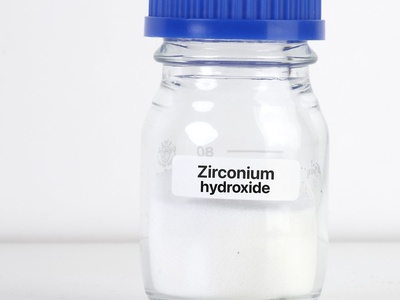
Zirconium hydroxide
Zirconium hydroxide is a gelatinous precipitate and precursor to zirconia, used as a sorbent for metals and occasionally as a flame-retardant additive. It forms from hydrolysis of salts and typically has a high surface area beneficial for catalysis.
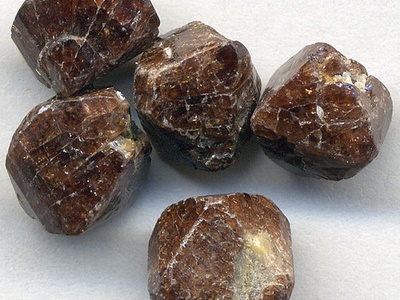
Zirconium silicate (natural/mineral)
Natural zirconium silicate (zircon) is a durable refractory mineral and gemstone used in jewelry and as the main ore of zirconium. It is chemically resistant, very hard, and may contain trace radioactive elements like thorium or uranium.
Zirconium boride
Zirconium diboride is an ultra-high-temperature ceramic with excellent hardness, electrical conductivity, and thermal stability used in aerospace and refractory coatings. It resists oxidation to some extent but often requires protective coatings at extreme temperatures.
Zirconium aluminates
Zirconium aluminates are mixed oxide phases used in refractory ceramics and pigments, offering thermal stability and chemical resistance. Their precise stoichiometry varies by phase; they are prepared by high-temperature solid-state reactions for specialty ceramics.