A 19th-century hunting account described tigers as solitary ghosts of the forest — part myth, part apex predator. Today those same forests hold fewer than 4,000 wild tigers worldwide (IUCN/WWF).
Picture a low-slung orange coat slipping between reeds, pupils narrowing as it closes on a grazing sambar at dusk. Tigers are both physically astonishing and culturally charged: indicators of healthy forests, focal points for large-scale conservation, and enduring icons across Asia. That combination makes them worth paying attention to.
Here are 10 compelling facts about tigers that illuminate their anatomy, behavior, and complicated relationship with people. The list is organized into three parts: physical adaptations, behavior and conservation, and human–cultural connections. Each fact draws on field studies, camera-trap research, and conservation reports so you get both vivid detail and the evidence behind it.
Physical characteristics and adaptations
Tigers are superbly adapted predators. Their orange coat and vertical stripes provide camouflage in dappled light, their muscular forequarters deliver the power needed to wrestle large prey, and specialized senses make crepuscular and nocturnal hunting efficient. These adaptations evolved to match prey type, habitat and climate, which is why subspecies from tropical Sundarbans to the snowy Russian Far East look and behave differently.
1. Tigers are the largest wild cats — size varies by subspecies
Tigers are the largest living felids, but size varies with subspecies and sex. Adult male Bengal tigers commonly weigh between about 180 and 260 kg and measure roughly 2.7–3.1 m head-to-tail, while adult females are smaller. Male Siberian (Amur) tigers are the heaviest, with some individuals approaching 300 kg in the Russian Far East (IUCN, National Geographic).
Larger size has clear ecological trade-offs: it helps males tackle big ungulates like sambar, gaur and wild boar, and in cold climates extra bulk aids thermoregulation. In contrast, tigers in prey-poor or dense forest habitats are often comparatively lighter and more agile.
2. Their stripes are unique — like a fingerprint
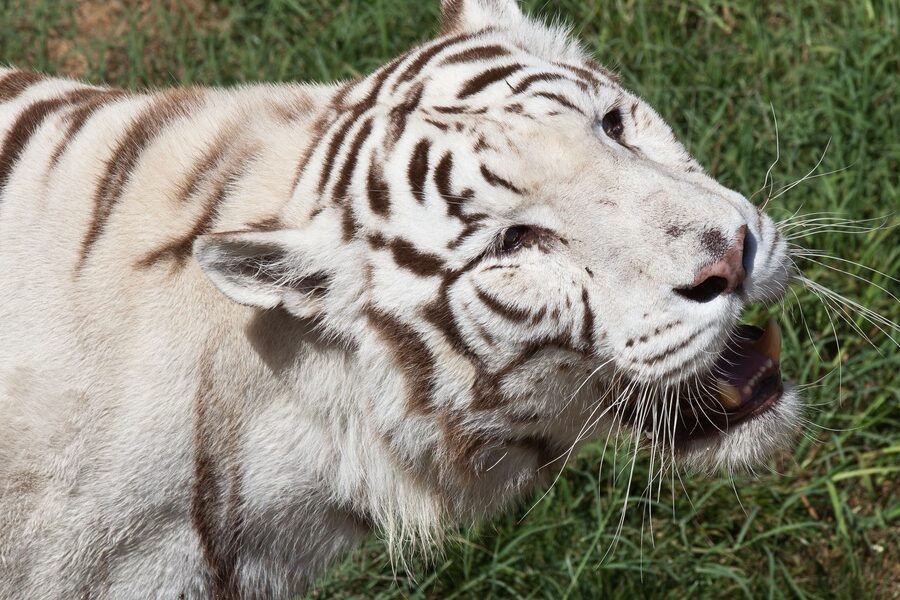
Every tiger’s stripe pattern is unique, and researchers use those patterns to identify individuals non-invasively. Camera-trap and photo-ID studies across reserves in India and elsewhere match stripe patterns to track movements, estimate population size, and follow life histories (WWF; peer-reviewed camera-trap papers).
Functionally, vertical stripes break up the cat’s outline amid tall grasses and forest shadows, making ambush hunting more effective. Long-term studies have even documented individual tigers appearing in distant reserves via photographic matches, showing how stripe-based ID supports landscape-scale monitoring.
3. Built for power: bite force, retractable claws, and muscular limbs
Tigers combine long canines (often up to about 7–8 cm) with a powerful skull and neck muscles to deliver a killing bite. Their forelimbs are heavily muscled for grappling, while long, retractable claws provide grip during a takedown.
They rely on short, explosive bursts of speed—estimates range roughly 49–65 km/h (30–40 mph) for brief sprints—to close the distance in an ambush. Once close, a tiger typically aims to clamp the throat or crush the windpipe of large prey, then hold it down with its forepaws.
4. Night vision and sensory adaptations make them stealthy hunters
Tigers are largely crepuscular and nocturnal hunters because their eyes and ears are tuned for low light. Their retinas have a high density of rod cells, and a reflective layer behind the retina—the tapetum lucidum—boosts photon capture so eyeshine indicates superior night vision.
They also have acute hearing and an excellent sense of smell, plus long whiskers that detect close-range movements. Conservation teams use this behavioral pattern to time patrols and place camera traps for the best chance of detection at night (conservation NGOs, field biologists).
Behavior, ecology, and conservation
Tigers are keystone predators: where they thrive, ecosystems tend to be healthier and more diverse. But habitat loss, prey decline and poaching shrank their range drastically through the 20th century. Conservation efforts over recent decades have secured local recoveries in places, yet long-term survival requires landscape-level protection, anti-poaching work, and people-focused solutions.
5. Wild tiger numbers and range have shrunk dramatically — but some recovery exists
Current estimates put the global wild tiger population at roughly 3,900 (IUCN/WWF, early 2020s). That number represents a fragile recovery from a century of heavy hunting and habitat loss when tigers were extirpated from much of their historic range.
Conservation milestones—such as the 1975 CITES Appendix I protection and national bans—helped slow declines. The global TX2 goal, launched in 2010, aimed to double wild tiger numbers by 2022; it galvanized funding, anti-poaching patrols and monitoring across range countries. India and Nepal show clear local gains after intensive protection and community programs, illustrating that targeted efforts can restore populations.
6. Tigers are solitary but maintain territories using scent and vocalizations
Adult tigers are mostly solitary hunters; females raise cubs alone and males roam to overlap several females’ ranges. Territory size varies massively with prey density and habitat: in prey-rich Indian reserves home ranges can be tens of square kilometers, while in Siberia, where prey are sparser, male ranges can span hundreds of square kilometers (camera-trap and radio-collar studies).
They mark areas with urine sprays, scrapes and cheek rubbing, and they produce loud roars that can travel long distances and serve as long-range communication. Understanding territory size is crucial for designing protected areas and connecting reserves with corridors so individuals can disperse safely.
7. Conservation demands multisector action: anti-poaching, habitat protection, and community engagement
Long-term tiger recovery rests on three pillars: stopping poaching, securing and restoring habitat, and engaging local communities so they benefit from living with tigers. Anti-poaching patrols, combined with intelligence-led enforcement and improved law enforcement, have reduced illegal kills in several range countries.
Community initiatives—from ecotourism revenue-sharing to livestock insurance and alternative livelihoods—have lowered retaliatory killings. International and bilateral funding, plus collaborative projects like transboundary reserve work in the Russian Far East and China, show how cooperation helps protect wide-ranging animals.
Human interactions and cultural significance

Tigers occupy a deep cultural place across Asia: they appear in folk tales, temple art, national symbols and modern branding. That cultural salience creates both opportunities and challenges for conservation—tiger imagery can rally support, but traditional beliefs and demand for body parts also drive illegal trade. Ethical, culturally aware outreach matters.
8. Human-tiger conflict is real — but manageable with smart policies
Tigers sometimes take livestock and, rarely, people. The scale varies by landscape; in some regions a handful of attacks occur annually, while in places like the Sundarbans a larger number of human fatalities have been recorded over years. Context matters: food-stressed animals, fragmented habitat and unprotected livestock raise conflict risk.
Mitigation options work. Predator-proof corrals, community-based early-warning systems, rapid-response units, and prompt compensation for losses all reduce retaliatory killings. Several Indian states and Sri Lanka run compensation schemes that studies associate with fewer revenge killings, and rapid-response teams in the Sundarbans help move problem animals away from villages.
9. Tigers generate substantial economic value through tourism and ecosystem services
Well-managed tiger reserves draw hundreds of thousands of visitors a year to high-profile parks such as Ranthambore and Bandhavgarh, generating tourism revenue that can fund protection and support local livelihoods. Parks report thousands to tens of thousands of visitors annually, with entrance and guide fees contributing directly to conservation budgets.
Beyond tourism, intact tiger landscapes deliver ecosystem services like water regulation and carbon storage that benefit downstream communities. When tourism revenues are shared—through jobs, vendor opportunities, and direct payments—local people often back conservation because they see tangible benefits.
10. Tigers are powerful cultural symbols — which helps and complicates conservation
Tiger imagery appears in Korean folk art, in regional festivals across South and Southeast Asia, and in modern logos and sports teams. That visibility helps fundraising and public engagement: people donate to protect animals they love.
But symbolism can complicate things. Traditional medicine markets and status-driven demand for parts have fueled illegal trade. Conservation messaging that uses cultural leaders, respects local beliefs, and channels pride toward protection tends to work best—programs relying on respected elders and festivals have successfully shifted attitudes in some communities.
Summary
- Stripe patterns are unique and used by researchers for non-invasive identification; camera-trap photo-ID is now a cornerstone of population monitoring.
- Global wild tiger numbers stand at roughly 3,900 (IUCN/WWF, early 2020s); decades of protection have enabled local recoveries, but landscape-scale threats remain.
- Physiological traits—large body size (male Siberian tigers nearing 300 kg), long canines (~7–8 cm), muscular forelimbs, and night-adapted vision—make tigers effective ambush predators.
- Successful conservation depends on coordinated anti-poaching, habitat connectivity and community engagement; examples include India’s intensive protection efforts and transboundary work in the Russian Far East.
- Support reputable organizations like IUCN or WWF, visit protected areas responsibly, and back community-centered programs to help ensure these charismatic animals persist in the wild.