Across habitats from tropical forests and open savannas to backyard ponds and city parks, vertebrates are part of the landscapes we study and the animals we notice every day. Observing a few species gives a quick lesson in how body plan and behavior match environment.
There are 20 Examples of Vertebrates, ranging from the African elephant to the Rock pigeon to illustrate extremes of size and habitat. Each entry is organized with Scientific name,Habitat / range,Size (cm) so you can compare classification, distribution and body size at a glance — you’ll find them below.
How were these 20 examples chosen?
The list highlights a mix of well-known and regionally representative species across major vertebrate groups (mammals, birds, reptiles, amphibians, fish) so readers get a broad sense of form and habitat rather than an exhaustive inventory.
How can I use the Scientific name,Habitat / range,Size (cm) columns effectively?
Use the scientific name for precise identification, check the Habitat / range field to see where each species occurs or whether it’s native to your area, and use Size (cm) to compare adult body dimensions or to filter species by the size ranges you care about.
Examples of Vertebrates
| Common name | Scientific name | Habitat / range | Size (cm) |
|---|---|---|---|
| Human | Homo sapiens | Worldwide (global; most continents) | 170 |
| African elephant | Loxodonta africana | Sub-Saharan Africa (savannas, forests) | 600 |
| Gray wolf | Canis lupus | Northern Hemisphere (forests, tundra, grasslands) | 100 |
| Blue whale | Balaenoptera musculus | Oceans worldwide (pelagic) | 2,500 |
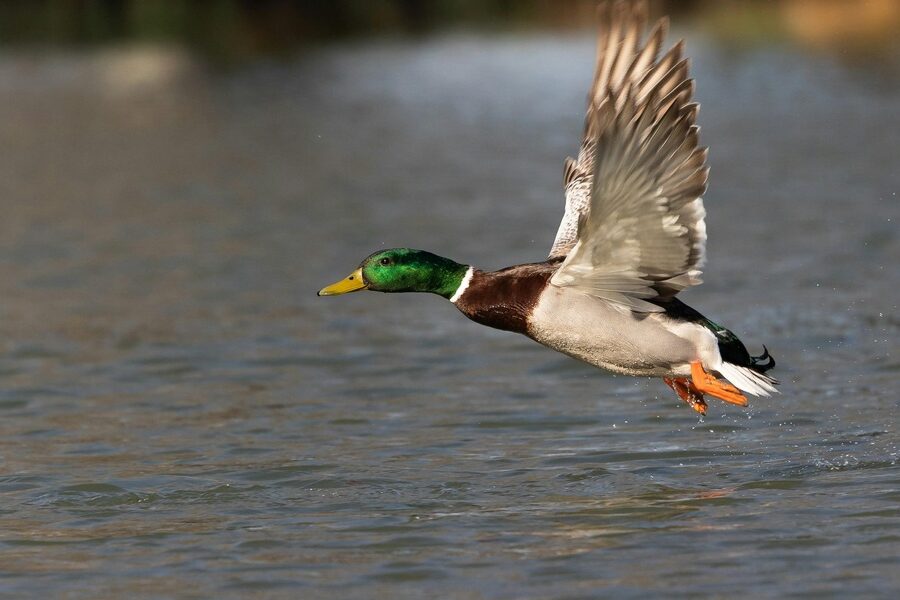
| Peregrine falcon | Falco peregrinus | Worldwide (coasts, mountains, cities) | 40 |
| Bald eagle | Haliaeetus leucocephalus | North America (lakes, rivers, coasts) | 90 |
| Rock pigeon | Columba livia | Worldwide (urban and rural areas) | 32 |
| Emperor penguin | Aptenodytes forsteri | Antarctic (sea ice and surrounding ocean) | 115 |
| Green sea turtle | Chelonia mydas | Tropical and subtropical coastal waters worldwide | 100 |
| Komodo dragon | Varanus komodoensis | Indonesian islands (Komodo, Rinca, Flores) | 300 |
| American alligator | Alligator mississippiensis | Southeastern United States (freshwater wetlands) | 300 |
| Corn snake | Pantherophis guttatus | Southeastern United States (forests, fields, edge habitats) | 120 |
| American bullfrog | Lithobates catesbeianus | North America (ponds, lakes, slow waters) | 15 |
| Common frog | Rana temporaria | Europe (gardens, ponds, wetlands) | 9 |
| Axolotl | Ambystoma mexicanum | Highland lakes near Mexico City (endemic) | 25 |
| Red-eyed tree frog | Agalychnis callidryas | Central America (tropical rainforests) | 7 |
| Atlantic salmon | Salmo salar | North Atlantic and connected rivers (Europe, North America) | 75 |
| Common carp | Cyprinus carpio | Freshwaters of Eurasia (introduced worldwide) | 60 |
| Clownfish | Amphiprion ocellaris | Indo-Pacific coral reefs and lagoons | 11 |
| Atlantic cod | Gadus morhua | North Atlantic (continental shelves, cold waters) | 100 |
Images and Descriptions

Human
Homo sapiens are a globally distributed mammal found in nearly every habitat. Adults average about 170 cm tall. Notable for advanced language, culture, and tool use; humans dramatically modify environments and build complex societies across continents.
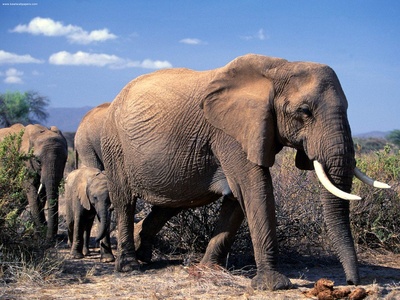
African elephant
The African elephant is Africa’s largest land mammal inhabiting savannas and forests. Body length around 600 cm. Notable for its versatile trunk used for feeding and touch; elephants form tight social herds and act as ecosystem engineers.
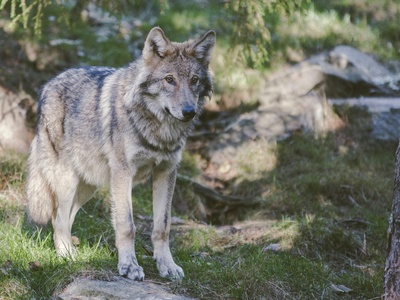
Gray wolf
The gray wolf ranges across the Northern Hemisphere in forests and tundra. Typical body length about 100 cm. Pack-hunting social carnivore known for cooperative behavior; wolves help regulate prey populations and shape landscapes.
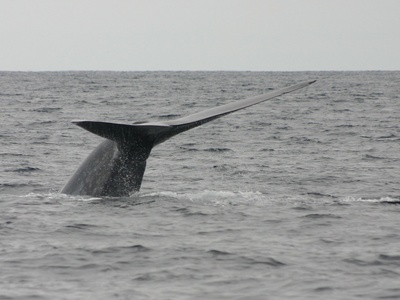
Blue whale
The blue whale roams oceans worldwide and is the largest animal ever, about 2,500 cm long. A baleen filter-feeder famed for immense size and low-frequency vocalizations; it consumes vast amounts of krill during seasonal feeding.
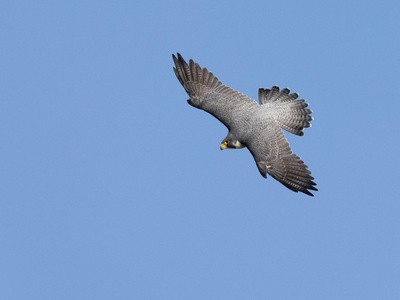
Peregrine falcon
Peregrine falcons are widespread birds of prey found on coasts, cliffs, and cities. Length about 40 cm. Remarkable for high-speed stoops exceeding 300 km/h, they’re among the fastest animals and excel at catching birds in flight.
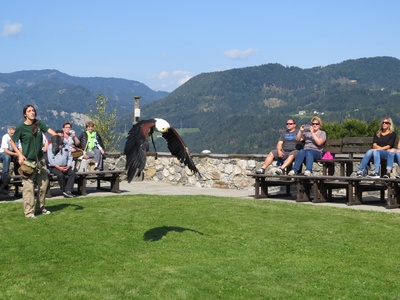
Bald eagle
The bald eagle inhabits lakes and rivers across North America. Body length about 90 cm. Known for keen eyesight and iconic white head, it’s a fish-eating raptor and a cultural and conservation symbol in the United States.
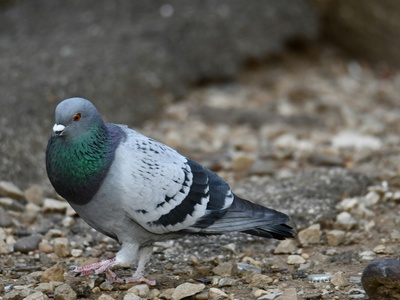
Rock pigeon
The rock pigeon thrives in cities and rural areas worldwide. About 32 cm long. Domesticated and adaptable, pigeons navigate using magnetic cues and were historically used as message carriers during wars.
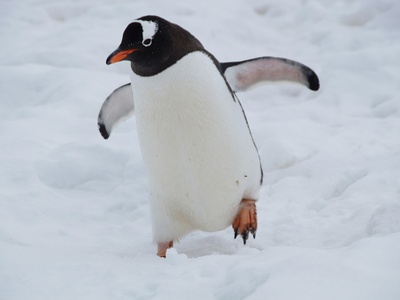
Emperor penguin
The emperor penguin breeds on Antarctic sea ice and dives in cold Southern Ocean waters. About 115 cm tall. Notable for deep, long dives and enduring extreme cold during lengthy breeding shifts on the ice.
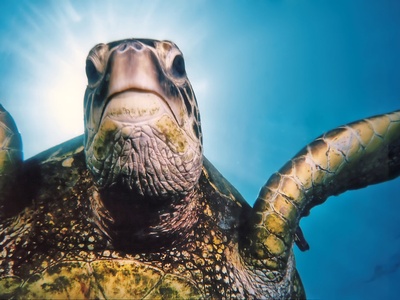
Green sea turtle
Green sea turtles live in tropical and subtropical coastal waters worldwide. Carapace length around 100 cm. Mostly herbivorous as adults, they migrate hundreds of kilometers between feeding grounds and nesting beaches.
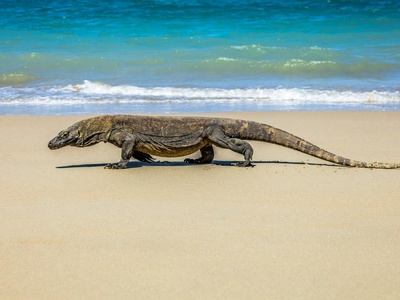
Komodo dragon
The Komodo dragon is a giant monitor lizard endemic to Indonesian islands. About 300 cm long. An ambush predator with a powerful bite and mildly venomous saliva, it feeds on deer and large prey and dominates its island ecosystems.
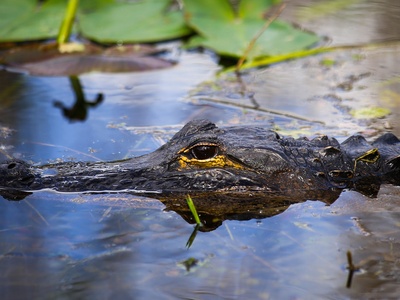
American alligator
The American alligator inhabits freshwater wetlands of the southeastern United States. Adult length around 300 cm. A top predator with armored skin and powerful jaws; alligators create open-water “gator holes” that benefit other wildlife.
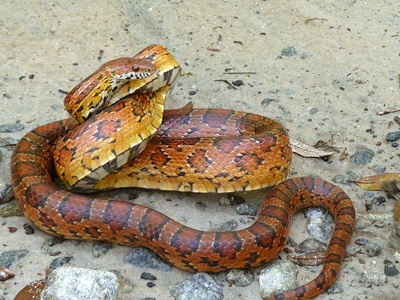
Corn snake
The corn snake lives in forests and fields of the southeastern United States. Typical length about 120 cm. A docile constrictor popular in the pet trade, it helps control rodent populations around farms and woodlands.
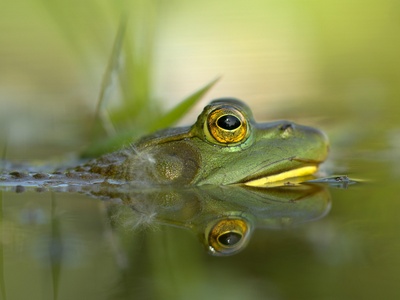
American bullfrog
The American bullfrog is a large frog found in ponds and lakes across much of North America. Body length about 15 cm. Famous for its deep croak and voracious appetite; when introduced it can outcompete native amphibians.
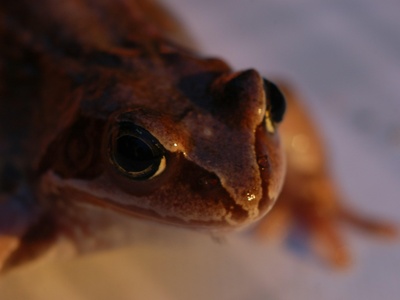
Common frog
The common frog inhabits gardens and ponds across Europe. About 9 cm long. A familiar springtime breeder with tadpole and metamorphosis stages, it serves as an indicator of freshwater habitat health.
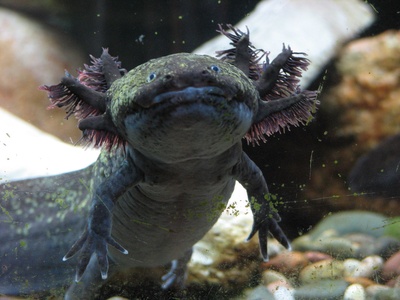
Axolotl
The axolotl is a neotenic salamander native to highland lakes near Mexico City. About 25 cm long. It retains juvenile gills into adulthood and can regenerate limbs and organs, making it a focus of developmental and regenerative research.
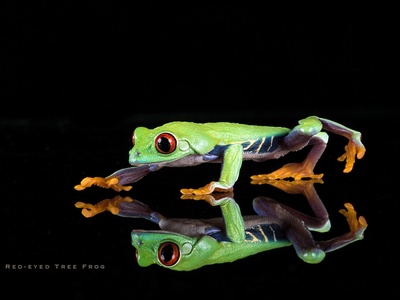
Red-eyed tree frog
This colorful Central American tree frog lives in tropical rainforests. About 7 cm long. Known for vivid red eyes and sticky toe pads for climbing, it hides during the day and becomes active at night to feed on insects.
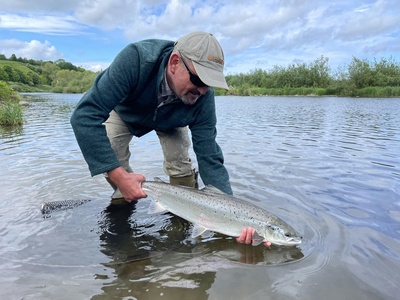
Atlantic salmon
Atlantic salmon migrate between North Atlantic rivers and the ocean. Typical length about 75 cm. Notable for long upstream migrations to spawn, they navigate from marine to freshwater environments during their life cycle.
Common carp
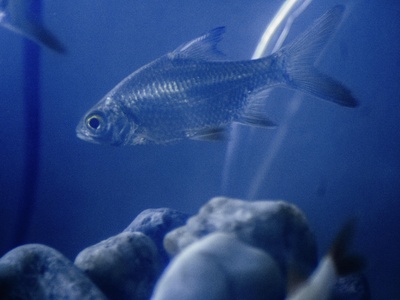
The common carp inhabits lakes and slow rivers across Eurasia and introduced regions worldwide. About 60 cm long. Omnivorous and highly adaptable, carp can stir sediments and alter vegetation, affecting water clarity and habitat structure.
Clownfish
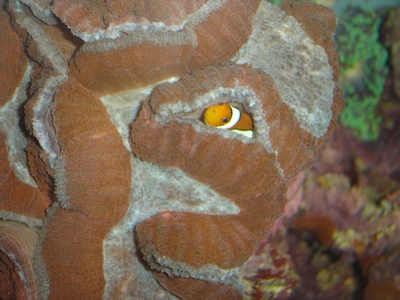
The clownfish lives among Indo-Pacific coral reefs and sea anemones. About 11 cm long. Famous for a mutualistic partnership with anemones that provide protection; clownfish are protandrous, often changing sex during their life.
Atlantic cod
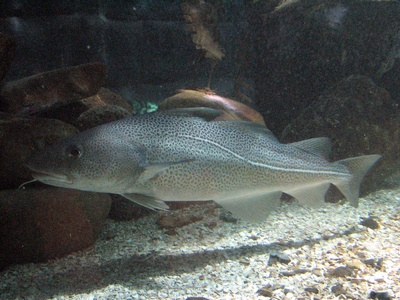
Atlantic cod occurs in cold North Atlantic waters and on continental shelves. About 100 cm long. Historically a cornerstone of fisheries, cod schools declined from overfishing, leading to major management and conservation efforts.