Russia’s huge range of habitats — from Arctic coasts and taiga to deep freshwater lakes and mountain valleys — has produced many species not found anywhere else. Long isolation, varied climates and unique ecosystems mean some plants and animals evolved only within Russia’s borders.
There are 8 Endemic Species of Russia, ranging from Baikal copepod to Little golomyanka. For each species, you’ll find below Scientific name,Taxon,Endemic region so you can quickly see where each occurs and how it’s classified; you’ll find below the concise entries and details.
How is “endemic” defined for species in Russia?
Endemic means a species is native to and restricted within a specific area; in Russia that can be a single lake, a region, or broader biogeographic zones. Scientists use records of natural, self-sustaining populations and historical range data to confirm true endemism rather than recent introductions.
What are the main threats to these endemic species and what can I do?
Threats include habitat loss, pollution, invasive species and climate change, which can be especially damaging for narrowly ranged species. You can help by supporting habitat protection groups, following responsible tourism practices, avoiding products that harm local ecosystems, and reporting observations to citizen science or conservation projects.
Endemic Species of Russia
| Name | Scientific name | Taxon | Endemic region |
|---|---|---|---|
| Baikal seal | Pusa sibirica | mammal | Lake Baikal |
| Baikal omul | Coregonus migratorius | fish | Lake Baikal |
| Big golomyanka | Comephorus baicalensis | fish | Lake Baikal |
| Little golomyanka | Comephorus dybowskii | fish | Lake Baikal |
| Baikal copepod | Epischura baikalensis | crustacean (copepod) | Lake Baikal |
| Baikal sponge | Lubomirskia baicalensis | sponge (Porifera) | Lake Baikal |
| Baikal sculpin | Batrachocottus baicalensis | fish (sculpin) | Lake Baikal |
| Korotneff’s deepwater sculpin | Abyssocottus korotneffi | fish (deepwater sculpin) | Lake Baikal |
Images and Descriptions
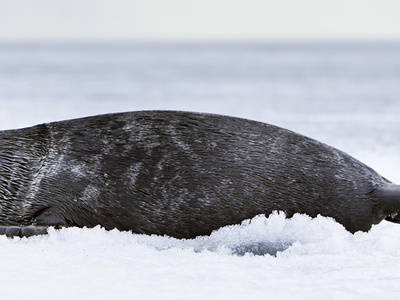
Baikal seal
The Baikal seal lives only in Lake Baikal, the world’s deepest freshwater lake. Small, ice-associated pinniped notable as the only freshwater seal; faces pollution, climate-change risks and fisheries interactions. Monitored locally; IUCN lists it as Least Concern but threats remain.

Baikal omul
The Baikal omul is a whitefish found only in Lake Baikal; valued for its rich flesh and seasonal spawning runs. Historically overfished and vulnerable to habitat change; subject to local catches and management. IUCN assessment notes population pressures regionally.
Big golomyanka
Comephorus baicalensis, the big golomyanka, is a translucent, oil-rich pelagic fish endemic to Baikal that gives live birth. It dominates open-water biomass and is sensitive to oxygen and food-web shifts; not widely assessed by IUCN but ecologically crucial.
Little golomyanka
Comephorus dybowskii, the little golomyanka, is a small, transparent Baikal fish living in pelagic waters and bearing live young. Important prey for predators and vulnerable to ecosystem changes; conservation status is poorly known but locally monitored.
Baikal copepod
Epischura baikalensis is a tiny copepod endemic to Lake Baikal that fuels much of the food web. Extremely abundant but sensitive to warming and invasive predators; not globally assessed by IUCN yet critical for Baikal ecosystem health.
Baikal sponge
Lubomirskia baicalensis is a large freshwater sponge endemic to Lake Baikal, forming dense underwater “forests” on rocks. Filters water and shelters many species; threatened by pollution, siltation and disease outbreaks, and considered of conservation concern locally.
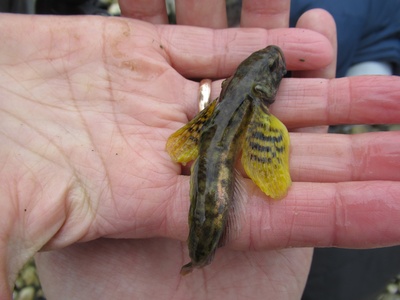
Baikal sculpin
Batrachocottus baicalensis, a Baikal sculpin, lives on rocky bottoms and shows striking adaptations to cold, deep waters. One of many Baikal-endemic sculpins; restricted range makes it vulnerable to habitat disturbance and food-web shifts, so monitored regionally.
Korotneff’s deepwater sculpin
Abyssocottus korotneffi is a deepwater sculpin found only in Lake Baikal’s cold abyssal zones. Adapted to pressure and low light, it’s emblematic of Baikal’s unique fauna; conservation worries center on oxygen changes and altered prey communities.