In 1752 Benjamin Franklin’s kite experiment—whether exactly as told or not—linked lightning and electricity in the public imagination and helped launch modern electrical science.
Most people flip switches and rarely think about the layers of physics, technology, and safety that make that convenience possible. That casual attitude hides a mix of surprising numbers, landmark discoveries, and practical rules that matter for homes, grids, and devices.
Electricity is more than just power at the flick of a switch: its physics, history, risks, and innovations shape modern life in surprising ways. Here are seven carefully chosen facts about electricity that range from the tiny charge on an electron to large-scale batteries and what to watch next, presented with concrete examples and clear takeaways.
Fundamental facts about electricity
Understanding electricity begins with charge and carriers. Below are the basic pieces that explain how static shocks, household currents, and superconducting magnets all relate to the motion of charged particles.
1. Electricity is the movement of charge — electrons and ions
At its most basic, electricity is motion of electric charge. The elementary charge carried by a single electron is 1.602×10^-19 coulombs, and electric current is simply how many coulombs pass a point each second (1 ampere = 1 coulomb/second).
In ordinary metal wires the carriers are electrons — a fact that followed J.J. Thomson’s cathode-ray experiments in 1897 when he identified the electron as a discrete particle. In fluids, gels, and living tissue, currents flow via ions, which is why batteries and biology behave differently from copper wiring.
A helpful image is beads sliding on a string: electrons shift and pass along energy even though each bead moves only a little. That analogy keeps the intuition without implying electrons need to travel from source to bulb across great distances.
2. Static electricity and lightning are related but very different
Static sparks and lightning are manifestations of the same charge physics, but the scale and dynamics differ enormously. NASA estimates roughly 1.4 billion lightning flashes occur worldwide each year, underscoring how common the large-scale phenomenon is.
A single lightning stroke can involve currents of tens of kiloamperes and transient voltages approaching 10^9 volts, but it typically lasts only tens to hundreds of microseconds per stroke. By contrast, the tiny zap you feel after walking across carpet is only milliamps and far lower voltage and energy.
Because of that scale difference, protection strategies vary: lightning arrestors and aircraft bonding addresses massive, fast transients, while simple grounding and dissipative materials reduce everyday static shocks.
3. Superconductors remove resistance — discovered in 1911
Most conductors have resistance that converts part of electrical energy to heat. In 1911 Heike Kamerlingh Onnes found that mercury loses all measurable electrical resistance below about 4.2 K, the first observation of superconductivity.
Decades later, in 1986, researchers found “high-temperature” superconductors such as YBCO with critical temperatures above the boiling point of liquid nitrogen (~77 K), making some applications easier and less costly to cool.
Practical uses already include MRI magnets and particle accelerator coils where near-zero resistance is essential, and researchers continue to explore whether lossless power transmission or room-temperature superconductors could reshape grids and devices.
How electricity powers homes, cities, and devices
Electric power operates at huge scale: generation, long-distance transmission, local distribution, and millions of end devices, plus batteries that both power and stabilize systems. The following facts emphasize scale, losses, and how storage has changed what’s possible.
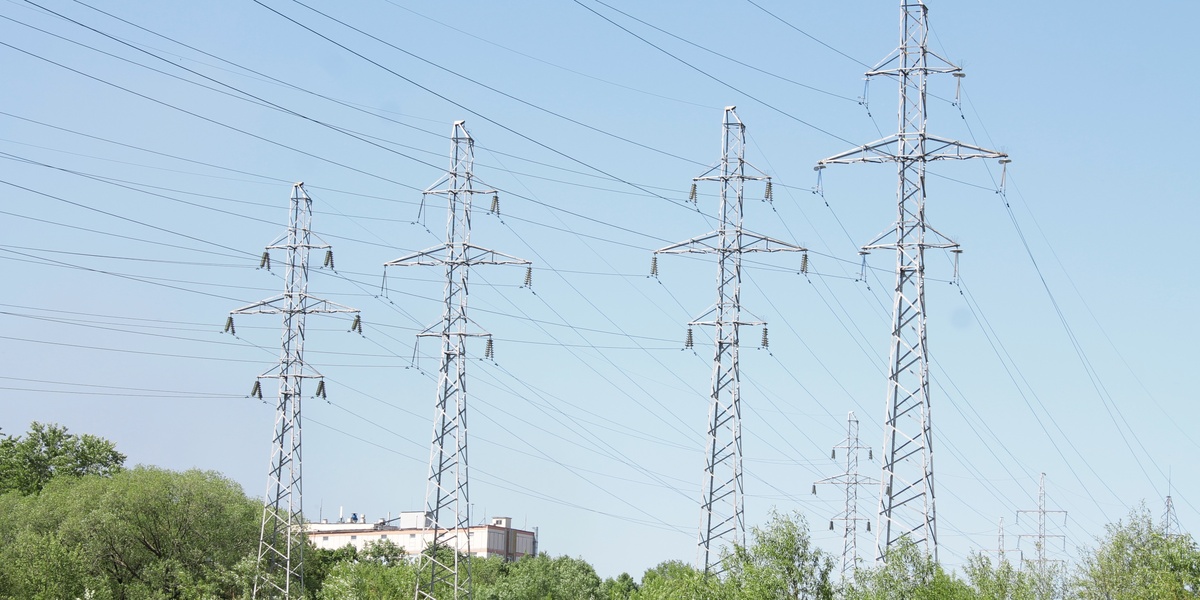
4. The grid moves enormous amounts of power — scale and losses matter
Global electricity generation is measured in the order of 10^4 terawatt-hours per year (see IEA statistics for recent totals). That scale means even small fractional losses become large absolute amounts of wasted energy.
Transmission and distribution losses average roughly 5–8% globally, driven by line resistance, transformer inefficiencies, and system configuration. Well-maintained, modern systems can keep losses under about 5%, while older or overloaded networks in some regions run higher.
Grid planners reduce losses by upgrading conductors, using higher voltages for long-distance links, and deploying high-voltage direct-current (HVDC) lines where appropriate to move bulk power more efficiently.
5. Batteries and storage reshaped devices and the grid
Rechargeable batteries turned portable electronics and electric vehicles from niche items into mass markets. Battery pack costs fell from roughly $1,100 per kWh around 2010 to under $150 per kWh by 2020, according to BloombergNEF, changing what is economically feasible.
On the grid scale, installations like the Hornsdale Power Reserve in South Australia (about 100 MW / 129 MWh) show how storage provides fast frequency response, emergency reserve, and market arbitrage, while home systems such as the Tesla Powerwall let households shift and store energy locally.
Storage helps smooth variable renewables, reduce peak demand, and provide resilience during outages — functions that are increasingly central as wind and solar grow their share of generation.
Safety, efficiency, and the future of electricity
Safe, efficient electricity depends on protective devices, sensible codes, and technology trends that are reshaping where and how electricity is used. The next two facts blend practical safety advice with realistic near-term developments.
6. Simple safety devices save lives: breakers, fuses, and GFCIs
Circuit breakers and fuses interrupt excessive current to prevent wiring damage and fires, while ground-fault circuit interrupters (GFCIs) detect tiny imbalances and trip quickly to reduce electrocution risk.
GFCIs typically trip on leakage currents around 4–6 mA and act within fractions of a second. They became more common in building codes from the 1970s onward, and modern codes extend their required use to kitchens, bathrooms, garages, and outdoor outlets.
Practical tips: install GFCIs where outlets may contact water, don’t overload multi-plug adapters, and treat a repeatedly tripping breaker as a warning sign rather than a nuisance.
7. The future: renewables, smart grids, EVs, and new materials
Renewable generation has been rising and supplied roughly a quarter to a third of global electricity in the early 2020s (see IEA trends). That growth, combined with storage and electrification, is reshaping demand and operations.
Smart meters, grid automation, and demand-response programs let operators integrate intermittent sources more smoothly. Electric vehicles such as the Tesla Model 3 are shifting transportation demand onto electricity and creating opportunities for managed charging to flatten peaks.
Research continues into next-generation batteries, advanced superconductors, and alternative chemistries that could further change storage and transmission. In the near term, expect more household electrification, wider EV charger deployment, and a steady need to upgrade wiring and local infrastructure.
Summary
- Electricity connects tiny physics to large systems: the electron’s charge (1.602×10^-19 C) underpins currents, while phenomena from static sparks to 1.4 billion annual lightning flashes illustrate scale.
- Superconductivity was discovered in 1911 (mercury at ~4.2 K) and later advances (1986 high-temperature superconductors) enable devices like MRI magnets; researchers still pursue broader loss-free transmission.
- Batteries have driven major change—prices fell dramatically between 2010 and 2020—enabling EVs, home storage (e.g., Tesla Powerwall), and grid projects such as Hornsdale (100 MW/129 MWh).
- Simple safety measures matter: breakers and fuses stop dangerous currents and GFCIs trip on ~4–6 mA to prevent shocks; install GFCIs in wet locations and treat repeated trips seriously.
- Watch near-term trends: rising renewable shares, smarter grids, and broader electrification mean more local upgrades (chargers, wiring) and opportunities to reduce emissions while maintaining safety and reliability.