In 1901 a short course at Manchester Polytechnic helped shape a profession that would later feed industries ranging from fertilizers to pharmaceuticals. That early, practical training — delivered in the early 20th century — set the tone for turning laboratory recipes into repeatable, safe, and economical processes. This article profiles eight famous chemical engineers whose engineering thinking — from process scale-up to enzyme design — changed industry and everyday life, enabling mass production of food, fuels, plastics, and medicines.
Over the next sections you’ll find three themed groupings: how the field was organized and taught; the industrial breakthroughs that scaled chemistry to millions of tons a year; and the molecular-level innovations reshaping medicine and materials today. Each profile ties a person to a concrete outcome so you can see how training, equipment, and design choices produced large societal effects.
Foundations and Education: Organizing a Profession
At the turn of the 20th century chemistry moved out of the small research lab and into factories that needed engineers who understood both molecules and machines. The founding decade of formal chemical engineering education is commonly placed around the late 1800s and early 1900s, when curricula began to emphasize reproducibility, plant safety, and scale-up rather than one-off recipes.
That shift produced standard textbooks and the unit-operations curriculum used in many programs, which made it possible to teach separations, reaction engineering, heat transfer, and mass transfer as transferable design skills. The practical result was fewer accidents, more reliable product quality, and the ability to plan plants that could run continuously instead of by trial and error.
Concrete milestones include short courses such as the 1901 Manchester Polytechnic offering, the creation of dedicated departments at institutions like MIT in the early 1900s, and textbooks that codified unit operations into a teachable framework used across chemical, petroleum, and process industries.
1. George E. Davis — Cataloging the Field
George E. Davis (1850–1907) is often called one of the originators of chemical engineering practice for his effort to organize the subject into a taught discipline. In 1901 he delivered a set of lectures and a published syllabus at Manchester Polytechnic that outlined the kinds of training plants needed beyond laboratory chemistry.
Davis argued for standardized training so engineers could design safer plants and reproduce processes at scale, and his syllabus influenced British industry practice by encouraging companies to hire people trained in process thinking rather than relying solely on chemists or trial-and-error operators.
2. Warren K. Lewis — Unit Operations and the MIT Model
Warren K. Lewis, active in the early to mid 20th century, helped develop and popularize the unit-operations approach that remains central to chemical-engineering education. His work at MIT shaped curricula and textbooks; a landmark text coauthored by faculty at that time (Principles of Chemical Engineering, 1923) framed separations and transport phenomena as reusable building blocks.
By treating distillation, heat exchange, and reaction as distinct unit operations, engineers could design distillation columns for petroleum refining and chemical separations with far greater predictability. That predictability reduced costly redesigns in oil refineries and bulk chemical plants.
3. Arthur D. Little — Bridging Lab and Industry
Arthur D. Little founded one of the first technical consulting firms in 1886, creating a bridge between academic chemistry and industrial needs. His firm offered engineers practical solutions to scale problems in dye houses, paper mills, and early polymer applications.
By supplying applied R&D and on-site design expertise, consultants like Little sped up the adoption of new processes and helped companies translate laboratory results into workable, safer plant operations.
Industrial Breakthroughs: Scaling Chemistry
Scaling a reaction from grams to tons requires new equipment, materials, and process control. The development of high-pressure reactors, continuous plants, and catalytic methods enabled synthetic fertilizers and large-volume chemicals that altered agriculture and energy systems. For example, synthetic ammonia production today runs to over 150 million tons per year globally, a scale unimaginable in a single chemist’s flask.
These famous chemical engineers — along with collaborating chemists — solved materials and mechanical challenges so that discoveries like laboratory ammonia synthesis could be produced at industrial throughput. The result was a dramatic expansion in food production capacity and the rise of petrochemical industries.
The subsections below profile the individuals most associated with these industrial leaps and highlight the engineering problems they solved: catalysts, metallurgy for high pressures, and continuous operation practices that made mass production possible.
4. Fritz Haber — Fixing Nitrogen in the Lab
Fritz Haber developed the reaction to synthesize ammonia from atmospheric nitrogen and hydrogen in 1909, a breakthrough that earned him the Nobel Prize in Chemistry in 1918. The chemistry itself made laboratory-scale ammonia synthesis possible.
Haber’s discovery underpins products such as ammonium nitrate and urea fertilizers, and it’s estimated that synthetic fertilizers stemming from this chemistry help support roughly 40% of global food production. Still, Haber worked primarily as a chemist; scaling the process to industrial volumes required further engineering innovations.
5. Carl Bosch — Industrial Scale and High-Pressure Engineering
Carl Bosch took Haber’s lab reaction and turned it into an industrial process at BASF, tackling the engineering hurdles of high pressure, heat management, and catalyst longevity. For that work in high-pressure chemistry he shared the 1931 Nobel Prize in Chemistry with Friedrich Bergius.
Bosch’s teams developed the metallurgy and continuous-operation designs to run the Haber–Bosch process reliably, and by the mid-20th century annual ammonia production was measured in millions of tons, enabling a global fertilizer industry.
6. Thomas Midgley Jr. — Additives with Big Consequences
Thomas Midgley Jr. was an engineer/chemist responsible for two widely adopted inventions: tetraethyl lead as an anti-knock additive in gasoline in the 1920s and early development of chlorofluorocarbons (CFCs) in the 1930s as refrigerants. Both found rapid industrial use through the mid-20th century.
Neither invention aged well. Leaded gasoline caused major public-health problems and was phased out in many countries by the late 20th century, while CFCs were later linked to stratospheric ozone depletion and addressed by the 1987 Montreal Protocol. Midgley’s story is a reminder that engineering choices can have long-term environmental and health consequences.
Biomedical and Materials Advances: Modern Chemical Engineering
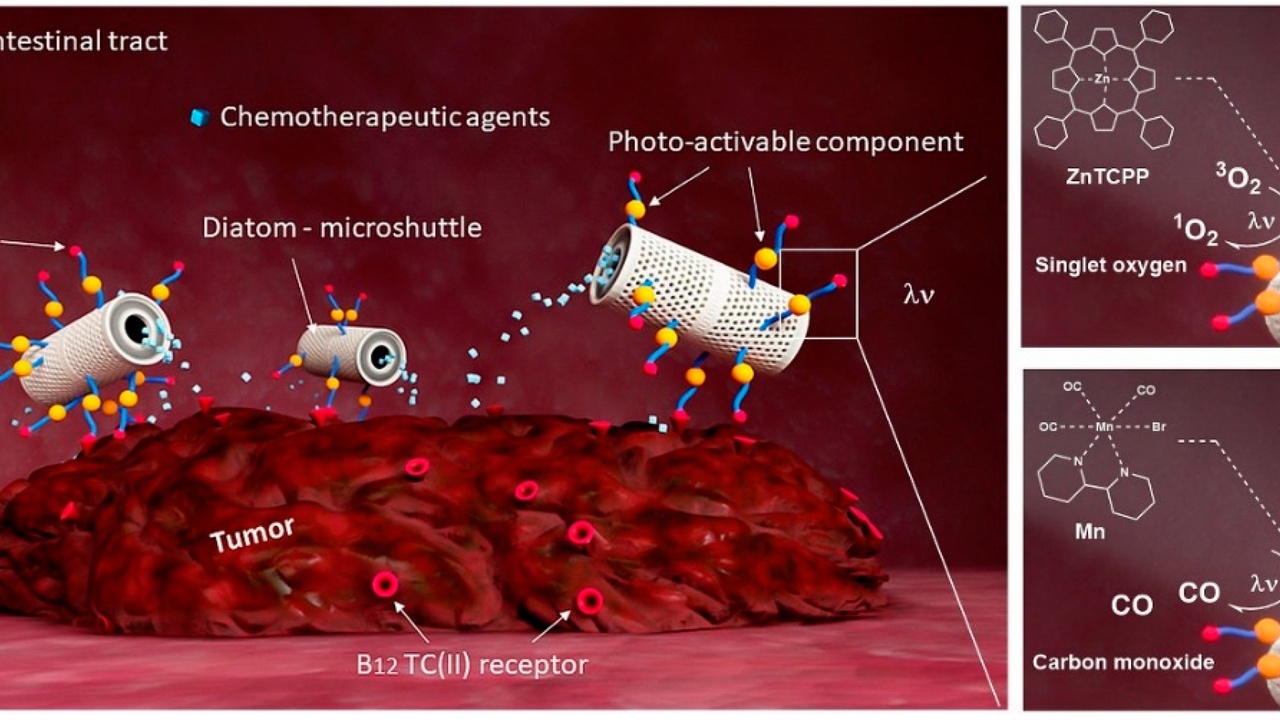
Modern chemical engineering now combines plant-scale know-how with molecular-level tools to create targeted therapies and novel materials. Process design principles are used to manufacture complex biologics, and molecular engineering methods produce controlled-release drugs, lipid nanoparticles, and engineered enzymes for greener chemistry.
The economic and health stakes are large: biomedical platforms generate hundreds of billions in market value and a steady stream of patents, and process engineers play a central role in moving lab breakthroughs into reliable commercial products.
The two profiles below illustrate how an engineering mindset — design, iteration, and scale — drives impact in medicine and sustainable manufacturing.
7. Robert Langer — Drug Delivery and Biotech Platforms
Robert Langer (born 1948) is an MIT chemical engineer whose work on controlled-release polymers and biomaterials reshaped drug delivery. He holds more than 1,400 issued patents and numerous companies and licensing deals have spun out of his lab’s inventions.
Langer’s contributions range from sustained-release cancer drug formulations to materials used for long-acting injectable drugs and components of lipid nanoparticle systems that proved critical for recent mRNA vaccine delivery. His work demonstrates how polymer chemistry, formulation engineering, and scale-up intersect to produce products on the market.
Beyond specific products, Langer’s model — high-volume patenting combined with entrepreneurship and translation — shows how an engineering lab can seed broad industrial change and support high-value biotech startups.
8. Frances Arnold — Directed Evolution of Enzymes
Frances Arnold (born 1956) received the 2018 Nobel Prize in Chemistry for pioneering directed evolution, an iterative process of mutating and selecting enzymes to improve performance. Directed evolution applies an engineering approach — design, test, and repeat — to molecular catalysts.
Her methods produce enzymes used in greener chemical synthesis, pharmaceutical manufacturing, and biofuel production, often reducing the number of steps and waste in complex syntheses. Companies now use evolved enzymes in commercial processes, showing how molecular engineering scales into industrial practice.
Summary
- Early organization and curricula (starting with efforts in 1901) professionalized process design and unit operations, leading to safer, more reproducible industrial plants.
- Industrial innovations — from Haber’s 1909 ammonia chemistry to Bosch’s high‑pressure engineering — transformed agriculture and energy, enabling the large-scale fertilizer production that supports roughly 40% of global food output.
- Modern work at the intersection of process and molecular engineering (exemplified by Robert Langer and Frances Arnold) delivers new drug-delivery platforms and enzyme catalysts that reduce waste and enable novel therapeutics.
- Historical examples also show that engineering choices carry societal consequences, so reflecting on ethics and regulation is essential when evaluating the legacy of famous chemical engineers.