July has produced a surprising number of influential scientists across disciplines, from theoretical physicists to pioneering microbiologists. Noticing birth anniversaries can be a handy way to tie historical context to classroom lessons, social posts, or research timelines.
There are 15 Scientists born in July, ranging from Carl Woese to William Henry Bragg; for each entry you’ll find below data organized as Birthdate (DD MMM YYYY),Field,Country — giving a compact view of when and where these contributors to science were born, and what they studied, you’ll find below.
How were the scientists chosen for this list?
The selection focuses on well-documented figures with verifiable birthdates who made notable contributions to their fields, aiming for a mix of eras, disciplines, and countries so the list reflects breadth rather than completeness.
Can I sort or filter the entries by date, field, or country?
Yes — because entries use the columns Birthdate (DD MMM YYYY),Field,Country you can easily sort or import the list into a spreadsheet to filter by year, discipline, or nationality for anniversary planning or research.
Scientists Born in July
| Name | Birthdate (DD MMM YYYY) | Field | Country |
|---|---|---|---|
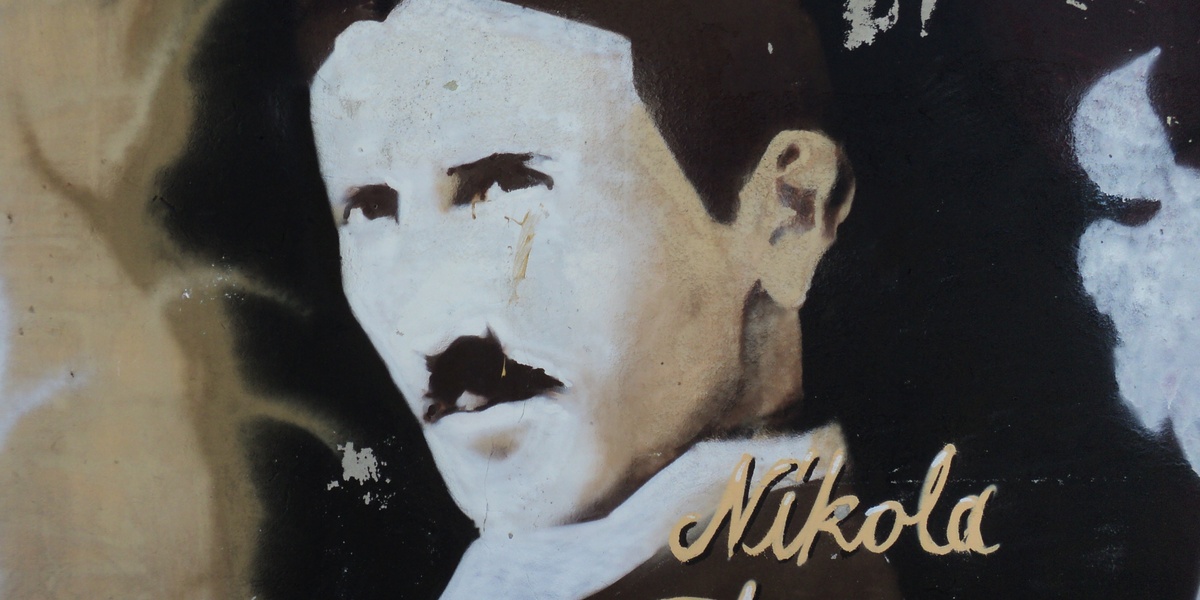
| Nikola Tesla | 10 Jul 1856 | Electrical engineer | Serbian-American |
| Gregor Mendel | 20 Jul 1822 | Geneticist | Austrian |
| Rosalind Franklin | 25 Jul 1920 | Chemist | British |
| William Henry Bragg | 02 Jul 1862 | Physicist | British |
| Hans Bethe | 02 Jul 1906 | Physicist | German-American |
| Claude Bernard | 12 Jul 1813 | Physiologist | French |
| John B. Goodenough | 25 Jul 1922 | Materials scientist | American |
| Friedrich Wöhler | 31 Jul 1800 | Chemist | German |
| Carl Woese | 15 Jul 1928 | Microbiologist | American |
| Marie Tharp | 30 Jul 1920 | Geologist | American |
| Ernst Mayr | 05 Jul 1904 | Evolutionary biologist | German-American |
| Gerhard Ertl | 10 Jul 1936 | Physical chemist | German |
| Joseph Larmor | 11 Jul 1857 | Physicist | Irish |
| Georges Lemaître | 17 Jul 1894 | Cosmologist | Belgian |
| Gottfried Leibniz | 01 Jul 1646 | Mathematician | German |
Images and Descriptions
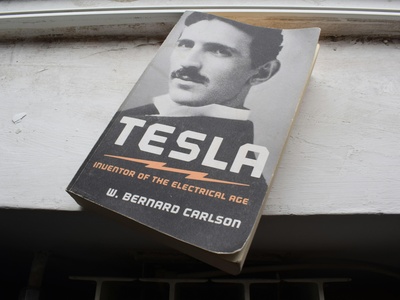
Nikola Tesla
Inventor and electrical engineer known for pioneering alternating current (AC) power systems, induction motors, radio-frequency technologies, and visionary ideas about wireless power transmission; his inventions and patents transformed electrical engineering and modern power distribution worldwide.
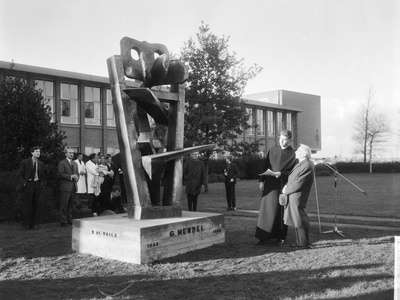
Gregor Mendel
Austrian monk and botanist who established modern genetics through pea-plant experiments demonstrating particulate inheritance laws; his work on dominant and recessive traits, segregation and independent assortment laid the experimental foundation for heredity and modern genetics.
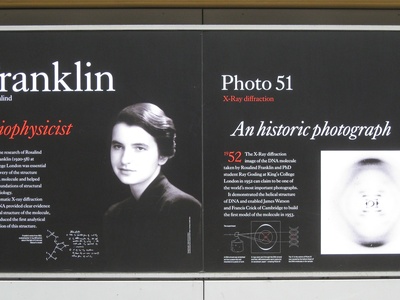
Rosalind Franklin
British chemist and X-ray crystallographer whose high-resolution diffraction images, especially “Photo 51,” provided crucial evidence for DNA’s double-helix structure; she also made important contributions to the study of viruses, coal and graphite before her untimely death.

William Henry Bragg
British physicist who, with his son William Lawrence Bragg, founded X-ray crystallography and formulated Bragg’s law; their work earned the 1915 Nobel Prize and enabled determination of crystal structures foundational to chemistry and materials science.
Hans Bethe
German-American theoretical physicist who explained stellar energy production via nuclear fusion (the Bethe processes), contributed to the Manhattan Project, and made broad advances in nuclear and astrophysics, earning the 1967 Nobel Prize in Physics.
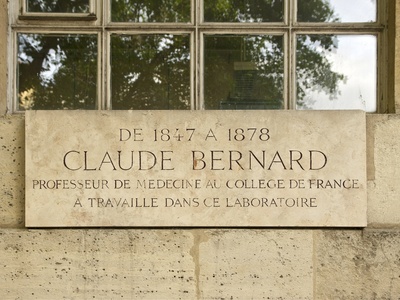
Claude Bernard
French physiologist regarded as a founder of experimental medicine; he introduced the concept of the internal environment (milieu intérieur), championed controlled experiments in physiology, and elucidated pancreatic and hepatic roles in digestion and metabolism.
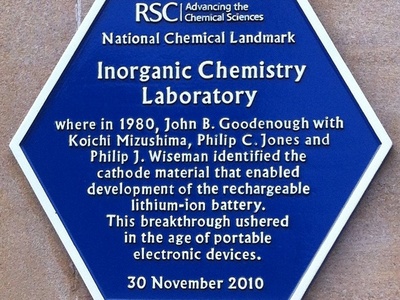
John B. Goodenough
American solid-state physicist and materials scientist who developed lithium-ion battery cathode materials that enabled modern rechargeable devices; his discoveries and decades-long career were honored with a shared 2019 Nobel Prize in Chemistry.
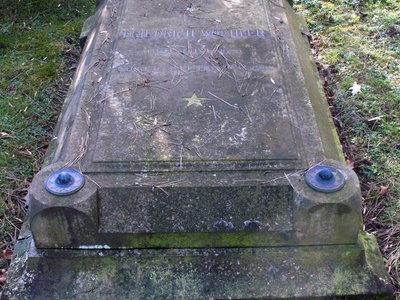
Friedrich Wöhler
German chemist who synthesized urea from ammonium cyanate in 1828, demonstrating that organic compounds could be prepared from inorganic precursors and challenging vitalism; his work is a cornerstone in the development of organic chemistry.
Carl Woese
American microbiologist who used ribosomal RNA sequencing to reveal a distinct third domain of life, Archaea, revolutionizing microbial phylogeny and reshaping biological classifications and our understanding of evolutionary relationships.
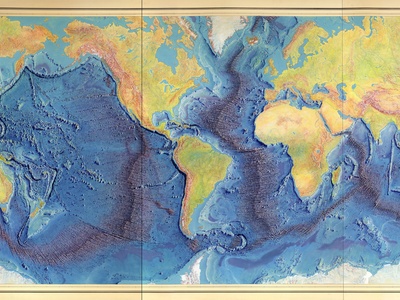
Marie Tharp
American geologist and oceanographic cartographer who produced the first detailed maps of the ocean floor, revealing mid-ocean ridges and supporting seafloor spreading and plate tectonics; her mapping transformed earth sciences and acceptance of continental drift.
Ernst Mayr
German-American evolutionary biologist whose work on species concepts, systematics and the modern synthesis reshaped evolutionary theory; he emphasized speciation, geographic isolation and the importance of biological classification in understanding diversity.
Gerhard Ertl
German physical chemist awarded the 2007 Nobel Prize for elucidating chemical processes on solid surfaces; his molecular-level studies of adsorption, catalysis and surface reactions advanced heterogeneous catalysis and industrial chemistry.
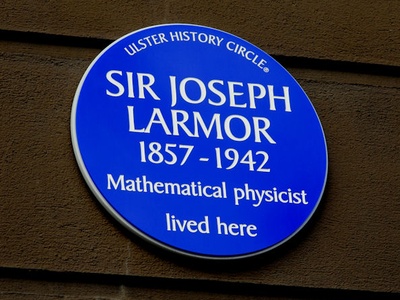
Joseph Larmor
Irish mathematician and theoretical physicist noted for Larmor precession and contributions to electron theory, electrodynamics and mathematical physics; his theoretical work influenced early atomic models and the development of classical electrodynamics.
Georges Lemaître
Belgian priest, physicist and cosmologist who proposed the expanding-universe model and the “primeval atom” hypothesis later known as the Big Bang; he derived relations akin to Hubble’s law and linked theory with astronomical observations.
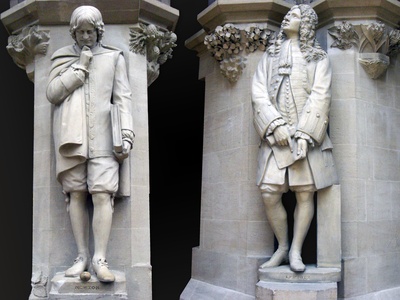
Gottfried Leibniz
German polymath and mathematician credited as co‑inventor of calculus, developer of symbolic logic and binary arithmetic, and contributor to mechanics and natural philosophy; his methods influenced analysis, computation and early scientific reasoning.