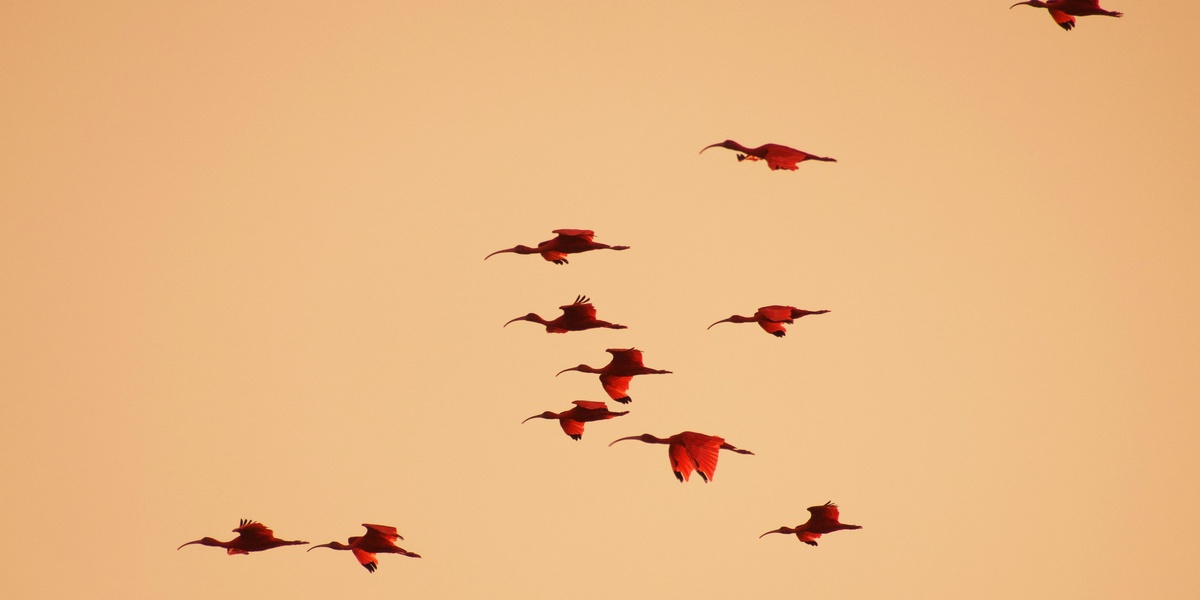
Suriname’s mosaic of coastal mangroves, rivers and Amazonian foothills makes it one of South America’s most consistently bird-rich countries, whether you’re scanning river edges or trekking lowland forest trails. Local guides and quiet reserves make sightings accessible without long inland expeditions.
There are 45 Birds of Suriname, ranging from Agami Heron to Yellow-rumped Cacique. For each entry I list the Scientific name,IUCN status,Where found (regions); you’ll find below.
How can I use this list to plan birdwatching in Suriname?
Use the “Where found (regions)” column to match species with accessible habitats and reserves, and check the IUCN status to prioritize rarer targets. Combine that with local guides’ knowledge of seasonal movements and sunrise-to-midday viewing windows for the best chances.
Are any of these species threatened or protected?
Yes — the IUCN status column flags species of conservation concern; while many are Least Concern, a few may be Near Threatened or Vulnerable. Treat the list as a starting point, verify current protections with local authorities, and follow site rules to minimize disturbance.
Birds of Suriname
| Common name | Scientific name | IUCN status | Where found (regions) |
|---|---|---|---|
| Scarlet Ibis | Eudocimus ruber | Least Concern | coastal mangroves, mudflats, rice fields |
| Hoatzin | Opisthocomus hoazin | Least Concern | riverbanks, flooded forests, swampy areas |
| Blue-and-yellow Macaw | Ara ararauna | Least Concern | lowland rainforest, river edges |
| Scarlet Macaw | Ara macao | Least Concern | remote rainforest canopy, river corridors |
| Chestnut-fronted Macaw | Ara severus | Least Concern | forest edges, gallery forest |
| Orange-winged Amazon | Amazona amazonica | Least Concern | woodland, edges, coastal forests |
| Harpy Eagle | Harpia harpyja | Near Threatened | remote lowland rainforest canopy |
| Black Vulture | Coragyps atratus | Least Concern | towns, open areas, coasts |
| Turkey Vulture | Cathartes aura | Least Concern | widespread, open country |
| Great Black Hawk | Buteogallus urubitinga | Least Concern | rivers, mangroves, wetlands |
| Roadside Hawk | Rupornis magnirostris | Least Concern | forest edges, savannas, clearings |
| Cocoi Heron | Ardea cocoi | Least Concern | rivers, wetlands, coastal lagoons |
| Great Egret | Ardea alba | Least Concern | wetlands, mangroves, rice fields |
| Snowy Egret | Egretta thula | Least Concern | shorelines, tidal flats, mangroves |
| Agami Heron | Agamia agami | Near Threatened | shaded rivers, flooded forest channels |
| Green Ibis | Mesembrinibis cayennensis | Near Threatened | swampy forest, river edges |
| Roseate Spoonbill | Platalea ajaja | Least Concern | coastal lagoons, mangroves, estuaries |
| Rufous-tailed Jacamar | Galbula ruficauda | Least Concern | forest edges, open woodland |
| Paradise Jacamar | Galbula dea | Least Concern | humid forest edges, riverbanks |
| Amazon Kingfisher | Chloroceryle amazona | Least Concern | rivers, lakes, forest streams |
| Ringed Kingfisher | Megaceryle torquata | Least Concern | rivers, estuaries, coasts |
| Green Kingfisher | Chloroceryle americana | Least Concern | streams, rivers, forest pools |
| Sunbittern | Eurypyga helias | Least Concern | secluded streams, forest pools, river edges |
| White-bearded Manakin | Manacus manacus | Least Concern | forest edges, river islands, clearings |
| Golden-headed Manakin | Ceratopipra erythrocephala | Least Concern | forest understory, edges |
| Guianan Toucanet | Selenidera piperivora | Least Concern | humid forest canopy, river corridors |
| Crested Oropendola | Psarocolius decumanus | Least Concern | forest edges, tall trees, clearings |
| Yellow-rumped Cacique | Cacicus cela | Least Concern | open woodland, forest edge, plantations |
| Silver-beaked Tanager | Ramphocelus carbo | Least Concern | forest edge, secondary growth, gardens |
| Blue-gray Tanager | Thraupis episcopus | Least Concern | gardens, edges, open woodland |
| Palm Tanager | Thraupis palmarum | Least Concern | forest edge, plantations, towns |
| Guianan Cock-of-the-rock | Rupicola rupicola | Least Concern | humid forest leks, rocky outcrops |
| Great Potoo | Nyctibius grandis | Least Concern | forest interior, perches high at night |
| Common Potoo | Nyctibius griseus | Least Concern | open woodland, savanna-forest edges |
| Long-billed Hermit | Phaethornis longirostris | Least Concern | understory, forest edges, shady gardens |
| Fork-tailed Woodnymph | Thalurania furcata | Least Concern | forest edges, clearings, gardens |
| Rufous-breasted Hermit | Glaucis hirsutus | Least Concern | forest understory, river edges, gardens |
| Semipalmated Sandpiper | Calidris pusilla | Near Threatened | coastal mudflats, estuaries, sandy beaches |
| Magnificent Frigatebird | Fregata magnificens | Least Concern | coastal waters, estuaries, roosts on islands |
| Brown Booby | Sula leucogaster | Least Concern | offshore, coastal waters, rocky islands |
| Black-capped Donacobius | Donacobius atricapilla | Least Concern | marshes, reedbeds, mangrove edges |
| Swallow-tailed Kite | Elanoides forficatus | Least Concern | open forest, wetlands, migratory over coasts |
| Southern Caracara | Caracara plancus | Least Concern | open country, savannas, roadsides |
| Large-billed Tern | Phaetusa simplex | Least Concern | sandy riverbars, coastal estuaries, large rivers |
| Black-throated Trogon | Trogon rufus | Least Concern | forest interior, shaded understory, river edges |
Images and Descriptions
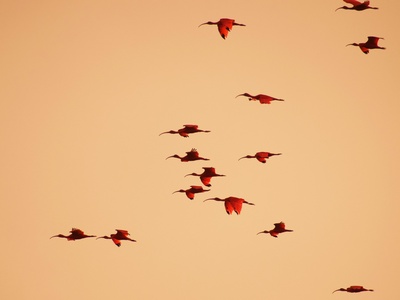
Scarlet Ibis
Vibrant pink shorebird famous along Suriname’s coast and estuaries. Often seen in noisy flocks probing mud for shrimp and crabs; a national icon easy for visitors to spot. Relies on healthy coastal wetlands and tidal flats.
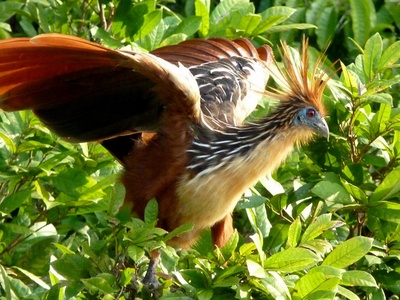
Hoatzin
Odd, prehistoric-looking bird of slow-moving rivers and flooded forests. Eats leaves and has a strong manure-like odor; chicks have claws on wing fingers. Best seen along river margins and shaded creeks in the interior.
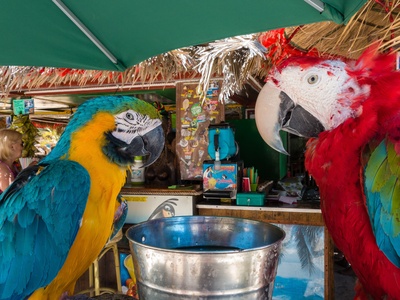
Blue-and-yellow Macaw
Striking large parrot with bright blue back and yellow underside. Often heard before seen; feeds on fruits and seeds in tall canopy. Locally common in forested river corridors and savanna-forest mosaics.
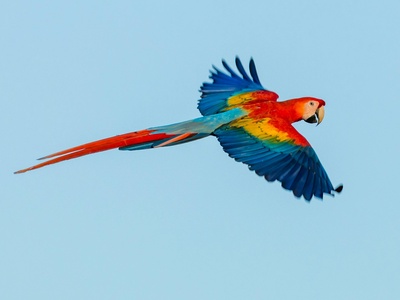
Scarlet Macaw
Showy red macaw with blue and yellow wing patches, most often in remote interior forests. Less common near coasts; prized sighting for birders flying along river corridors and forest clearings.
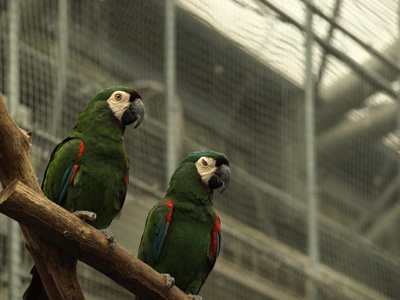
Chestnut-fronted Macaw
Medium-sized macaw with chestnut forehead and green body; more tolerant of secondary forest and edges. Often seen in small groups along riverbanks and around forest clearings.
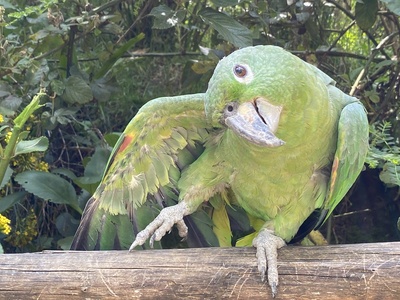
Orange-winged Amazon
Common green parrot with orange on the wings and loud chattering calls. Found in coastal forest, mangroves and near villages; often feeds on fruiting trees and palm seeds.
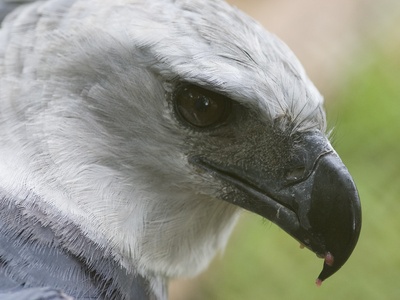
Harpy Eagle
Impressive apex predator of the canopy with massive talons and crested head. Extremely rare in Suriname, seen only in large tracts of undisturbed rainforest; a thrilling but uncommon sight.
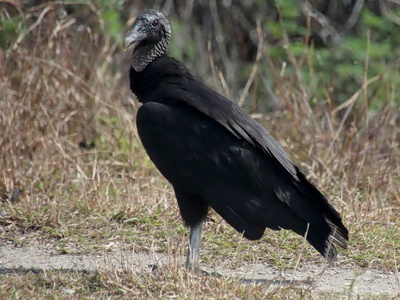
Black Vulture
Widespread scavenger often seen in small groups near roads, towns and coastlines. Dark and plain compared with turkey vultures; plays an important cleanup role in human and wild landscapes.
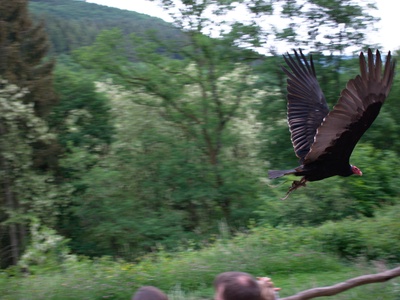
Turkey Vulture
Common soaring scavenger with keen sense of smell for carrion. Frequently seen along roads, wetlands and over coastal plains; often forms large kettles when thermals are strong.
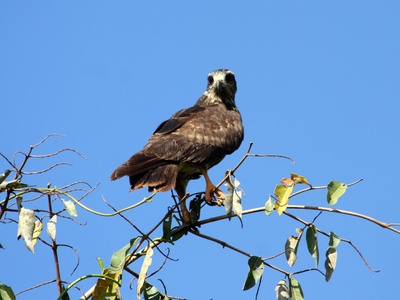
Great Black Hawk
Powerful marsh and river hawk often perched near water hunting crabs, fish and small vertebrates. Dark plumage and broad wings make it conspicuous along mangrove-lined rivers and coastal lagoons.
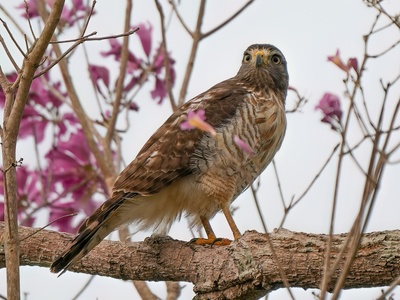
Roadside Hawk
Small, adaptable hawk commonly seen perched on roadside posts and forest edges. Hunts insects and small vertebrates from exposed perches; one of the easiest raptors to spot in Suriname.
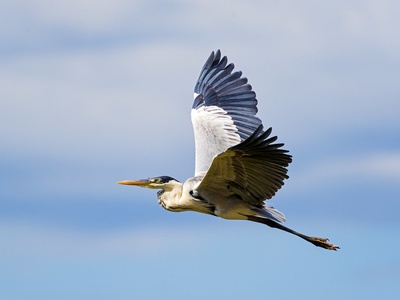
Cocoi Heron
Large gray-and-white heron frequenting rivers, marshes and estuaries. Stands patiently for fish and amphibians; often seen in shallow water and mangrove fringes throughout the country.
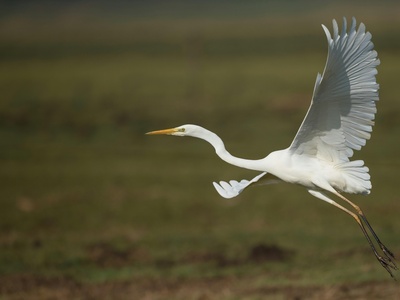
Great Egret
Elegant white heron with long S-shaped neck and yellow bill. Common in wetlands, tidal flats and rice fields where it feeds on fish, crustaceans and amphibians.
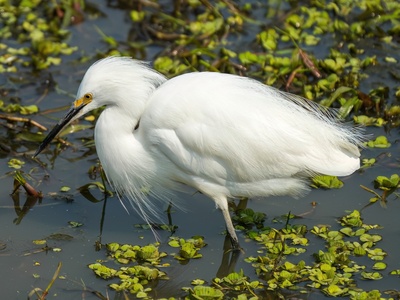
Snowy Egret
Smaller white egret with black bill and yellow feet that often forage in shallow tidal flats. Agile and active, it is a common sight on coastal mudflats and estuarine edges.
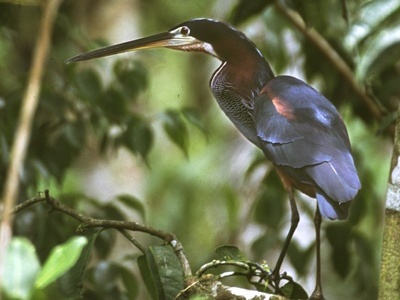
Agami Heron
Secretive, richly colored heron of calm, shaded waterways. Prefers forest rivers and flooded channels; often hides in dense vegetation and is best seen from quiet boat trips in the interior.
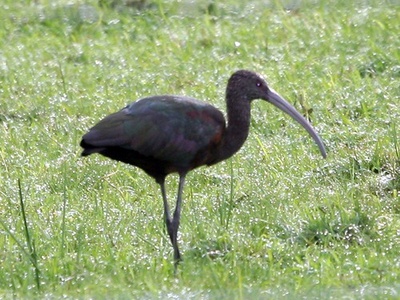
Green Ibis
Shy, olive-green ibis that frequents forested swamps and river margins. Often skulks in cover and is more likely heard than seen; an indicator of healthy wet forest.
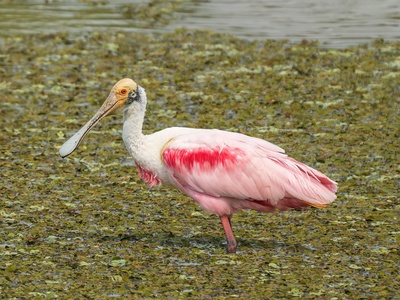
Roseate Spoonbill
Pink, spatulate-billed wader commonly seen in shallow coastal lagoons and mangrove pools. Feeds by sweeping bill through water and is a colorful component of estuarine birdlife.
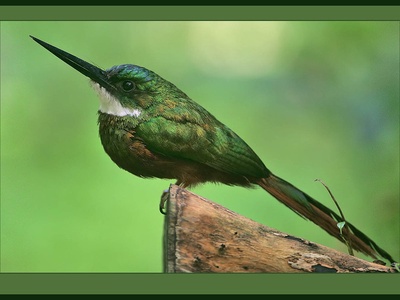
Rufous-tailed Jacamar
Sleek insect-catching bird with iridescent green back and rufous belly. Perches on exposed twigs to sally for flying insects along forest edges and river clearings.
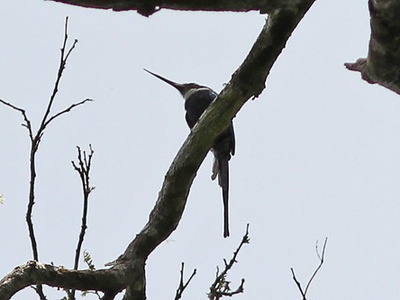
Paradise Jacamar
Long, slender jacamar with glossy green plumage and long bill, often seen perched quietly before darting to catch insects over streams and clearings.
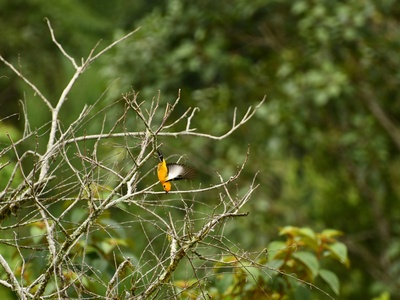
Amazon Kingfisher
Large green-and-white kingfisher frequenting slow rivers and forest pools. Hunts fish from low perches and is commonly seen along major rivers and oxbow lakes.
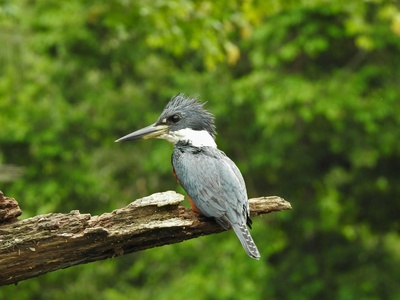
Ringed Kingfisher
Big, noisy kingfisher with a loud rattle call that patrols rivers and coastal estuaries. Perches prominently and dives for fish; often seen near human settlements on waterways.
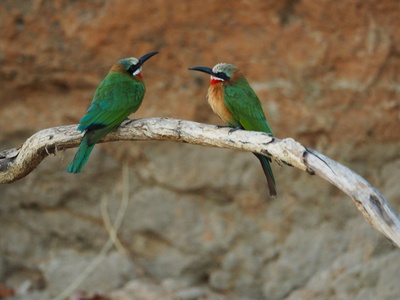
Green Kingfisher
Small, compact kingfisher that favors shaded streams and forest pools. Quick and rapid, it sits close to the water before plunging for small fish.
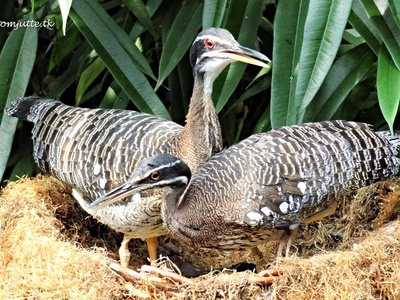
Sunbittern
Elegant, cryptic bird of forest streams that fans striking wing patterns when alarmed. Walks along banks hunting aquatic insects and small fish; best found in quiet interior waterways.
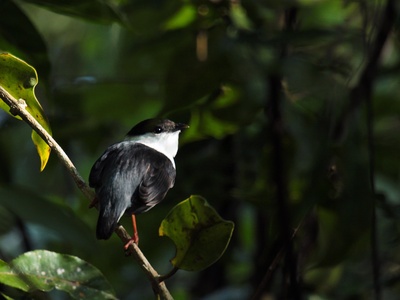
White-bearded Manakin
Tiny, energetic bird known for its acrobatic courtship displays on communal leks. Common near forest edges and river islands, where males snap wings and leap to attract females.
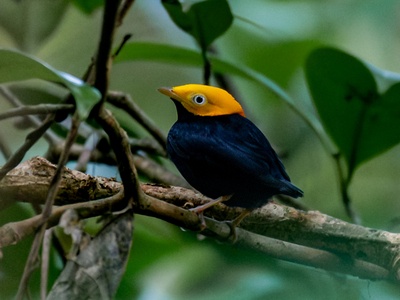
Golden-headed Manakin
Small, flashy red-and-black manakin with remarkable mating dances. Lives in humid forest understory; best found at leks where males display to visiting birders.
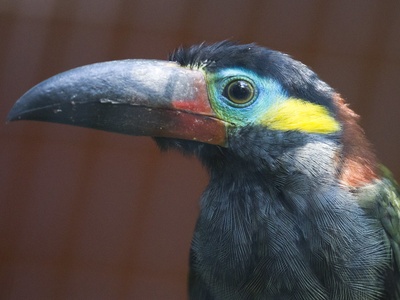
Guianan Toucanet
Compact toucan-like bird with colorful facial markings and short bill. Moves in small groups through canopy and edges along rivers; noticeable by its nasal calls.
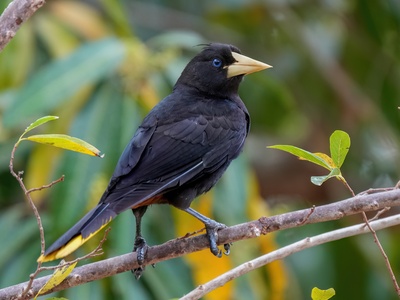
Crested Oropendola
Large, colonial passerine that builds long hanging woven nests and makes bubbling, raucous calls. Often found in tall trees near clearings and forest edges.
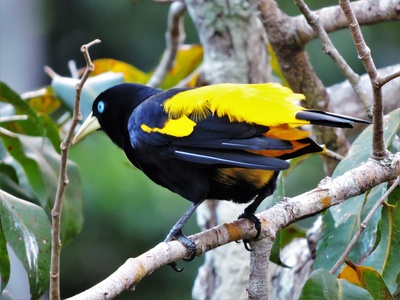
Yellow-rumped Cacique
Black bird with bright yellow rump and sociable nesting colonies. Common in open forest and plantations; known for hanging nests and varied, chattering calls.
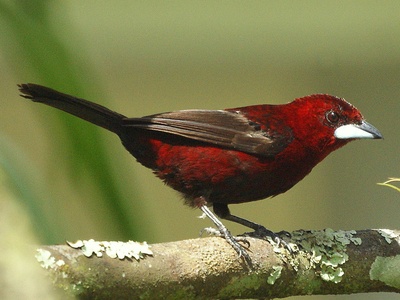
Silver-beaked Tanager
Common medium-sized tanager with glossy black and bright silver-beaked appearance. Often forms flocks in edges and gardens, feeding on fruit and insects.
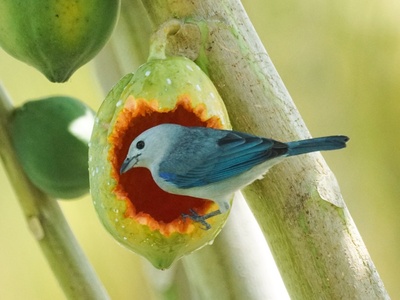
Blue-gray Tanager
Friendly, pale blue bird frequently seen in towns, gardens and forest edges. Eats fruit and visits feeders; one of the most familiar tanagers to visitors.
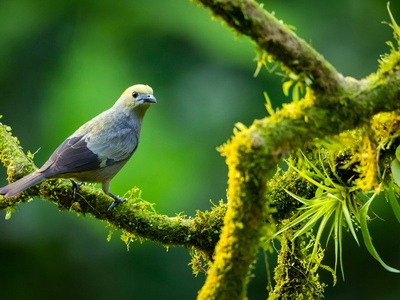
Palm Tanager
Olive-green to brownish tanager common around palms and human-modified habitats. Often forages in small groups and adapts well to gardens and plantations.
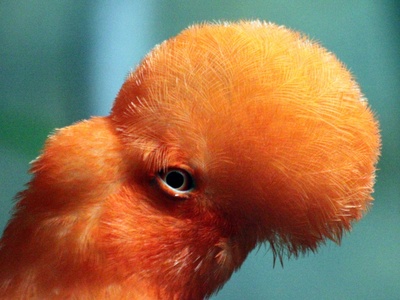
Guianan Cock-of-the-rock
Iconic orange courtship bird that gathers at leks near rocky streams and forest clearings. Males are strikingly colored, and seeing a lek is a highlight for many visitors.
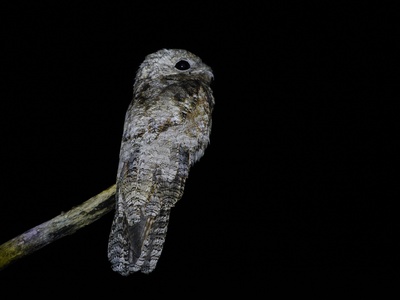
Great Potoo
Large, nocturnal bird with cryptic plumage and an eerie, haunting call. Perches motionless on high branches by day, blending with tree trunks and emerging at dusk to hunt.
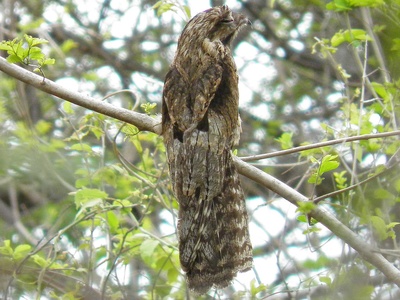
Common Potoo
Smaller potoo of open habitats that freezes by day on exposed perches. Known for its mellow night calls and superb camouflage among dead branches.
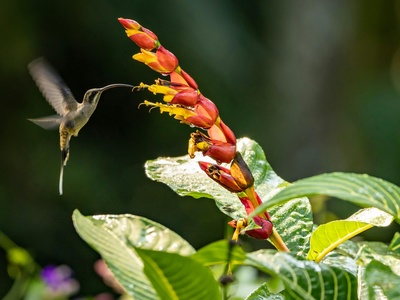
Long-billed Hermit
Streamlined hummingbird with a long curved bill and subtle plumage. Drinks from tubular flowers in shaded understory and gardens; often feeds in small groups along forest edges.
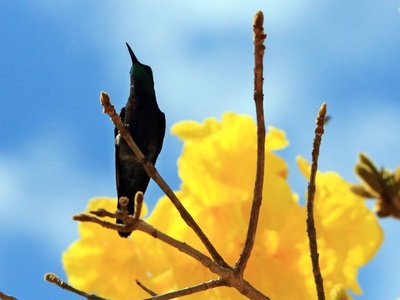
Fork-tailed Woodnymph
Fast, iridescent hummingbird common at forest edges and flowering gaps. Males flash bright green and blue; visitors often see them around flowering trees near lodges.
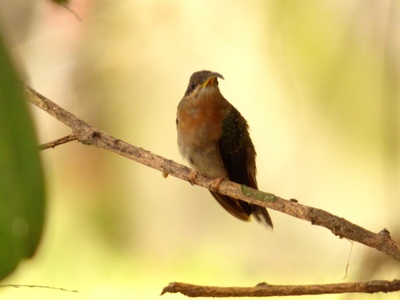
Rufous-breasted Hermit
Distinctive hermit hummingbird with curved bill and rufous underparts. Prefers shaded understory and riparian vegetation; often seen at flowering plants close to trails.
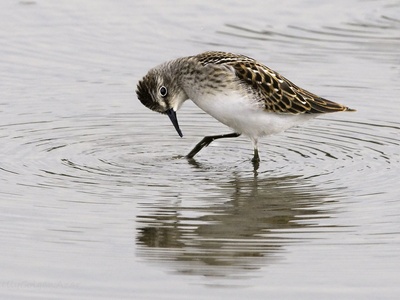
Semipalmated Sandpiper
Small migratory sandpiper that stops in Suriname’s tidal flats during migration. Forms large flocks on muddy shores, probing for invertebrates; shorebird conservation depends on intact stopover habitats.
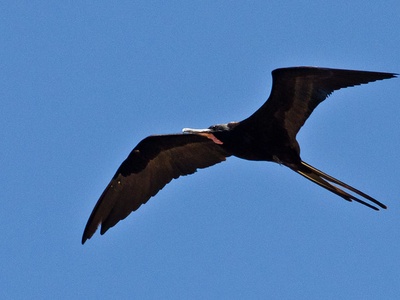
Magnificent Frigatebird
Large, migratory seabird with a forked tail and males’ inflatable red throat pouch. Soars over coastal waters and estuaries, often kleptoparasitizing other seabirds.
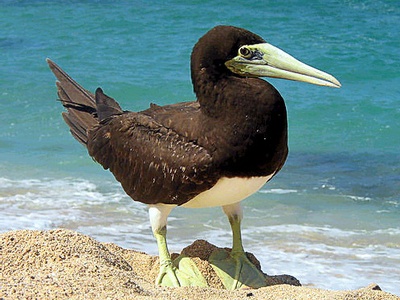
Brown Booby
Large diving seabird that plunges for fish around offshore rocks and coastal waters. Seen from boats and headlands, often in small groups near fishing grounds.
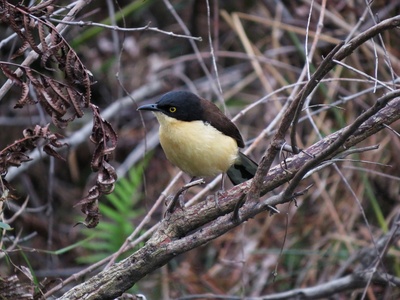
Black-capped Donacobius
Unusual, loud marsh bird with a bubbly song and bold behavior. Lives in reedbeds, marsh edges and mangrove fringes; easy to hear and often visible.
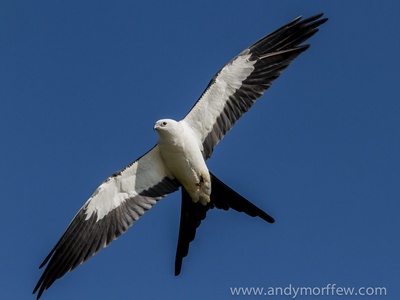
Swallow-tailed Kite
Elegant, long-tailed raptor that migrates through northern South America. Graceful over wetlands and open forest edges, catching insects and small prey on the wing.
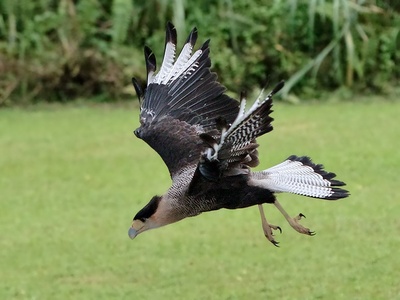
Southern Caracara
Opportunistic, terrestrial raptor often seen walking on the ground for carrion and small animals. Found in open fields, roadsides and savanna-like habitats across Suriname.
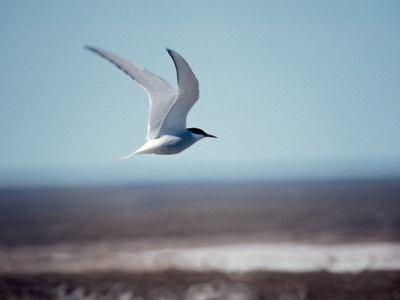
Large-billed Tern
Distinctive tern with a large yellow bill that nests on sandy riverbars and hunts fish over calm rivers. Best spotted along major rivers and sandbar-strewn estuaries.
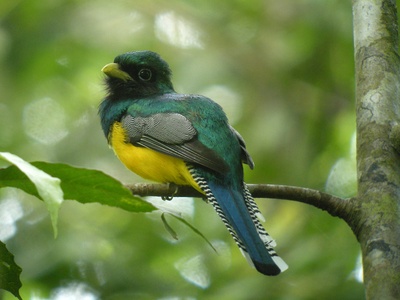
Black-throated Trogon
Colorful, stocky bird of the forest interior with a soft cluck call. Sits quietly in shaded understory and sallies for insects and small fruits near rivers.