Stars forge elements and particle detectors tease apart the universe’s tiniest interactions — the forces that change one particle into another and give rise to radioactive processes we measure on Earth. Understanding those processes helps explain everything from stellar evolution to results coming out of the Large Hadron Collider.
There are 20 Weak Nuclear Force, ranging from Beta decay to Z boson. For each entry I list, data are organized under Type,Mass / scale (GeV),Where observed so you can compare mechanisms and energy scales easily, and you’ll find below the complete list.
How does the weak nuclear force cause beta decay?
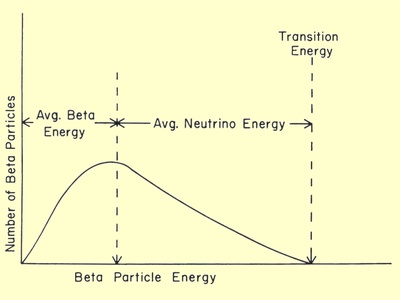
Beta decay is a direct consequence of the weak interaction: a down quark in a neutron turns into an up quark by emitting a W− boson, which quickly decays into an electron and an antineutrino. That quark-level change alters the nucleon type and produces the observable beta particle and neutrino signature in detectors.
How is the weak force observed in experiments?
Experimental evidence comes from radioactive decays, neutrino interactions, and collider production of W and Z bosons; detectors measure emitted electrons, neutrinos (indirectly), and decay products, while colliders probe the higher mass scale (tens of GeV) where W and Z bosons appear.
Weak Nuclear Force
| Name | Type | Mass / scale (GeV) | Where observed |
|---|---|---|---|
| W boson | particle | 80.38 | colliders (LEP, Tevatron, LHC) |
| Z boson | particle | 91.19 | colliders (LEP, LHC) |
| Charged current | process | — | beta decay and neutrino interactions |
| Neutral current | process | — | neutrino scattering and electron scattering |
| Beta decay | process | ≈0.001 | nuclei and laboratory decay experiments |
| Muon decay | process | 0.11 | accelerators and cosmic-ray muons |
| Neutrino | particle | ≤0.000000001 | solar, reactor, and accelerator experiments |
| Neutrino oscillation | property | — | solar, atmospheric, reactor detectors |
| Parity violation | property | — | beta decay and polarized electron scattering |
| CP violation | property | — | kaon and B-meson decay experiments |
| Fermi constant G_F | equation | 1.17e-5 GeV^-2 | determined from muon lifetime measurements |
| Weak mixing angle (sin^2θ_W) | property | 0.231 | LEP, SLD and low-energy experiments |
| CKM matrix | property | — | B-factories, kaon experiments, colliders |
| PMNS matrix | property | — | solar, reactor and accelerator neutrino experiments |
| Wu experiment | experiment | — | polarized cobalt-60 beta decay experiment |
| Gargamelle | experiment | few GeV | CERN neutrino beam bubble chamber |
| UA1/UA2 discovery | experiment | 540 | SPS collider experiments at CERN |
| LEP Z-pole precision measurements | experiment | 91 | LEP collider at CERN |
| Super-Kamiokande | experiment | GeV-scale neutrinos | Kamioka mine water Cherenkov detector |
| Neutrinoless double beta decay (0νββ) | process | ≈0.001 | underground 0νββ experiments with heavy isotopes |
Images and Descriptions
W boson
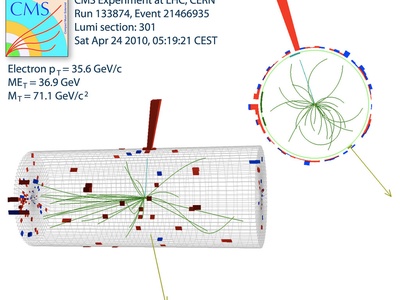
The charged W bosons mediate charged-current weak interactions, changing particle flavor and enabling beta decay. They carry electric charge, have a mass about 80.38 GeV, and are central to electroweak theory and many particle-decay processes.
Z boson
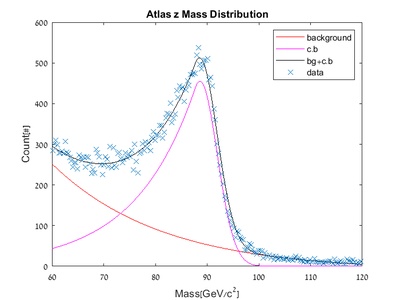
The neutral Z boson mediates weak neutral currents without changing electric charge. It has mass about 91.19 GeV, was key to electroweak unification, and appears in neutrino scattering and precision tests at colliders.

Charged current
Charged-current weak interactions involve W± exchange and convert one fermion flavor to another, for example neutron beta decay or neutrino-induced charged leptons. They violate parity and have distinctive signatures in detectors.
Neutral current
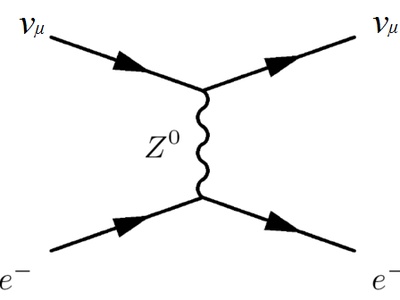
Neutral-current weak interactions are mediated by the Z boson, leaving particle charges unchanged. Their discovery proved the electroweak model, and they govern neutrino scattering, parity-violating electron scattering, and many precision observables.
Beta decay
Nuclear beta decay transforms a neutron to a proton (or vice versa) via W exchange, emitting an electron or positron and a neutrino. It shaped early weak-force theory and remains a laboratory for testing symmetries.
Muon decay
Muon decay (µ→eνν̄) proceeds through a charged-current weak interaction; the precise muon lifetime determines the Fermi constant. It provides a clean, low-energy test of weak interaction structure and lepton universality.
Neutrino
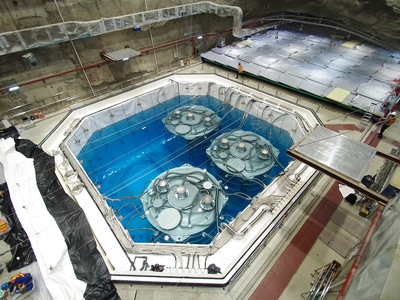
Neutrinos are neutral, nearly massless fermions that interact only through the weak force (and gravity). Electron, muon and tau neutrinos participate in charged- and neutral-current processes used to study oscillations and weak interaction properties.
Neutrino oscillation
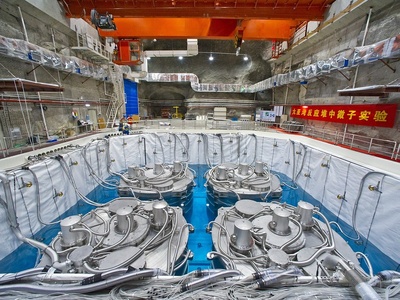
Neutrino oscillation is a quantum phenomenon where flavors change during flight because neutrinos have tiny mass and mix. Its discovery required weak-interaction detectors and proved physics beyond the original Standard Model.
Parity violation
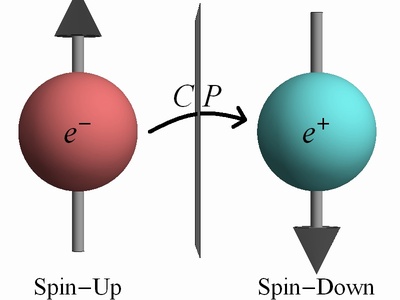
Weak interactions maximally violate parity symmetry, meaning left-handed and right-handed processes behave differently. This nonconservation was established experimentally in many decays and scattering experiments and underpins the chiral V–A structure of the weak force.
CP violation
CP violation in weak decays (kaons, B mesons) means matter–antimatter asymmetries arise under combined charge-parity reversal. It’s essential to explain the cosmic matter excess and remains an active experimental focus.
Fermi constant G_F
The Fermi constant G_F quantifies weak interaction strength at low energies and is determined from the muon lifetime. Its value, about 1.17×10^-5 GeV^-2, sets the scale for weak decay rates and cross sections.
Weak mixing angle (sin^2θ_W)
The weak mixing angle (θ_W) measures how the weak and electromagnetic forces mix; sin^2θ_W≈0.231. Precision measurements of this parameter test electroweak theory through collider and low-energy experiments.

CKM matrix
The Cabibbo–Kobayashi–Maskawa matrix describes quark flavor mixing in charged-current weak interactions, encoding transition probabilities and CP-violating phases. Its elements are measured in weak decays of hadrons at colliders and fixed-target experiments.
PMNS matrix
The Pontecorvo–Maki–Nakagawa–Sakata matrix governs neutrino flavor mixing and oscillations, specifying angles and phases measured by solar, reactor and accelerator neutrino experiments. It determines how weak-interaction flavor states relate to mass eigenstates.

Wu experiment
The Wu experiment (1956) demonstrated parity violation in beta decay by measuring asymmetric electron emission from polarized cobalt-60 nuclei. It overturned long-held symmetry assumptions and revolutionized weak interaction theory.
Gargamelle
The Gargamelle bubble-chamber experiment at CERN discovered neutral-current neutrino interactions in 1973, providing decisive evidence for the electroweak theory and motivating the search for the Z boson. Its result changed particle physics direction worldwide.
UA1/UA2 discovery
The UA1 and UA2 experiments at CERN’s SPS discovered the W and Z bosons in 1983, confirming electroweak theory and measuring masses around 80 and 91 GeV. This Nobel-winning discovery validated weak-force mediators.

LEP Z-pole precision measurements
The LEP collider produced millions of Z bosons at 91 GeV, enabling precision studies of electroweak parameters, sin^2θ_W, and Z couplings. These measurements tightly constrained the Standard Model and guided Higgs-mass predictions.
Super-Kamiokande
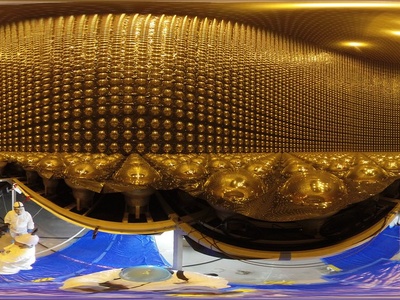
Super-Kamiokande is a large water Cherenkov detector that observed atmospheric neutrino oscillations in 1998, providing strong evidence for neutrino mass and weak-interaction flavor change over long baselines, and influenced neutrino physics worldwide.
Neutrinoless double beta decay (0νββ)
Neutrinoless double-beta decay (0νββ) is a hypothetical weak-process violating lepton number; its observation would prove Majorana neutrinos and show new physics. Experiments search for tiny decay rates in heavy isotopes.