Belize packs a surprising variety of habitats into a small country — coastal lagoons, mangroves, lowland rainforest and pine savanna — so birding here can mean kingfishers at the river one hour and warblers in a forest patch the next. Trails and community guides make many species accessible, whether you’re after a quick day trip or a longer checklist chase.
There are 55 Birds of Belize, ranging from Amazon Kingfisher to Yellow-rumped Warbler. For each species, data are organized under Scientific name,Length (cm),Status,Location & season to help with identification and planning — take a look at the list you’ll find below.
When is the best time to see the most birds in Belize?
The prime window is roughly November through April when migrants mix with residents and dry-season conditions concentrate birds around reliable water and fruiting trees; early mornings are best for activity. Still, many resident species are visible year-round, and some wetland specialties are easier right after rains, so check the Location & season notes for each species.
How should I use the Scientific name, Length (cm), Status and Location & season columns?
Use the Scientific name to confirm species across guides and apps, Length (cm) as a quick size reference, Status to prioritize rare or threatened birds, and Location & season to target when and where to look — combine those columns with local guides and recent eBird reports for the most efficient trip planning.
Birds of Belize
| Common name | Scientific name | Length (cm) | Status | Location & season |
|---|---|---|---|---|
| Keel-billed Toucan | Ramphastos sulfuratus | 55 | Resident, common | Lowland forest; year-round |
| Collared Aracari | Pteroglossus torquatus | 35 | Resident, common | Forest edge; year-round |
| Great Curassow | Crax rubra | 90 | Resident, uncommon | Mature forest; year-round |
| Plain Chachalaca | Ortalis vetula | 50 | Resident, common | Scrub and edges; year-round |
| Jabiru | Jabiru mycteria | 120 | Seasonal migrant, uncommon | Wetlands and lagoons; dry season Jan–May |
| Wood Stork | Mycteria americana | 95 | Seasonal resident, uncommon | Wetlands; breeding Mar–Aug |
| Brown Pelican | Pelecanus occidentalis | 100 | Resident, common | Coast and estuaries; year-round |
| Magnificent Frigatebird | Fregata magnificens | 110 | Resident, common | Coastal skies; year-round |
| Neotropic Cormorant | Nannopterum brasilianum | 60 | Resident, common | Inland waters and coasts; year-round |
| Anhinga | Anhinga anhinga | 85 | Resident, common | Freshwater wetlands; year-round |
| Osprey | Pandion haliaetus | 55 | Migratory/resident, uncommon | Coastal and inland waters; Oct–May peak |
| King Vulture | Sarcoramphus papa | 80 | Resident, rare | Mature lowland forest; year-round, scarce |
| Turkey Vulture | Cathartes aura | 65 | Resident, common | Widespread open areas; year-round |
| Black Vulture | Coragyps atratus | 60 | Resident, common | Widespread; year-round |
| Broad-winged Hawk | Buteo platypterus | 35 | Migratory, common | Forests and migration corridors; Sep–Nov, Mar–May |
| Roadside Hawk | Rupornis magnirostris | 40 | Resident, common | Open woodland and edges; year-round |
| Great Black Hawk | Buteogallus urubitinga | 60 | Resident, uncommon | Rivers, mangroves; year-round |
| Bat Falcon | Falco rufigularis | 30 | Resident, uncommon | Forest edges and clearings; year-round |
| Ringed Kingfisher | Megaceryle torquata | 40 | Resident, common | Rivers and coasts; year-round |
| Green Kingfisher | Chloroceryle americana | 25 | Resident, common | Small streams and canals; year-round |
| Amazon Kingfisher | Chloroceryle amazona | 30 | Resident, common | Large rivers and lagoons; year-round |
| Gartered Trogon | Trogon caligatus | 28 | Resident, common | Lowland forest and edges; year-round |
| Turquoise-browed Motmot | Eumomota superciliosa | 35 | Resident, common | Woodland edges and gardens; year-round |
| Rufous-tailed Jacamar | Galbula ruficauda | 20 | Resident, common | Forest edge and clearings; year-round |
| Cocoa Woodcreeper | Xiphorhynchus susurrans | 22 | Resident, common | Forest mid-levels; year-round |
| Wedge-billed Woodcreeper | Glyphorynchus spirurus | 15 | Resident, common | Understory forest; year-round |
| White-whiskered Puffbird | Malacoptila panamensis | 22 | Resident, uncommon | Forest interior; year-round |
| Rufous-tailed Hummingbird | Amazilia tzacatl | 12 | Resident, common | Gardens, edges; year-round |
| Ruby-throated Hummingbird | Archilochus colubris | 9 | Migratory, common | Gardens and edges; Sep–Apr presence |
| Scarlet Macaw | Ara macao | 85 | Resident, rare/local | Southern forests, reserves; year-round |
| Mealy Parrot | Amazona farinosa | 35 | Resident, common | Forest and plantation; year-round |
| Yellow-headed Parrot | Amazona oratrix | 36 | Resident, rare | Lowland forest and savanna; year-round |
| Great Kiskadee | Pitangus sulphuratus | 25 | Resident, common | Open areas and waterways; year-round |
| Tropical Kingbird | Tyrannus melancholicus | 20 | Resident, common | Open woodland and agricultural areas; year-round |
| Social Flycatcher | Myiozetetes similis | 18 | Resident, common | Edges and gardens; year-round |
| Piratic Flycatcher | Legatus leucophaius | 18 | Resident, uncommon | Forest edge and clearings; year-round |
| Yellow Warbler | Setophaga petechia | 12 | Resident/migrant, common | Mangroves and edges; most of year |
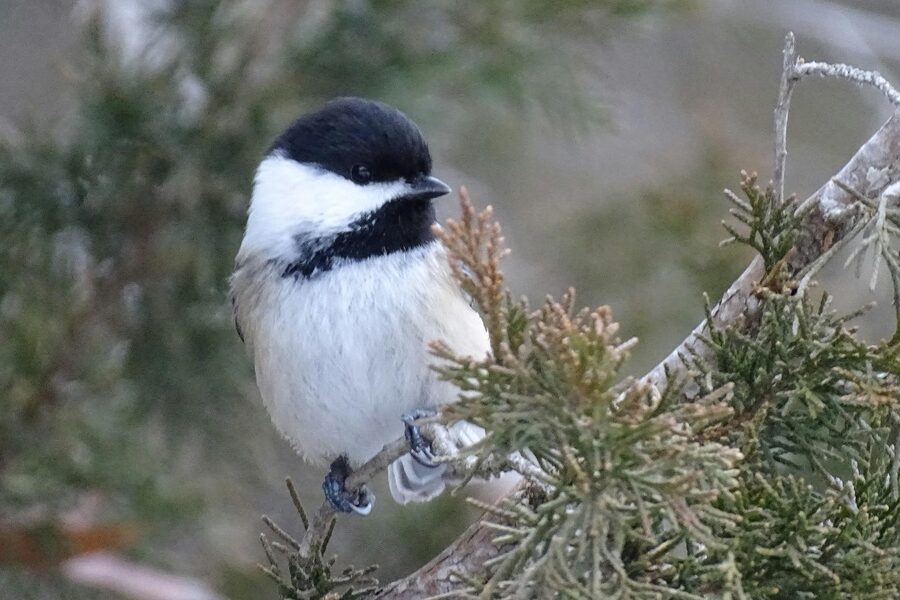
| Yellow-rumped Warbler | Setophaga coronata | 14 | Migratory, common | Woodlands and gardens; Sep–Apr |
| Black-and-white Warbler | Mniotilta varia | 12 | Migratory, common | Forests and gardens; Sep–Apr |
| Prothonotary Warbler | Protonotaria citrea | 13 | Migratory, uncommon | Mangroves and flooded forest; Oct–Apr |
| Northern Waterthrush | Parkesia noveboracensis | 13 | Migratory, common | Mangroves and wetlands; Sep–Apr |
| Ovenbird | Seiurus aurocapilla | 15 | Migratory, common | Forest floor and understory; Sep–Apr |
| Sanderling | Calidris alba | 20 | Migratory, common | Sandy beaches; Sep–Apr migration |
| Willet | Tringa semipalmata | 34 | Migratory/resident, common | Mudflats and coasts; Sep–Apr and some year-round |
| American Oystercatcher | Haematopus palliatus | 48 | Resident, uncommon | Rocky coasts and sandbars; year-round |
| Laughing Gull | Leucophaeus atricilla | 36 | Resident, common | Coastal zones; year-round |
| Royal Tern | Thalasseus maximus | 46 | Resident/migrant, common | Nearshore waters and beaches; year-round |
| Roseate Spoonbill | Platalea ajaja | 80 | Resident, uncommon | Shallow lagoons and mangroves; year-round |
| American Flamingo | Phoenicopterus ruber | 120 | Vagrant/rare | Salt flats and coastal lagoons; irregular |
| Snowy Egret | Egretta thula | 64 | Resident, common | Mangroves and marshes; year-round |
| Great Egret | Ardea alba | 100 | Resident, common | Wetlands and coasts; year-round |
| Little Blue Heron | Egretta caerulea | 56 | Resident, common | Mangroves and wetlands; year-round |
| Green Heron | Butorides virescens | 46 | Resident, common | Small wetlands and mangrove edges; year-round |
| Yellow-crowned Night-Heron | Nyctanassa violacea | 60 | Resident, common | Mangroves and coastal lagoons; year-round |
| Limpkin | Aramus guarauna | 63 | Resident, uncommon | Freshwater marshes and waterways; year-round |
Images and Descriptions
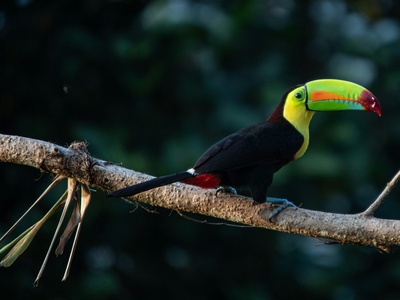
Keel-billed Toucan
Large, colorful bill and loud croaking calls make this iconic forest canopy bird easy to spot. Often seen in pairs or small groups feeding on fruit; nests in tree cavities and common around reserves like Cockscomb and Mountain Pine Ridge.
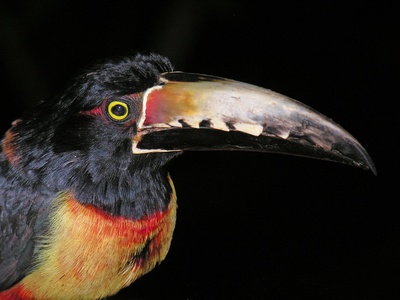
Collared Aracari
Small, long-tailed toucan relative with a brightly patterned bill and noisy social behavior. Moves in small flocks through edges and secondary growth, often at fruiting trees; a charismatic, easily recognized aracari for lowland birding trails.
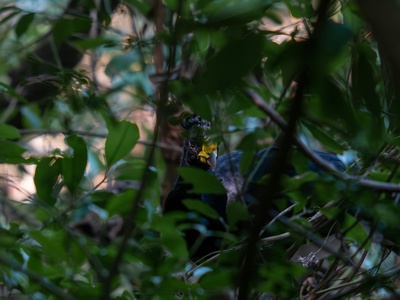
Great Curassow
Large, heavy-bodied galliform with glossy black plumage and curly crest on males; shy and secretive on the forest floor. Best sought early or at lek sites in mature Maya Mountains forests; conservation concern due to hunting and habitat loss.

Plain Chachalaca
Loud, communal roosting bird with raucous calls at dawn and dusk. Ground-foraging, often seen in family groups in thickets and forest edges; an unmistakable background sound of lowland Belizean habitats.
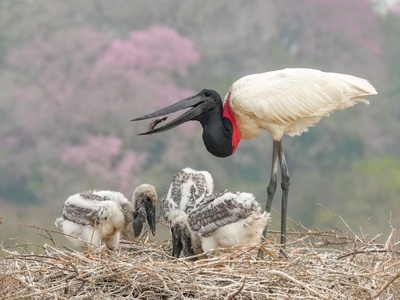
Jabiru
Huge stork with long black bill and white body, black neck and distinctive bare red throat pouch in breeding adults. Found in large marshes and river systems during dry months feeding on fish and amphibians.
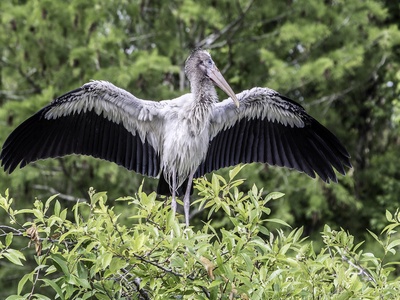
Wood Stork
Large white stork with bare head and dagger-like bill; feeds by probing shallow water for fish. Congregates at wetland rookeries during the breeding season, including freshwater marshes and estuarine lagoons.
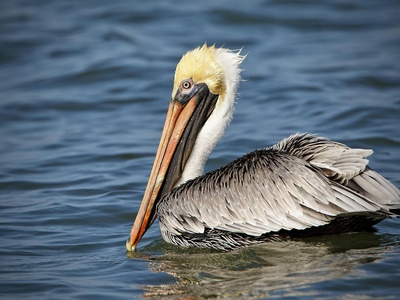
Brown Pelican
Large coastal bird famous for plunge-diving and bulky bill pouch. Often seen along Belize’s barrier reef islands and shorelines roosting on posts and feeding on schooling fish close to shore.
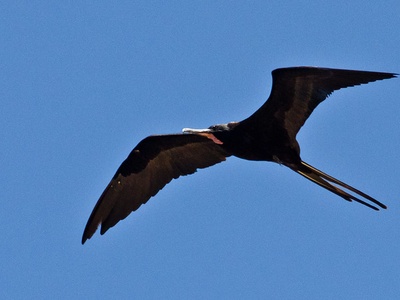
Magnificent Frigatebird
Soaring seabird with long wings and forked tail; males display red gular sack. Common over coastal waters and islands, kleptoparasitic behavior stealing fish from other seabirds; unmistakable in flight silhouette.
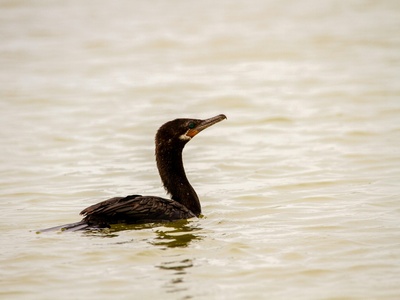
Neotropic Cormorant
Slim, dark cormorant often seen perched drying wings on logs and rocks. Feeds on fish in lakes, rivers and coastal lagoons; smaller and more numerous than other regional cormorants.
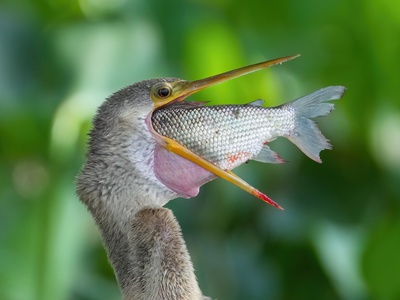
Anhinga
Long-necked, snake-like swimmer that fishes by spear-diving; often dries wings perched on branches. Known as “water turkey” locally; common in marshes, oxbow lakes and slow rivers throughout Belize.
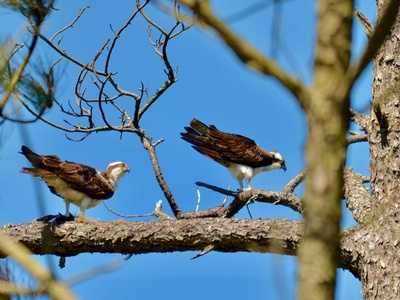
Osprey
Fish-eating raptor with white underparts and dark eye stripe. Regular winter visitor and occasional breeder, visible patrolling coasts and rivers where it plunges feet-first to capture fish.
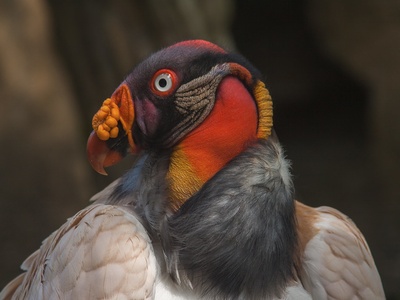
King Vulture
Large, boldly patterned vulture with brightly colored head and massive bill. Scattered, infrequent records in remote mature forests; an exciting sighting due to rarity and striking appearance.
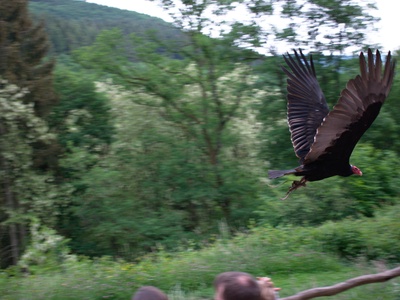
Turkey Vulture
Common scavenger with keen sense of smell and distinctive V-shaped soaring profile. Frequently seen along roads, on fenceposts and migrating in groups; ubiquitous across habitats in Belize.
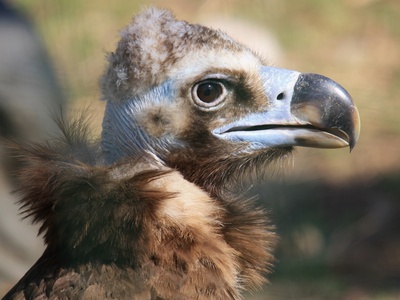
Black Vulture
Coal-black scavenger with short tail and strong social behavior. Often seen near human settlements, garbage dumps, and roadkills; noisier and more gregarious than turkey vultures.
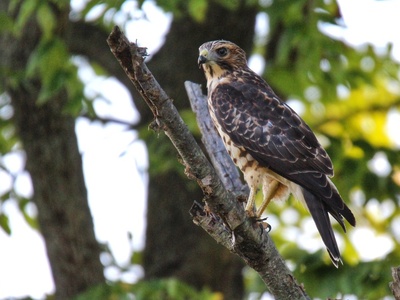
Broad-winged Hawk
Small, stocky raptor that migrates in impressive kettles. Appears in forest clearings and at ridges during migration; silent perched birds show broad wings and distinctive banded tail.
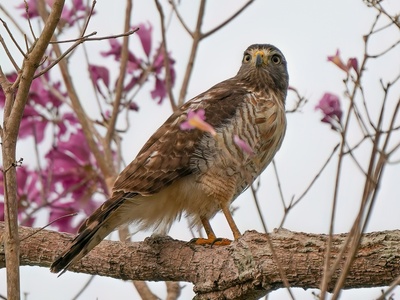
Roadside Hawk
Small, compact hawk often seen perched conspicuously on roadside posts watching for prey. Adapts well to human-altered landscapes and is one of the most frequently encountered hawks in Belize.
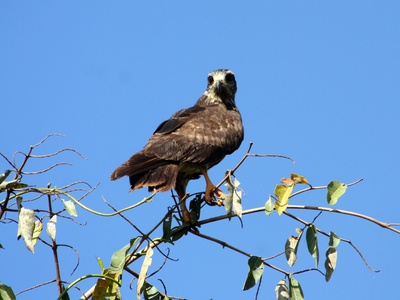
Great Black Hawk
Powerful, dark-hued hawk often near water and river margins hunting crabs and small vertebrates. Slow, deliberate flight and strong bill help separate it from other raptors near mangrove channels.
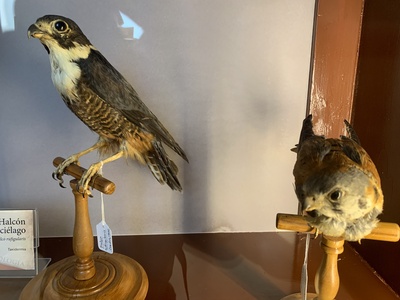
Bat Falcon
Small, fast falcon that hunts small birds and large insects at dawn and dusk. Often perched conspicuously then launching short, explosive chases; a treat to see in forest openings.
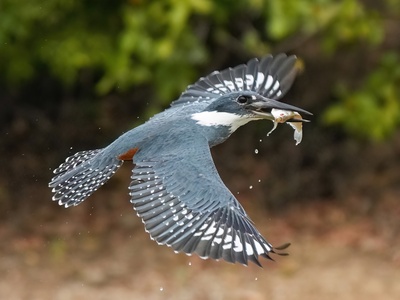
Ringed Kingfisher
Large, heavy-billed kingfisher with rufous belly and loud rattling call. Patrols riverbanks and channels, dives for fish from perch; more common on large waterways than other kingfishers.
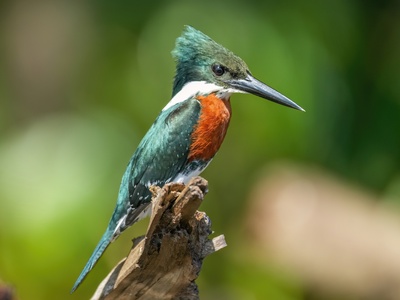
Green Kingfisher
Small, compact kingfisher with green upperparts and white collar. Sits low over water hunting fish; often nervous and quick to flush, but recognizable by its rapid delivery and small size.
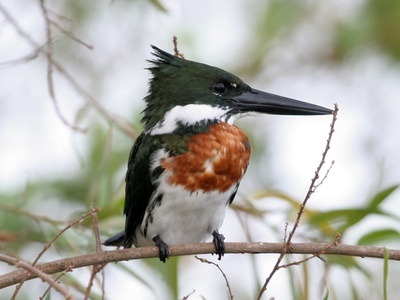
Amazon Kingfisher
Larger than Green Kingfisher with a bulkier head and crested appearance. Hunts from low perches over slow-moving water, diving vertically for fish and aquatic prey.
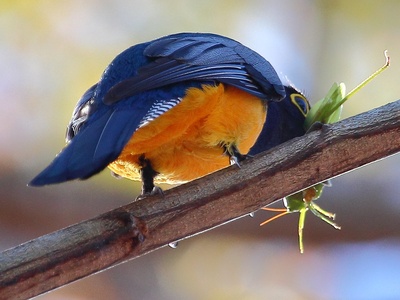
Gartered Trogon
Stunning colorful bird with green back, red belly (male) and soft vocalizations. Prefers shady forest interior and rides quietly on lower branches; a favorite target for forest birders.
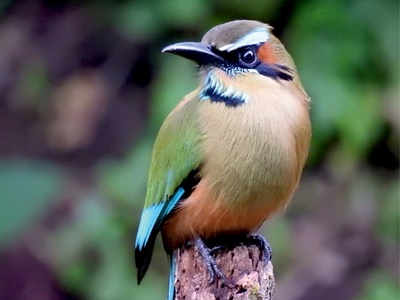
Turquoise-browed Motmot
Striking motmot with turquoise brow, long racketed tail and slow, pendulous tail-wagging. Perches conspicuously on open perches at forest edge and second growth, often near human settlement.
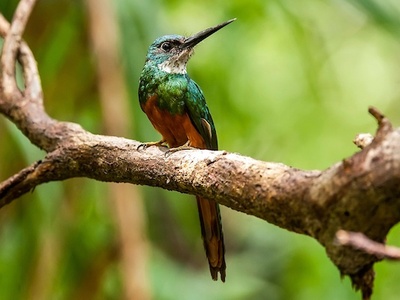
Rufous-tailed Jacamar
Iridescent green upperparts and rufous underparts, perches on exposed branches hawking insects. Typically seen singly or in pairs, often near streams and gaps in the canopy where it sallies for dragonflies.
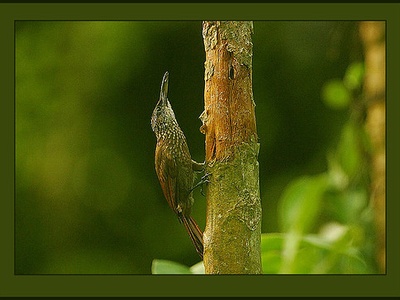
Cocoa Woodcreeper
Brown, strongly curved-billed woodcreeper that creeps up trunks and limbs probing bark for insects. Frequently joins mixed-species flocks in mature and secondary forest, using stiff tail for support.
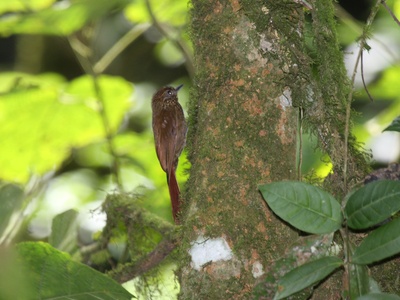
Wedge-billed Woodcreeper
Tiny, hunched woodcreeper with short wedge bill that ascends trunks in quick hops. Favors dense understory and often participates in ant-following flocks, voice a key field clue in dark forest.
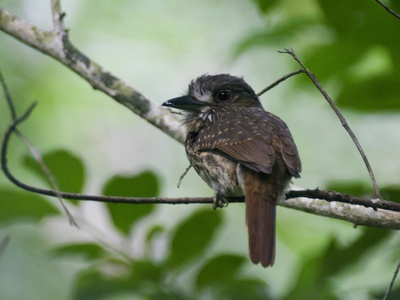
White-whiskered Puffbird
Plump, quiet puffbird with heavy bill and subtle facial markings. Sits motionless on twigs waiting to sally for large insects and small vertebrates; best sought in mature lowland forest.
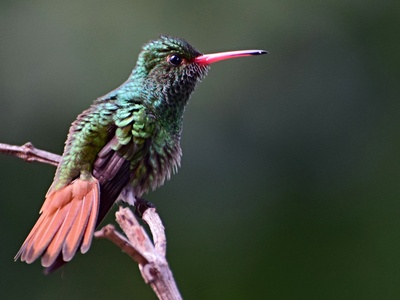
Rufous-tailed Hummingbird
Common medium-sized hummingbird with rufous tail and strong territorial behavior. Frequently visits feeders and flowering shrubs; both sexes show bright bill and fast, hovering flight.
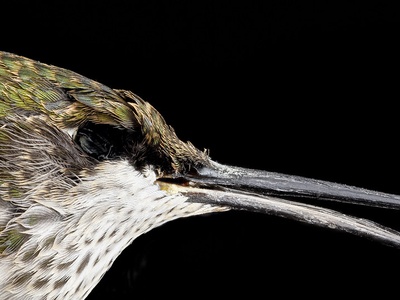
Ruby-throated Hummingbird
Tiny, long-distance migrant with iridescent throat (male) and buoyant flight. Regular winter visitor and passage migrant in Belize where it feeds at flowers and feeders during cooler months.
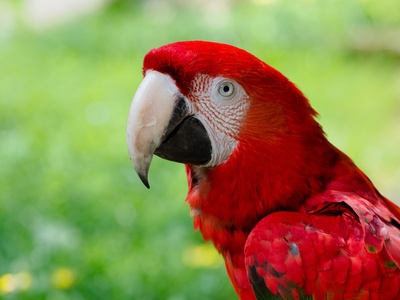
Scarlet Macaw
Large, brilliantly colored macaw with scarlet body and blue-yellow wings. Small, locally stable populations in southern Belize (e.g., Cockscomb Basin), culturally important and closely watched by conservationists and birders.
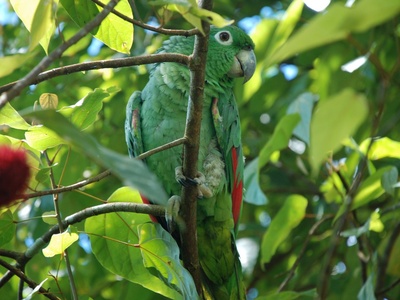
Mealy Parrot
Large, green amazon with pale lores and noisy communal roosts. Feeds on fruits and seeds in canopy and adapts to disturbed habitats, often seen in flocks near fruiting trees.
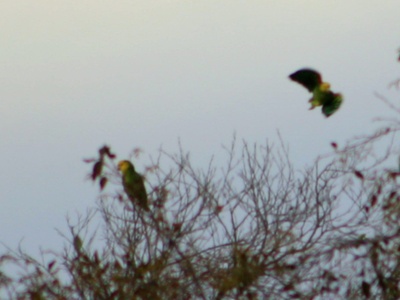
Yellow-headed Parrot
Striking yellow head and green body; highly vocal and endangered locally due to trapping and habitat loss. Scattered, declining populations make sightings notable for conservation-minded birders.
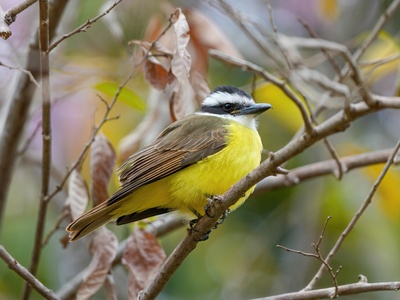
Great Kiskadee
Bold, noisy flycatcher with bright yellow belly and black-and-white head pattern. Hunts from exposed perches for insects and small vertebrates; a ubiquitous, conspicuous presence in rural and urban areas.
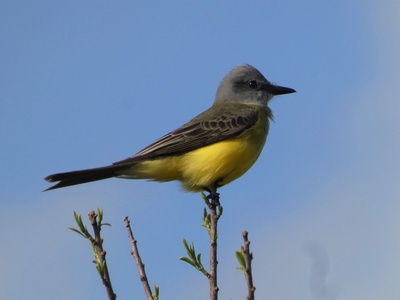
Tropical Kingbird
Common, aggressive flycatcher that sallies from high perches to catch insects. Pale underparts and subtle head crest; frequently seen guarding perches along roads and field edges.
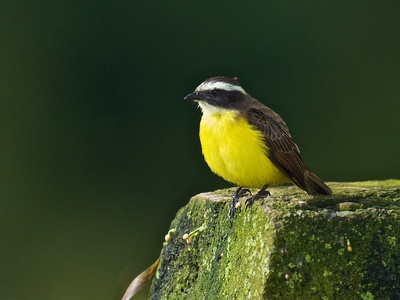
Social Flycatcher
Medium-sized, vocal flycatcher with a pale eyebrow and strong wing bars. Often nests near human habitation and forages at forest edges; social behavior includes active chases of intruders.
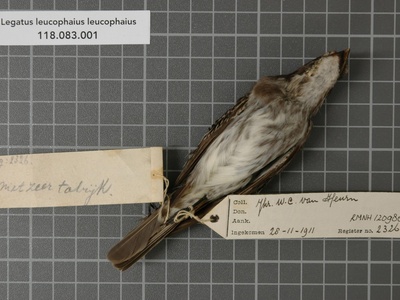
Piratic Flycatcher
Distinctive for its habit of stealing nests and nestlings; sits on exposed perches catching insects. Blackish crown and broad eye-ring help identification; more often heard than seen.
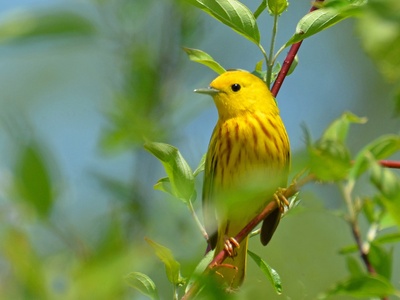
Yellow Warbler
Bright yellow warbler, common in riparian and coastal scrub, with male’s reddish streaking on breast in many subspecies. Present as both local breeder and migrant depending on region and season.
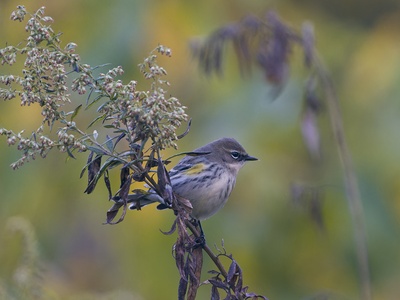
Yellow-rumped Warbler
Wintering migrant that favors a variety of wooded habitats and coastal scrub. Notable for yellow rump patch and flitting foraging style; common during North American winter months in Belize.
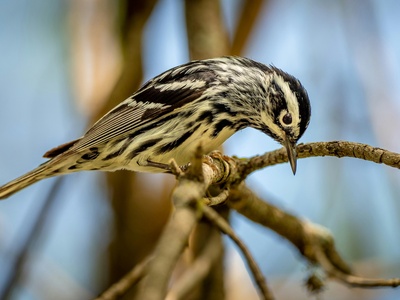
Black-and-white Warbler
Distinctive streaked black-and-white plumage and nuthatch-like creeping along trunks and branches. Regular migrant through Belize, often probing bark for insects during migration and winter.
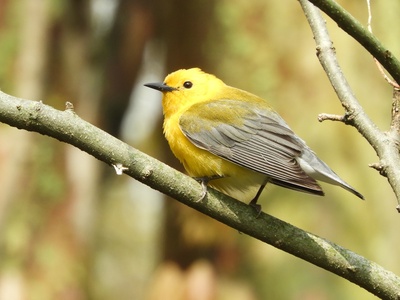
Prothonotary Warbler
Bright yellow below with olive back; prefers swampy, wooded wetlands. A prized migrant/winter species in Belize where it forages low in tangles and flooded forests.
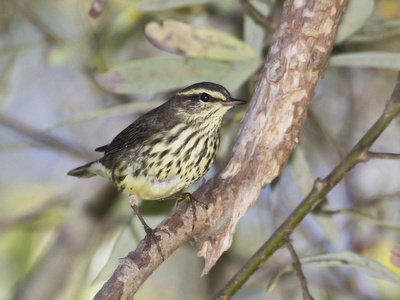
Northern Waterthrush
Ground-feeding migrant that walks steadily along muddy edges and mangrove roots probing for insects. Olive-brown above with streaked underparts; common winter visitor to wet habitats.
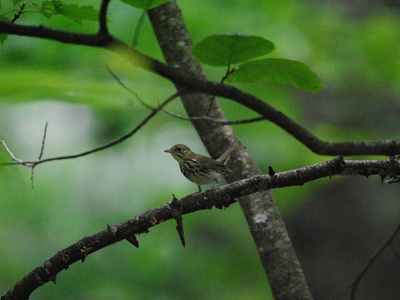
Ovenbird
Terrestrial warbler with loud “teacher-teacher” song and heavy, streaked breast. During migration and winter spends time in leaf-littered forest floors and dense understory feeding on invertebrates.
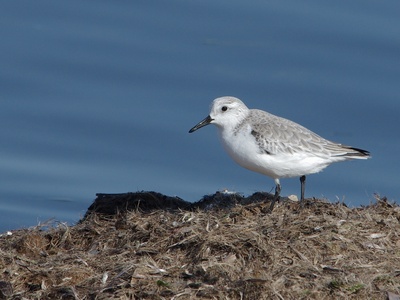
Sanderling
Small, hyperactive shorebird that races wave edges probing for invertebrates. Winters and migrates along Belizean coasts in flocks, turning pale in non-breeding plumage and often seen in tight feeding groups.
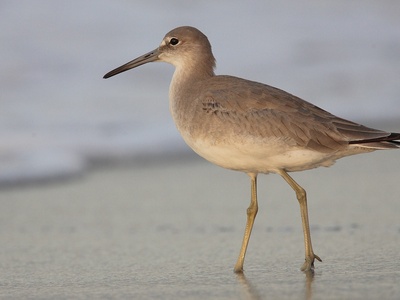
Willet
Stout shorebird with loud piercing calls and bold black-and-white wing pattern in flight. Forages on mudflats and sandy shores for crustaceans and mollusks; visible year-round in some coastal areas.
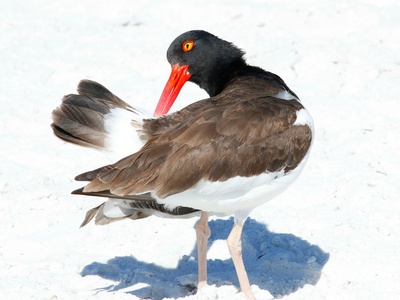
American Oystercatcher
Large, noisy shorebird with long orange bill designed for prying open shellfish. Prefers exposed sandbanks and reefs; local and conspicuous where present, often in small breeding groups.
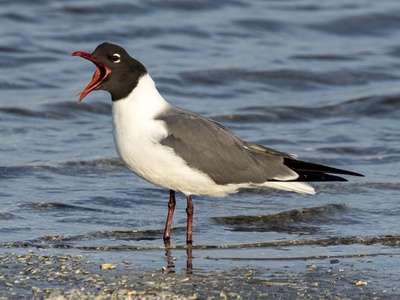
Laughing Gull
Medium gull with bold black hood in breeding season and characteristic laughing call. Widespread along beaches, estuaries and near fishing boats; often fronts mixed gull flocks.
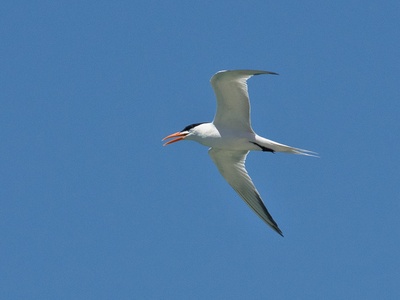
Royal Tern
Large, elegant tern with shaggy crest and strong forked bill. Feeds by plunge-diving for fish and forms offshore roosts; commonly seen patrolling reef edge and nearshore waters.
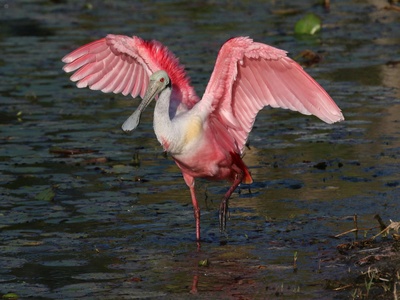
Roseate Spoonbill
Pink, spoon-billed wader that sweeps bill side-to-side through shallow water to feed on crustaceans. Spectacular breeding flocks occur seasonally in suitable wetlands and estuaries.
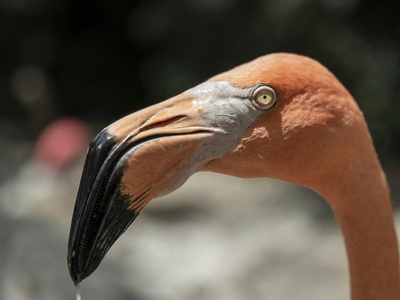
American Flamingo
Large, pink wader with long legs and downcurved bill for filter feeding. Irregular and localized occurrences in Belize’s shallow coastal lagoons and flats; a striking and memorable sight when present.
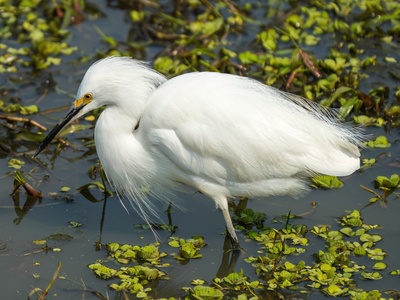
Snowy Egret
Small, elegant white heron with black bill and yellow feet; active forager using feet to stir prey. Common in shallow coastal and inland wetlands and often conspicuous in mixed heron flocks.
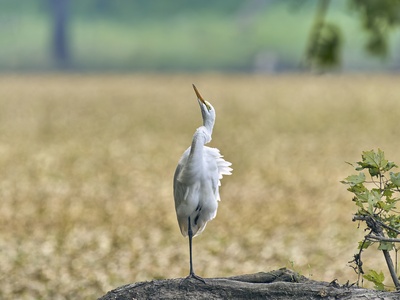
Great Egret
Tall, stately white heron with long S-shaped neck and dagger bill. Wades in shallow water stalking fish; widespread in marshes, lagoons and coastal mangroves across Belize.
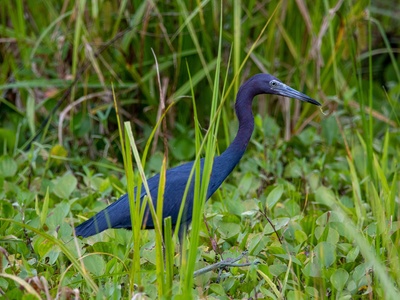
Little Blue Heron
Slate-blue juvenile plumage transforms to adult deep blue; hunts in shallow waters for fish and crustaceans. Often mixes with other herons but identifiable by size and color when mature.
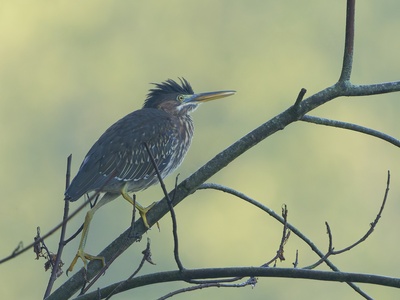
Green Heron
Compact, short-necked heron that uses tools (bait) occasionally to lure fish. Prefers shaded edges and small channels; stealthy hunter often seen perched low above water.
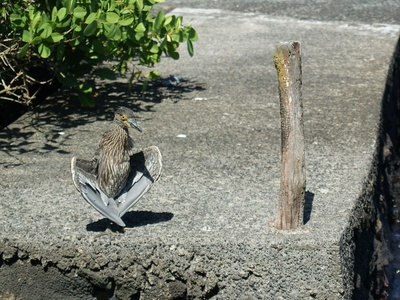
Yellow-crowned Night-Heron
Nocturnal or crepuscular heron with stout bill, often feeds on crabs and crustaceans. More active at dusk and dawn, roosts in mangroves by day and breeds in coastal colonies.
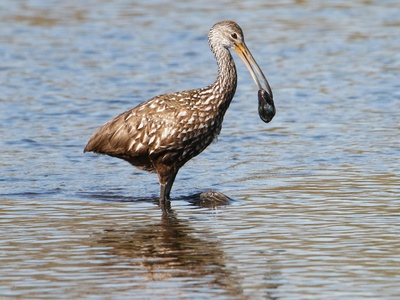
Limpkin
Long-legged, brown wader with loud, ringing call; specializes on apple snails and other mollusks. Walks slowly through marsh vegetation, often alone or in loose pairs, favored by permanent wetlands.