In 1872 the Challenger expedition began the first global survey of the oceans while around the same era meteorology was becoming a formal science—two parallel efforts that revealed how air and water shape the planet.
Distinguishing the planet’s air envelope from its water envelope matters for everyday life: weather and storms come from the atmosphere, freshwater and fisheries come from the hydrosphere, and both set the stage for climate, agriculture, and coastal planning.
Below are eight clear, measurable contrasts organized into three groups: physical/chemical differences, dynamic/process differences, and biological/human implications. Together they explain why the atmosphere and hydrosphere behave so differently and why management strategies must match those differences, from flood planning to fisheries policy. This piece uses a mix of authoritative numbers (NOAA, IPCC, UNESCO, WHO) and practical examples to make those air–water differences concrete.
Physical and Chemical Differences
The atmosphere and hydrosphere differ first and foremost in what they’re made of and where that material sits — one is a layered mixture of gases, the other a reservoir of liquid water with dissolved salts and nutrients.
1. Composition: mostly gases vs. mostly liquid water and dissolved salts
The atmosphere is a gaseous blend dominated by nitrogen (~78%) and oxygen (~21%), with argon ~0.93% and carbon dioxide roughly 420 ppm at present (NOAA). The hydrosphere is overwhelmingly liquid water: oceans contain about 97.2% of Earth’s water and have an average salinity close to 35 PSU (practical salinity units) according to UNESCO.
Those differences have direct implications. Human breathing depends on atmospheric oxygen and its stable ratio, while drinking water requires removing salts and contaminants — hence large-scale reverse‑osmosis desalination plants in the Middle East and elsewhere. Trace gases in air (measured in parts per million or billion) drive greenhouse warming; dissolved salts and nutrients shape marine ecosystems and chemistry.
2. Density and heat capacity: light, compressible air versus dense, high-heat-capacity water
Air at sea level has a density of about 1.225 kg/m³ and is compressible; liquid water is roughly 1,000 kg/m³. Specific heat differs strongly: dry air Cp ≈1.005 kJ·kg⁻¹·K⁻¹, while liquid water Cp ≈4.18 kJ·kg⁻¹·K⁻¹.
Because water stores around four times more heat per kilogram, oceans act as thermal buffers that slow temperature swings. Coastal locations typically show milder winters and cooler summers than inland sites, and large currents such as the Gulf Stream move stored heat across latitudes — a major reason Western Europe’s climate is warmer than other regions at similar latitude (NOAA, IPCC).
3. State and global distribution: layered gaseous envelope versus concentrated liquid reservoirs
The atmosphere is vertically stratified: the troposphere (roughly 0–12 km) holds most weather, the stratosphere (~10–50 km) contains the ozone layer, and higher layers (mesosphere, thermosphere, exosphere) extend much farther. A typical atmospheric scale height is about 8 km.
The hydrosphere is concentrated: oceans cover ≈71% of Earth’s surface with an average depth near 3,688 m, and only about 2.8% of global water is fresh — most of that freshwater (roughly 68.7%) is locked in glaciers and polar ice (UNESCO). Accessibility matters: plentiful seawater but limited usable freshwater drives infrastructure choices and regional vulnerability.
Dynamics and Movement: How Air and Water Circulate
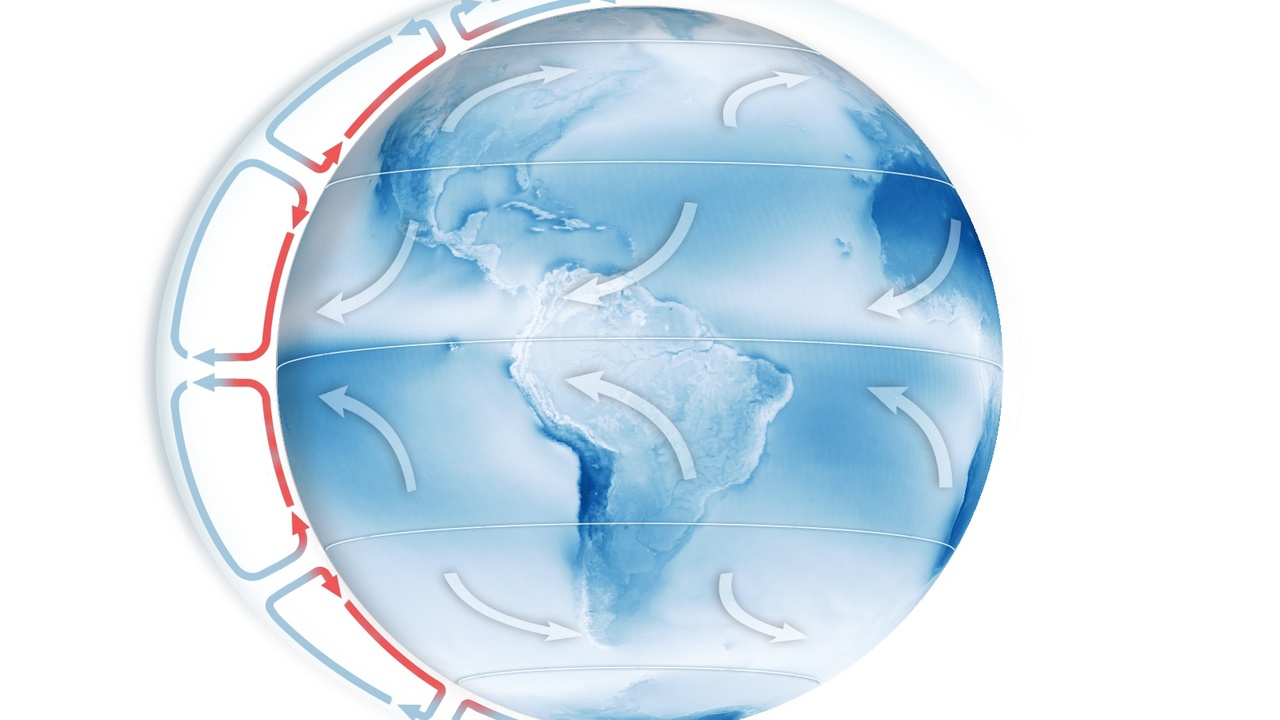
Movement sets the pace of change: the atmosphere moves mass and energy quickly, producing weather; the hydrosphere moves heat and biogeochemical tracers more slowly but with longer-lived effects on climate and ecosystems.
4. Circulation patterns: fast, turbulent weather systems vs. large-scale ocean currents
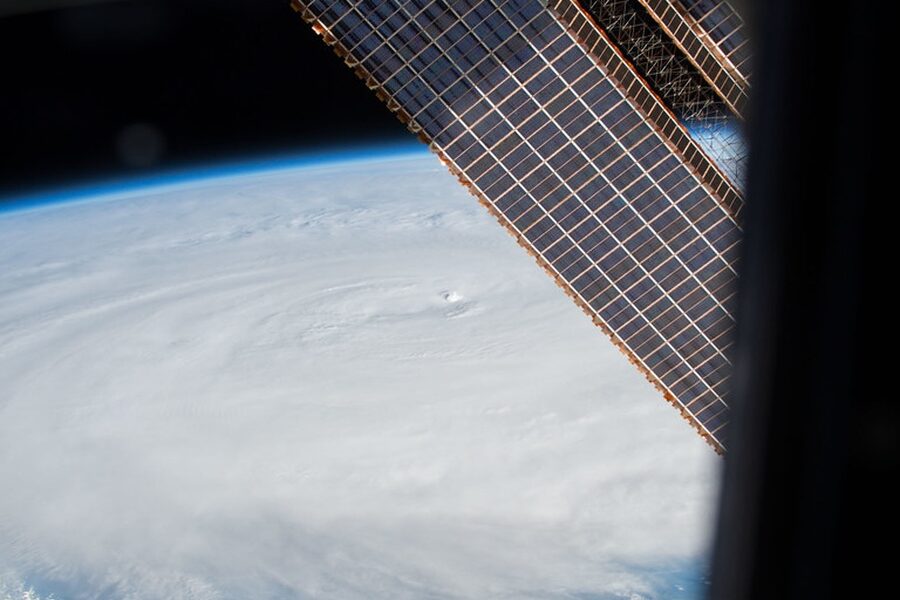
Atmospheric circulation includes Hadley, Ferrel, and Polar cells and fast jets overhead. Jet stream winds commonly exceed 30 m/s and steer storm tracks over days to weeks. Those rapid flows create the daily weather variability societies plan around.
Ocean circulation is slower but massive. Surface currents like the Gulf Stream can reach ~1–2 m/s in core regions and carry enormous heat poleward, while the thermohaline “global conveyor” circulates deep water across basins. The atmosphere shapes immediate weather; the ocean sculpts regional climate over seasons to centuries and affects shipping routes and fisheries distribution (NOAA).
5. Exchange mechanisms: evaporation, precipitation, and gas transfer at the air–sea interface
The boundary between air and sea is active: evaporation moves roughly the same amount of water to the atmosphere as precipitation returns over the long term, but regionally that balance shifts. Gases diffuse across the surface, too — the oceans have absorbed about 30% of human CO2 emissions since the industrial era (IPCC, NOAA).
Those exchanges matter for chemistry and climate. Ocean CO2 uptake lowers surface pH (surface ocean pH has declined by about 0.1 units since preindustrial times), changing carbonate chemistry and stressing shell-forming organisms. Evaporation supplies atmospheric moisture, and water vapor then amplifies greenhouse warming because it’s an effective greenhouse gas.
6. Residence times and turnover: atmosphere is fast-moving; deep ocean is slow to change
The atmosphere mixes rapidly: tropospheric air parcels mix on timescales of days to weeks, so weather responds quickly to forcings. Atmospheric CO2 perturbations, however, persist for decades to centuries in the climate system.
By contrast, surface ocean layers mix on timescales of years to decades, while deep-ocean turnover can be on the order of hundreds to over 1,000 years. That slow hydrospheric response means warming, sea-level rise, and acidification are long-lived — a key reason emissions now commit the climate system for generations (IPCC).
Biological Roles and Human Impacts
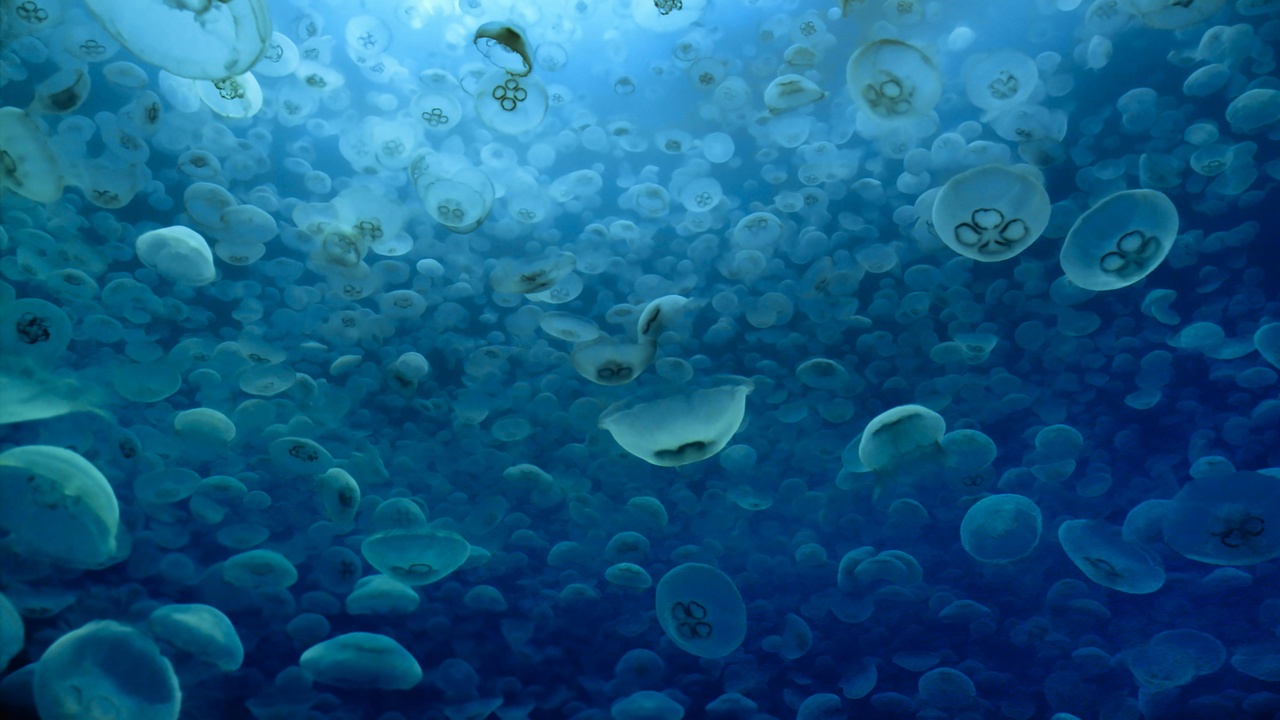
Both systems sustain life but in different ways and with distinct risks. Air supplies oxygen and buffers radiation; water provides habitats, food, and the freshwater we drink. The human footprint shows up in pollution, overuse, and climate forcing across both realms.
7. Support for life: oxygen, habitats, and biogeochemical cycling
The atmosphere delivers oxygen and shields harmful ultraviolet light via the stratospheric ozone layer (roughly 10–50 km altitude). Meanwhile the hydrosphere hosts vast ecosystems: microscopic phytoplankton produce about half of Earth’s oxygen and form the base of marine food webs, and coral reefs — which cover less than 1% of the seafloor — support roughly 25% of marine species.
When atmospheric greenhouse gases warm the planet, the hydrosphere reacts: warmer, more stratified oceans reduce nutrient mixing in some regions, lowering productivity, and trigger events like coral bleaching during marine heatwaves. Thus changes in one envelope quickly ripple through the other.
8. Human uses, risks, and management: water supply, air quality, pollution, and climate impacts
People rely on both systems but face different management challenges. Oceans cover ~71% of Earth yet only about 2.8% of water is fresh and much of that is frozen, so regions turn to desalination (large plants in the Middle East and elsewhere) and groundwater pumping to meet needs. At the same time, air pollution exacts a heavy toll: the WHO attributes roughly 7 million premature deaths annually to ambient and household air pollution (PM2.5 and other pollutants).
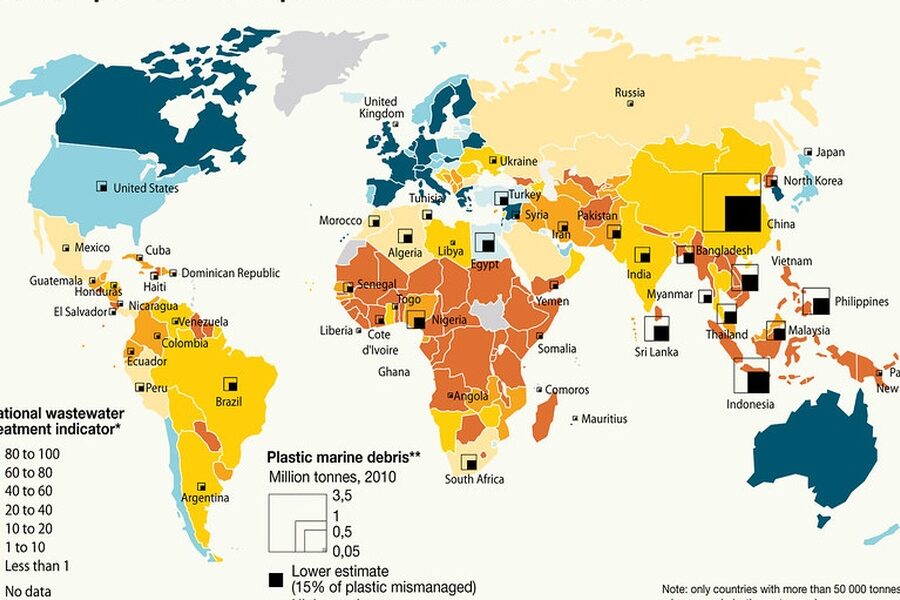
Pollution pathways differ. Plastics and nutrient runoff accumulate in oceans — recent estimates put annual plastic inputs on the order of 8 million metric tons — while airborne pollutants move rapidly across cities and continents, prompting air quality standards and emissions controls. Policy tools therefore range from wastewater treatment and marine protected areas to Clean Air Acts and vehicle emissions regulations, reflecting the physical realities of mixing and residence time for each sphere.
Summary
- Air and water are both fluids but very different in substance: the atmosphere is a thin, layered mix of gases (≈78% N₂, ≈21% O₂, CO₂ ~420 ppm) while the hydrosphere is concentrated liquid water (oceans ~71% of the surface, ~97.2% of Earth’s water) with salts and dissolved nutrients.
- Physical contrasts matter: water is ~800 times denser than air and stores about four times more heat per kilogram, so oceans buffer and lengthen warming while the atmosphere drives fast weather and immediate risk.
- Circulation and timescales differ sharply — jet streams and storms act on hours to weeks, surface currents on seasons to decades, and deep-ocean turnover on centuries to millennia — so policy and adaptation must match those rhythms (for example, short-term air-quality alerts vs long-term ocean protection).
- Both systems sustain life but face distinct threats: phytoplankton supply about half of global oxygen and reefs host ~25% of marine species, while air pollution contributes to millions of premature deaths annually; solutions range from marine protected areas and wastewater treatment to emissions reductions and air-quality standards.
- Practical takeaway: recognize the differences between atmosphere and hydrosphere when planning — reduce greenhouse emissions to limit long-term ocean change, conserve freshwater and invest in treatment and desalination where needed, and support air-quality measures that save lives now.