West Virginia’s hills, caves and river systems create a patchwork of habitats where some species have evolved in isolation. From karst caves to isolated streams, these places support creatures you won’t find anywhere else in the U.S., and many are tied to specific counties or watersheds.
There are 10 Endemic Species of West Virginia, ranging from the Diamond Darter to White’s Cave Millipede. For each species you’ll find below the Scientific name, Taxon, WV range (counties) to make it easy to see where each one occurs and what group it belongs to.
How is a species determined to be endemic to West Virginia?
Endemism is based on documented occurrences: museum specimens, vetted survey records and vetted observations showing a species’ natural range is restricted to the state; sometimes genetics and historic data confirm isolation. The county-level WV range in the list reflects where reliable records exist.
What should I do if I think I’ve found one of these species?
Take clear photos, note the precise location and habitat, avoid disturbing the animal or habitat, and submit the record to a platform like iNaturalist and contact the West Virginia Natural Heritage Program or local conservation groups so experts can verify and advise on next steps.
Endemic Species of West Virginia
| Name | Scientific name | Taxon | WV range (counties) |
|---|---|---|---|
| Guyandotte River Crayfish | Cambarus veteranus | Crustacean | Wyoming, Logan |
| Diamond Darter | Crystallaria cincotta | Fish | Kanawha, Clay, Braxton |
| Flat-spired Three-toothed Snail | Triodopsis platysayoides | Mollusk | Preston, Monongalia |
| West Virginia Spring Salamander | Gyrinophilus subterraneus | Amphibian | Greenbrier |
| Virginia Fringed Mountain Snail | Polygyriscus virginianus | Mollusk | Preston |
| White’s Cave Millipede | Pseudotremia whitei | Millipede | Greenbrier |
| Greenbrier Cave Snail | Fontigens tartarea | Mollusk | Greenbrier |
| West Virginia Cave Beetle | Pseudanophthalmus newelli | Insect | Greenbrier, Pocahontas |
| Organ Cave Pseudoscorpion | Apochthonius organensis | Pseudoscorpion | Greenbrier |
| Greenbrier Cave Isopod | Caecidotea bowmani | Crustacean | Greenbrier |
Images and Descriptions
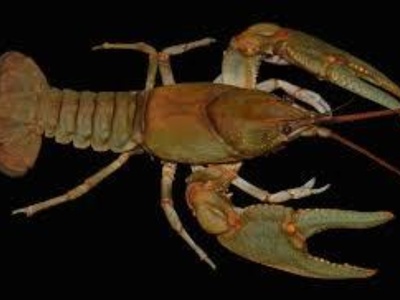
Guyandotte River Crayfish
A critically endangered crayfish now found only in a few clean, fast-flowing streams in the upper Guyandotte River basin. Habitat loss from mining has eliminated it from most of its former range, making it one of North America’s rarest crayfish.
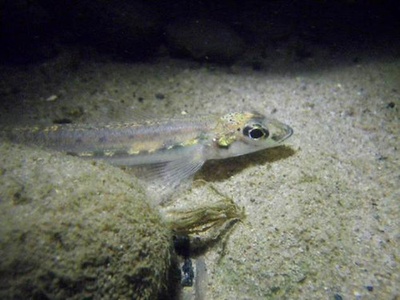
Diamond Darter
This small, translucent fish is a federally endangered species. The last known surviving population in the world lives in the lower Elk River. It buries itself in sand and gravel, darting out to catch prey, but is threatened by sedimentation and pollution.
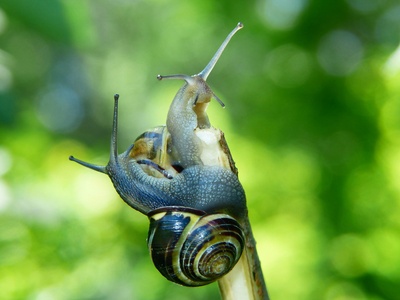
Flat-spired Three-toothed Snail
This federally threatened land snail is a true West Virginia specialist. It lives only on large, mossy sandstone boulders under rhododendron thickets along the rim of the Cheat River Gorge, a unique habitat found nowhere else. Its shell is distinctively flattened.
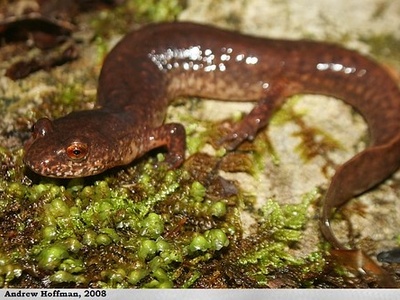
West Virginia Spring Salamander
A rare creature found exclusively within the General Davis Cave system. This salamander is neotenic, meaning it retains its juvenile, gilled, aquatic features throughout its life. It is highly vulnerable due to its single-location existence and reliance on pure groundwater.

Virginia Fringed Mountain Snail
Despite its name, this tiny, critically endangered snail is known from only one location on Earth: a single rock pile at Cooper’s Rock State Forest. Its extreme rarity and restricted range make it one of the most vulnerable species in the state.
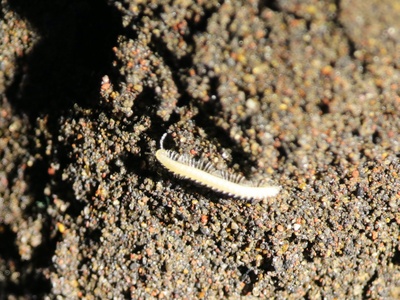
White’s Cave Millipede
A true troglobite (cave-dweller) that lives its entire life in total darkness. This eyeless, unpigmented millipede is known only from the Organ Cave system, where it feeds on decaying organic matter in the unique and stable cave environment.
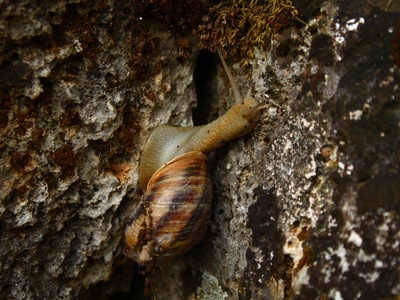
Greenbrier Cave Snail
This tiny, aquatic cave snail is known from a single cave system, General Davis Cave. It lives in the cave’s stream, grazing on bacteria and biofilm. Its complete dependence on the cave’s pristine water quality makes it extremely vulnerable to pollution.
West Virginia Cave Beetle
An eyeless, reddish-brown ground beetle adapted for a life of darkness in several limestone caves. As a top invertebrate predator in its lightless world, it hunts for other small cave dwellers. Its limited range makes it sensitive to groundwater contamination.
Organ Cave Pseudoscorpion
This tiny, scorpion-like predator is found only in the Organ Cave system. Lacking a tail and stinger, it uses its formidable pincers to hunt even smaller invertebrates in the pitch-black cave environment, highlighting the unique biodiversity found underground.
Greenbrier Cave Isopod
An aquatic, eyeless isopod (related to pillbugs) found only in the streams of caves in the Greenbrier Valley. This small, white crustacean is a detritivore, feeding on organic debris and playing a crucial role in the cave’s subterranean food web.