From concert halls to coastal monitoring stations, sounds shape the way we perceive and measure the world — from music and speech to environmental and engineered signals. A practical list helps you spot patterns, compare behaviors, and pick the right tools for measurement or noise control.
There are 53 Sound Waves, ranging from Acoustic bandgap to White noise. For each entry you’ll find below a compact, tabular summary organized with Category, Frequency range (Hz), Typical medium & speed (m/s) so you can quickly compare type, expected frequency band and propagation details — you’ll find below.
How can I use this list to identify sounds in a recording?
Start by generating a spectrogram to see dominant frequencies and bandwidth; then match observed bands to entries by Frequency range and Category. Use the Typical medium & speed (m/s) column to decide whether propagation conditions (air, water, solids) could shift apparent frequencies, and look for broadband versus narrowband signatures (white noise is broadband; many mechanical or tonal sources are narrowband).
When would an acoustic bandgap matter compared with white noise?
An acoustic bandgap describes frequencies blocked by structure (useful in sound insulation and phononic crystals), while white noise is broadband random energy (used for testing or masking). Knowing which you’re dealing with guides design choices: bandgaps for selective filtering or vibration isolation, white noise for calibration, system identification, or masking.
Sound Waves
| Name | Category | Frequency range (Hz) | Typical medium & speed (m/s) |
|---|---|---|---|
| Infrasound | Frequency band | 0.001–20 | Air ~343 m/s at 20°C; in oceans ~1,500 m/s |
| Audible | Frequency band | 20–20,000 | Air ~343 m/s at 20°C |
| Ultrasound | Frequency band | 20,000–10,000,000 | Air ~343 m/s; water ~1,480–1,500 m/s |
| Hypersound (GHz acoustic phonons) | Frequency band | 1,000,000–1,000,000,000 | Solids; propagation speeds vary widely (e.g., 3,000–6,000 m/s) |
| Longitudinal wave | Physical mode | varies | Fluids and solids; air ~343 m/s, water ~1,500 m/s |
| Transverse (shear) wave | Physical mode | varies | Solids; shear speed example steel ~3,200 m/s |
| Surface acoustic wave (SAW) | Physical mode | 10,000–1,000,000,000 | Solid surfaces; typical speeds ~1,000–5,000 m/s |
| Lamb waves | Guided/plate mode | 100–10,000,000 | Thin solids (plates); speeds depend on mode, e.g., 1,000–5,000 m/s |
| Duct modes (waveguide modes) | Guided mode | varies (Hz–kHz) | Air in ducts; speed ~343 m/s but modal cutoff varies |
| Plane wave | Waveform/idealization | varies | Any medium; speed equals medium sound speed (e.g., air 343 m/s) |
| Spherical wave | Waveform/geometry | varies | Any medium; radial speed equals medium sound speed |
| Standing wave | Phenomenon | varies | Air/solids; speed equals medium sound speed |
| Traveling wave | Phenomenon | varies | Any medium; speed equals medium sound speed |
| Interference | Phenomenon | varies | Any medium; wave speed depends on medium |
| Beats | Phenomenon | ~0.1–100 | Air ~343 m/s |
| Diffraction | Phenomenon | varies | Any medium; speed equals medium sound speed |
| Reflection | Phenomenon | varies | Any medium; speed equals medium sound speed |
| Refraction | Phenomenon | varies | Air, water; speed varies with temperature and salinity |
| Doppler effect | Phenomenon | varies | Any medium; relative speed alters received frequency |
| Resonance (general) | Phenomenon | varies | Air and solids; resonant frequencies depend on geometry |
| Helmholtz resonance | Phenomenon | ~20–5,000 | Air in cavities; speed ~343 m/s |
| Reverberation | Phenomenon | varies | Air in rooms; speed ~343 m/s |
| Echo | Phenomenon | varies | Air, water; speed depends on medium |
| Attenuation/absorption | Phenomenon | varies with frequency | Air and materials; absorption coefficients change with frequency |
| Scattering | Phenomenon | varies | Air, water, solids; speed equals medium sound speed |
| Shock waves | Nonlinear phenomenon | varies, broadband | Air; supersonic fronts travel >sound speed (e.g., 343+ m/s) |
| Sonic boom | Phenomenon | broadband | Air; travels at supersonic speeds tied to object velocity |
| Parametric array (nonlinear beam) | Nonlinear phenomenon | varies (audio to ultrasonic) | Air or water; primary ultrasonic speed ~343 m/s in air |
| Nonlinear acoustics (harmonic generation) | Phenomenon | varies | Any medium; speeds near medium sound speed |
| Acoustic phonon | Quantum/solid-state | varies (GHz–THz) | Crystalline solids; speeds depend on lattice (1,000–6,000 m/s) |
| Room modes | Resonant modes | varies (Hz–kHz) | Air in rooms; speed ~343 m/s |
| Dispersion | Phenomenon | varies | Solids, ducts, multilayer media; speed varies with frequency |
| Group vs phase velocity | Phenomenon/concept | varies | Any medium; velocities may differ |
| Acoustic impedance | Parameter/phenomenon | varies | Any medium; impedance = density × speed |
| Acoustic radiation pressure | Phenomenon | varies | Air, liquids; small steady pressure values |
| Acoustic streaming | Phenomenon | varies | Fluids; flow speeds depend on intensity |
| Brillouin scattering | Interaction phenomenon | varies (GHz–THz) | Solids and liquids; sound speed varies with medium |
| Acoustic cavitation | Phenomenon | kHz–MHz | Liquids; sound speed ~1,480 m/s |
| Hydroacoustic (underwater sound) | Medium classification | 0.1–1,000,000 | Seawater ~1,500 m/s; fresh water ~1,480 m/s |
| Pure tone (sine wave) | Waveform | varies | Any medium; speed equals medium sound speed |
| Square wave (acoustic) | Waveform | varies | Any medium; speed equals medium sound speed |
| Pulse (transient) | Waveform | varies | Any medium; speed equals medium sound speed |
| Chirp (sweep) | Waveform | varies | Any medium; speed equals medium sound speed |
| White noise | Noise type | varies (broadband) | Any medium; speed equals medium sound speed |
| Pink noise | Noise type | varies (broadband) | Any medium; speed equals medium sound speed |
| Evanescent wave (acoustic) | Near-field phenomenon | varies | Near interfaces in fluids/solids; decays rapidly |
| Mode conversion | Phenomenon | varies | At interfaces between media with different properties |
| Acoustic emission | Phenomenon | kHz–MHz | Solids and structures; speeds depend on material |
| Acoustic bandgap | Metamaterial phenomenon | varies | Engineered solids or fluids with structured elements; speeds vary |
| Acoustic vortex (orbital angular momentum) | Waveform/phenomenon | varies | Air and water; speed equals medium sound speed |
| Soliton (acoustic solitary wave) | Nonlinear phenomenon | varies | Shallow water or nonlinear media; speeds depend on amplitude |
| Diffusive sound field | Statistical phenomenon | varies | Enclosed spaces; average speed ~343 m/s |
| Cutoff frequency (waveguides) | Phenomenon | varies | Ducts and waveguides; speed equals medium sound speed |
Images and Descriptions
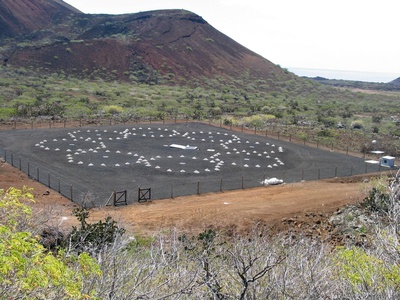
Infrasound
Very low frequency sound below human hearing, produced by storms, volcanoes, and machinery. Travels long distances with low attenuation and is used to monitor natural events and large-scale atmospheric phenomena.

Audible
Sound frequencies humans can hear, spanning speech and music. Occurs in everyday environments and audio systems; important for acoustics, hearing science, and product design because perception and communication rely on this band.
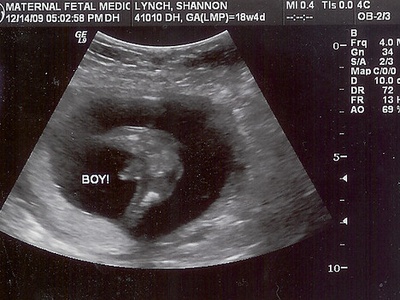
Ultrasound
High-frequency sound above hearing, used in medical imaging, cleaning, and material inspection. Higher frequencies give better resolution but attenuate faster, making medium and application decisive for usefulness.

Hypersound (GHz acoustic phonons)
Very high-frequency acoustic vibrations in solids, often treated as quantized phonons. Important in nanostructures, ultrasonics and materials research for heat transport and high-frequency acoustic devices.
Longitudinal wave
Primary sound mode in fluids where particle motion is parallel to propagation. Responsible for ordinary audible and ultrasonic sound; dominant in gases and liquids and key to pressure wave behavior.
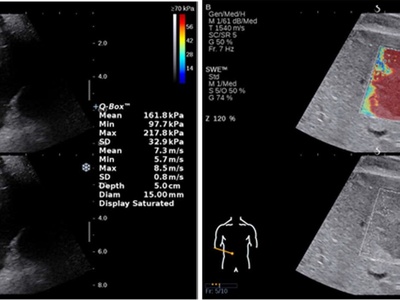
Transverse (shear) wave
Particle motion is perpendicular to propagation, occurring in solids, not fluids. Important for nondestructive testing and solid mechanics; different speeds and polarization from longitudinal waves.
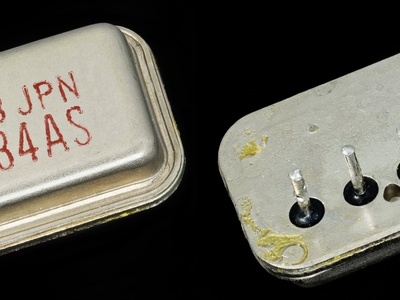
Surface acoustic wave (SAW)
Wave confined to a solid surface, decaying with depth. Widely used in sensors, signal processing, and touch devices for compact, high-frequency acoustic control.
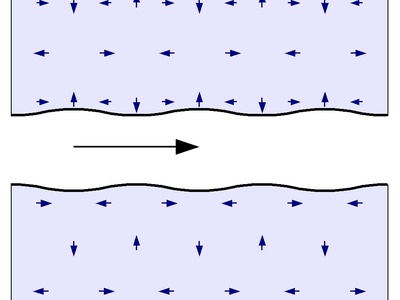
Lamb waves
Guided waves in plates with complex symmetric and antisymmetric modes. Used in structural inspection and material characterization because they travel long distances along thin structures.
Duct modes (waveguide modes)
Discrete propagation modes in pipes and ducts where geometry filters frequencies. Crucial for HVAC acoustics, musical instruments, and exhaust noise engineering to predict resonances and transmission.
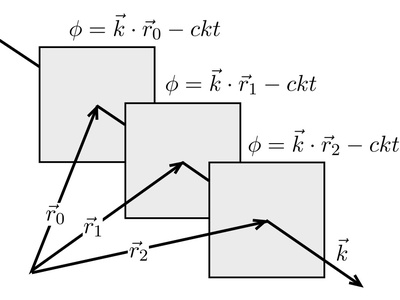
Plane wave
An idealized wave with flat wavefronts and uniform direction. Useful model for far-field sound, simplifying analysis of transmission, reflection, and absorption in acoustics.
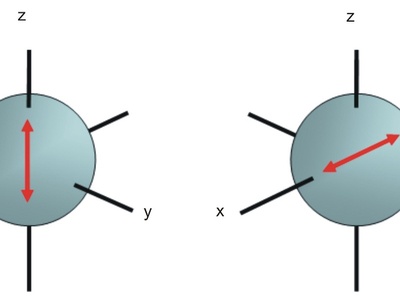
Spherical wave
Radiation from a point source spreading as expanding spheres. Amplitude falls with distance; describes many real sources like loudspeakers and explosions in open space.
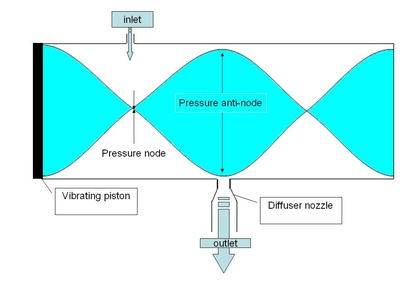
Standing wave
Occurs when two counterpropagating waves form fixed nodes and antinodes. Common in rooms, instruments, and resonators, leading to strong resonances and predictable mode patterns.
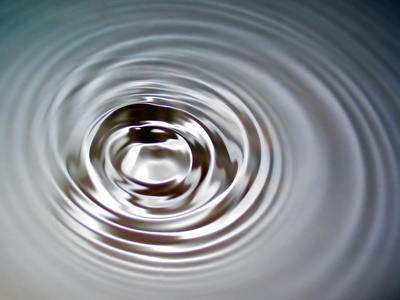
Traveling wave
Wave energy propagates away from a source without fixed nodes. Essential to sound propagation, outdoor acoustics, and understanding how signals move through space or ducts.
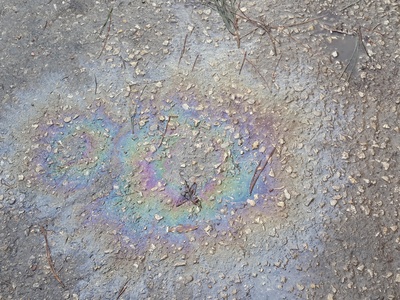
Interference
Superposition of waves producing constructive or destructive results. Explains beats, comb filtering, and spatial patterns; central to acoustical design, speaker placement, and noise control.

Beats
Perceptible amplitude modulation created when two close frequencies interfere. Useful in tuning, psychoacoustics, and signal analysis; beat rate equals frequency difference of the two tones.
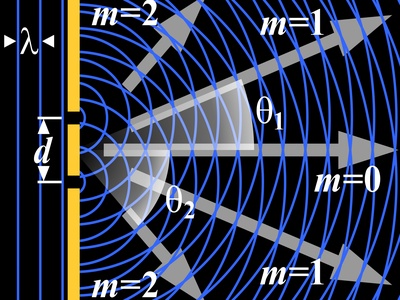
Diffraction
Bending of sound around obstacles and through openings, more pronounced at long wavelengths. Explains why low frequencies wrap around barriers and affects speaker and architectural acoustics.

Reflection
Sound bouncing from surfaces following angle rules and energy loss. Fundamental for echo, reverberation, room acoustics, and designing absorbers or reflectors to shape sound fields.
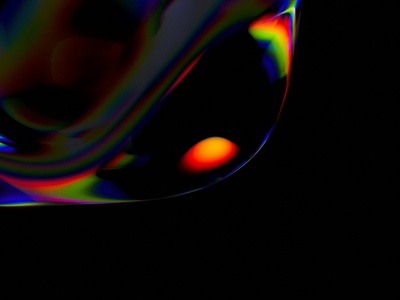
Refraction
Bending of sound rays when speed changes, e.g., atmospheric ducts or ocean thermoclines. Causes sound focusing, shadow zones, and long-range propagation effects used in sonar and atmospheric acoustics.
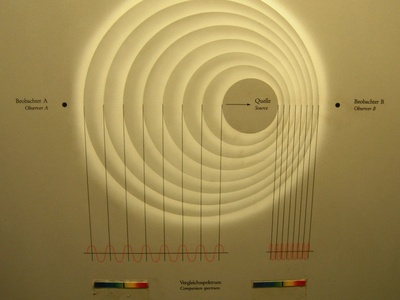
Doppler effect
Frequency shift perceived when source or listener moves relative to each other. Central to radar/sonar, medical flow measurements, and everyday sounds like passing vehicles.
Resonance (general)
Strong amplification when a system vibrates at its natural frequency. Underlies instrument tones, cavity behavior, and problems like feedback in audio systems.
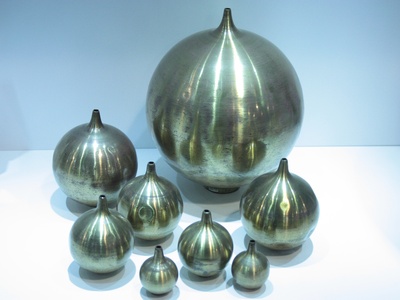
Helmholtz resonance
A single resonance of a cavity with a neck, like bottles and room features. Predictable frequency used in design of loudspeakers, mufflers, and acoustic sensors.
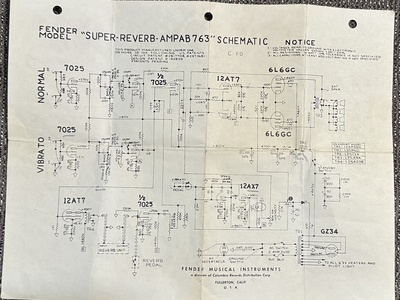
Reverberation
Sustained sound from multiple overlapping reflections in an enclosed space. Measured by reverberation time; critical for speech intelligibility, music acoustics, and room design.

Echo
Distinct reflected sound arriving later than direct sound. Used in ranging, sonar, and simple architectural diagnostics, the echo requires sufficient separation in time.
Attenuation/absorption
Energy loss of sound due to medium viscosity, thermal conduction, or absorbing materials. High frequencies attenuate more; key for noise control and acoustic material design.
Scattering
Redirection of sound by roughness or inhomogeneities, causing diffuse fields and spectral changes. Important in room acoustics, underwater acoustics, and sonic signature studies.
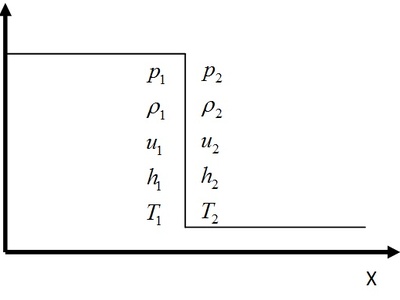
Shock waves
Strong nonlinear compressive fronts where linear acoustics fails. Form from explosions or supersonic objects, creating sudden pressure jumps and sonic booms.
Sonic boom
Loud pressure wave produced by objects exceeding sound speed. Characteristic sharp double-notch signature and important for aircraft design and regulation.
Parametric array (nonlinear beam)
Highly directional low-frequency beams generated by nonlinear interaction of high-frequency carriers. Used in directed audio systems and specialized sonar due to tight beams and low sidelobes.
Nonlinear acoustics (harmonic generation)
When large amplitudes produce waveform distortion and new frequencies. Causes shock formation, harmonic content, and enables parametric sources and certain medical therapies.
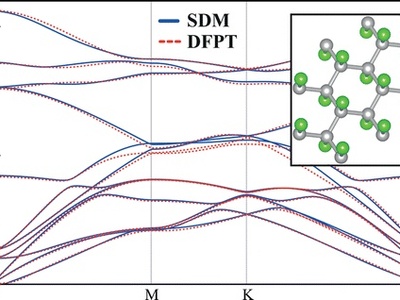
Acoustic phonon
Collective quantized lattice vibrations that carry heat and sound at the nanoscale. Central to solid-state physics, thermal conductivity, and nanoscale acoustic devices.
Room modes
Discrete resonances set by room dimensions that boost or cancel frequencies. Key for studio design and loudspeaker placement to manage problem frequencies and bass behavior.
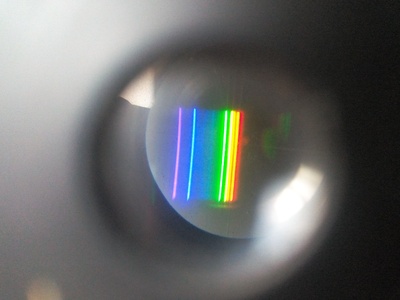
Dispersion
When phase velocity depends on frequency, causing waveform spreading. Important in waveguides, seismic prospection, and interpreting signal arrival times.
Group vs phase velocity
Phase velocity is individual wavefront speed; group velocity carries energy. Differences matter in dispersive media for pulse shaping, communications, and wave packet behavior.
Acoustic impedance
Ratio of pressure to particle velocity at an interface. Determines reflection/transmission and matching requirements in transducers, room acoustics, and medical ultrasound.
Acoustic radiation pressure
Time-averaged pressure exerted by sound waves on objects. Enables acoustic manipulation like particle trapping and is a consideration in high-intensity acoustic fields.
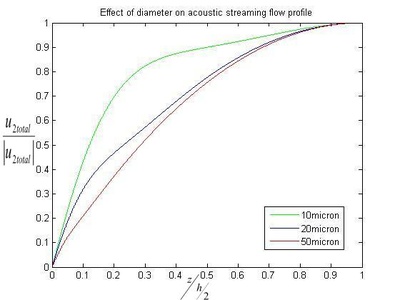
Acoustic streaming
Steady flows driven by viscous effects of intense sound. Used in microfluidics, cleaning, and enhancing mass transport in sonochemistry and medical applications.
Brillouin scattering
Interaction between light and acoustic phonons that shifts optical frequency. Used in sensing, materials characterization, and distributed fibre-optic acoustics.
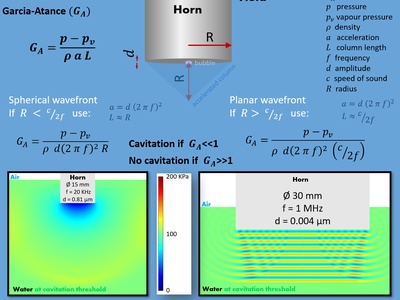
Acoustic cavitation
Bubble formation and violent collapse driven by ultrasonic pressure cycles. Causes erosion, sonochemistry, and cleaning; central to ultrasonic processing and concerns in medical ultrasound.
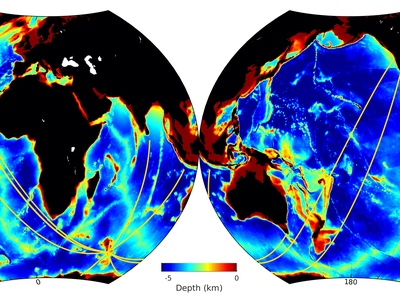
Hydroacoustic (underwater sound)
Sound propagation in water with different absorption and speed profiles than air. Used for sonar, marine biology, and underwater communication and navigation.
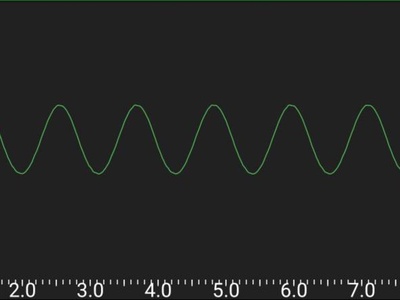
Pure tone (sine wave)
Single-frequency oscillation with constant amplitude and phase. Fundamental to acoustics and testing because it isolates frequency-specific behavior and perception.
Square wave (acoustic)
Periodic signal rich in odd harmonics, producing a buzzy timbre. Useful in signal processing and synthesis but prone to spectral energy over wide bands.
Pulse (transient)
Short-duration broadband disturbance used for echolocation, radar/sonar pulses, and transient testing. Temporal brevity gives high-resolution range information but wide spectral content.
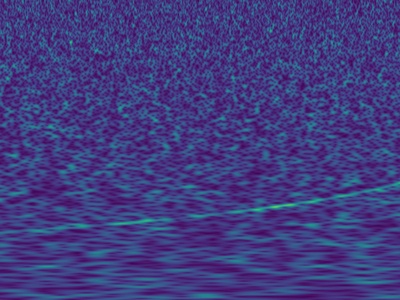
Chirp (sweep)
Signal whose frequency changes over time, used in radar, sonar, and ultrasonic testing for robust detection and time-frequency analysis due to wideband energy distribution.
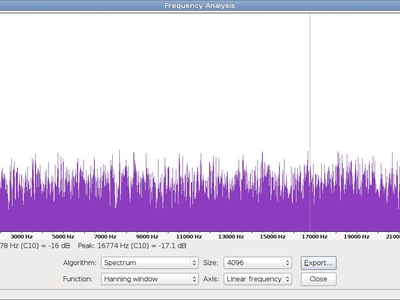
White noise
Equal energy per frequency band, sounding hiss-like. Widely used for testing, masking, and sleep aids; important in psychoacoustics and system identification.
Pink noise
Noise with equal energy per octave (decreasing with frequency). More balanced to human hearing than white noise and used in audio testing and acoustical measurements.
Evanescent wave (acoustic)
Non-propagating field decaying exponentially from a boundary. Important for near-field acoustic imaging, subwavelength sensing, and coupling between structures.
Mode conversion
Conversion of one wave type to another (e.g., longitudinal to shear) at boundaries. Critical for interpreting signals in nondestructive testing and multiphase acoustics.
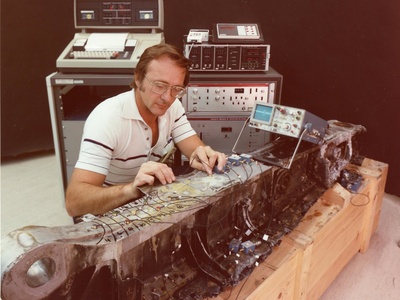
Acoustic emission
Transient elastic waves released by crack growth or stress redistribution. Used as a monitoring tool in structural health and failure detection for early-warning diagnostics.
Acoustic bandgap
Frequency ranges where propagation is forbidden due to periodic structure. Enables sound insulation, waveguiding, and novel acoustic device designs with tailored transmission.
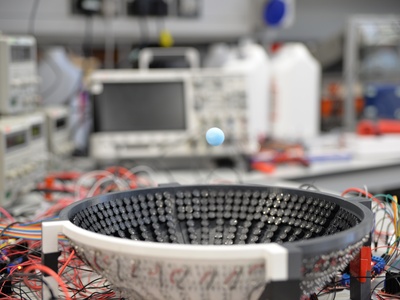
Acoustic vortex (orbital angular momentum)
Wave carrying orbital angular momentum with a phase singularity and doughnut-shaped intensity. Used for particle manipulation, novel communication channels, and advanced wave control.
Soliton (acoustic solitary wave)
Localized nonlinear wave maintaining shape over long distances. Observed in certain fluids and lattices; interesting for information transport and nonlinear dynamics.
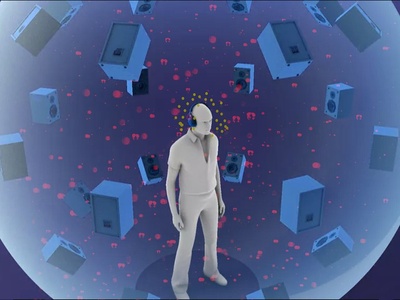
Diffusive sound field
A reverberant field where energy is uniformly distributed and directionality is lost. Useful for simplified acoustic modelling, sound power measurements, and room design approximations.
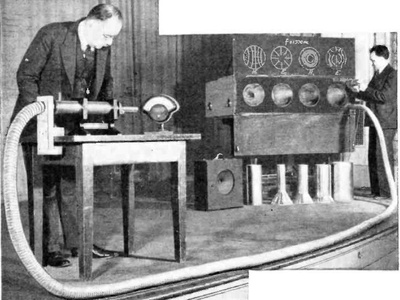
Cutoff frequency (waveguides)
Lowest frequency at which a guided mode propagates. Below cutoff waves become evanescent; important for designing ducts, mufflers, and waveguide filters.