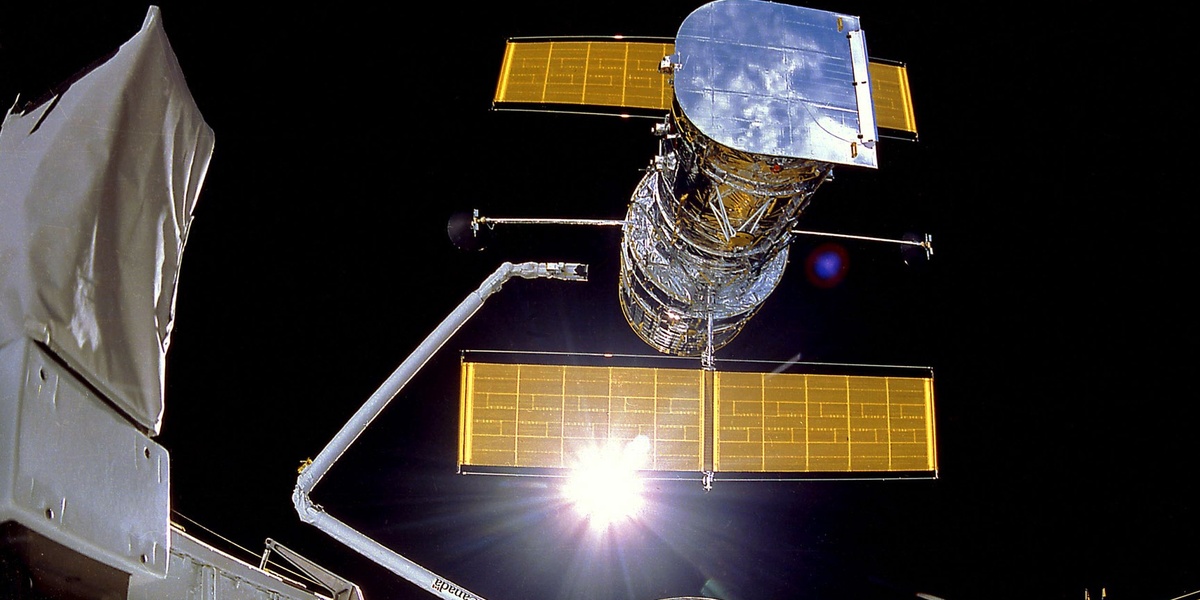
Since the James Webb Space Telescope launched on December 25, 2021, astronomers have pushed observational boundaries and reported candidate galaxies at redshifts above 11 — a sign that the next decade will reshape what we know about the cosmos.
That leap follows earlier revolutions: Edwin Hubble’s optical surveys, the rise of radio astronomy after World War II, and the precision cosmology era sparked by space-based observatories. Each generation of instruments redefined long-standing questions.
Why should you care? Advances in astronomy drive new sensors, computing tools, national priorities, and even medical devices. They change what governments fund and what engineers build for everyday life.
Astrophysics is entering a phase where new telescopes, computing power, data science, and cross-disciplinary technology will transform discovery; these future trends in astrophysics will affect both fundamental science and practical applications.
The pieces fall into three broad groups: observational breakthroughs, computation and theory, and technology with cross-disciplinary impacts. Below are eight concrete trends to watch in the coming decade.
Observational Breakthroughs

New observatories in space and on the ground are opening wavelength ranges and survey volumes we simply couldn’t access a decade ago. JWST began operations in late 2021 with a 6.5‑meter primary mirror and infrared instruments that peer into the era of first light. ESA’s Euclid (launched 2023) and NASA’s Nancy Grace Roman Space Telescope (planned for the mid‑2020s) add wide, precise surveys that complement JWST’s deep pencil‑beam view.
Meanwhile, radio facilities and gravitational‑wave detectors provide complementary, non‑optical perspectives. Arrays such as the Square Kilometre Array (phased deployment through the 2020s–2030s) and pathfinders like HERA and LOFAR map neutral hydrogen, while LIGO, Virgo, and KAGRA are turning transient alerts into routine follow-up campaigns.
Coordinated multi‑messenger observing — combining photons across the spectrum with neutrinos and gravity waves — is moving from exceptional events to planned campaigns. That means richer, cross‑checked datasets and a higher chance of spotting rare phenomena.
1. Next-generation space telescopes probing the first galaxies
Telescope platforms like JWST, Euclid, and Roman will reveal the early universe in unprecedented detail. JWST (launched Dec 25, 2021) has already produced NIRCam deep fields that contain candidate galaxies at z>11, pushing observations into the first few hundred million years after the Big Bang.
Roman’s wide‑field high‑latitude survey (planned for the mid‑2020s) will image vast swaths of sky at Hubble‑quality resolution, placing the ultra‑deep JWST pointings into a statistical context. Euclid’s imaging and spectroscopy supply complementary redshift information.
Those combined data will tighten models of early galaxy growth, feedback from the first stars, and the timing and topology of reionization — providing measurable tests for dark‑matter and formation scenarios that previously relied on sparse sampling.
2. Radio arrays mapping hydrogen across cosmic time
Radio facilities will chart neutral hydrogen using 21‑cm spectroscopy and intensity mapping, making true three‑dimensional maps of cosmic gas over large volumes. Pathfinder projects such as HERA and LOFAR have already produced constraints on reionization-era signals, and they’re refining techniques for foreground subtraction and calibration.
The Square Kilometre Array, coming online in phased stages through the 2020s and into the 2030s, promises massive sensitivity and survey speed. That will let astronomers track the progress of reionization and trace large‑scale structure in a way that optical surveys alone cannot.
Cross‑correlating radio hydrogen maps with JWST, Roman, and Euclid fields gives independent checks on when the first stars ionized the intergalactic medium and helps resolve discrepancies between different probes of early structure.
3. Gravitational-wave astronomy moving from discovery to precision
Gravitational‑wave detectors have shifted from headline detections to growing catalogs. The first confirmed event, GW150914 (September 14, 2015), proved the concept, and subsequent observing runs produced dozens of detections — roughly ninety events reported across early 2020s runs — spanning binary black holes and neutron‑star mergers.
Third‑generation instruments such as the Einstein Telescope and Cosmic Explorer are conceptualized for the 2030s and aim to boost sensitivity by an order of magnitude. That expands horizon distance, sample sizes, and fidelity of waveform measurements.
Precision catalogs will constrain stellar remnant populations, pin down the neutron‑star equation of state, and refine cosmological measures through standard sirens — building on multi‑messenger milestones like GW170817 and its August 2017 kilonova follow‑up.
Computation, Simulation, and Theory
Advances in computing power, AI, and evolving theoretical ideas will reshape how we interpret the flood of observational data. Exascale and near‑exascale machines let simulations include far more particles and realistic gas physics, while machine learning digests petabyte‑scale surveys for fast discovery.
Together with improved theory, these future trends in astrophysics will allow tighter, testable predictions for structure formation, compact objects, and fundamental physics. That turns qualitative speculation into falsifiable models backed by massive synthetic datasets.
Researchers will increasingly run end‑to‑end pipelines: from simulated skies through instrument models to analysis that mirrors observational selection effects. The result is better comparisons between theory and data and faster iterations on model building.
4. Exascale computing enabling realistic cosmological simulations
Exascale machines became operational in the early 2020s, with facilities such as Frontier at Oak Ridge demonstrating exascale‑class performance in 2022. That capability lets teams push cosmological simulations to far higher fidelity than before.
Where previous large runs tracked millions to billions of particles with simplified gas treatments, next‑generation projects are tracking billions of resolution elements with richer baryonic physics and feedback models. That improves predictions for galaxy morphologies, star‑formation histories, and the role of black‑hole feedback.
Those improved simulations directly inform interpretation of JWST and Euclid observations and provide more realistic priors for dark‑matter models, shrinking theoretical uncertainties when confronting survey data.
5. AI and machine learning accelerating discovery
Machine learning is already essential for classification, anomaly detection, and rapid follow‑up. Rubin Observatory’s LSST will produce on the order of 20 terabytes of data per night, creating urgent demand for automated analysis and real‑time alerting systems.
ML pipelines have helped vet thousands of exoplanet candidates from Kepler and TESS and have sorted transient alerts for faster telescope response. Automated triage means human teams focus on the most promising or unusual events.
Concrete use cases include real‑time transient alert systems that trigger spectroscopic resources within minutes, and anomaly detectors that surface rare gravitational‑wave or fast‑radio‑burst counterparts for targeted follow‑up.
6. New theoretical frameworks for dark matter and dark energy
Persistent mysteries—dark matter and dark energy—are driving new theoretical proposals that upcoming observations will test. Alternatives such as fuzzy (ultra‑light) dark matter and self‑interacting dark matter change small‑scale structure predictions in ways surveys can probe.
Laboratory constraints also push model space. For example, the LZ experiment published competitive direct‑detection limits in 2022, narrowing regions for weakly interacting massive particles and motivating attention to nonstandard candidates.
Large coordinated surveys — Euclid, Roman, and DESI — together with CMB and gravitational‑wave measures will constrain dark‑energy parametrizations and test whether tensions such as the Hubble constant discrepancy point to new physics or systematic effects.
Technology and Cross-disciplinary Impacts
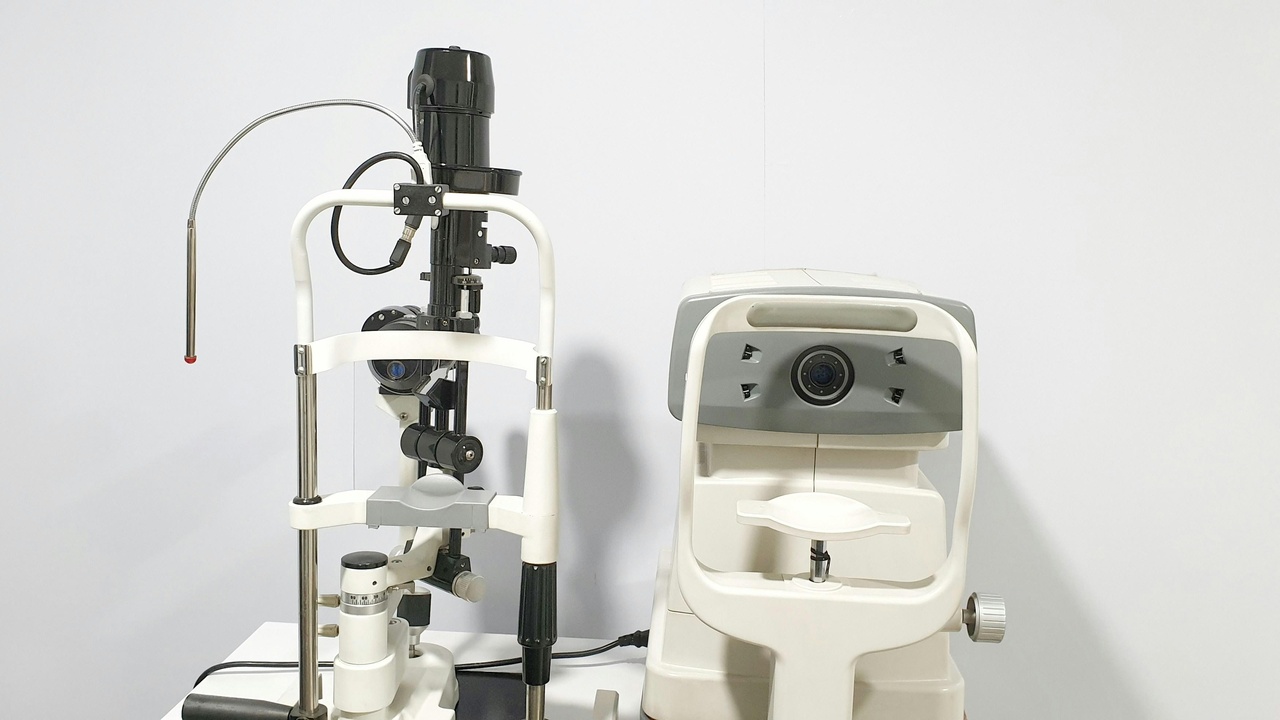
Astrophysics instruments drive technologies that spill over into healthcare, Earth observation, and industry. Improvements in detectors, adaptive optics, and image‑processing algorithms have immediate, practical benefits beyond research telescopes.
At the same time, planetary‑defense and resource‑survey missions demonstrated techniques that inform policy and commercial plans. That mix of fundamental and applied work accelerates societal returns on scientific investment.
Below are two areas where near‑term outcomes are already visible: imaging and sensors on Earth, and the maturation of planetary‑defense and resource initiatives in space.
7. Astrophysics driving sensor and imaging technology on Earth
Advances in detectors, optics, and signal processing developed for astronomy feed directly into medical imaging and remote sensing. Adaptive optics, once used to sharpen stellar images through the atmosphere, now improves retinal imaging for ophthalmology.
Astronomical cameras and low‑light sensors influence Earth‑observation satellites and security imaging. Algorithmic techniques such as deconvolution and interferometric reconstruction are being reused in microscopy and synthetic‑aperture systems.
Those transfers shorten development cycles for medical diagnostics and environmental monitoring while making advanced imaging more accessible to industry and clinics.
8. Space resources and planetary defense becoming practical priorities
Planetary defense and resource utilization shifted from planning to demonstration in the early 2020s. NASA’s DART mission deliberately impacted Dimorphos on September 26, 2022, altering its orbital period by roughly 33 minutes and showing kinetic deflection is practical.
Meanwhile, the Psyche mission launched October 13, 2023 to study a metal‑rich asteroid and demonstrate remote resource characterization. Those missions provide data and operational experience for mitigation strategies and reconnaissance of potential resources.
The practical implications range from updated insurance and risk models to new commercial activity in satellite servicing, asteroid prospecting, and international coordination on hazard response.
Summary
- Next‑generation observatories (JWST, Euclid, Roman) and complementary facilities (SKA, LIGO/Virgo/KAGRA) will provide richer, cross‑checked datasets that sharpen questions about the first galaxies and cosmic structure.
- Exascale computing and large simulations plus AI pipelines (handling Rubin/LSST’s ~20 TB/night stream) let theory catch up with data, producing falsifiable predictions rather than hand‑wavy explanations.
- Applied spin‑offs are tangible: adaptive optics improves retinal imaging, and planetary‑defense demonstrations like DART (Sept 26, 2022) show that mitigation techniques work in practice.
- Combined, these trends mean we’ll test fundamental physics in new regimes while harvesting technologies that matter for healthcare, Earth monitoring, and commercial space activity.
- Stay curious and support science education and open data initiatives — following missions and learning data‑science skills are practical ways to participate in what’s next in space science.