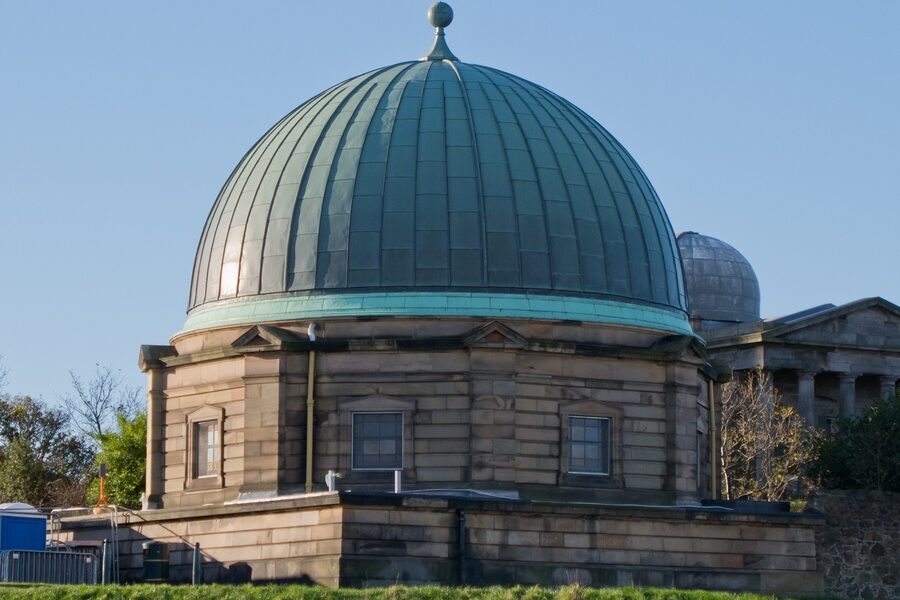
In 1965, Arno Penzias and Robert Wilson stumbled on a faint microwave hiss — the cosmic microwave background — that became the smoking-gun evidence for the Big Bang. That discovery helped turn speculation about cosmic beginnings into a testable science. Astronomers now date the universe to about 13.8 billion years and use observations across the electromagnetic spectrum to read its history, from the first light elements to the growth of galaxies. Cosmology combines observation and theory to answer big questions about the universe’s origin, composition, and fate; this article highlights eight engaging facts that illuminate how we know what we know. You’ll find these facts grouped into three clear categories — foundations, observational evidence, and implications/open questions — each grounded in measurements, missions, and experiments that shaped modern thinking.
Foundations: How the Universe Began and Evolved
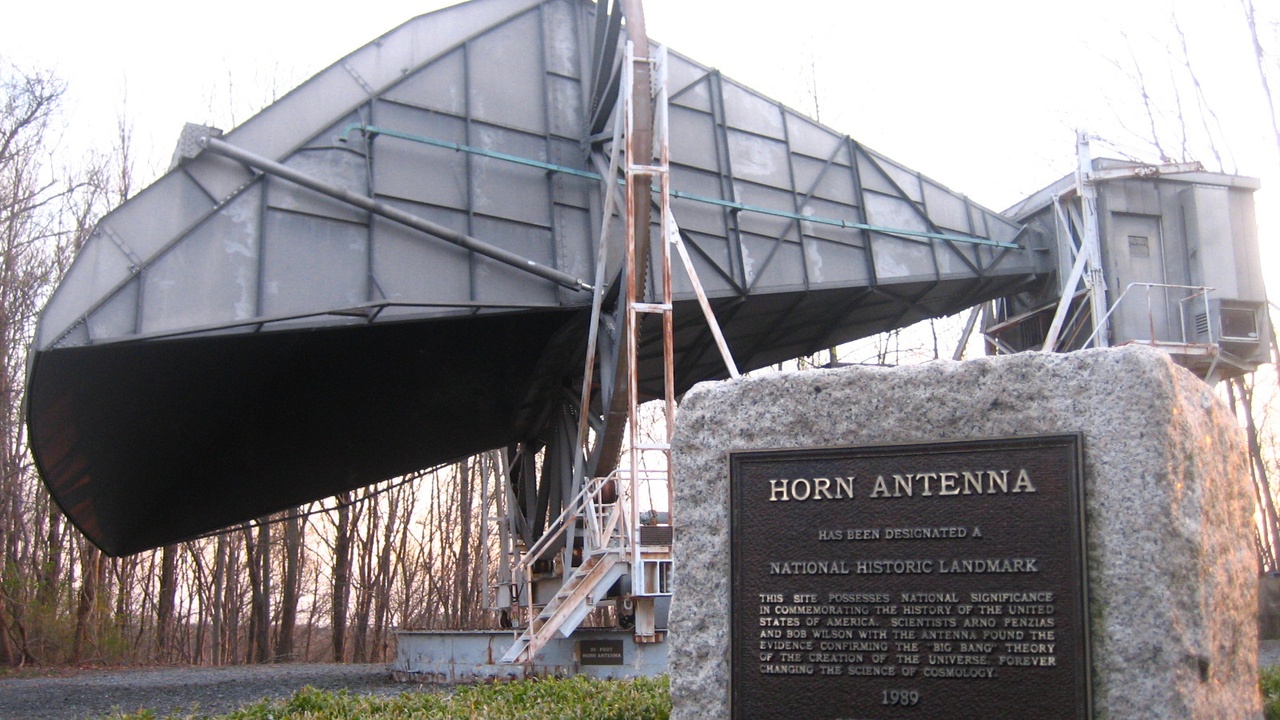
These foundational facts form the baseline for everything cosmologists test today: the universe’s hot dense origin, the relic radiation we can still measure, and the first few minutes of nuclear chemistry that set primordial element abundances. Why do those early moments matter so much? Because they set the initial conditions for structure formation and for the cosmological parameters we use to interpret all later observations. Edwin Hubble’s 1929 redshift measurements first showed galaxies receding, and the 1965 CMB detection by Penzias and Wilson provided direct relic radiation from the early plasma. Predictions from Big Bang nucleosynthesis for helium and deuterium tied theory to measured abundances in ancient gas clouds. Together these lines of evidence create a tightly constrained framework that later observations refine.
1. The Big Bang and Cosmic Expansion
The universe began in a hot, dense state and has been expanding ever since. Edwin Hubble’s 1929 observations showed distant galaxies have redshifted spectra, implying recession velocities proportional to distance — the basis of Hubble’s law. Astronomers quantify the expansion with the Hubble constant, currently measured in the range of about 67–73 km/s/Mpc, a difference that drives the so-called Hubble tension between early-Universe (Planck) and local measurements. Knowing the expansion rate calibrates the cosmic distance ladder and informs estimates of other parameters, including matter density and dark energy. The expansion rate also yields an age: roughly 13.8 billion years for the standard ΛCDM model, a central number many other results reference.
2. The Cosmic Microwave Background (CMB)
The CMB is the nearly uniform microwave radiation left over from when the universe cooled enough for atoms to form, about 380,000 years after the Big Bang. Penzias and Wilson discovered that faint hiss in 1965; later satellites mapped it with increasing precision — COBE first detected anisotropies, WMAP refined them, and the Planck mission released high-resolution maps in 2013 and again with improved analysis in 2018. The CMB has a mean temperature of about 2.725 K with minute anisotropies at the microkelvin level. Those anisotropies tightly constrain cosmological models, setting values for matter density, curvature, and the initial spectrum of fluctuations that seeded galaxy formation.
3. Primordial Nucleosynthesis: How Light Elements Formed
In the first few minutes after the Big Bang, rapid nuclear reactions forged the universe’s initial light elements. Big Bang nucleosynthesis predicts a helium mass fraction of about 24–25% and specific deuterium abundances that depend sensitively on the baryon density. Observations of primordial deuterium in high-redshift quasar absorption lines and helium in metal-poor H II regions closely match these predictions, providing a strong test of early-Universe physics. These measured abundances offer an independent way to infer the baryon density and check consistency with values derived from the CMB.
Evidence and Observations That Shape Cosmology
Observations across decades have repeatedly changed and sharpened cosmological models. Some of the most striking facts about cosmology come from dynamics we can’t see directly, brightnesses of exploding stars used as distance markers, and massive sky surveys that reveal a sponge-like large-scale pattern. Key pillars include the dynamical evidence for invisible mass, the 1998 discovery that the expansion is accelerating, and the mapping of the cosmic web by surveys such as the Sloan Digital Sky Survey (SDSS). These datasets link laboratory physics, general relativity, and astrophysical modeling to build and stress-test the standard model of cosmology.
4. Dark Matter: Invisible Mass Shapes Galaxies
Most of the universe’s matter is dark — it doesn’t emit or absorb light but exerts gravity. Vera Rubin’s galaxy rotation-curve work in the 1970s showed stars orbit too fast at large radii to be held by visible matter alone, implying a halo of unseen mass. Gravitational lensing maps and collision systems like the Bullet Cluster (1E 0657‑558) provide further empirical evidence by separating mass (from lensing) and hot gas (seen in X-rays). Under ΛCDM, dark matter makes up roughly 27% of the universe’s total energy density, shaping how galaxies form in simulations and informing the astrophysics coded into galaxy-evolution models.
5. Dark Energy and the Accelerating Expansion
In 1998, two teams studying distant Type Ia supernovae — the Supernova Cosmology Project and the High‑Z Supernova Search Team — found those standardizable candles were dimmer than expected, implying the expansion rate is accelerating. The discovery (for which Perlmutter, Riess, and Schmidt later received the Nobel Prize) led to the dark energy concept, which in the concordance model accounts for about 68% of the universe’s energy density. Dark energy changed how scientists think about cosmic fate: depending on its properties, the universe could approach heat death, undergo a Big Rip, or slow and recollapse. Modeling dark energy drives both theoretical work and future survey design.
6. The Cosmic Web: Large-Scale Structure of the Universe
Galaxies are not distributed randomly; they trace a vast cosmic web of filaments, sheets, and voids. Large redshift surveys such as the Sloan Digital Sky Survey (SDSS) and the 2dF Galaxy Redshift Survey mapped these structures across scales of tens to hundreds of millions of light-years, producing striking “slices” of the universe. These patterns reflect the growth of primordial fluctuations under gravity and reveal the distribution of dark matter. Studying the web helps constrain models of structure formation and the physics governing galaxy clustering.
Implications, Technologies, and Open Questions
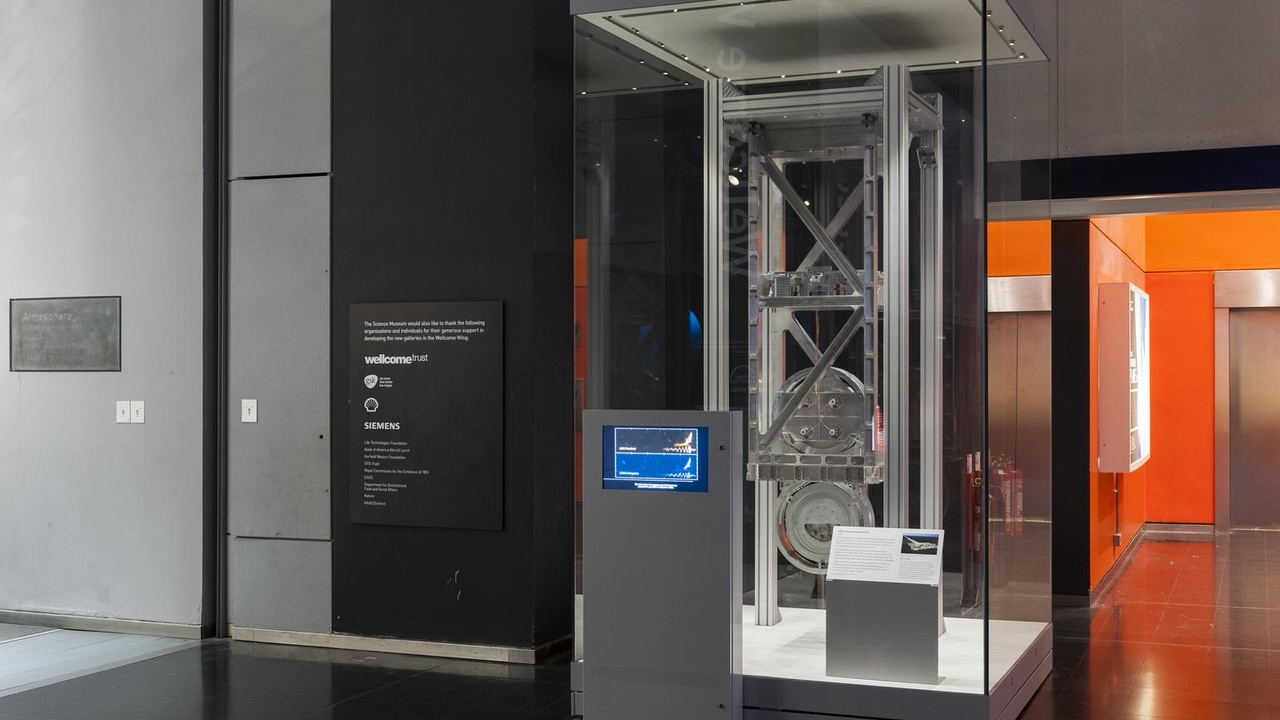
Advances in instrumentation continually expand what we can test about the cosmos. Gravitational-wave detectors, deep infrared telescopes, and precision CMB experiments let researchers probe epochs and processes previously out of reach. These facts about cosmology now inform practical questions — how elements heavier than iron are made, how galaxies assemble — and philosophical ones about why the universe has the values it does. Missions like the James Webb Space Telescope (JWST) and upcoming surveys such as Euclid and CMB‑S4 will target specific predictions, narrowing model space and guiding theory toward or away from speculative ideas like certain inflationary scenarios.
7. Gravitational Waves Have Opened a New Window
Gravitational waves provide a novel way to observe cosmic events and test cosmology. LIGO made the first direct detection (GW150914) on September 14, 2015, observing a binary black-hole merger. Since then, many mergers have been cataloged, and the binary neutron-star event GW170817 (2017) offered a multi-messenger dataset: gravitational waves, electromagnetic counterparts, and a kilonova that illuminated heavy-element synthesis. ‘Standard sirens’ — mergers with measured distances — offer an independent route to the Hubble constant, complementary to local and CMB-based methods. Gravitational-wave astronomy thus links compact-object physics to cosmological measurements.
8. Open Questions: Inflation, the Multiverse, and Cosmic Fate
Major theoretical questions remain unsettled. Inflation, proposed in 1980–1981 by Alan Guth and others, explains the universe’s flatness and horizon puzzles, but we lack a direct smoking‑gun for specific inflation models. Some inflationary frameworks lead naturally to multiverse ideas, though those remain speculative and difficult to test. Observational efforts target primordial B‑mode polarization in the CMB as a signature of inflationary gravitational waves (experiments like BICEP/Keck and planned programs such as CMB‑S4). Determining dark energy’s precise properties is key to predicting cosmic fate, so experimental and mission design continues to focus on tightening constraints.
Summary
- The cosmic microwave background and cosmic expansion provide direct, measurable anchors for the Big Bang model.
- Most of the universe is made of unseen components: dark matter (~27%) and dark energy (~68%), which drive structure and expansion.
- New probes — gravitational waves, precision CMB experiments, deep surveys — keep expanding what we can test about the early universe and cosmic evolution.
- Big open questions remain (inflation, the multiverse, cosmic fate); reliable updates appear on agency pages such as NASA and ESA, and by following missions like JWST, Euclid, and observatories such as LIGO.