In labs, lecture halls, and everyday measurements, scalar quantities quietly describe the size of things without worrying about direction. From a kitchen scale to a physics problem, recognizing scalars helps you pick the right formulas and avoid vector confusion.
There are 39 Examples of Scalar Quantities, ranging from Action to Work. Each entry is presented with clear data fields — SI unit,Symbol,Common example — so you can scan units, notation, and a practical instance quickly; you’ll find the full list below.
What exactly makes a quantity scalar rather than a vector?
A scalar has magnitude only and is fully described by a single numerical value with appropriate units (like temperature or mass); it does not include direction, so it adds arithmetically and is unaffected by orientation.
How should I use this list when studying or solving problems?
Use the list to check units, symbols, and typical examples so you pick scalar-appropriate operations (addition, multiplication by scalars, energy calculations) and avoid applying vector methods like components or dot/cross products where they don’t belong.
Examples of Scalar Quantities
| Name | SI unit | Symbol | Common example |
|---|---|---|---|
| Mass | kg | m | A standard bag of flour has a mass of about 1 kilogram. |
| Temperature | K | T | Water boils at 373.15 K (100 °C) at standard atmospheric pressure. |
| Time | s | t | It takes approximately 8.3 minutes for light from the sun to reach Earth. |
| Distance | m | d, l | The distance of a marathon race is 42,195 meters. |
| Area | m² | A | A standard sheet of A4 paper has an area of about 0.062 m². |
| Volume | m³ | V | A standard can of soda has a volume of 355 milliliters (0.000355 m³). |
| Speed | m/s | v | The speed limit on many highways is around 29 m/s (105 km/h). |
| Energy | J | E | A 100-watt light bulb uses 360,000 joules of energy in one hour. |
| Work | J | W | Lifting a 10 kg box one meter high does about 98 joules of work. |
| Power | W | P | A typical microwave oven consumes power at a rate of about 1,200 watts. |
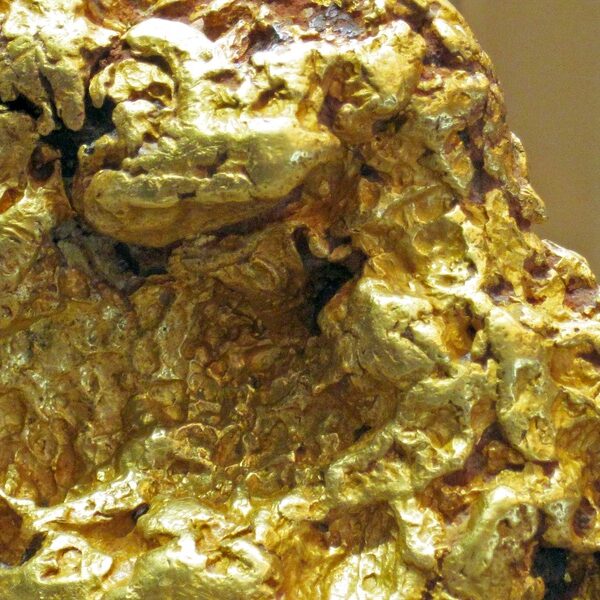
| Density | kg/m³ | ρ | The density of water is approximately 1,000 kg/m³, while gold’s is 19,300 kg/m³. |
| Pressure | Pa | p, P | Standard atmospheric pressure at sea level is about 101,325 pascals. |
| Frequency | Hz | f, ν | The alternating current in a US household outlet has a frequency of 60 Hz. |
| Electric Charge | C | q, Q | A typical lightning bolt can transfer 15 coulombs of charge. |
| Electric Current | A | I | A smartphone typically charges at a current of 1 to 2 amperes. |
| Electric Potential | V | V, φ | A standard AA battery provides an electric potential difference (voltage) of 1.5 volts. |
| Resistance | Ω | R | A 60-watt incandescent light bulb has a resistance of about 240 ohms. |
| Capacitance | F | C | A camera flash circuit might use a capacitor with a capacitance of 150 microfarads. |
| Inductance | H | L | An electric guitar pickup coil can have an inductance of around 7 henries. |
| Heat | J | Q | It takes about 4,184 joules of heat to raise 1 kg of water by 1°C. |
| Specific Heat Capacity | J/(kg·K) | c | Water has a high specific heat capacity of about 4,184 J/(kg·K). |
| Entropy | J/K | S | Melting one kilogram of ice at 0°C increases its entropy by about 1,223 J/K. |
| Luminous Flux | lm | Φv | A 60-watt equivalent LED bulb emits about 800 lumens of luminous flux. |
| Illuminance | lx | Ev | A brightly lit office typically has an illuminance of about 500 lux. |
| Magnetic Flux | Wb | ΦB | The magnetic flux through a small refrigerator magnet is a few microwebers. |
| Wavelength | m | λ | Green light has a wavelength of about 550 nanometers (5.5 x 10⁻⁷ m). |
| Period | s | T | The period of the Earth’s rotation on its axis is about 86,164 seconds. |
| Amount of Substance | mol | n | A sample of 18 grams of water contains approximately one mole of H₂O molecules. |
| Activity | Bq | A | A household smoke detector contains about 37,000 becquerels of americium-241. |
| Plane Angle | rad | θ, φ | A full circle is 2π radians, which is approximately 6.28 radians. |
| Solid Angle | sr | Ω | A full sphere subtends a solid angle of 4π steradians from its center. |
| Molar Mass | kg/mol | M | The molar mass of water (H₂O) is approximately 0.018 kg/mol. |
| Molar Concentration | mol/m³ | c | The molar concentration of salt (NaCl) in seawater is about 540 mol/m³. |
| Luminous Efficacy | lm/W | η | Modern LED lights have a high luminous efficacy, often over 150 lumens per watt. |
| Conductance | S | G | A component with a resistance of 100 ohms has a conductance of 0.01 siemens. |
| Thermal Conductivity | W/(m·K) | k | Copper has a high thermal conductivity of about 400 W/(m·K), making it good for cookware. |
| Dynamic Viscosity | Pa·s | μ, η | At room temperature, honey has a dynamic viscosity of about 10 Pa·s. |
| Action | J·s | S | Planck’s constant (h) is a quantum of action, about 6.626 x 10⁻³⁴ J·s. |
| Moment of Inertia | kg·m² | I | A solid disk’s moment of inertia about its center axis is ½mr². |
Images and Descriptions

Mass
Mass measures an object’s inertia or the amount of matter it contains. It’s a scalar because it only has magnitude; an object’s mass is the same regardless of its direction of motion or location in space.
Temperature
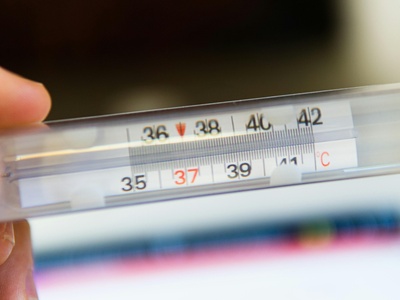
Temperature is a measure of the average kinetic energy of particles in a substance. It is a scalar quantity because it describes a state and has magnitude but no associated direction, unlike a temperature gradient.

Time
Time measures the duration between two events in a sequence. It’s a fundamental scalar quantity because it “flows” in one direction and is described completely by its magnitude. It doesn’t point anywhere in 3D space.
Distance
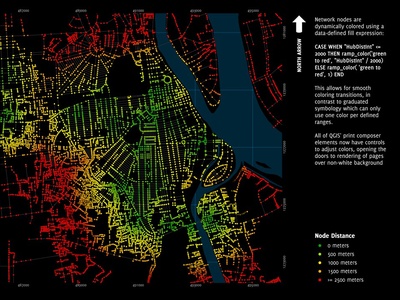
Distance is the total path length traveled by an object. Unlike displacement (a vector), it has no direction. If you walk 5 meters east and 5 meters west, your distance traveled is 10 meters.
Area
Area is the measure of a two-dimensional surface. While a surface can have an orientation (represented by a normal vector), its area is a scalar magnitude. It simply tells you the size of the surface, not its direction.
Volume
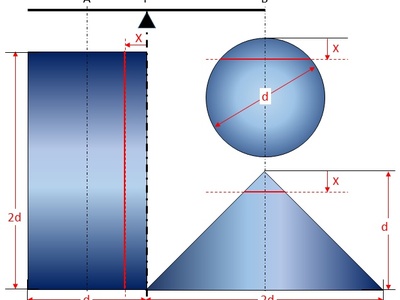
Volume is the amount of three-dimensional space an object occupies. It is a scalar quantity because it only describes the magnitude of the space, with no directional component. It tells you the size of the space it occupies.

Speed
Speed is the rate at which an object covers distance. It is the scalar magnitude of the velocity vector. It tells you “how fast” you are going, but not “in which direction.” A car’s speedometer measures speed, not velocity.
Energy
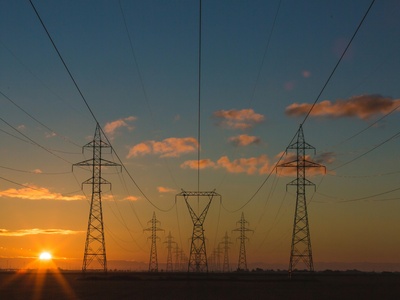
Energy is the capacity to do work. It comes in many forms (kinetic, potential, thermal) but is always a scalar. It represents a quantity of potential for change, which has no direction, making it fundamentally a scalar property.

Work
In physics, work is the energy transferred to or from an object via a force along a displacement. Although calculated from vectors (force and displacement), the result is a scalar quantity representing the amount of energy transferred.
Power
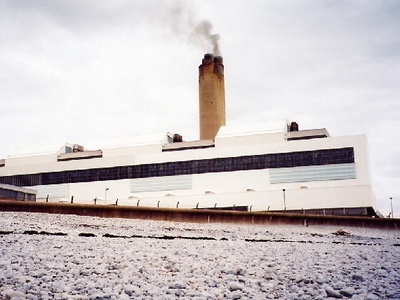
Power is the rate at which work is done or energy is transferred. Since both energy and time are scalars, power is also a scalar. It tells you how quickly energy is used or transferred, regardless of direction.

Density
Density is the mass of a substance per unit volume. Since mass and volume are both scalars, density is also a scalar. It’s an intrinsic property of a material that describes its “compactness” without any sense of direction.

Pressure
Pressure is the force applied perpendicular to a surface, divided by the area over which it is distributed. While force is a vector, pressure at a point in a fluid is a scalar, acting equally in all directions.
Frequency
Frequency is the number of occurrences of a repeating event per unit of time. It’s a scalar quantity because it’s a count over a time interval. It describes “how often” something happens, not in which direction.

Electric Charge
Electric charge is the physical property of matter that causes it to experience a force in an electromagnetic field. This positive or negative sign doesn’t represent a direction in space, making charge a scalar.
Electric Current
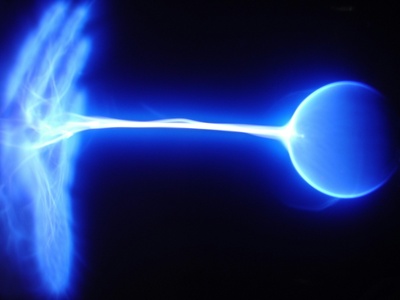
Electric current is the rate of flow of electric charge. Although we talk about current flowing in a direction through a wire, it is formally treated as a scalar in circuit analysis. It’s the magnitude of charge flow per second.
Electric Potential
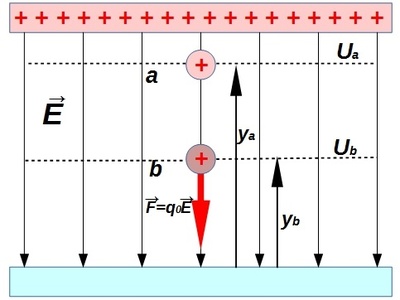
Electric potential, or voltage, is the work needed per unit of charge to move a test charge between two points in a field. It’s a scalar field; each point in space has a potential value, but that value itself has no direction.
Resistance
Electrical resistance is a measure of the opposition to current flow in an electrical circuit. It’s a property of a material or component. Since it describes a general opposition and not one in a specific direction, it is a scalar.
Capacitance
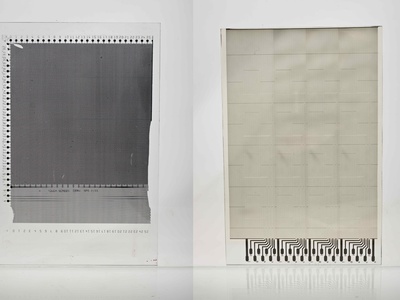
Capacitance is the ability of a system to store an electric charge. It is the ratio of the change in electric charge to the corresponding change in its electric potential. As a ratio of two scalars, it is also a scalar.
Inductance
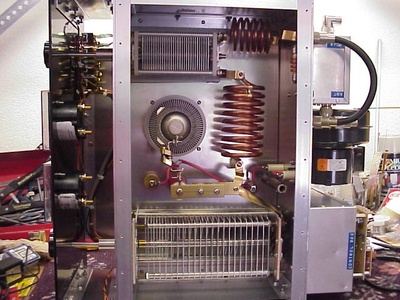
Inductance is the tendency of an electrical conductor to oppose a change in the electric current flowing through it. It’s a property of the conductor’s geometry and material, represented by a single value (magnitude), making it a scalar.
Heat
Heat is energy transferred from one system to another due to a temperature difference. Like other forms of energy, it is a scalar quantity. It describes the amount of energy transferred, not the direction of the transfer itself.
Specific Heat Capacity
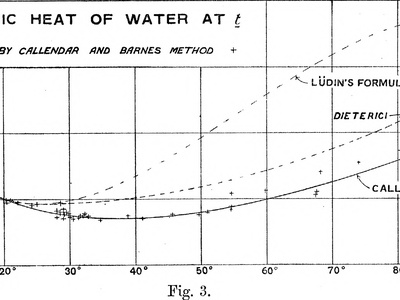
Specific heat capacity is the amount of heat energy required to raise the temperature of one kilogram of a substance by one kelvin. It’s an intrinsic material property and a scalar, describing a capacity rather than a directed quantity.
Entropy
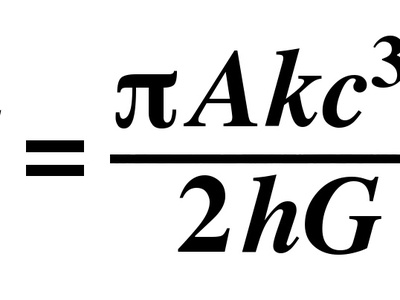
Entropy is a measure of the disorder or randomness in a system. In thermodynamics, it quantifies the thermal energy in a system that is unavailable to do useful work. It’s a state property described by a single number, a scalar.
Luminous Flux
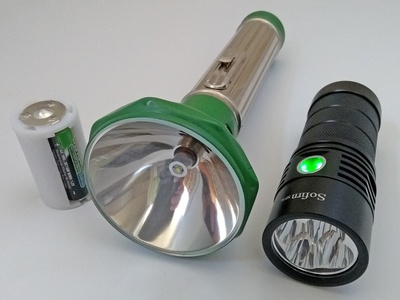
Luminous flux is the perceived power of light, adjusted for the human eye’s sensitivity. It measures the total amount of visible light emitted by a source in all directions, making it a scalar describing the total light output.

Illuminance
Illuminance is the total luminous flux incident on a surface, per unit area. It measures how much light illuminates the surface. As a measure of how much light hits a surface from all directions, it is a scalar quantity.
Magnetic Flux
Magnetic flux measures the total magnetic field passing through a given area. Although the magnetic field is a vector, the flux through a surface is a scalar product, resulting in a scalar quantity representing the “amount” of field lines.
Wavelength
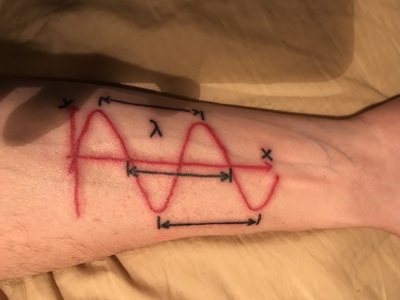
Wavelength is the spatial period of a periodic wave – the distance over which the wave’s shape repeats. It’s a measure of length, a fundamental scalar quantity, describing a characteristic size of the wave, not its direction of travel.
Period
Period is the time taken for one full cycle of a repeating event. As a measure of time duration, it is a scalar quantity. It’s the reciprocal of frequency and simply describes “how long” a cycle takes, not in any direction.
Amount of Substance
The amount of substance is a measure of the number of specified elementary entities (like atoms or molecules). It’s a scalar because it’s essentially a scaled count and has no direction.
Activity
The activity of a radioactive sample is the rate at which its nuclei undergo decay, measured in decays per second. Since it is a rate of events over time, it is a scalar quantity, specifying ‘how many’ decays occur per second.

Plane Angle
A plane angle is the figure formed by two rays sharing a common endpoint. While it describes an orientation between lines, the angle itself is a scalar measure of that separation, having only magnitude.
Solid Angle
A solid angle is the three-dimensional analogue of a plane angle. It measures how large an object appears to an observer looking from a point. As a measure of a portion of an observer’s field of view, it is a scalar.
Molar Mass
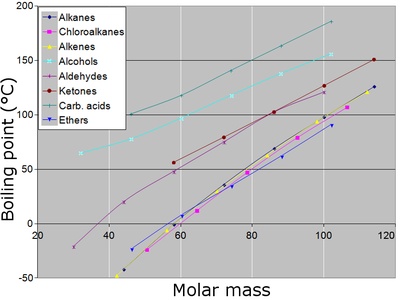
Molar mass is the mass of one mole of a substance. It’s a ratio of two scalars (mass and amount of substance), making it a scalar itself. It’s an intrinsic property of a chemical substance with no directional component.
Molar Concentration
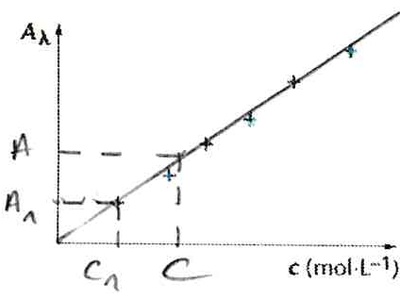
Molar concentration is the amount of a substance (in moles) per unit volume of solution. As a ratio of amount of substance to volume, both scalars, concentration is also a scalar. It describes “how much” stuff is in a space.
Luminous Efficacy
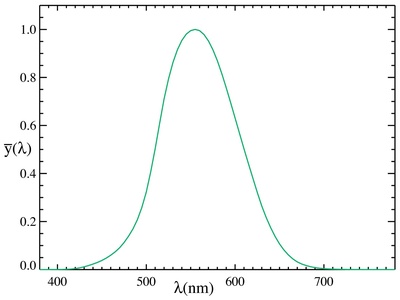
Luminous efficacy measures how well a light source produces visible light, as the ratio of luminous flux to power. Since both luminous flux and power are scalars, their ratio is also a scalar, describing a source’s light-producing efficiency.

Conductance
Conductance is the reciprocal of electrical resistance, measuring how easily electricity flows through a component. As the inverse of a scalar quantity (resistance), it is also a scalar. It describes an intrinsic property of a material.
Thermal Conductivity
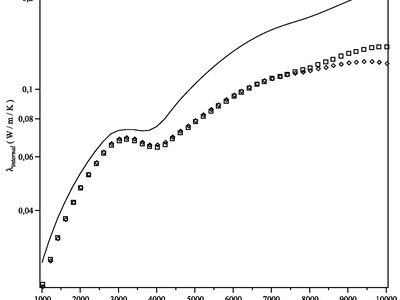
Thermal conductivity is a material’s intrinsic ability to conduct heat. It is a scalar property that describes how rapidly heat is transferred through a material, independent of the direction of the heat flow itself.
Dynamic Viscosity
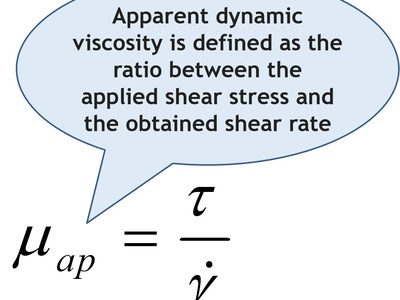
Dynamic viscosity measures a fluid’s resistance to shear flow. It is a scalar property of the fluid that relates the shear stress (force per area) to the rate of shear strain. It describes the fluid’s “thickness” or internal friction.
Action
In physics, action is an attribute of the dynamics of a physical system, calculated as an integral over time of the Lagrangian. The result is a scalar quantity with units of energy multiplied by time, central to the principle of least action.
Moment of Inertia
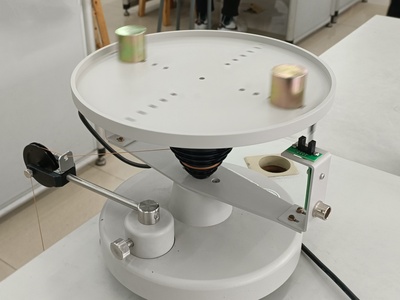
The moment of inertia is the rotational analog of mass. It quantifies the resistance of an object to angular acceleration about a specific axis. For a given axis, it is a scalar property determined by the distribution of mass.