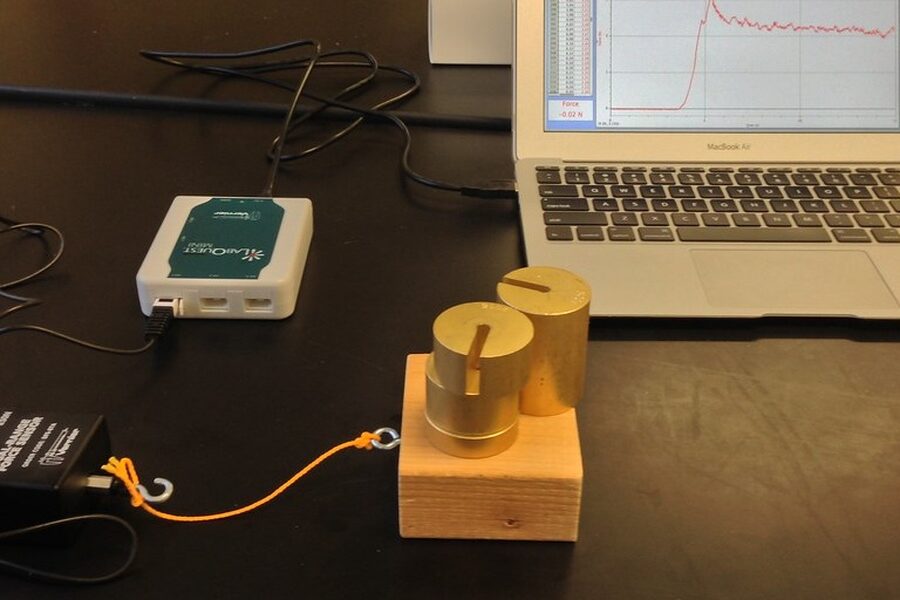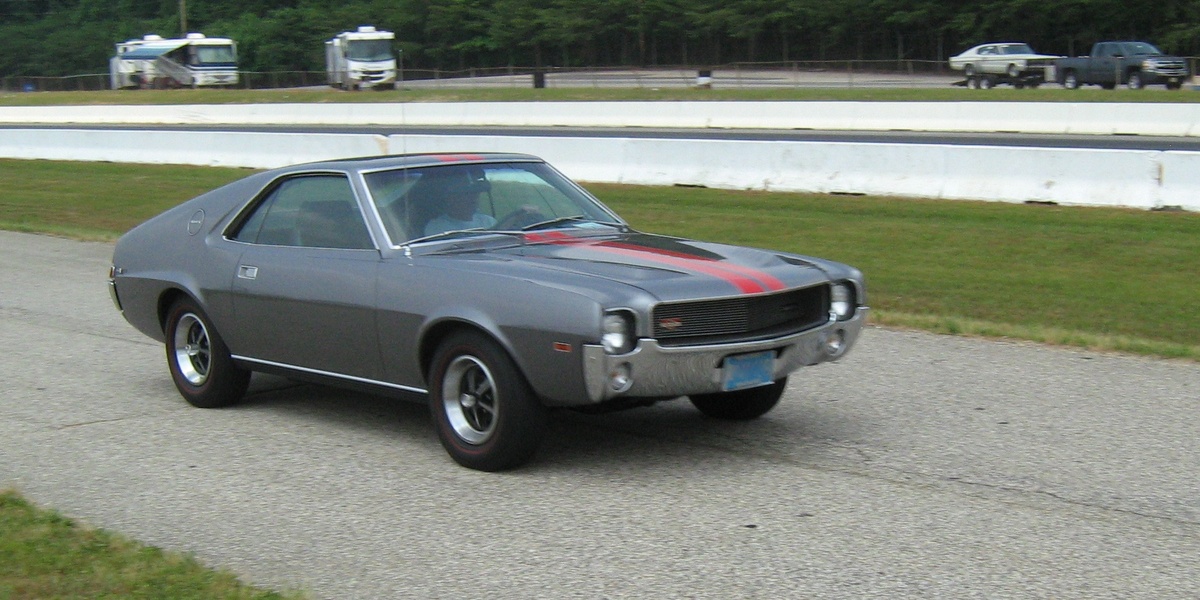
From kitchen counters to airplane skins, friction governs whether surfaces grip, slide, wear or resist motion. Noticing how shoes catch on pavement, how ball bearings move, or how water drags a hull helps make sense of everyday performance and engineering tradeoffs.
There are 20 Types of Friction, ranging from Adhesive friction to Wave drag. For each entry I show Category,Typical coefficient (µ),Typical examples / where found so you can quickly see where each type matters and how strong it typically is — you’ll find below.
Which types of friction matter most for designing machines or structures?
That depends on the application: sliding and rolling friction dominate machinery and transport, adhesive and boundary friction matter for seals and coatings, while fluid friction (including wave drag) is critical for ships and aircraft; use the listed category and typical coefficient to compare likely effects during design.
How can engineers control friction for better performance?
Engineers reduce or increase friction through materials, surface finish, lubrication, textures, and geometry changes; the table below links each type to common control methods and typical coefficient ranges so you can match mitigation techniques to the specific friction type you’ll find below.
Types of Friction
| Name | Category | Typical coefficient (µ) | Typical examples / where found |
|---|---|---|---|
| Static friction | contact | 0.20–1.00 | parked cars, stacked boxes, furniture at rest |
| Kinetic (sliding) friction | contact | 0.05–0.80 | sliding sleds, rubbing blocks, conveyor belts |
| Coulomb / Amontons friction | contact/model | Model: F=µN; µ ~0.01–1.20 | engineering approximations, textbooks, basic physics |
| Rolling resistance | rolling | 0.00–0.05 | car tires, bicycles, ball bearings, train wheels |
| Stokes (viscous) drag | fluid | N/A (linear) | small particles in liquids, sedimentation, microfluidics |
| Quadratic (inertial) drag | fluid | 0.10–2.00 | cars, cyclists, falling skydivers, sports balls |
| Skin friction (viscous shear) | fluid | 0.00–0.02 | aircraft wings, ship hulls, pipe flow |
| Form (pressure) drag | fluid | 0.10–1.50 | trucks, buildings, bluff bodies, parachutes |
| Wave drag | fluid | 0.10–2.00 | ships at hull speed, transonic aircraft, watercraft |
| Boundary lubrication | lubrication regime | 0.01–0.30 | engine start-up, heavily loaded machine contacts |
| Mixed lubrication | lubrication regime | 0.00–0.10 | bearings during speed/load changes, many machine contacts |
| Hydrodynamic lubrication | lubrication regime | 0.00–0.01 | journal bearings, fluid-film bearings, seals |
| Elastohydrodynamic lubrication (EHL) | lubrication regime | 0.00–0.02 | gears, rolling-element bearings under high load |
| Stick‑slip | contact/dynamic | Occurs when µstatic>µkinetic | violin bowing, brake squeal, seismic fault motion |
| Adhesive friction | contact/mechanism | 0.10–1.00 | microcontacts, gecko-inspired pads, cold welding |
| Plowing (ploughing) friction | contact/mechanism | 0.30–1.00 | metal cutting, tires on soft ground, scratches |
| Hysteresis (internal) friction | internal/viscoelastic | 0.01–0.50 | rubber tires, vibration damping materials |
| Fretting | contact/wear | 0.30–1.00 | bolted joints, blade roots, small oscillatory interfaces |
| Squeeze‑film damping | fluid/tribology | N/A (geometry-dependent) | MEMS devices, seals, dampers between closely spaced surfaces |
| Atomic / nanoscale friction | nanoscale | 0.01–1.00 | AFM tips, nanomachines, microcontacts |
Images and Descriptions
Static friction
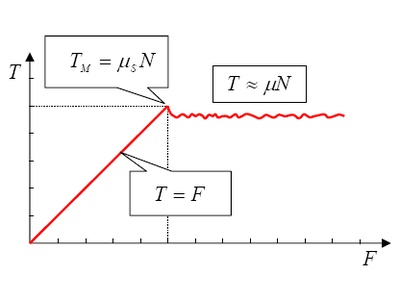
Resistance to the start of sliding between dry surfaces. Usually larger than kinetic friction; follows Amontons’ law approximately. Controls when objects begin to move and is critical for traction, brakes, and grip design.
Kinetic (sliding) friction
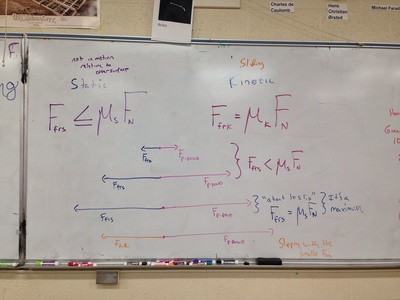
Friction acting during steady sliding contact. Often slightly lower than static friction and approximated as F=µkN for many engineering problems. Important for wear, energy loss, and braking performance.

Coulomb / Amontons friction
Empirical dry-friction model stating friction is proportional to normal force and (approximately) independent of contact area and speed. Useful simple law for many macroscopic problems; breaks down with lubrication, adhesion, or high speeds.

Rolling resistance
Resistance to rolling motion, mainly from deformation (hysteresis) and micro-slip at the contact. Much smaller than sliding friction; expressed as coefficient of rolling resistance. Key for vehicle fuel economy and tire design.
Stokes (viscous) drag
Low-Reynolds-number fluid resistance where force is proportional to velocity: F=6πμfluid r v (sphere). Dominates for tiny particles, slow viscous flows, and many biological micro-scale processes.
Quadratic (inertial) drag
High-Reynolds-number drag where force scales with velocity squared: F=½ρCdA v^2. Cd varies with shape and flow. Dominant in everyday macroscopic motion through air or water.
Skin friction (viscous shear)
Friction from viscous shear in the boundary layer along a surface. For streamlined bodies it’s often the main drag source at low-to-moderate speeds; reduced by smooth surfaces and laminar flow.
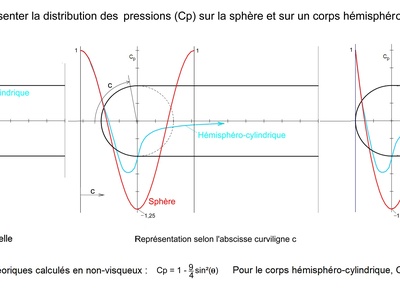
Form (pressure) drag
Drag arising from pressure differences and flow separation around a body. Highly shape-dependent and usually larger for bluff shapes; major design driver for cars, buildings, and bridges.

Wave drag
Drag associated with generation of waves or compressibility effects (air/water). Important for ships near hull speed and aircraft approaching the speed of sound; depends strongly on speed and medium.
Boundary lubrication
Regime where surfaces are separated by a molecularly thin lubricant layer and asperities still contact. Friction depends on surface chemistry and additives; critical during start/stop and heavy loads.
Mixed lubrication
Intermediate regime with both asperity contact and fluid film support. Friction and wear are reduced compared to dry contact but still influenced by surface roughness and lubricant properties.
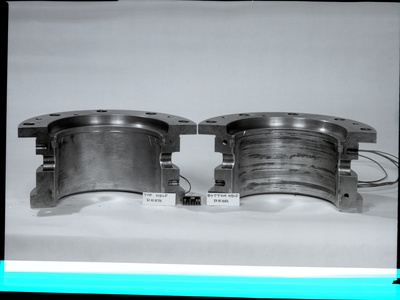
Hydrodynamic lubrication
Full fluid film separates surfaces due to relative motion, carrying load hydrodynamically. Friction is low and viscous; design of bearings exploits this for long life and low loss.
Elastohydrodynamic lubrication (EHL)
High-pressure fluid film in rolling contacts where elastic deformation of surfaces is significant. EHL films are thin but prevent metal contact, controlling friction and wear in gears and bearings.

Stick‑slip
Intermittent motion where periods of sticking alternate with sudden slipping. Produces noise and vibration; arises when static friction exceeds kinetic friction and system stiffness/damping allow oscillation.
Adhesive friction
Friction dominated by actual adhesion between contacting asperities or molecular bonds. Important at small scales and for soft materials; exploited in bio-inspired adhesives and a concern in microdevices.
Plowing (ploughing) friction
Friction component when hard asperities plow into a softer surface, displacing material. Causes higher forces and wear than pure shear; relevant in machining and soft-surface traction.
Hysteresis (internal) friction
Internal energy loss in materials that deform cyclically (viscoelastic damping). Not surface contact friction but converts mechanical energy to heat; major source of tire rolling resistance and damping.

Fretting
Wear and high local friction caused by small-amplitude oscillatory motion between contacts. Leads to surface damage, increased friction, and potential crack initiation in structures.
Squeeze‑film damping
Viscous damping that occurs when a thin fluid film is squeezed between approaching surfaces. Force depends on viscosity, gap geometry, and velocity; used intentionally for vibration control in small devices.
Atomic / nanoscale friction
Friction at atomic scales shows stick‑slip, quantization, and strong surface chemistry dependence. Models like the Tomlinson model explain atomic-scale stick‑slip; critical for nanotechnology and surface science.