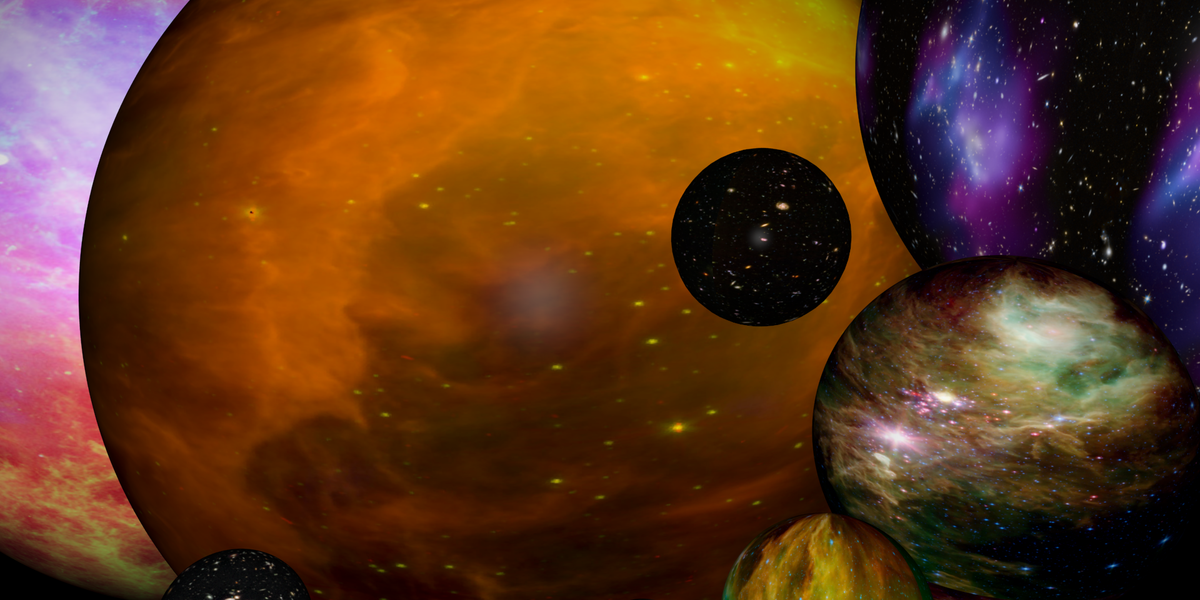
In 1957 physicist Hugh Everett proposed the many-worlds interpretation, a short paper that quietly seeded decades of public fascination with alternate universes.
The idea matters beyond curiosity: debates over alternate-universe ideas influence research funding, cosmology priorities, and even how non-experts interpret ethics and risk. Conversations often invoke big numbers (the oft-cited estimate of ~10^500 vacua in some string-theory discussions) and real missions (Planck, WMAP), but mixing popular storytelling with technical claims has produced a long list of myths about multiverse thinking that deserve correction.
I’ll separate eight common misunderstandings into three groups — origins, scientific misconceptions, and philosophical/pop-culture confusions — and show what mainstream physics actually means in each case.
Origins & early ideas behind multiverse myths

1. Myth: The multiverse is a single, agreed scientific theory
The myth says there’s one clear “multiverse” theory that explains everything. That’s not accurate.
Physicists use the same shorthand — “multiverse” — for several very different proposals. Hugh Everett’s 1957 many-worlds interpretation describes quantum branching and decoherence. Inflationary cosmology, popularized by Alan Guth around ~1981, suggests our observable patch could be one bubble among many formed during eternal inflation. And discussions of a string-theory landscape (Susskind and others in the early 2000s) point to a huge set of mathematically possible vacuum solutions.
Those three frameworks rely on distinct math and assumptions and answer different questions about initial conditions, quantum measurement, and high-energy theory. Collapsing them into a single “theory of everything” leads to sloppy reporting and muddled policy arguments over where to invest limited research funds.
2. Myth: The multiverse is just speculative philosophy, not part of mainstream physics
Some people treat all multiverse talk as metaphysics divorced from experiment. That dismisses a lot of active science.
Versions of the multiverse grew out of concrete puzzles: why the universe had particular initial conditions, how inflation ended locally, and how to interpret quantum outcomes. Satellite missions like WMAP and Planck produced data (notably Planck data releases in 2013 and 2018) that constrain inflationary models and motivate refined theoretical work.
Researchers propose observational signatures tied to these frameworks, and null results from real data are used to rule out parameter ranges. That’s textbook science, not mere armchair speculation.
3. Myth: Many-worlds means every imaginable outcome happens somewhere
A frequent exaggeration says many-worlds spawns literal universes where any fantasy occurs — that somewhere you’re a rock star, somewhere you’re a unicorn.
Many-worlds rests on unitary quantum evolution and decoherence, which produce branches with amplitudes determined by the wave function. Only outcomes with non-negligible quantum amplitude create branches that matter for observers; physical law constrains those amplitudes. So improbable does not mean unconstrained or arbitrary.
Physicists such as Sean Carroll emphasize that branching follows precise equations, not wishful thinking. Popular images of “infinite yous” obscure that structure and lead to misunderstanding, especially in discussions about quantum computing and measurement.
Scientific misconceptions and what the data actually say
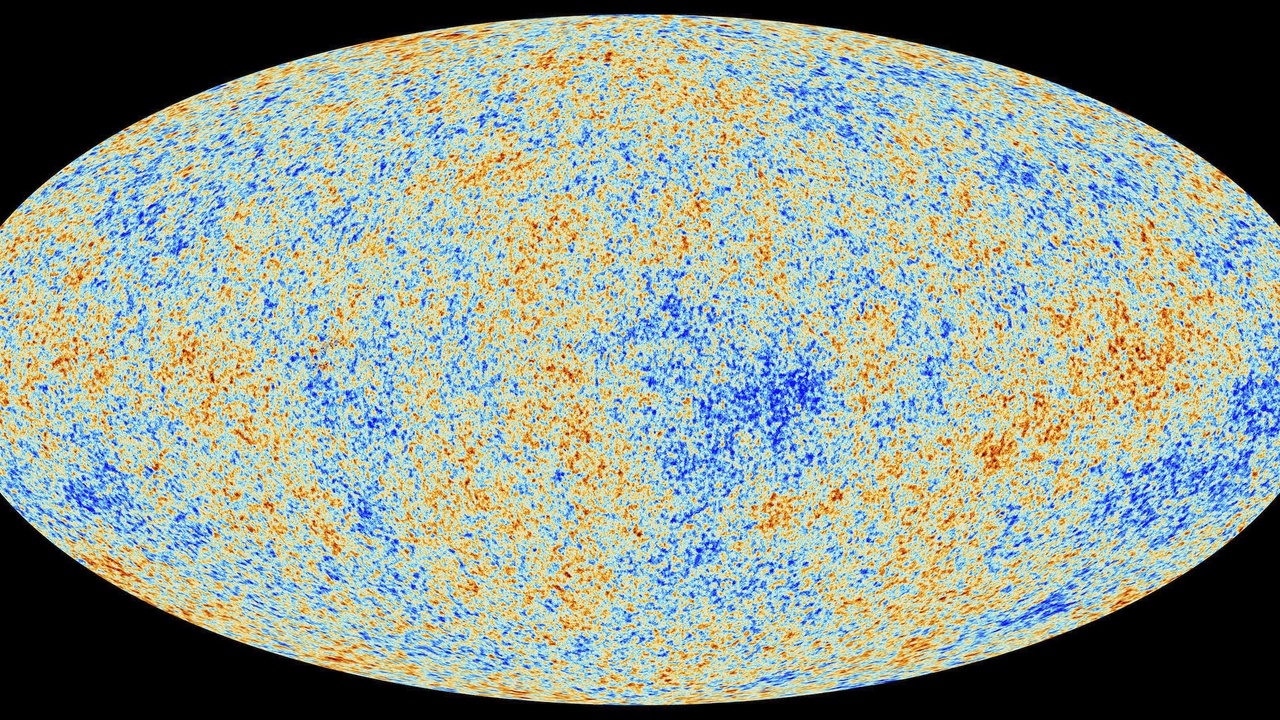
4. Myth: We already see evidence of other universes in the cosmic microwave background
Some headlines claim bubble collisions or messages from other universes are visible in the CMB. That overstates what analyses show.
Teams analyzing WMAP and Planck maps searched for circular temperature discontinuities and other statistical anomalies that bubble collisions would produce. Those searches produced no convincing detections, and Planck’s 2018 results tightened limits on plausible signals.
Null results aren’t useless. They narrow the parameter space for inflationary and bubble models and motivate better data and methods for future surveys.
5. Myth: String theory proves a multiverse exists
It’s common to read that string theory “proves” a multiverse because of its landscape of solutions. That’s an overreach.
String landscape discussions (Susskind and others in the early 2000s) show that many compactifications lead to different low-energy physics; estimates like ~10^500 possible vacua are rough, illustrative counts rather than empirical measurements. Mathematical possibility does not equal observational proof.
Anthropic reasoning — selecting regions compatible with observers — is invoked by some to explain parameters. Many physicists accept the landscape as an interesting theoretical framework, but others view anthropic arguments as philosophically unsatisfying and scientifically incomplete.
6. Myth: The multiverse solves fine-tuning without cost
Invoking a multiverse to explain fine-tuning sounds tidy: if many universes exist, we find ourselves in one compatible with life. That move has costs.
Take the cosmological constant problem: the observed vacuum energy is extremely small compared with naive theoretical expectations — roughly 10^-122 in Planck units in many discussions. A multiverse plus anthropic selection can account for an observed small value, but it shifts explanatory weight to the distribution of parameters across the ensemble and to selection effects.
Critics argue that this approach reduces predictive power and raises new questions about measure, probability, and testability. Proponents reply that it offers a plausible framework pending better data. Either way, the multiverse is not a free lunch.
Philosophical, cultural and pop-culture confusions

7. Myth: Movie and comic multiverses reflect scientific consensus
Films and comics use multiverse ideas for drama, character choice, and spectacle. That doesn’t make them scientific summaries.
Marvel’s cinematic multiverse, TV dramas such as Dark, and pulp staples like Sliders compress timelines, invent causal links, and grant narrative permissions that real physics does not provide. Storytelling often imports the language of quantum branching or parallel worlds but remixes it for plot.
Journalists and educators can correct misunderstandings with short analogies: explain that fiction trades accuracy for cohesion, and point readers to accessible books like Sean Carroll’s Something Deeply Hidden or Max Tegmark’s Our Mathematical Universe for clearer takes on the science.
8. Myth: The multiverse excuses moral or legal responsibility
People sometimes argue, jokingly or not, that “somewhere another you” makes your actions here unimportant. That confuses physical interpretation with ethics.
Whether many-worlds or other multiverse ideas are true, our legal systems and moral practices operate within this universe and depend on causation, agency, and social consequences here and now. Branching interpretations do not erase responsibility for choices or the harms those choices cause.
Teachers and communicators should flag casual uses of alternate-self rhetoric when it appears in social media debates, and steer conversations back to accountability and empirical facts.
Summary
Here are a few takeaways from the eight myths above: different multiverse proposals come from distinct corners of physics; observational data constrain models even when they don’t provide definitive proof; and pop culture often reshapes scientific terms for dramatic effect.
If you want to read more, look for readable treatments by Sean Carroll and Max Tegmark, and consult accessible summaries of Planck 2018 results or NASA/ESA outreach pages for the observational context behind many of these debates.
- Different multiverse proposals come from distinct parts of physics and shouldn’t be conflated.
- Observations (WMAP, Planck) place real constraints even when they don’t offer proof.
- Popular portrayals often oversimplify; consult reputable sources to separate myths about multiverse claims from scientific nuance.