In 1905 Albert Einstein’s paper on special relativity reframed time as something that depends on motion, and a decade later general relativity tied time to gravity. That shift moved time from an absolute backdrop to a flexible dimension you can measure. Modern systems — notably GPS — must correct satellite clocks by about 38 microseconds per day to work accurately.
Time travel isn’t just sci‑fi fantasy: relativity gives us real, measurable effects; theory offers speculative pathways; and the topic raises technological, cultural, and philosophical questions. Here are seven interesting facts that cut across physics, engineering and culture. I’ll span established measurements, theoretical models, and the ethical and cultural questions that follow. Expect names, dates, and concrete numbers as we move from Einstein’s equations to clocks in labs and paradoxes in fiction.
Physics and Theory of Time Travel
This section separates experimental, mathematical, and speculative facts about time. Traveling to the future is well supported by relativity; traveling to the past emerges only in special solutions to Einstein’s equations and remains controversial. Key milestones include Einstein (1905, 1915), Einstein & Rosen (1935), Gödel (1949) and Morris & Thorne (1988).
1. Time dilation is real and measurable
Moving clocks run slow and clocks deeper in gravity run slow — and experiments have confirmed both effects. In 1971 the Hafele–Keating flights compared cesium-beam atomic clocks flown around the world to ground clocks and found the relativistic shifts predicted by theory.
Particle experiments provide another clear demonstration: muons produced in the upper atmosphere and in accelerators live longer by the Lorentz gamma factor, matching relativistic predictions. The second itself is defined by the cesium-133 hyperfine transition at 9,192,631,770 Hz, so the accuracy of clocks makes relativistic corrections unavoidable.
One striking real-world consequence: GPS satellite clocks experience both gravitational and velocity time shifts that net about +38 microseconds per day; without that correction navigation would drift by kilometers each day. CERN timing systems and modern atomic-clock networks continue to verify and use these effects for precision science and engineering.
2. Wormholes are mathematically possible but require exotic conditions
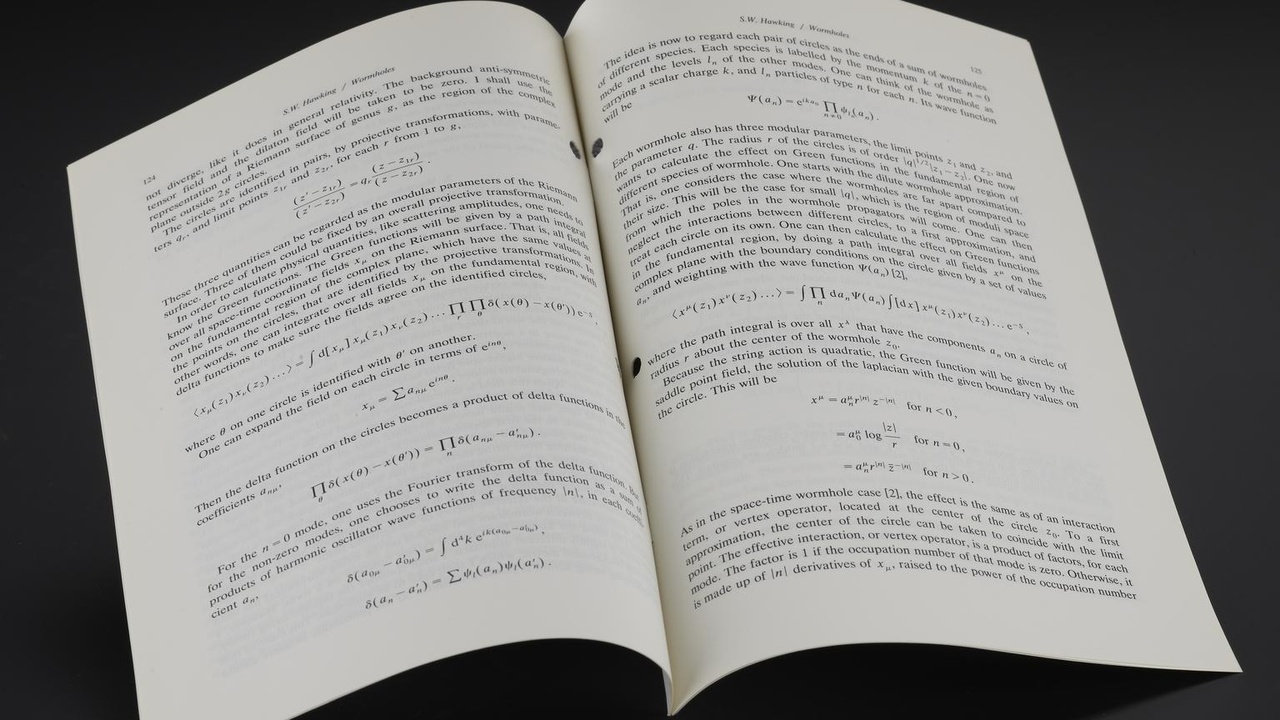
Certain exact solutions to general relativity permit bridges or tunnels connecting distant spacetime points. Einstein and Rosen described non-traversable “bridges” in 1935; the idea of traversable wormholes was laid out much later by Morris and Thorne (and Yurtsever) in 1988, who mapped the conditions needed for safe passage.
Morris and Thorne showed that holding a traversable throat open requires negative energy density — so-called exotic matter — which violates energy conditions used in classical GR. Quantum phenomena like the Casimir effect produce small negative energy densities in laboratories, but scaling that to a macroscopic wormhole faces severe stability and energy hurdles.
In short, wormholes are a useful theoretical tool in quantum gravity and relativity research, but they are not a near-term engineering project: the energy and control requirements remain speculative and daunting.
3. Solutions with closed timelike curves produce paradoxes physicists still debate
Some GR solutions admit closed timelike curves (CTCs), worldlines that return to their own past. Kurt Gödel’s rotating-universe solution (1949) and Frank Tipler’s infinitely long rotating cylinder (1974) are classic examples that allow such loops in principle.
CTCs generate familiar paradoxes: the grandfather paradox (preventing your own existence) and bootstrap paradoxes (objects or information with no clear origin). The Novikov self-consistency principle, proposed in the 1980s, argues only self-consistent histories occur. In quantum theory, David Deutsch (1991) formulated a model where quantum probabilities can enforce consistency, but debates about causality and physical plausibility continue.
These scenarios are mainly theoretical devices that probe the interplay of quantum mechanics and gravity and even suggest speculative computational implications (CTCs could, in theory, change complexity classes), but they remain far from experimental realization.
Practical and Technological Implications
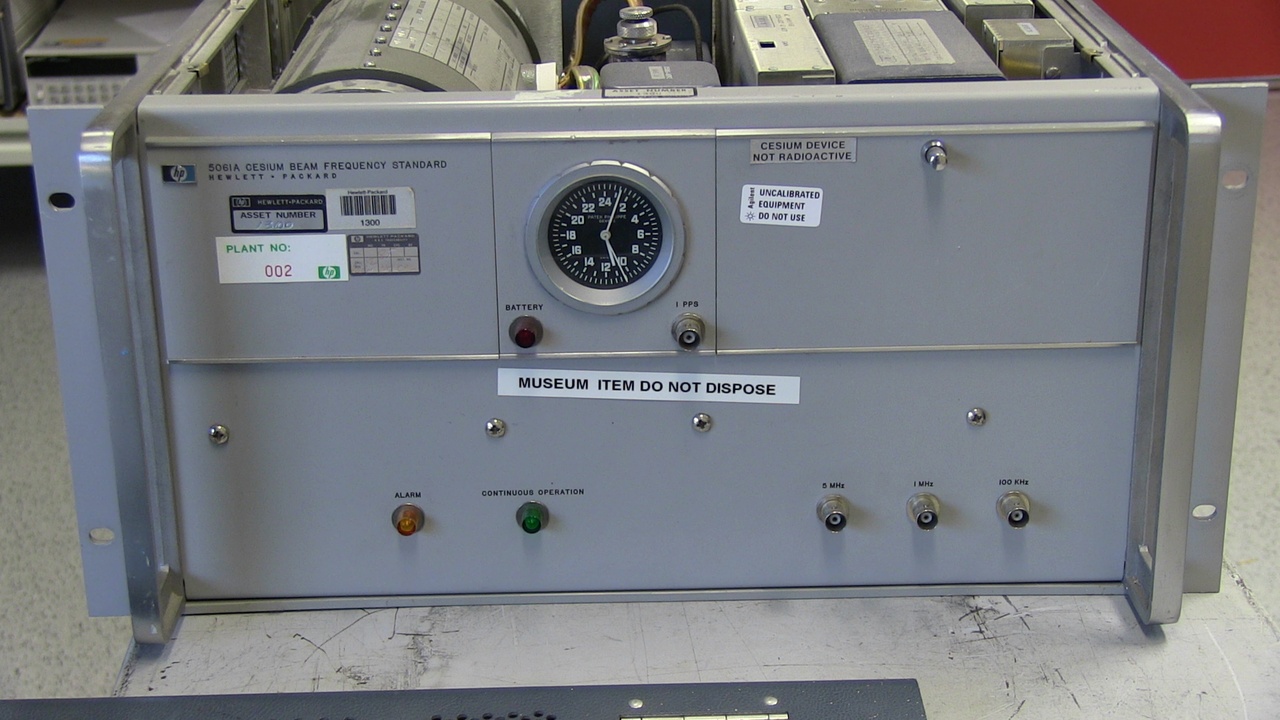
Backward time machines are speculative, yet relativity already shapes critical technologies. Precision timekeeping, navigation, telecommunications and computing must handle relativistic effects. Improvements in clocks both enable applications and open new experimental tests of gravity.
4. Traveling to the future already happens — at different rates
“Traveling to the future” in relativity simply means aging less than someone else because you moved faster or sat in weaker gravity. The effect can be tiny — astronauts aboard the International Space Station age microseconds to milliseconds less than people on Earth over months in orbit — but it is real and measurable.
Particle accelerators give dramatic laboratory examples: relativistic muons and high-speed beams show time dilation that matches theory precisely. GPS satellites, subject to both weaker gravity and orbital speed, require that net correction of roughly +38 microseconds per day to keep positioning accurate. These are practical forward shifts, not science-fiction leaps, but they demonstrate that relativity already changes how different observers experience time.
5. Advances in timekeeping enable new technologies and experiments
Some of the most compelling facts about time travel are simply improvements in how we measure time. The SI second is tied to the cesium-133 transition at 9,192,631,770 Hz, but optical lattice clocks developed in the 2010s and onward reach fractional uncertainties near 10−18, a leap that opens new capabilities.
Clocks with ~10−18 accuracy (NIST and other national labs have reported milestones in the mid‑2010s through 2020s) can detect gravitational redshifts from height changes of centimeters, letting metrology double as high-resolution geodesy. That precision powers telecommunications synchronization, financial trading time-stamping, and tests of fundamental physics. For technical background, see NIST’s time and frequency work.
Cultural, Philosophical, and Ethical Dimensions
Time travel is a powerful storytelling device that shapes how people imagine science and history. Fiction, thought experiments, and ethical scenarios influence public expectations, research priorities, and even funding for related fields. The cultural side matters alongside equations and clocks.
6. Time travel is a storytelling engine that shaped scientific curiosity
Modern time-travel fiction stretches back to H. G. Wells’s The Time Machine (1895), which popularized the idea of moving through time. Films like Back to the Future (1985) and long-running series such as Doctor Who (1963–present) turned paradoxes, personal stakes, and mechanics into shared cultural reference points.
Those narratives do more than entertain. They frame the questions scientists and the public ask about causality, responsibility, and feasibility. Many researchers and engineers cite early exposure to science fiction as part of what motivated them to study physics, astronomy, or computer science, and cultural interest can affect which research directions gain attention.
7. Paradoxes raise real philosophical and ethical questions — and even computational ideas
Paradoxes like the grandfather and bootstrap puzzles force careful thinking about causality and responsibility. The Novikov self-consistency principle (proposed in the 1980s) suggests only histories consistent with past events can occur; David Deutsch’s 1991 quantum model of CTCs showed how quantum probabilities might enforce consistency without outright contradictions.
Ethically, hypothetical time alteration prompts questions: would changing a past atrocity be justified if it erases many lives? Who bears responsibility for ripple effects? On the computational side, theoretical work suggests access to CTC-like resources could alter computational complexity, giving machines power beyond conventional models — another reason philosophers and computer scientists take these thought experiments seriously even if practical CTCs remain hypothetical.
Summary
- Relativity produces measurable differences in experienced time: experiments (Hafele–Keating, muon lifetimes) and GPS corrections (~38 microseconds/day) show future-directed time shifts are real.
- Certain solutions to Einstein’s equations (Einstein–Rosen bridges, Gödel universe, Tipler cylinder) permit exotic structures like wormholes or closed timelike curves, but they require negative energy or other extreme conditions (Morris & Thorne, 1988).
- Paradoxes from backward time travel (grandfather, bootstrap) generate serious philosophical and computational discussions; responses include the Novikov self-consistency principle and Deutsch’s quantum CTC model (1991).
- Precision clocks and timekeeping advances (cesium definition: 9,192,631,770 Hz; optical clocks ≈10−18 accuracy since the 2010s) enable navigation, geodesy, and new tests of fundamental physics.
- Cultural narratives (Wells 1895, Back to the Future 1985, Doctor Who 1963–present) shape public understanding and motivate scientists, so the ethics and stories matter alongside equations.
Curiosity about time pushes both precise laboratory work and imaginative thought. Keep asking for sources, check numbers, and treat bold claims about “time machines” with healthy skepticism — but don’t underestimate the real, measurable ways relativity already changes how we live.