Across the brain and spinal cord, different cell types work together to process sensation, drive movement and support thought. A compact view of those cells helps make patterns — which types live where, how they signal, and why that matters for health and behavior.
There are 48 Neurons, ranging from Alpha motor neuron to Von Economo neuron (spindle neuron). For each entry you’ll find below the concise columns Type (function/morphology),Location,Main neurotransmitter so you can compare role, anatomy and chemistry at a glance — you’ll find below.
How do different neuron types influence behavior and disease?
Different types contribute in distinct ways: motor neurons execute movement, interneurons regulate local circuit timing, projection neurons connect regions, and specialized cells like spindle neurons are linked to social and emotional processing. Morphology, connectivity and main neurotransmitter shape how a cell integrates signals and how vulnerable it may be in conditions such as ALS, epilepsy or psychiatric disorders.
What’s the best way to use this list for studying or research?
Use the list to filter by function, location or neurotransmitter to identify candidates for experiments or revision (for example, cholinergic motor neurons vs. GABAergic interneurons), then follow up with primary literature for electrophysiology and molecular markers — the table below is a quick comparison tool to guide deeper reading.
Neurons
| Name | Type (function/morphology) | Location | Main neurotransmitter |
|---|---|---|---|
| Pyramidal cell | Excitatory principal neuron,multipolar pyramidal | Cerebral cortex and hippocampus | Glutamate |
| Purkinje cell | Inhibitory principal neuron,large planar multipolar | Cerebellar cortex | GABA |
| Cerebellar granule cell | Excitatory interneuron,compact multipolar | Cerebellar granular layer | Glutamate |
| Cortical interneuron (GABAergic) | Inhibitory interneuron,diverse morphologies (basket,chandelier) | Cerebral cortex and hippocampus | GABA |
| Medium spiny neuron | GABAergic projection neuron,densely spiny medium-sized | Striatum (caudate,putamen) | GABA,modulated by dopamine |
| Dopaminergic neuron (SNc) | Modulatory projection neuron,multipolar | Substantia nigra pars compacta (midbrain) | Dopamine |
| Serotonergic neuron (raphe) | Modulatory projection neuron,multipolar | Raphe nuclei (brainstem) | Serotonin (5-HT) |
| Noradrenergic neuron (LC) | Modulatory projection neuron,multipolar | Locus coeruleus (brainstem) | Norepinephrine |
| Chandelier cell | GABAergic interneuron,targeting axon initial segment | Cerebral cortex and hippocampus | GABA |
| Basket cell | Fast-spiking inhibitory interneuron,perisomatic targeting | Cortex,hippocampus,cerebellum | GABA |
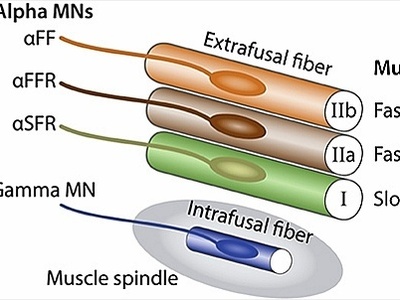
| Alpha motor neuron | Somatic efferent multipolar neuron,large | Spinal ventral horn,brainstem motor nuclei | Acetylcholine |
| Gamma motor neuron | Somatic efferent neuron,smaller multipolar | Spinal cord ventral horn | Acetylcholine |
| Dorsal root ganglion neuron | Primary sensory neuron,pseudounipolar | Dorsal root ganglia (spinal) | Glutamate,neuropeptides (substance P,CGRP) |
| Sympathetic postganglionic neuron | Autonomic efferent,multipolar | Sympathetic ganglia (paravertebral) | Norepinephrine (mostly) |
| Olfactory receptor neuron | Peripheral sensory bipolar neuron,bipolar | Olfactory epithelium (nasal cavity) | Glutamate |
| Retinal ganglion cell | Retinal output neuron,multipolar | Retina projecting to LGN and brainstem | Glutamate |
| Rod photoreceptor | Photoreceptor neuron,highly light-sensitive | Retina (outer nuclear layer) | Glutamate |
| Cone photoreceptor | Photoreceptor neuron,color and acuity tuned | Retina (fovea and outer nuclear layer) | Glutamate |
| Retinal bipolar cell | Interneuron relaying photoreceptor input,ON/OFF types | Retina (inner nuclear layer) | Glutamate (relay; ON/OFF via different receptors) |
| Amacrine cell | Retinal interneuron,diverse morphologies | Inner retina (inner nuclear layer) | GABA,glycine,dopamine (varies) |
| Horizontal cell | Retinal lateral inhibitory interneuron,lateral processes | Outer retina (inner nuclear layer) | GABA (and ephaptic interactions) |
| Renshaw cell | Spinal inhibitory interneuron,small multipolar | Ventral horn of spinal cord | Glycine,GABA |
| Spiny stellate cell | Excitatory cortical interneuron,radial symmetry | Primary sensory cortex layer IV | Glutamate |
| Cajal-Retzius cell | Developmental pioneer neuron,horizontal morphology | Marginal zone/layer I (developing cortex) | Glutamate (reelin release important) |
| Von Economo neuron (spindle neuron) | Large bipolar projection neuron,spindle-shaped | Anterior cingulate and frontoinsular cortex | Glutamate (putative) |
| Hippocampal granule cell | Excitatory principal neuron,small densely packed | Dentate gyrus of hippocampus | Glutamate |
| Hippocampal mossy cell | Excitatory hilar neuron,multipolar | Hilus of dentate gyrus | Glutamate |
| Cerebellar stellate cell | Inhibitory interneuron,molecular layer | Cerebellar molecular layer | GABA |
| Thalamic relay neuron | Excitatory projection neuron,multipolar | Thalamic nuclei | Glutamate |
| Thalamic reticular neuron | GABAergic inhibitory neuron,shell-forming | Thalamic reticular nucleus | GABA |
| Pedunculopontine cholinergic neuron | Modulatory cholinergic projection neuron,multipolar | Pedunculopontine/laterodorsal tegmental nuclei (brainstem) | Acetylcholine |
| Substantia nigra pars reticulata neuron | GABAergic projection neuron,tonic firing | Substantia nigra pars reticulata (basal ganglia) | GABA |
| Magnocellular neurosecretory neuron | Hypothalamic projection neuron,large somato-dendritic | Paraventricular and supraoptic nuclei (hypothalamus) | Vasopressin or oxytocin (peptides) |
| Martinotti cell | Somatostatin-expressing inhibitory interneuron,ascending axon to layer I | Cerebral cortex (layers II-VI) | GABA,somatostatin |
| VIP interneuron | Vasoactive intestinal peptide-expressing interneuron,disinhibitory | Cortex and hippocampus | GABA and VIP neuropeptide |
| Grid cell | Spatially tuned principal neuron,entorhinal stellate/pyramidal | Medial entorhinal cortex | Glutamate |
| Place cell | Spatially selective hippocampal pyramidal neuron,projection cell | Hippocampal CA1/CA3 regions | Glutamate |
| Betz cell | Giant pyramidal output neuron,large Layer V | Primary motor cortex (layer V) | Glutamate |
| Intrinsically photosensitive retinal ganglion cell (ipRGC) | Photosensitive ganglion neuron,melanopsin-expressing | Retina (ganglion cell layer) | Glutamate (melanopsin photopigment) |
| Spiral ganglion neuron | Primary auditory neuron,bipolar/pseudounipolar | Cochlea (spiral ganglion) | Glutamate |
| Vestibular primary afferent neuron | Primary vestibular neuron,pseudounipolar | Vestibular (Scarpa’s) ganglion | Glutamate |
| Striatal cholinergic interneuron | Tonically active modulatory interneuron,large somata | Striatum | Acetylcholine |
| Globus pallidus internal neuron (GPi) | GABAergic projection neuron,tonic firing | Globus pallidus internal segment | GABA |
| Subplate neuron | Developmental cortical neuron,transient projection/interneuron | Developing cortex subplate zone | Glutamate,GABA (varies) |
| Olfactory bulb granule cell | Axonless inhibitory interneuron,dendrodendritic | Olfactory bulb (granule layer) | GABA |
| Mitral cell | Principal excitatory output neuron,multipolar | Olfactory bulb (mitral cell layer) | Glutamate |
| Spinal projection neuron (nociceptive) | Projection neuron,lamina I/II projection | Dorsal horn of spinal cord projecting to thalamus and brainstem | Glutamate,neuropeptides (substance P) |
| Hypothalamic orexin/hypocretin neuron | Modulatory projection neuron,peptidergic | Lateral hypothalamus | Orexin (hypocretin) peptides,co-release glutamate |
Images and Descriptions

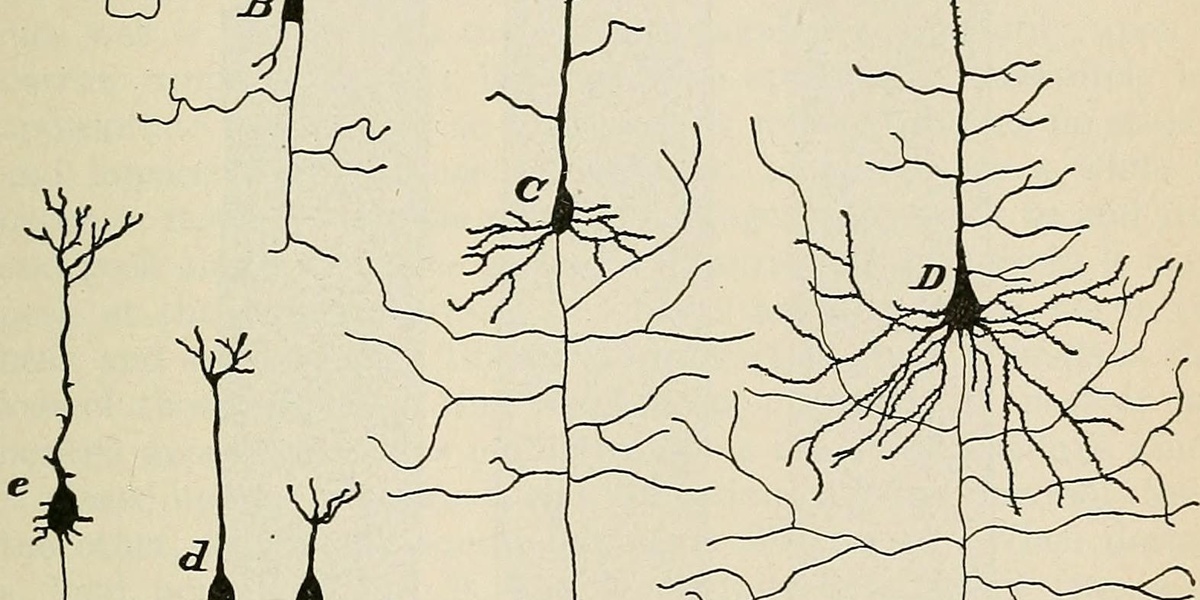
Pyramidal cell
Large excitatory neurons with triangular soma, long apical dendrite and branching basal dendrites. They integrate input across layers, generate output to other cortical areas and subcortical targets, and use glutamate for fast excitatory transmission.
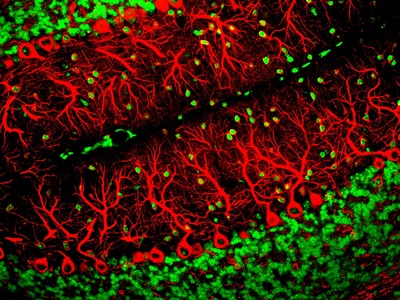
Purkinje cell
Huge inhibitory neuron with elaborate dendritic arbor that receives cortical inputs and provides sole output from cerebellar cortex to deep nuclei. Critical for motor coordination and learning, it releases GABA onto cerebellar nuclei neurons.
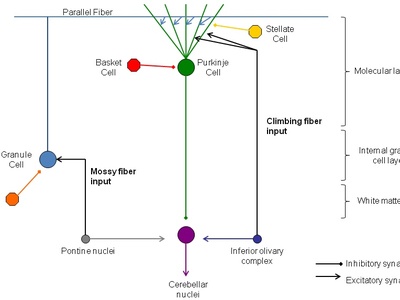
Cerebellar granule cell
Tiny, very numerous excitatory neurons whose parallel fibers synapse on Purkinje cell dendrites. They receive mossy fiber inputs and support timing and coordination by distributing signals across thousands of Purkinje cells.

Cortical interneuron (GABAergic)
Local inhibitory cells that sculpt cortical circuits, control timing, and prevent runaway excitation. Includes basket, chandelier and Martinotti cells; many express parvalbumin or somatostatin and target soma or dendrites of pyramidal neurons.

Medium spiny neuron
Principal output neurons of the striatum; they integrate cortical and dopaminergic inputs and gate motor and reward-related behaviors. Characterized by dense dendritic spines and inhibitory projections to basal ganglia targets.
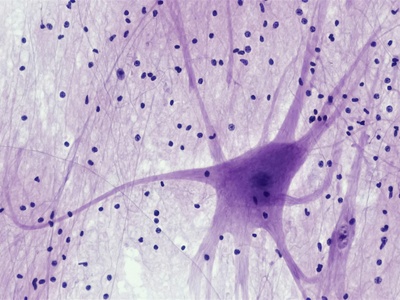
Dopaminergic neuron (SNc)
Dopamine-producing neurons projecting to striatum and cortex that modulate movement, motivation and learning. Vulnerable in Parkinson’s disease; they have autonomous pacemaking activity, widespread modulatory synapses, and critical roles in reinforcement and motor control.

Serotonergic neuron (raphe)
Serotonin-secreting neurons in the brainstem that project widely to regulate mood, sleep, appetite and pain sensitivity. They provide slow, diffuse neuromodulation rather than fast point-to-point transmission and influence developmental wiring and plasticity.
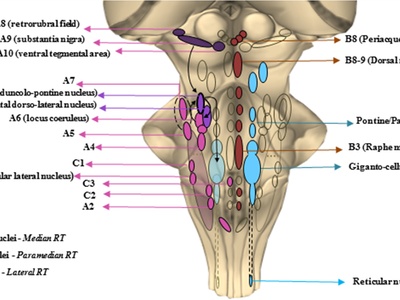
Noradrenergic neuron (LC)
Norepinephrine-producing neurons that broadcast arousal, attention and stress signals broadly across brain and spinal cord. They modulate sensory processing and vigilance, switching network states between sleep and wakefulness and influence learning and memory consolidation.

Chandelier cell
Specialized inhibitory interneuron that synapses onto the axon initial segments of pyramidal cells, exerting powerful control over spike generation and timing. Named for its branching ‘candlestick’ axonal cartridges, important in network synchrony and implicated in schizophrenia research.
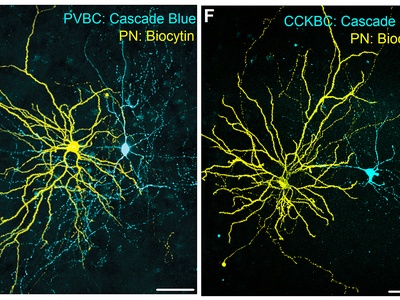
Basket cell
Fast-spiking inhibitory cells that wrap around pyramidal or Purkinje cell bodies to control output timing and synchrony. They are key for oscillations like gamma rhythms and precise network inhibition during cognition.
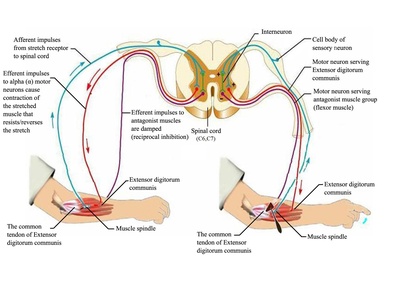
Alpha motor neuron
Large α-motor neurons that directly innervate skeletal muscle fibers to produce voluntary movement. They receive descending and sensory inputs and release acetylcholine at neuromuscular junctions to trigger muscle contraction reliably.
Gamma motor neuron
Smaller motor neurons that adjust sensitivity of muscle spindles by innervating intrafusal fibers. They regulate proprioceptive feedback and muscle tone without directly producing large muscle force, critical during posture and reflex modulation.
Dorsal root ganglion neuron
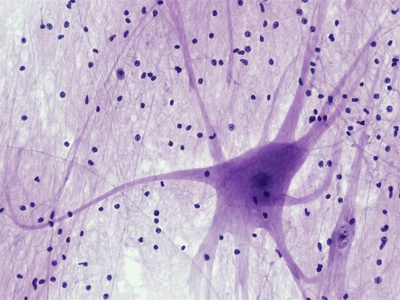
Primary somatosensory neurons that convey touch, pain, temperature and proprioception from the periphery to the spinal cord. Pseudounipolar morphology allows peripheral and central branches; many release glutamate and neuropeptides in spinal cord.

Sympathetic postganglionic neuron
Sympathetic postganglionic neurons that innervate organs and vasculature, driving ‘fight-or-flight’ responses like increased heart rate and vasoconstriction. Use norepinephrine as their primary neurotransmitter; some sweat glands use acetylcholine and pupil dilation.

Olfactory receptor neuron
Bipolar neurons in the nasal epithelium that detect odor molecules and send axons through the cribriform plate to the olfactory bulb. They transduce chemical signals into electrical activity and use glutamate to activate bulb circuits.
Retinal ganglion cell
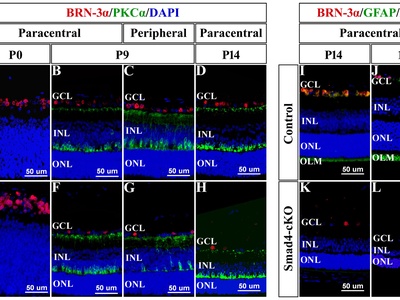
Final retinal neurons that collect processed signals and transmit visual information to the brain via the optic nerve. Diverse subtypes encode contrast, motion, and circadian light levels and influence reflexes like pupillary responses.
Rod photoreceptor
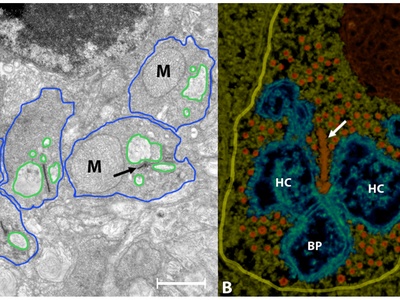
Highly light-sensitive photoreceptors for vision in dim light; they hyperpolarize in response to light and modulate glutamate release to downstream bipolar cells. Very numerous and key for night vision, and rod degeneration causes night blindness.
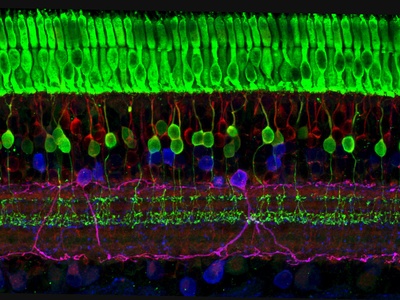
Cone photoreceptor
Photoreceptors tuned to brighter light and color, concentrated in the fovea for high-acuity vision. Cones respond with graded potentials and alter glutamate release to convey color and detail, critical for reading and fine tasks.
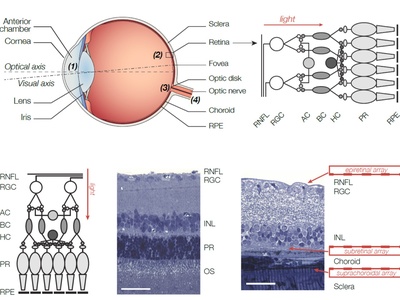
Retinal bipolar cell
Retinal interneurons that transmit signals from rods and cones to ganglion cells. ON and OFF bipolar types invert or preserve sign using different glutamate receptors, shaping contrast and temporal responses.
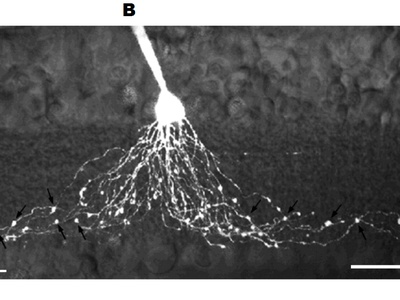
Amacrine cell
Local retinal interneurons that modulate bipolar-to-ganglion cell signaling, integrate temporal information, and contribute to motion detection and adaptation. Many types use GABA or glycine; starburst amacrines release acetylcholine and GABA.
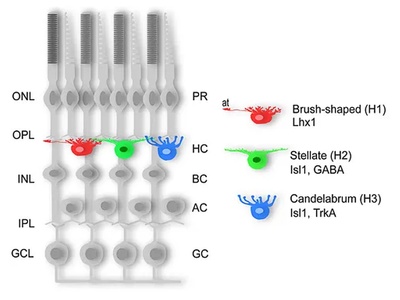
Horizontal cell
Lateral inhibitory neurons in the retina that connect photoreceptors and bipolar cells to create surround inhibition and sharpen spatial contrast. They help establish receptive field organization and influence color processing.
Renshaw cell
Small inhibitory interneurons that receive collaterals from motor neurons and provide recurrent inhibition back onto those motor neurons, stabilizing firing and preventing excessive activity during movement, critical for reflex modulation.

Spiny stellate cell
Radially symmetric excitatory neurons in cortical layer IV that receive thalamic input and distribute it locally to pyramidal neurons, playing a central role in sensory signal processing especially in primary sensory areas.
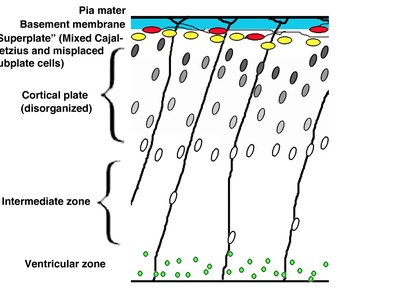
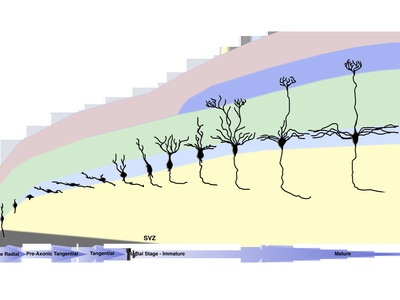
Cajal-Retzius cell
Transient pioneer neurons in the marginal zone that secrete reelin to guide cortical layer formation and help organize neuronal migration during development. Some persist in adult layer I and are excitatory.
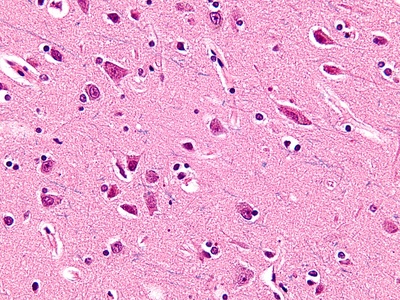
Von Economo neuron (spindle neuron)
Large, fast-conducting spindle-shaped neurons found in social-emotional brain regions implicated in rapid intuitive judgments and social cognition. They are prominent in humans and some large-brained mammals and may support fast long-range signaling.
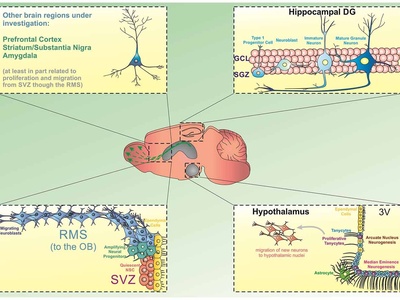
Hippocampal granule cell
Principal excitatory cells of the dentate gyrus that sparsely encode incoming cortical information and contribute to pattern separation and memory encoding. They send mossy fiber projections to CA3 pyramidal neurons.
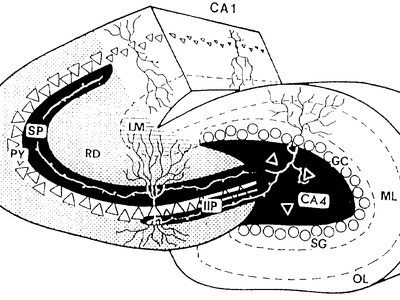
Hippocampal mossy cell
Excitatory hilar neurons that receive granule cell input and project back to granule cells and interneurons, amplifying and coordinating dentate gyrus activity; implicated in seizure propagation, pattern completion and plasticity.
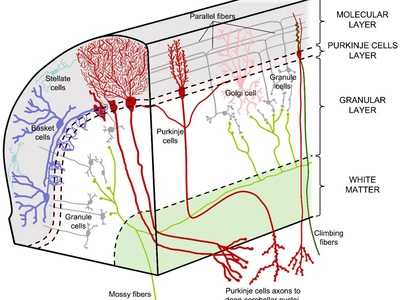
Cerebellar stellate cell
Inhibitory interneurons that synapse on Purkinje cell dendrites and modulate excitatory input timing. They help shape Purkinje responses and cerebellar output during fine motor control and learning through adaptive synaptic changes.

Thalamic relay neuron
Thalamic relay neurons convey sensory and motor information to the cortex, transforming and gating inputs. They can fire in tonic or burst modes affecting attention and sleep-wake states and thalamocortical synchrony.
Thalamic reticular neuron
GABAergic neurons forming a shell around thalamic relay nuclei that gate and synchronize thalamocortical transmission. They regulate attentional selection and contribute to sleep spindles, sensory filtering important for cognition.
Pedunculopontine cholinergic neuron
Cholinergic brainstem neurons that promote wakefulness, REM sleep and modulate motor circuits. They project widely to thalamus and basal forebrain, influencing cortical activation, attention and locomotor control, important for arousal.
Substantia nigra pars reticulata neuron
GABAergic output neurons of the basal ganglia that inhibit thalamic and brainstem targets, regulating movement initiation and tonic inhibition of motor programs. They receive input from striatal direct and indirect pathways and are central to basal ganglia circuitry.

Magnocellular neurosecretory neuron
Large hypothalamic neurons that synthesize and release the neuropeptides vasopressin or oxytocin into the posterior pituitary for systemic hormone release; they regulate fluid balance, childbirth, social behaviors and lactation.
Martinotti cell
Somatostatin-positive interneurons that send axons to layer I to inhibit distal dendrites of pyramidal cells, regulating dendritic integration and feedback inhibition across cortical columns, important for gain control and computation.
VIP interneuron
Interneurons that preferentially inhibit other interneurons, disinhibiting pyramidal cells and gating cortical circuits during behavioral states. They express VIP and can release GABA to modulate inhibition, affecting attention and sensory processing.

Grid cell
Principal neurons that fire in a hexagonal grid pattern across environments, supporting spatial mapping and navigation. Grid cells supply metric information to hippocampal place cells and aid path integration and memory.
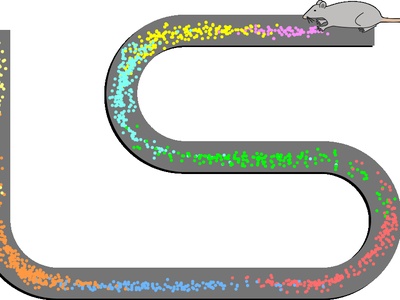
Place cell
Hippocampal pyramidal neurons that become active when an animal is in a specific location, forming a cognitive map for navigation and episodic memory. Activity is influenced by sensory and self-motion cues.
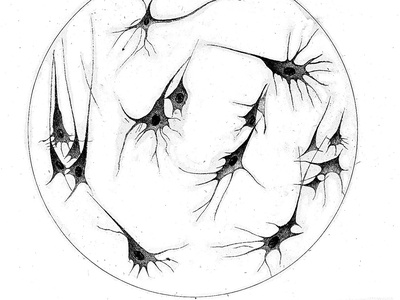
Betz cell
Very large Layer V pyramidal neurons that constitute part of the corticospinal tract, making direct, fast connections to spinal motor circuits for precise voluntary movement control, particularly of distal limbs.
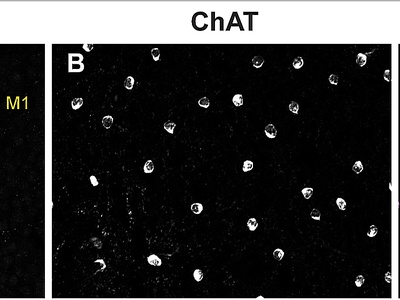
Intrinsically photosensitive retinal ganglion cell (ipRGC)
Retinal ganglion neurons that express melanopsin and respond directly to light, conveying ambient light information to circadian and pupillary reflex centers. They use glutamate to signal and help entrain biological rhythms.
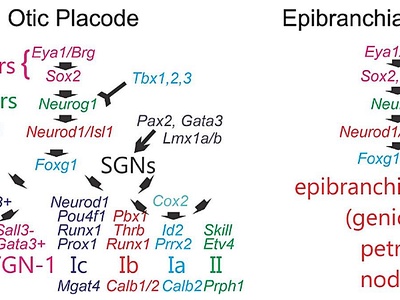
Spiral ganglion neuron
Primary auditory neurons that transmit hair cell signals from the cochlea to the cochlear nucleus. They are bipolar/pseudounipolar and encode sound frequency and intensity with high temporal precision using glutamatergic transmission.
Vestibular primary afferent neuron
Primary vestibular neurons that carry head motion and position signals from inner ear hair cells to brainstem vestibular nuclei, crucial for balance and gaze stabilization. Pseudounipolar morphology and glutamatergic synapses relay high-fidelity timing information.
Striatal cholinergic interneuron
Small population of tonically active interneurons in the striatum that release acetylcholine to modulate striatal output and plasticity, influencing motor learning and reward-related behaviors and habit formation via pause responses.
Globus pallidus internal neuron (GPi)
GABAergic output neurons of the basal ganglia that tonically inhibit thalamocortical circuits and shape motor control. They receive striatal and subthalamic inputs and are targets for Parkinson’s therapies including deep brain stimulation.
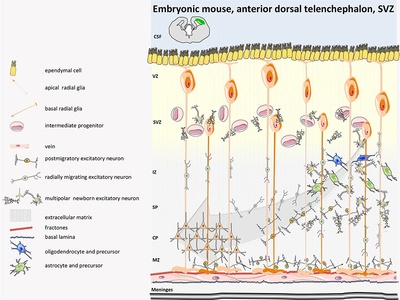
Subplate neuron
Early-born neurons in the subplate that guide thalamocortical axon development and early cortical circuit formation. Many are transient but critical for establishing initial connectivity and plasticity in the immature brain.

Olfactory bulb granule cell
Axonless inhibitory interneurons that form reciprocal dendrodendritic synapses with mitral and tufted cells, shaping odor representations via lateral inhibition and affecting odor discrimination and sensitivity and olfactory learning in adults.
Mitral cell
Principal output neurons that receive input from olfactory receptor neurons in glomeruli and send processed odor information to olfactory cortex. Their lateral interactions via interneurons refine odor signals and learning.

Spinal projection neuron (nociceptive)
Spinal projection neurons that transmit pain and temperature information from dorsal horn to brain centers like thalamus. They receive primary afferent input and use glutamate plus neuropeptides to signal nociceptive intensity.
Hypothalamic orexin/hypocretin neuron
Orexin-producing neurons that promote wakefulness, reward-seeking and stabilize arousal; loss causes narcolepsy. They project widely and release orexin peptides, often co-releasing glutamate to influence downstream targets, metabolism and stress regulation.