Choosing the right technology grouping can make or break a product’s development speed and long-term maintainability. Whether you’re sketching a quick prototype or scaling to millions of users, a clear map of options helps teams pick tools that match goals, skills and timelines.
There are 29 Stacks, ranging from Android Stack to iOS Stack, that cover mobile, web and backend approaches. Each entry is organized with Category,Core components,Typical use cases so you can compare responsibilities and trade-offs at a glance — you’ll find below.
How do I choose the right stack for my project?
Start with the problem you need to solve, then match constraints: team expertise, performance needs, deployment targets and ecosystem maturity. Favor stacks with strong tooling and community for your use case, prototype quickly to validate assumptions, and consider long-term costs like maintenance and hiring.
Is it practical to combine parts from different stacks?
Yes — many teams mix frontend frameworks, backend services and cloud tools to fit requirements. Keep integrations clear (APIs, contracts), watch for mismatched lifecycles or overlap in responsibility, and add tests and documentation so the hybrid approach remains maintainable.
Stacks
| Name | Category | Core components | Typical use cases |
|---|---|---|---|
| LAMP | Web | Linux, Apache, MySQL, PHP | Traditional web apps, CMS sites, shared hosting |
| LEMP | Web | Linux, Nginx, MySQL/MariaDB, PHP | High-performance web sites, reverse-proxy setups |
| WAMP | Web | Windows, Apache, MySQL, PHP | Windows development, local web testing |
| XAMPP | Web/Dev | Cross-platform, Apache, MariaDB, PHP, Perl | Local development, testing, learning web stacks |
| MAMP | Web/Dev | macOS/Windows, Apache/Nginx, MySQL/MariaDB, PHP | Local macOS/Windows development for PHP projects |
| MEAN | Web | MongoDB, Express, Angular, Node.js | Single-language JavaScript web applications |
| MERN | Web | MongoDB, Express, React, Node.js | SPA and progressive web app backends |
| MEVN | Web | MongoDB, Express, Vue.js, Node.js | Progressive web apps, small-to-medium SPAs |
| PERN | Web | PostgreSQL, Express, React, Node.js | Data-driven web apps needing relational DB |
| JAMstack | Web | JavaScript, APIs, Markup (static hosting) | Static sites, headless CMS, high-performance apps |
| Serverless | DevOps/Conceptual | FaaS (Lambda), managed DB, API gateway, storage | Event-driven apps, microservices, low-ops backends |
| Elastic Stack (ELK) | Observability/DevOps | Elasticsearch, Logstash, Kibana (Beats) | Log analytics, search, observability dashboards |
| EFK | Observability/DevOps | Elasticsearch, Fluentd, Kibana (Beats) | Logging pipelines, container logs aggregation |
| TICK | Monitoring | Telegraf, InfluxDB, Chronograf, Kapacitor | Time-series metrics, monitoring, alerting |
| Prometheus Stack | Monitoring/Observability | Prometheus, Alertmanager, exporters, Grafana | Cloud-native monitoring, Kubernetes metrics |
| Hadoop Ecosystem | Data | HDFS, YARN, MapReduce, Hive, HBase | Batch big-data processing, data lakes, ETL |
| Modern Data Stack | Data | ETL/ELT, cloud warehouse, dbt, BI tools | Analytics, ELT pipelines, self-serve analytics |
| Lambda Architecture | Data/Conceptual | Batch layer, speed layer, serving layer | Large-scale streaming + batch analytics |
| Kappa Architecture | Data/Conceptual | Single streaming pipeline, immutable log, real-time views | Streaming-first analytics, simplified ETL |
| TCP/IP Stack | Protocol | Link, Internet, Transport, Application layers | Internet communication, routing, client-server apps |
| OSI Model | Protocol/Conceptual | Seven layers (Physical to Application) | Teaching, protocol design, network troubleshooting |
| Microsoft/.NET Stack | Enterprise/Web | Windows Server, IIS, .NET, SQL Server | Enterprise apps, intranet, Windows-centric deployments |
| Java EE / Jakarta EE | Enterprise | Servlet container, EJB, JPA, JMS, JDBC | Large-scale enterprise applications, transaction systems |
| Spring Stack | Enterprise/Web | Spring Boot, Spring MVC, Spring Data, Tomcat | Microservices, REST APIs, enterprise web apps |
| Kubernetes / Cloud-native Stack | DevOps/Infrastructure | Kubernetes, container runtime, etcd, CNI, ingress | Container orchestration, microservices, cloud deployments |
| CI/CD Stack | DevOps | Git, CI server, build runners, artifact repo, CD tool | Automated build, test, deploy pipelines |
| Blockchain / Ethereum Stack | Protocol/Blockchain | Geth/clients, EVM, smart contracts, Web3 tools | DApps, token platforms, decentralized finance |
| Android Stack | Mobile | Android SDK/NDK, Java/Kotlin, Android OS, Play services | Mobile apps, device integrations, embedded Android |
| iOS Stack | Mobile | iOS SDK, Swift/Objective-C, Xcode, Cocoa Touch | Native iPhone/iPad apps, tightly integrated UX |
Images and Descriptions

LAMP
Classic open-source web stack pairing Linux with Apache, MySQL and PHP. Widely used for content-driven sites and small-to-medium web apps; notable for simplicity, widespread hosting support and a large ecosystem of PHP applications like WordPress and Drupal.

LEMP
Variation of LAMP replacing Apache with Nginx for better concurrency and static file serving. Popular for performance-minded PHP deployments, common on VPS and cloud servers; notable for efficient resource use and modern reverse-proxy patterns.
WAMP
Windows-port of the LAMP idea for local development and small deployments on Windows servers. Good for developers familiar with Windows ecosystems; notable as an easy onboarding environment for PHP-based projects on Windows.
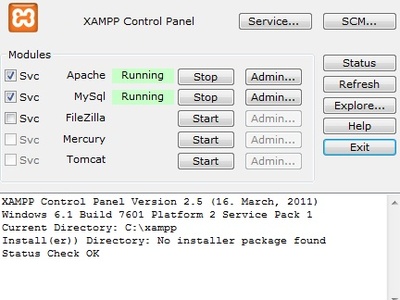
XAMPP
All-in-one local server distribution that bundles Apache, MariaDB, PHP and Perl for Windows, macOS and Linux. Designed for quick setup and education; notable for being beginner-friendly and portable for local testing.
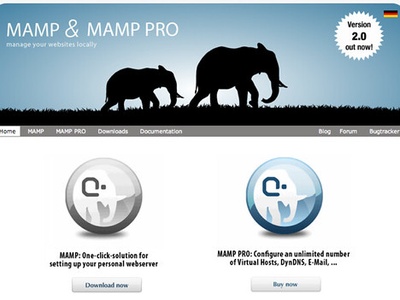
MAMP
Packaged local server environment aimed at macOS developers (also Windows) bundling web server, database and PHP. Useful for quick local development of PHP apps; notable for macOS integration and simple GUI controls.
MEAN
Full-stack JavaScript stack using Node.js and Angular with MongoDB. Favored for single-language development from client to server, real-time apps and rapid prototyping; notable for seamless JSON data flow and large JavaScript ecosystem.
MERN
Like MEAN but with React instead of Angular; popular for building modern single-page applications with server-side APIs. Notable for React ecosystem compatibility and component-driven front-end development workflows.
MEVN
MEAN/MERN variant using Vue.js for the front end. Appreciated for Vue’s gentle learning curve and flexibility; notable for fast development cycles and approachable state management options.
PERN
Full-stack JavaScript using PostgreSQL for relational needs, Express and React. Favored when ACID properties or complex queries matter; notable for combining modern JS front-ends with a robust SQL backend.
JAMstack
Architecture emphasizing prebuilt markup, client-side JavaScript and serverless/back-end APIs. Popular for fast static sites and decoupled front-ends with CDN delivery; notable for excellent performance, security and developer experience.
Serverless
Architecture and stack pattern built around managed Function-as-a-Service, API gateways and managed services. Reduces operational overhead and scales automatically; notable for cost-efficiency on bursty workloads but vendor lock-in considerations.
Elastic Stack (ELK)
Popular logging and analytics stack centered on Elasticsearch for search, Logstash/Beats for ingestion and Kibana for visualization. Widely used for centralized logs and observability; notable for powerful full-text search and a large plugin ecosystem.
EFK
Variation of the Elastic Stack replacing Logstash with Fluentd for lighter log forwarding and Kubernetes friendliness. Favored in containerized environments; notable for flexibility and lower memory footprint in some setups.
TICK
Time-series monitoring stack built around InfluxDB for metrics, Telegraf for collection and Kapacitor for processing. Good for high-resolution telemetry and custom alerting; notable for being purpose-built for metrics workloads.

Prometheus Stack
Open-source monitoring stack designed for scraping time-series metrics, rule-based alerts and visualization in Grafana. Extremely popular in Kubernetes/cloud-native environments; notable for pull-based model and powerful query language (PromQL).
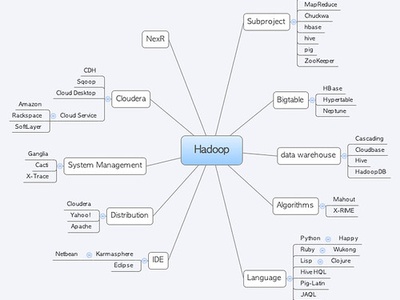
Hadoop Ecosystem
Collection of big-data tools around Hadoop storage and processing. Suited for large-scale batch analytics, archival storage and ETL workloads; notable historically for enabling petabyte-scale data processing across commodity hardware.
Modern Data Stack
Contemporary analytics pattern using cloud data warehouses (Snowflake, BigQuery), ELT tools, transformation (dbt) and BI. Emphasizes modular managed services and fast analytics; notable for enabling agile, analyst-driven workflows.
Lambda Architecture
Architectural pattern combining batch processing and real-time speed layers to provide low-latency, accurate views of data. Used in time-series and analytics-heavy systems; notable for complexity trade-offs and historical influence on streaming designs.
Kappa Architecture
Simpler streaming-oriented architecture replacing separate batch and speed layers with one stream-processing pipeline. Suited for systems where streaming is primary; notable for operational simplicity versus Lambda.
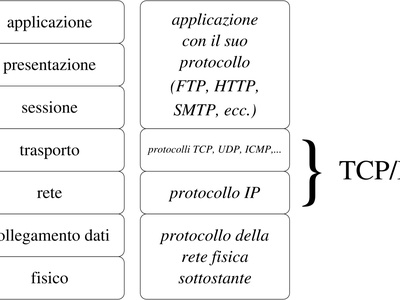
TCP/IP Stack
Fundamental network protocol stack underlying the Internet, defining packet formats and layered behavior from link up to application protocols. Ubiquitous and foundational; notable for practical layering that enabled global interoperable networks.
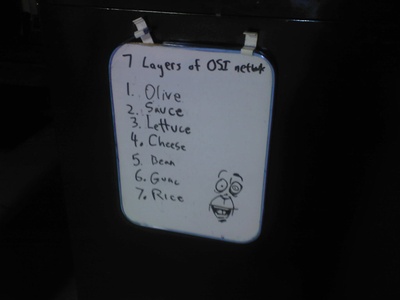
OSI Model
Conceptual seven-layer model for networking that helps explain responsibilities from physical signaling to application semantics. Widely used as an educational and diagnostic tool; notable for clarifying where protocols and devices fit.
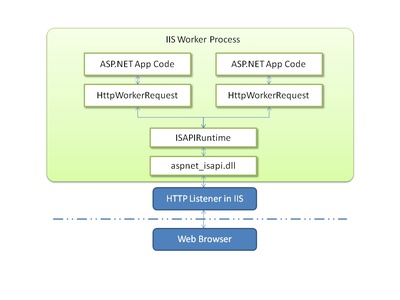
Microsoft/.NET Stack
Common enterprise stack centered on Microsoft technologies: .NET for application code, IIS for hosting and SQL Server for storage. Popular in corporate environments with Windows infrastructure; notable for strong tooling and corporate support.
Java EE / Jakarta EE
Standardized enterprise Java platform providing APIs and runtime services for scalable, transactional applications. Widely used in traditional enterprise IT; notable for robustness, portability and long-term enterprise adoption.
Spring Stack
Ecosystem built on the Spring framework, often using Spring Boot for opinionated setups. Favored for building Java microservices and REST APIs; notable for dependency injection, modularity and extensive production features.
Kubernetes / Cloud-native Stack
Platform for container orchestration and cloud-native deployments providing scheduling, scaling and service discovery. Central to modern infrastructure; notable for portability, extensibility and a vibrant ecosystem of cloud-native tools.
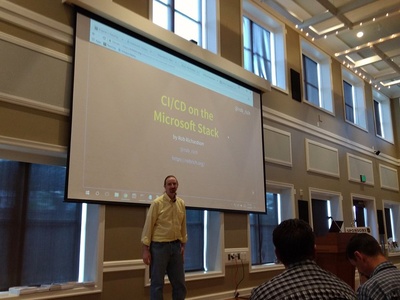
CI/CD Stack
Pipeline-focused stack combining version control, CI engines (Jenkins, GitLab CI), artifact storage and CD tools. Automates testing and releases for faster delivery; notable for improving reliability through repeatable pipelines.

Blockchain / Ethereum Stack
Stack for building on an Ethereum-like blockchain: nodes, EVM smart contracts, wallets and Web3 client libraries. Used for decentralized applications and tokens; notable for transparency, immutability and rapid DApp innovation.
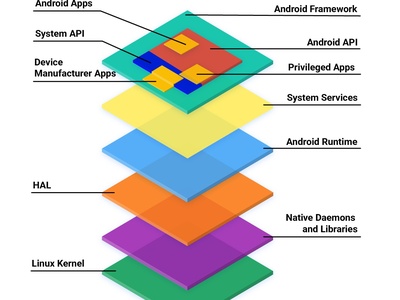
Android Stack
Layered mobile stack from Android OS through SDKs and app runtimes to Play services. Common for consumer and enterprise mobile apps on billions of devices; notable for wide device reach and Java/Kotlin developer base.
iOS Stack
Apple’s mobile stack including the iOS platform, developer frameworks and toolchain for building native apps. Emphasizes performance and user experience; notable for strong ecosystem, monetization and platform consistency.