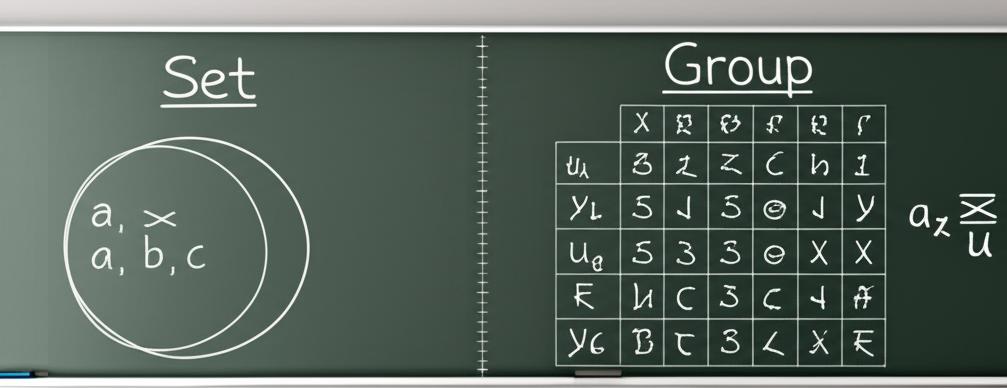
In the 1830s Évariste Galois sketched the ideas that would become group theory while scribbling arguments the night before a duel; his work explained why some polynomial equations resist solution. A few decades later, Ernst Zermelo began formalizing the foundations of collections in 1908, a move that matured into the Zermelo–Fraenkel axioms for set theory. That burst of history matters because the two concepts sit at different levels: one describes raw membership, the other packages membership with an operation and rules.
For students, engineers, and scientists, confusing the two leads to errors in proofs, buggy code, and flawed models. Group axioms: four main properties you can check (closure, associativity, identity, inverses). And a quick concrete fact: the symmetric group S_3 has order 6, which shows how small algebraic structures already carry rich behavior.
Below I walk through eight clear, concrete differences between set and group, with examples, numbers, and real-world applications so you can tell when a plain collection is enough and when you need algebraic structure.
Fundamental Definitions and Language
1. Collection vs. Algebraic Structure
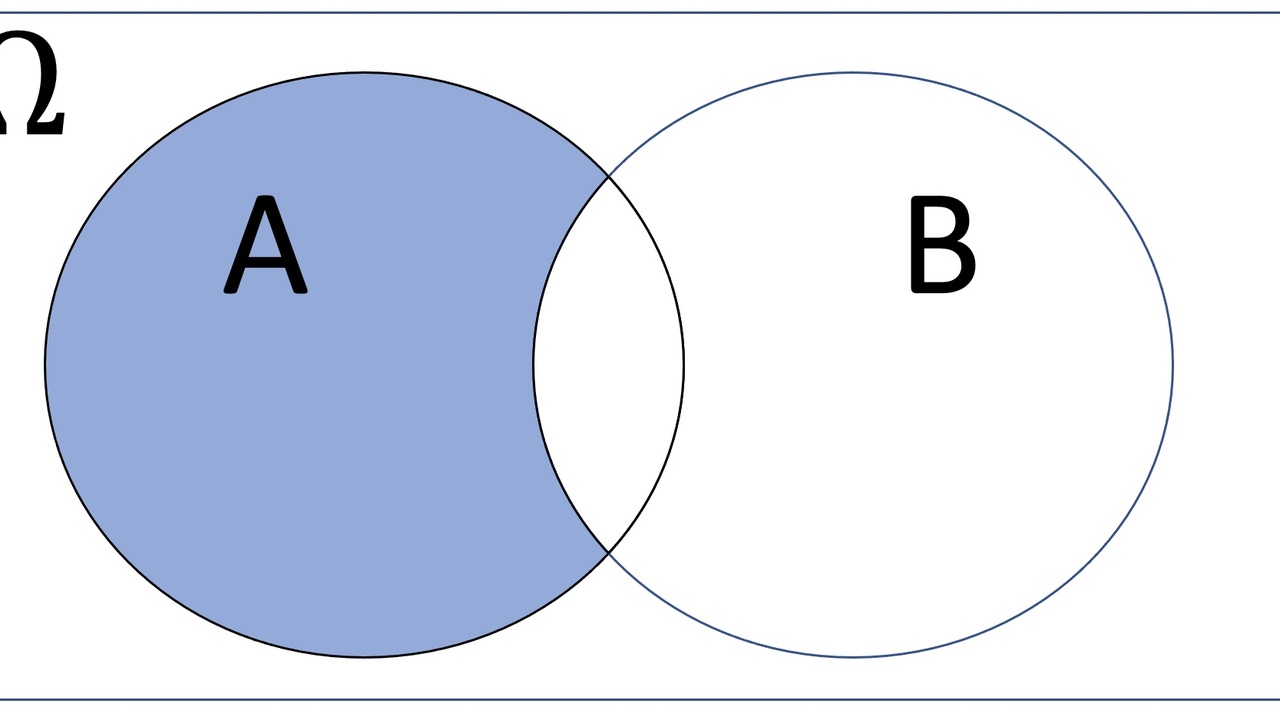
A set is simply a collection of distinct elements determined by membership: x ∈ A says x belongs to A. A group is a set equipped with a binary operation that obeys extra rules, turning a bare collection into something you can compose and manipulate algebraically.
Formally, set theory rests on Zermelo–Fraenkel axioms (ZF) developed in the early 20th century, while group ideas trace back to Galois and later algebraists. In practice that means sets need only admit membership tests; groups must also support a product (or sum) with well-defined outcomes.
Examples: A = {1, 2, 3} and the empty set ∅ are plain sets. By contrast Z_5, the integers mod 5 under addition, is a group of order 5 — it has five elements and a defined addition operation that meets the group rules.
2. Notation and Language: elements, membership, and operations
Notation signals the difference. For sets you write x ∈ A or A ⊂ B; for groups you’ll see a ·, +, or juxtaposition a b to mean the operation. A Cayley table lists results of the group operation much like a multiplication table.
Practical examples help: a Python set looks like {1, 2, 3} and supports membership checks and union/intersection. A permutation group such as S_3 (order 6) is represented by a Cayley table with 6×6 entries that show how permutations compose.
3. Formal definitions and axioms
Sets are defined by axioms that constrain membership and construction (ZF includes axioms like Extensionality and Replacement). Groups are defined by four axioms: closure, associativity, an identity element, and inverses for every element.
These four conditions are what let you prove results about structure and behavior. For instance Z_n (integers mod n under addition) satisfies all four axioms, so Z_n is a group of order n. That contrast — simple membership versus axiom-driven behavior — is decisive in theory and in code.
Algebraic Structure and Core Properties
4. Operations and closure: why structure changes everything
Add a binary operation and you change the object fundamentally. Closure — the requirement that combining two elements returns an element of the same set — is the first test a set must pass to be a candidate for a group.
Example: Z is closed under +, so (Z, +) is a group if inverses exist (they do). The natural numbers N are not closed under subtraction, so (N, −) fails immediately. In practice cryptography relies on closure: elliptic-curve groups used in ECC have large prime orders often near 2^256 in modern curves, which matters for security guarantees.
5. Axioms in practice: associativity, identity, and inverses
The four group axioms each play a role: closure keeps results in the set, associativity lets you ignore parentheses, identity gives a neutral element, and inverses let you undo operations. Together they enable algebraic reasoning not available for plain sets.
Uniqueness proofs are short: if e and e′ are two identities, then e = e e′ = e′, so the identity is unique. If a has two inverses b and c, then b = b(a c) = (b a) c = c, so inverses are unique. For further reading, standard texts like Dummit and Foote present these lemmas early in any algebra course.
6. Substructures: subsets vs. subgroups
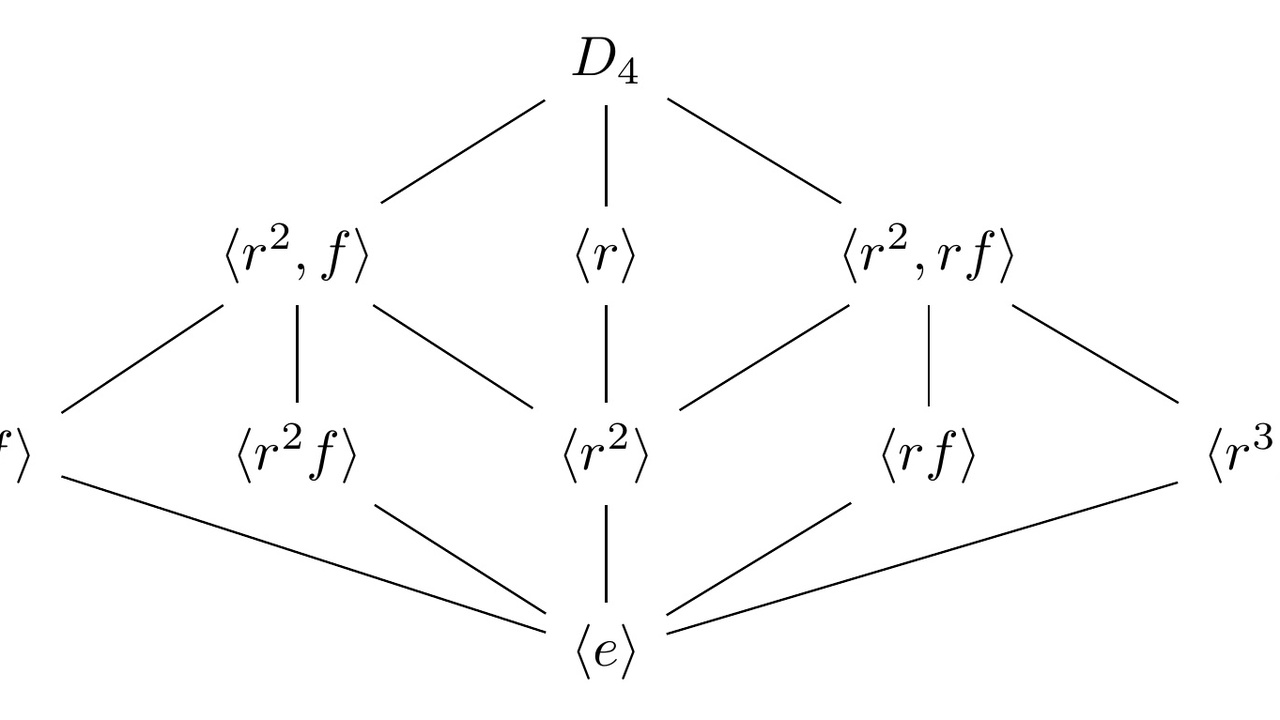
Not every subset of a group is a subgroup; extra checks are required. A common subgroup test: a nonempty subset H of G is a subgroup if H is closed under the group operation and taking inverses.
Concrete numbers show the gap. A set with n elements has 2^n subsets (n=3 gives 2^3 = 8 subsets), but only a few may be subgroups. For example in Z_6 the subset {0,3} is a subgroup of order 2, while many other 2-element subsets fail closure.
Applications, Computation, and Implications
7. Sets in computing vs. groups in cryptography and symmetry
In software a set models collections: Python’s built-in set type gives O(1) average membership checks and supports union, intersection, and difference. SQL tables use set-like semantics for rows when you think in terms of relational algebra.
Groups underlie cryptographic primitives and symmetry. RSA uses modular arithmetic on integers mod n (structure of units mod n), while elliptic-curve cryptography (ECC) uses group operations on curve points; comparable security might use a 2048-bit RSA key versus a 256-bit ECC curve.
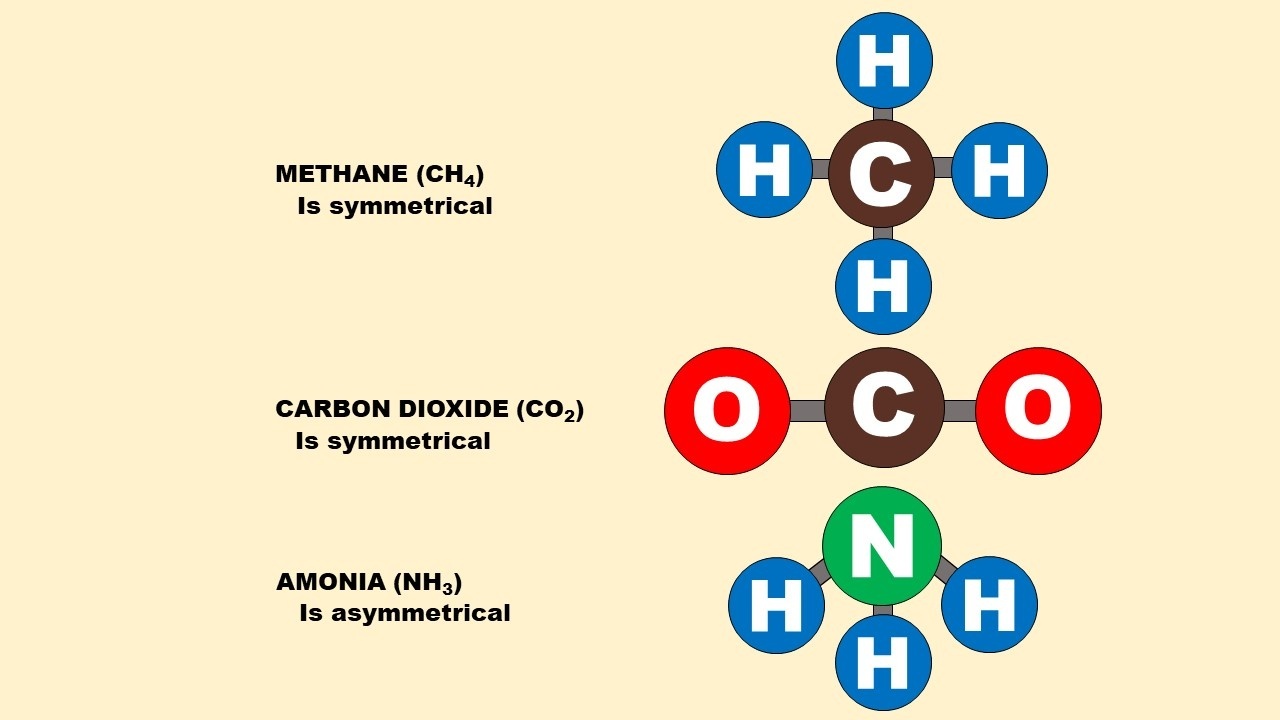
Physics uses symmetry groups extensively: permutations, rotation groups, and Lie groups organize particle properties and crystal symmetries. The difference in abstraction—collection versus operation—determines the APIs, tests, and guarantees you rely on.
8. Modeling, reasoning, and what to test for
Choosing the right model changes what you prove and what you test. For sets you confirm membership, uniqueness, and cardinality. For groups you must test algebraic properties like closure, identity presence, and the existence of inverses.
Developer checklist (quick):
- Check closure under the candidate operation (combine representatives and verify result stays in the set).
- Verify an identity element exists and is unique.
- Confirm each element has an inverse under the operation.
A common bug is assuming invertibility: code that calls an inverse method on arbitrary data will fail if the underlying collection isn’t a group. Likewise, using sets for de-duplication is fine; using them where algebraic composition is required will produce logical errors.
Summary
- A set is a plain collection defined by membership; a group is that collection plus a binary operation and four axioms (closure, associativity, identity, inverses).
- Many subsets of an n-element set (2^n total) are not subgroups; subgroup tests are stricter and algebraically meaningful.
- Applications diverge: use sets for data structures and relational models (Python set, SQL tables); use groups for cryptography (RSA, ECC) and symmetry in physics.
- Practical checklist for developers and mathematicians: check closure under operation, confirm an identity, and verify inverses before assuming group behavior.
- Try this exercise: pick a collection you use (a set of keys, a list of transformations) and decide whether it needs an operation; if yes, list which axioms you must verify to promote it to a group.